Skylands Manor-New Jersey Botanical Garden
5 Morris Road
Ringwood, NJ 07456
(973) 962-9370
http://www.ringwoodmanor.org/Victorian-Christmas.html
Open: Check website for details
Fee: Check the website for details
https://visitingamuseum.files.wordpress.com/2019/01/skyland-manor-entrance.jpg?w=640
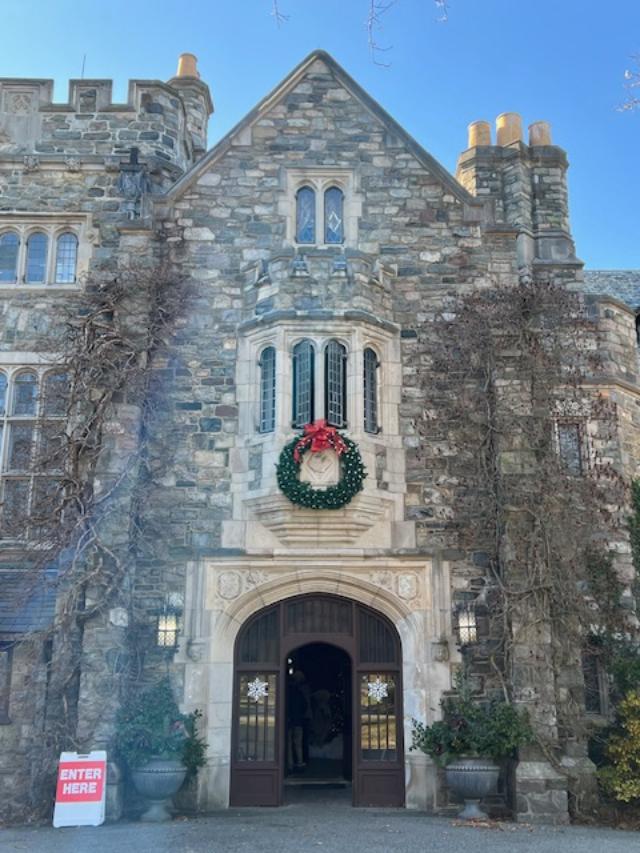
The Skylands Manor at Christmas time.
Note: The Skylands Manor is decorated for the holidays during the first week of December and only for one weekend as it used for a banquet facility the rest of the time and as a hotel. The first weekend of December is when local Gardening groups are assigned one room to decorate and they have one week to put it together, display their ideas and explain how they did it to the public.
https://visitingamuseum.files.wordpress.com/2019/01/skyland-manor-entrance-i.jpg?w=640
The front of the Skylands Manor during Christmas time.
The best day to go is the Thursday afternoon opening as it is the quietest day of the four day event with Saturday being the busiest. The best time on Thursday to come is in the morning.
https://visitingamuseum.files.wordpress.com/2019/01/skyland-manor-front-ii.jpg?w=640
The side entrance to the Skylands Manor.
My review on TripAdvisor:
https://www.tripadvisor.com/Hotel_Review-g46774-d1140628-Reviews-The_Castle_at_Skylands_Manor-Ringwood_New_Jersey.html?m=19905
Skylands Manor during Christmas Time:
https://visitingamuseum.files.wordpress.com/2019/01/skyland-manor-front.jpg?w=640
The Manor home decorated for Christmas.
Visiting the Skylands Manor in 2019:
In 2019, the decorations were not as elaborate as the previous two years. The snow storm before the event may have put a damper on a few of the groups decorating. Still the best day to visit the manor is Thursday afternoon as it is the quietest time and you can take the best pictures.
The two best rooms in the manor in 2019 were the Entrance Hall and Grand Staircase decorated by the Magnificent Seven, a group of volunteers whose theme was ‘The Secret Life of Gnomes’ and the trees and staircases were studded with gnomes, large and small, on the trees and wreathes surrounding the stairs.
The other room that was very impressive was the Center Hall whose theme was the “Enchanted Forest, full of little fairies and painted rocks and jeweled winged ornaments. When you looked at the detail work of the trees and table displays you could see the work that went into the decor. Each little fairy on the stands and trees had immense detail and took a lot of time. This display was done by the Friends of Laurelwood Arboretum in Wayne, NJ.
The rest of the rooms in the manor were really pared down from 2018 and did not have the same elaborate details to them. The Library and Study did not have half of the display items that they did in the past.
https://visitingamuseum.files.wordpress.com/2019/01/skyland-manor-carriage-house-front.jpg?w=640
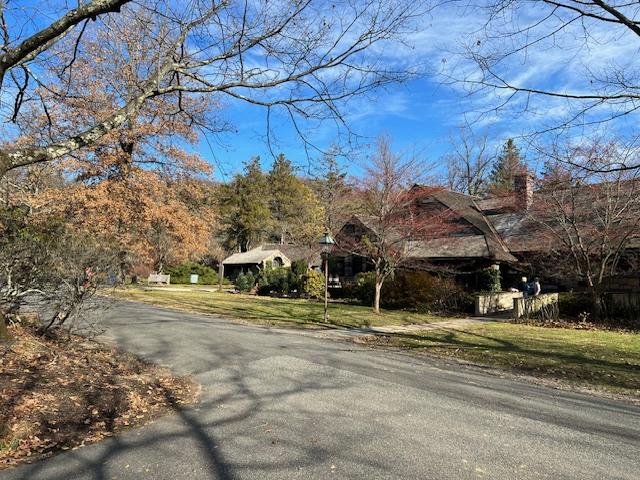
The Carriage House on the estate.
https://visitingamuseum.files.wordpress.com/2019/01/skyland-manor-carriage-house.jpg?w=640
The Carriage House was used as a restaurant and a gift shop during the event.
The fee to enter the home is still $10.00. The carriage house is being used for a cafe with Chicken Salad sandwiches and hot dogs with toppings. There are all sorts of crafts for sale.
https://visitingamuseum.files.wordpress.com/2019/01/skyland-manor-carriage-house-restaurant.jpg?w=640
The Carriage House for Lunch.
https://visitingamuseum.files.wordpress.com/2019/01/skyland-manor-menu.jpg?w=640
The menu at the pop-up restaurant at the Skylands Manor.
Watch the calendar for 2024 in early December for the next display.
The Display in 2023:
It was just breathtaking!
This was the first time I had visited the mansion and I was able to visit on Thursday morning and the crowds were very small. This is the best time to come to the Skylands Manor.
https://visitingamuseum.files.wordpress.com/2019/01/skyland-manor-front-i.jpg?w=640
The front door leading inside of the house.
The house looked amazing as usual and because I came the first day in the morning, it was the perfect time to visit the manor while the crowds were away.
https://visitingamuseum.files.wordpress.com/2019/01/skyland-manor-entrance-i.jpg?w=640
The entrance to the self-guided walking tour of Skylands Manor.
The tour was really spectacular in 2023. The whole house was decorated so beautifully.
https://visitingamuseum.files.wordpress.com/2019/01/skyland-manor-entrance-ii.jpg?w=640
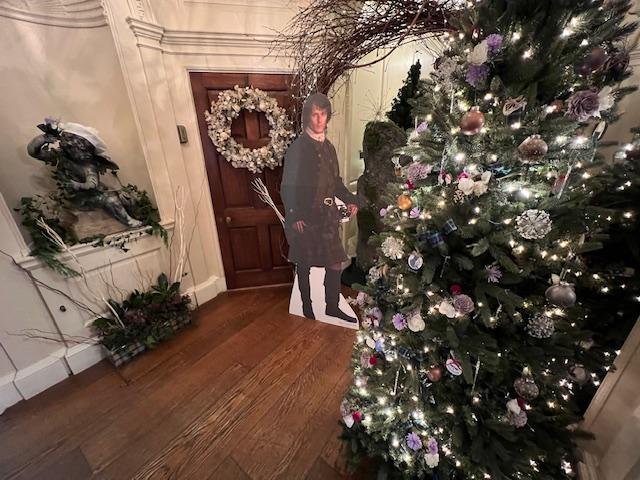
The entrance to the house was decorated by the Passaic County Parks and Recreation. This display was based on the magic of the Scottish Highlands.
After passing through the entrance of the house, it was off to the Ladies Parlor of the home and the decorations of the Garden Club of Teaneck. Then off to the Dining Room that was decorated by the Master Gardeners of Bergen County.
https://visitingamuseum.files.wordpress.com/2019/01/skyland-manor-dining-room-i.jpg?w=640
The Dining Room was just breathtaking.
https://visitingamuseum.files.wordpress.com/2019/01/skyland-manor-dining-room.jpg?w=640
The Dining Room was festive with lots of lit Christmas trees.
https://visitingamuseum.files.wordpress.com/2019/01/skyland-manor-dining-room-iii.jpg?w=640
The Dining Room was quite elaborate.
https://visitingamuseum.files.wordpress.com/2019/01/skyland-manor-dining-room-ii.jpg?w=640
The Master Gardeners of Bergen County were very detail orientated with their display spreading the Christmas cheer as you entered the house. The next room was the Breakfast Room with beautiful sunlight coming into the room and views of the gardens that are dormant at this time.
The theme of the Breakfast Room was that of enchanted forests with sacred fairy springs and moss covered meadows. The Breakfast Room was decorated also by the Master Gardeners of Bergen County.
https://visitingamuseum.files.wordpress.com/2019/01/skyland-manor-breakfast-room.jpg?w=640
A beautiful view of the Breakfast Room done by the Master Gardeners of Bergen County.
https://visitingamuseum.files.wordpress.com/2019/01/skyland-manor-breakfast-room-ii.jpg?w=640
The decorations of the Breakfast Room were quite elaborate.
https://visitingamuseum.files.wordpress.com/2019/01/skyland-manor-breakfast-room-i.jpg?w=640
The side of the Breakfast Room.
As I left the Breakfast Room, I entered The Center Hall where the many faucets of Robert Burns, the Scottish author of “My Heart is in the Highlands” themed room was decorated by the Ringwood Garden Club.
https://visitingamuseum.files.wordpress.com/2019/01/skyland-manor-center-hall.jpg?w=640
The Center Hall of the manor house.
https://visitingamuseum.files.wordpress.com/2019/01/skyland-manor-back-porch-i.jpg?w=640
The Center Hall led to the back porch that was decorated by the Demarest Garden Club.
https://visitingamuseum.files.wordpress.com/2019/01/skyland-manor-back-porch.jpg?w=640
The Back Porch of the house just off the Center Hall.
The room was done with the theme “We wish you Blythe Yule as you enter a pastoral view of Holidays in the Highlands”.
The next room I visited the was The Great Hall, which is a Jacobean style interior designed to impress with its arched beams, paneled walls and spectacular stained glass windows (Skylands pamphlet).
https://visitingamuseum.files.wordpress.com/2019/01/skyland-manor-great-hall.jpg?w=640
The Great Hall Christmas tree
https://visitingamuseum.files.wordpress.com/2019/01/skyland-manor-great-hall-i.jpg?w=640
The Great Hall by the stained glass window.
https://visitingamuseum.files.wordpress.com/2019/01/skyland-manor-great-hall-ii.jpg?w=640
The Great Hall decorations by the fireplace off to the side.
I next walked through The Octagonal Hall, that is the transition room between The Great Hall and The Withdrawing Room/Living Room. This was transformed into a boutique lounge with custom made furniture and decor. Festive pops of pattern and color create a merry, modern vibe (Skylands pamphlet). The Octagonal Hall was designed by Stephanie Graham and Diane Simon.
https://visitingamuseum.files.wordpress.com/2019/01/skyland-manor-octagon-room.jpg?w=640
The entrance to the Octagonal Hall
https://visitingamuseum.files.wordpress.com/2019/01/skyland-manor-octagon-room-ii.jpg?w=640
The decorations of The Octagonal Hall
https://visitingamuseum.files.wordpress.com/2019/01/skyland-manor-octagon-room-i.jpg?w=640
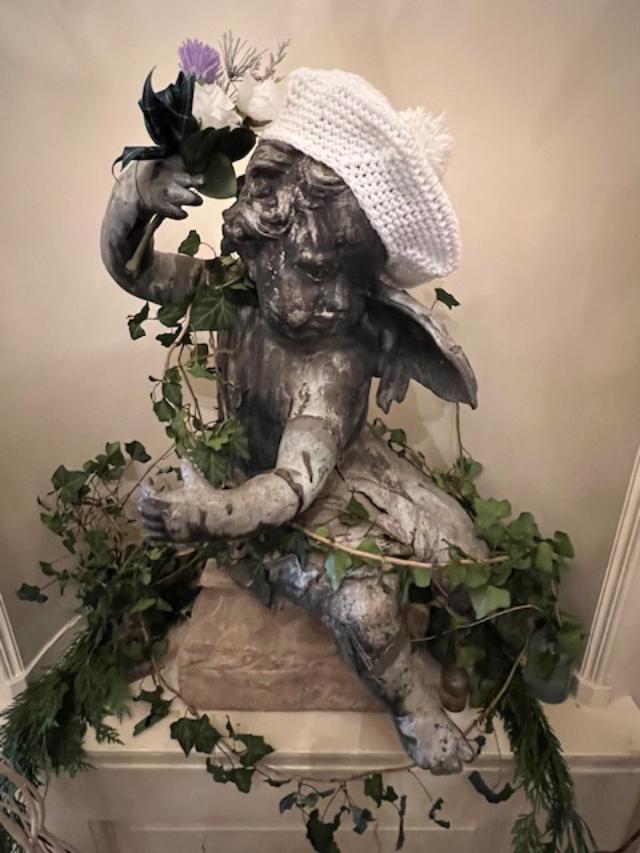
The statuary in the room beautifully embellished.
The Living Room was decorated to celebrate a Hip Highland Holiday and transformed into a boutique lounge with custom made furniture and decor. The Living Room/Withdrawing Room was designed by local artists Nicole Cohen (Teaneck), Brenda Gallagher (Upper Saddle River) and Lisa Williamson (Ridgewood).
https://visitingamuseum.files.wordpress.com/2019/01/skyland-manor-living-room-i.jpg?w=640
The Living Room in full view.
https://visitingamuseum.files.wordpress.com/2019/01/skyland-manor-winter-queen.jpg?w=640
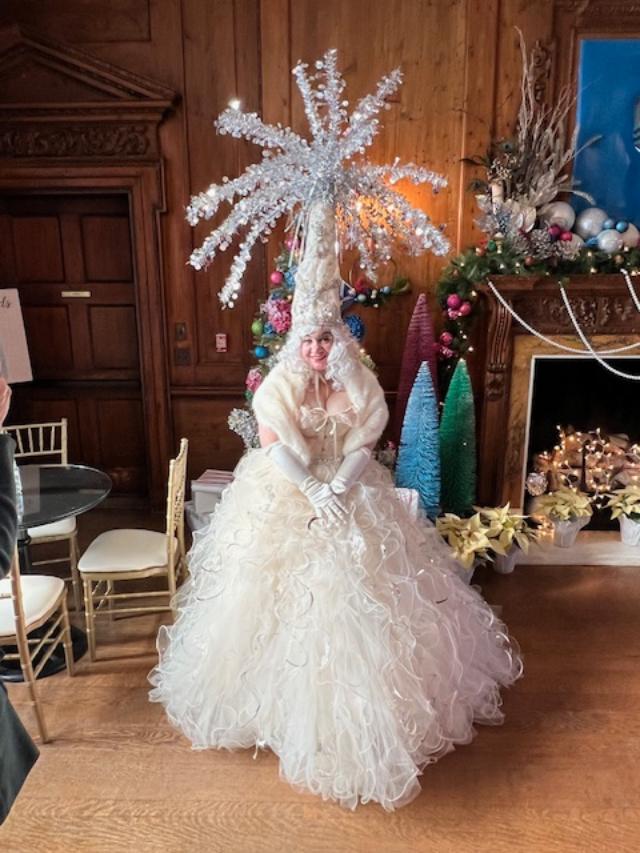
We were joined by the Winter Queen in the Living Room who was roaming around the manor home engaging with all the guests who attended that morning.
https://visitingamuseum.files.wordpress.com/2019/01/skyland-manor-living-room-ii.jpg?w=640
A modern twist to the Christmas tree in the Living Room.
https://visitingamuseum.files.wordpress.com/2019/01/skyland-manor-living-room-iii.jpg?w=640
The display by the stained glass windows.
https://visitingamuseum.files.wordpress.com/2019/01/skyland-manor-living-room.jpg?w=640
The festive trees of the Living Room
Transitioning out of the Living Room into the The Study, this room with its window seat is the perfect place to curl up with a good book or share stories of Christmas on a snowy afternoon. The study was designed by artist Linda Karen.
https://visitingamuseum.files.wordpress.com/2019/01/skyland-manor-study.jpg?w=640
The window seat in The Study.
https://visitingamuseum.files.wordpress.com/2019/01/skyland-manor-study-i.jpg?w=640
The dark wood paneling of The Study.
The last room on the tour was The Library that is resplendent with the holiday tree decorated with hundreds of lights and a myriad of ornaments representing the Scottish heritage of its owners (Skylands pamphlet). This room was designed by the Master Gardeners of Passaic County.
https://visitingamuseum.files.wordpress.com/2019/01/skyland-manor-library-iii.jpg?w=640
The Library at the Skylands Manor decked out for the holidays.
https://visitingamuseum.files.wordpress.com/2019/01/skyland-manor-library-ii.jpg?w=640
The Library in full view.
https://visitingamuseum.files.wordpress.com/2019/01/skyland-manor-library.jpg?w=640
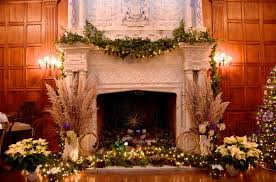
The fireplace in The Library is beautifully decorated for the holidays.
https://visitingamuseum.files.wordpress.com/2019/01/skyland-manor-library-iv.jpg?w=640
The Library in all its Christmas glory.
The Living Room was the last decorated room in the manor home for the holidays. I exited by the back door and then explored the grounds and the dormant gardens and look out areas of the estate that must look quite spectacular in the Spring and Summer months. I headed back to the Carriage House to look at the menu and explore the gift shop. This display is only open the first weekend of December and then for the rest of the year, the manor house is used for banquets and meetings and as a B & B. Until next year.
https://visitingamuseum.files.wordpress.com/2019/01/skyland-manor-carriage-house-front-1.jpg?w=640
The front of the Carriage House where the restaurant and gift shop were located during the event.
History of the Skylands Manor & People:
https://visitingamuseum.files.wordpress.com/2019/01/skyland-manor-entrance-i-1.jpg?w=640
The entrance to the manor that morning.
Clarence McKenzie Lewis bought Skylands in 1922 from the estate of Francis Lynde Stetson, who founded Skylands in 1891. Mr. Lewis was educated in England and Germany. While he was there, his widowed mother, Helen Forbes Lewis married William Salomon, founder of the New York banking house. Upon his return, Lewis attended Columbia University, where he received a Civil Engineering degree in 1898. In 1908, he married and bought a country place in Mahwah; it was there that Lewis became interested in horticulture.
https://visitingamuseum.files.wordpress.com/2019/01/skyland-manor-front-1.jpg?w=640
The front of the manor home.
Helen Lewis Salomon, the mother of Clarence Lewis, was widowed in 1919. Not only thereafter, she and her bereaved son agreed to a joint project; she wanted a Tudor-style showplace; he wanted plants and gardens. Mrs. Salomon worked closely with the architect on Skylands Manor but she died in 1927 before its completion.
https://visitingamuseum.files.wordpress.com/2019/01/skyland-manor-estate-ii.jpg?w=640
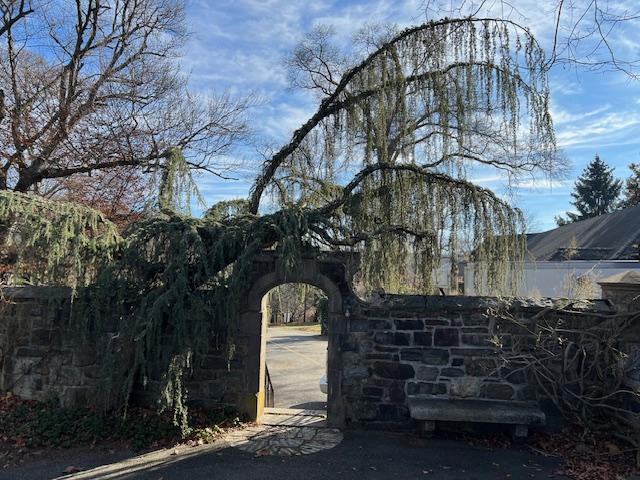
The entrance to the Walled Gardens.
John Russell Pope (1874-1937) “an architect born to work, in the grand style” was educated at City College, Columbia University, the American Academy in Rome and the Ecole des Beaux Arts in Paris. He trained under Bruce Price, the master builder of Tuxedo Park. Pope designed many outstanding public buildings, such as the Jefferson Memorial and the National Gallery of Art.
https://visitingamuseum.files.wordpress.com/2019/01/skyland-manor-estate.jpg?w=640
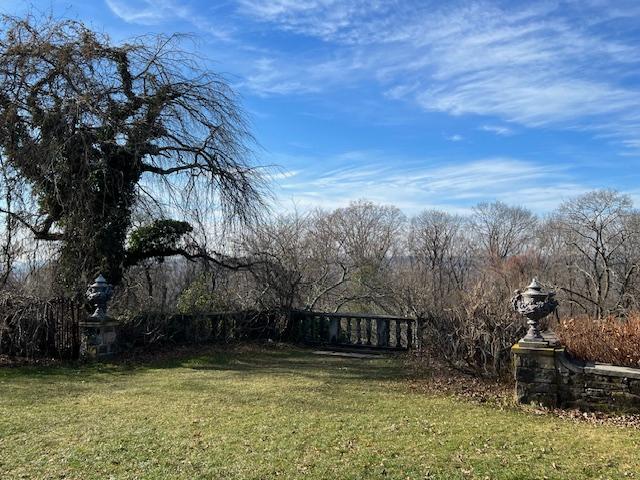
The estate gardens overlooking the mountains and the valley below.
Tutor Architecture originated in England in the late Gothic period and continued to be popular into the Renaissance. It features half-timbering on the exterior, crenelated walls, large groups of rectangular windows, oriel or bay windows and intricate chimney complexes The interiors usually had large central halls, wood paneling, molded plaster ceilings and elaborately carved staircases. Tudor Revival became a popular style for the elegant country houses of wealthy Americans.
https://visitingamuseum.files.wordpress.com/2019/01/skyland-manor-estate-i.jpg?w=640
The estate grounds.
The builder of Skylands was the Elliot C. Brown Co., of New York City, which also built the country homes of Franklin Delano Roosevelt at Hyde Park and E. Roland Harriman (Arden House).
https://visitingamuseum.files.wordpress.com/2019/01/skyland-manor-entrance-1.jpg?w=640
The house as you enter the drive.
Samuel Yellin (1885-1940) decorative metal designer and craftsman, who performed to call himself “the blacksmith”, fashioned the lanterns. electrical fixtures, lamps, gate, and spiral staircase rail for Skylands Manor.
https://visitingamuseum.files.wordpress.com/2019/01/skyland-manor-side.jpg?w=640
The side of the estate that afternoon in the late fall.
Native Granite for the exterior walls of Skylands was quarried at Pierson Ridge above Emerald Pond in the eastern part of the property in Bergen County.
Mrs. Salomon purchased a collection of antique Stained Glass Medallions from an English collector. The 16th century German, Bavarian and Swiss panes were set in leaded windows by Heinegke & Smith of New York City.
https://visitingamuseum.files.wordpress.com/2019/01/skyland-manor-botanical-garden.jpg?w=640
The entrance to the Botanical Garden.
Disclaimer: This information on the details of the history of Skylands Manor was taken directly from their pamphlet and I give them full credit for it. Please call the manor for times that it is open as it is used a banquet/catering facility and a B & B.
The NJ Botanical Gardens just off the Manor House Fall 2026:
I visited the NJ Botanical Gardens in the Fall of 2026 just as all the Fall flowers were in bloom. With the foliage in the background mountains, it gave the whole garden colorful effect on the late afternoon. I will have to remind myself to visit the gardens again in the Spring and early Summer next year. There is a real complexity to these gardens during each season. I will have to visit again in the Spring and early Summer of 2027.
Skylands Manor Gardens:
https://wwwbergencountycaregiver.wordpress.com/wp-content/uploads/2026/10/img_1912.jpg?w=1024
The Pump House at the start of the Gardens
https://wwwbergencountycaregiver.wordpress.com/wp-content/uploads/2026/10/img_1911.jpg?w=1024
The Pump House used to irrigate the estate
https://wwwbergencountycaregiver.wordpress.com/wp-content/uploads/2026/10/img_1913.jpg?w=1024
The Orchard on the lawn of the edge of the estate
https://wwwbergencountycaregiver.wordpress.com/wp-content/uploads/2026/10/img_1914.jpg?w=1024
The Butterfly Garden sign
https://wwwbergencountycaregiver.wordpress.com/wp-content/uploads/2026/10/img_1915.jpg?w=577
Even though Fall began the early Fall flowers were still in bloom
https://wwwbergencountycaregiver.wordpress.com/wp-content/uploads/2026/10/img_1916.jpg?w=1024
The main part of the Gardens
https://wwwbergencountycaregiver.wordpress.com/wp-content/uploads/2026/10/img_1920.jpg?w=1024
The Gardens with the Fall foliage in the way
https://wwwbergencountycaregiver.wordpress.com/wp-content/uploads/2026/10/img_1918.jpg?w=1024
The foliage was just beginning in the Gardens
https://wwwbergencountycaregiver.wordpress.com/wp-content/uploads/2026/10/img_1919.jpg?w=1024
I noticed this beautiful seating area in the corner of the Gardens
https://wwwbergencountycaregiver.wordpress.com/wp-content/uploads/2026/10/img_1921.jpg?w=577
Looking at the length of the gardens from the center point stonework
https://wwwbergencountycaregiver.wordpress.com/wp-content/uploads/2026/10/img_1917.jpg?w=1024
The center point stone vase
https://wwwbergencountycaregiver.wordpress.com/wp-content/uploads/2026/10/img_1923.jpg?w=1024
The Rose Garden in the second set of Gardens was still in bloom
https://wwwbergencountycaregiver.wordpress.com/wp-content/uploads/2026/10/img_1924.jpg?w=768
The Gardens were filled with statuary. Mostly little angels and fairies
https://wwwbergencountycaregiver.wordpress.com/wp-content/uploads/2026/10/img_1925.jpg?w=768
The Fall flowers were in full bloom
https://wwwbergencountycaregiver.wordpress.com/wp-content/uploads/2026/10/img_1926.jpg?w=768
The second set of Gardens were lined with small bushes and more colorful flowers
https://wwwbergencountycaregiver.wordpress.com/wp-content/uploads/2026/10/img_1922.jpg?w=1024
The beautiful flowers of the Fall
https://wwwbergencountycaregiver.wordpress.com/wp-content/uploads/2026/10/img_1927.jpg?w=768
The Perennial Garden was still in bloom at the time of my visit
https://wwwbergencountycaregiver.wordpress.com/wp-content/uploads/2026/10/img_1929.jpg?w=768
The Fall foliage served as a backdrop for the Gardens
https://wwwbergencountycaregiver.wordpress.com/wp-content/uploads/2026/10/img_1933.jpg?w=768
The Gardens were so beautifully maintained
https://wwwbergencountycaregiver.wordpress.com/wp-content/uploads/2026/10/img_1931.jpg?w=768
The archway into the Gardens from the main house
https://wwwbergencountycaregiver.wordpress.com/wp-content/uploads/2026/10/img_1930.jpg?w=768
The beautiful flowers lining the edges of the Gardens
https://wwwbergencountycaregiver.wordpress.com/wp-content/uploads/2026/10/img_1932.jpg?w=1024
The Rock Garden
https://wwwbergencountycaregiver.wordpress.com/wp-content/uploads/2026/10/img_1928.jpg?w=768
I thought this was so beautiful
https://wwwbergencountycaregiver.wordpress.com/wp-content/uploads/2026/10/img_1934.jpg?w=1024
I thought this garden was so pretty in the third set of Gardens
https://wwwbergencountycaregiver.wordpress.com/wp-content/uploads/2026/10/img_1935.jpg?w=1024
I though of the angels as a good sign
https://wwwbergencountycaregiver.wordpress.com/wp-content/uploads/2026/10/img_1944.jpg?w=768
The flowers were so colorful by the archway
https://wwwbergencountycaregiver.wordpress.com/wp-content/uploads/2026/10/img_1937.jpg?w=1024
The full view of the Gardens from the lawn and orchard
https://wwwbergencountycaregiver.wordpress.com/wp-content/uploads/2026/10/img_1936.jpg?w=1024
The view of the mountains in the distance
https://wwwbergencountycaregiver.wordpress.com/wp-content/uploads/2026/10/img_1940.jpg?w=1024
The Rose Garden on the edge of the lawn
https://wwwbergencountycaregiver.wordpress.com/wp-content/uploads/2026/10/img_1939.jpg?w=1024
The variety of flowers on the Gardens
https://wwwbergencountycaregiver.wordpress.com/wp-content/uploads/2026/10/img_1941.jpg?w=1024
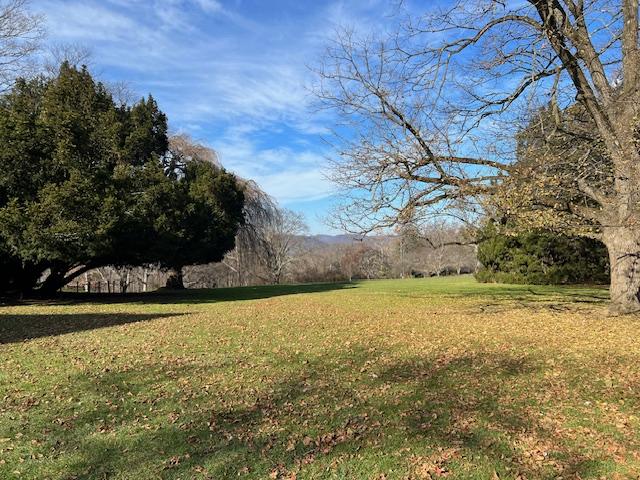
The view of the lawn and mountains on the background
https://wwwbergencountycaregiver.wordpress.com/wp-content/uploads/2026/10/img_1942.jpg?w=1024
The lawn looking north
https://wwwbergencountycaregiver.wordpress.com/wp-content/uploads/2026/10/img_1943.jpg?w=1024
Leaving the Gardens to head back to the parking lot
https://wwwbergencountycaregiver.wordpress.com/wp-content/uploads/2026/10/img_1945.jpg?w=768
The view from the parking lot