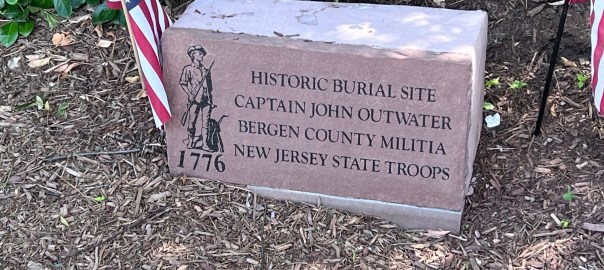
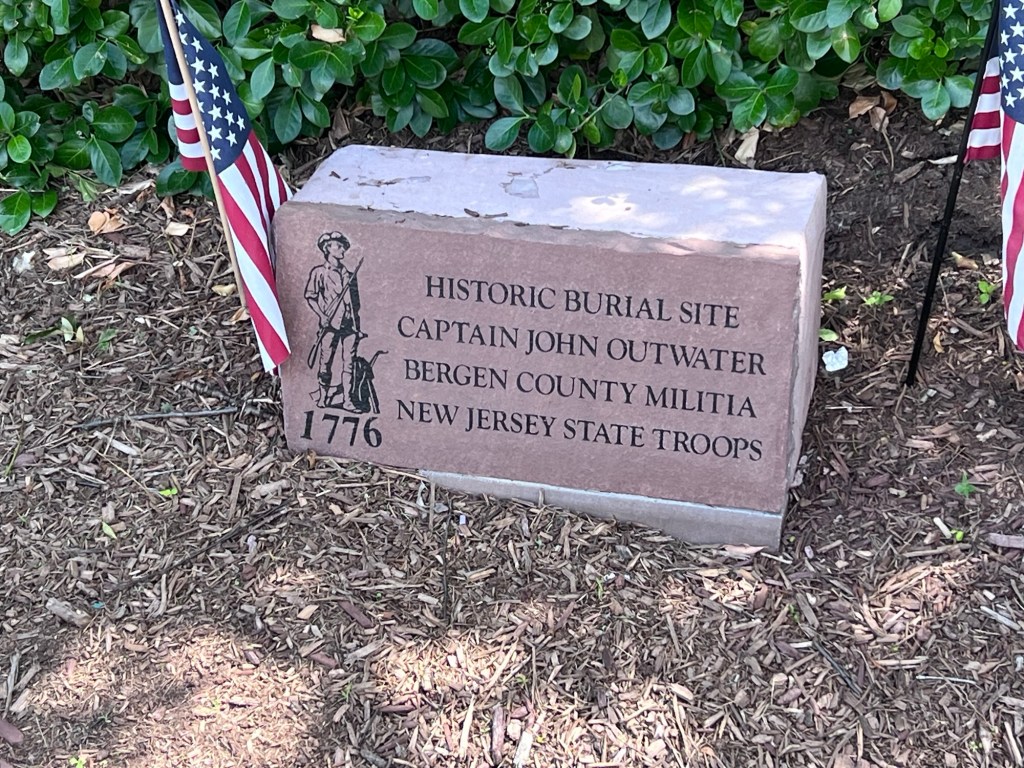
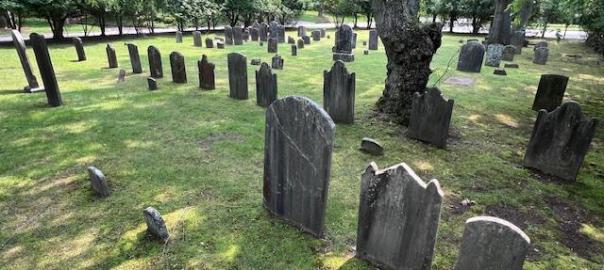
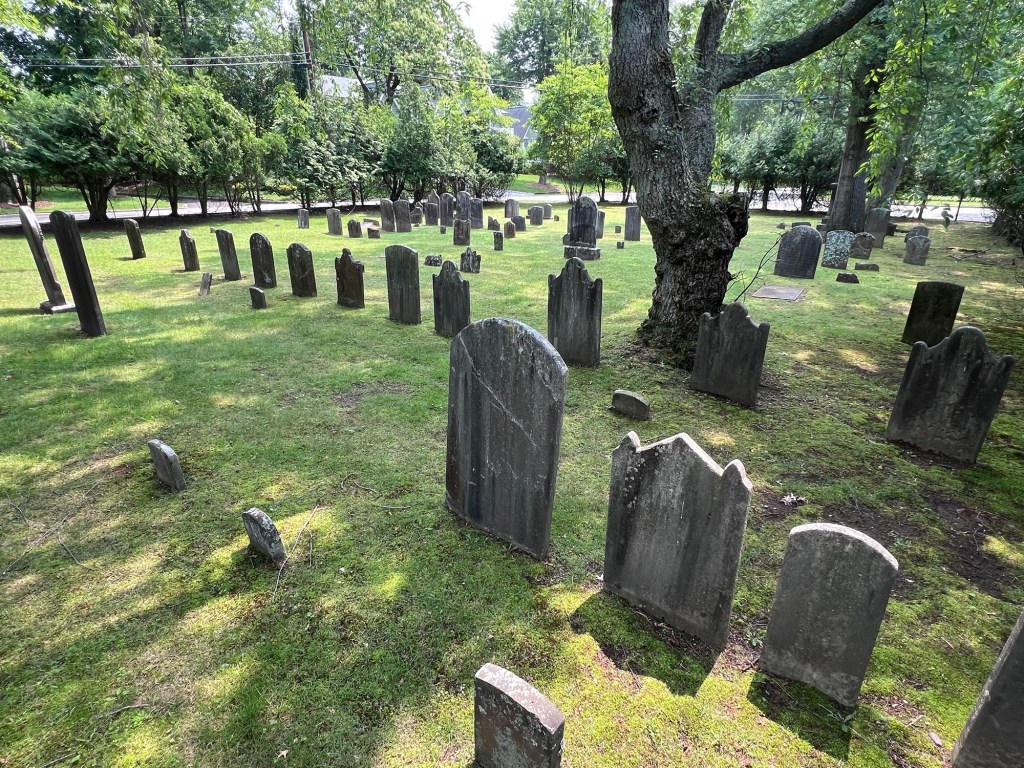
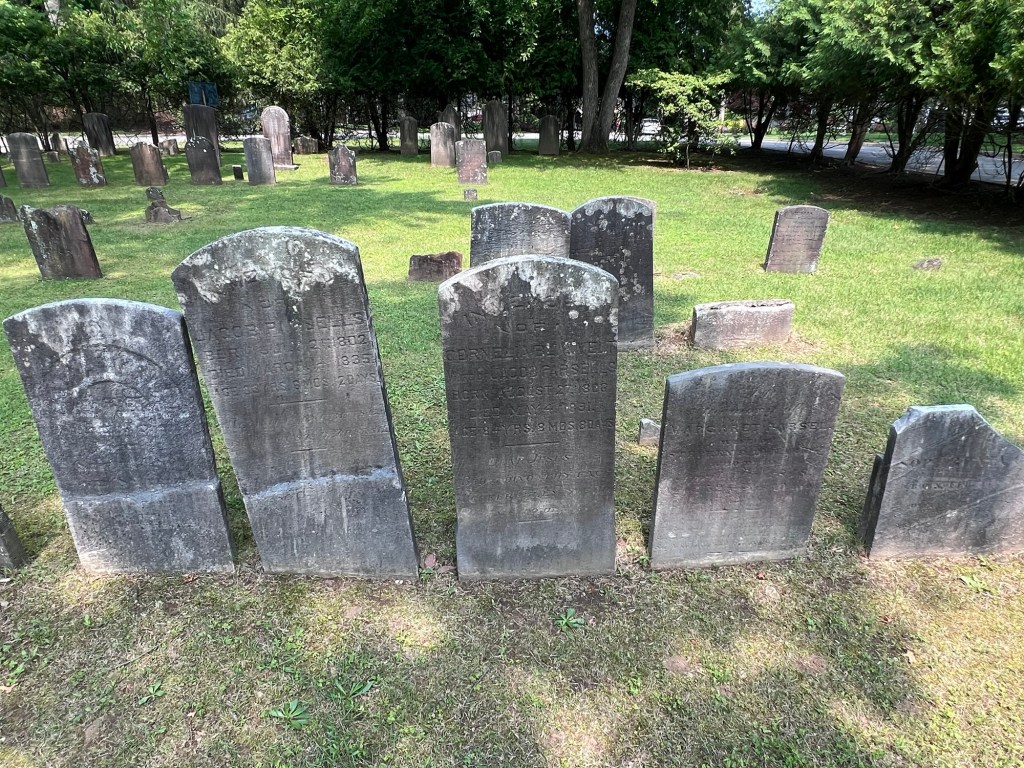
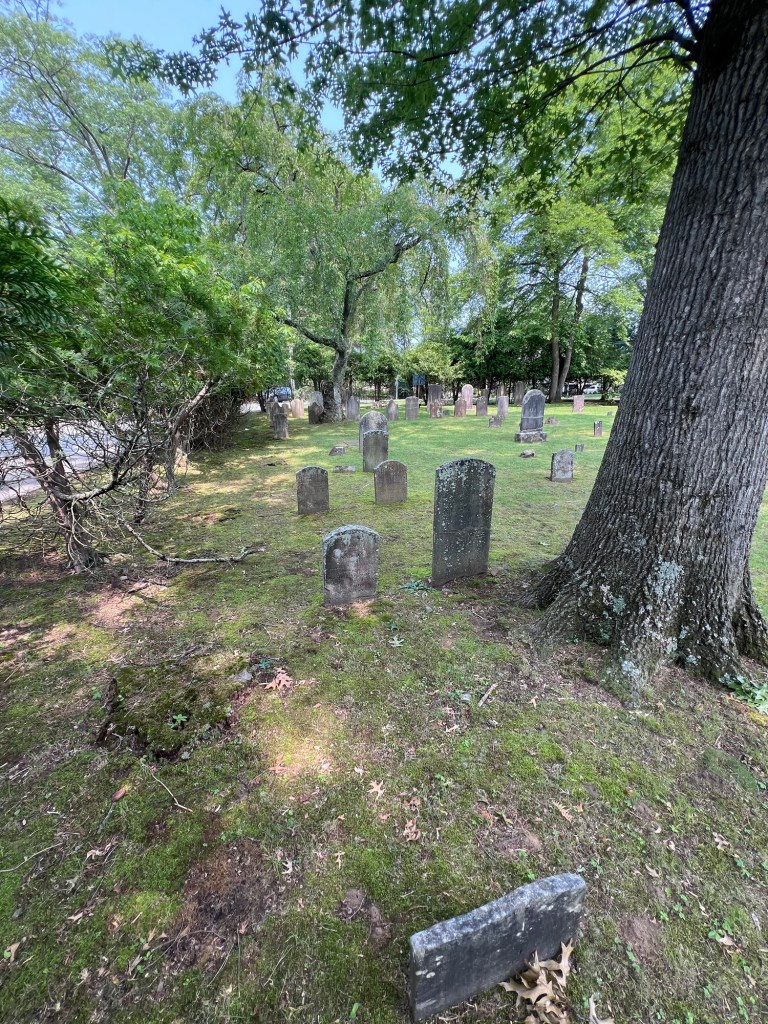
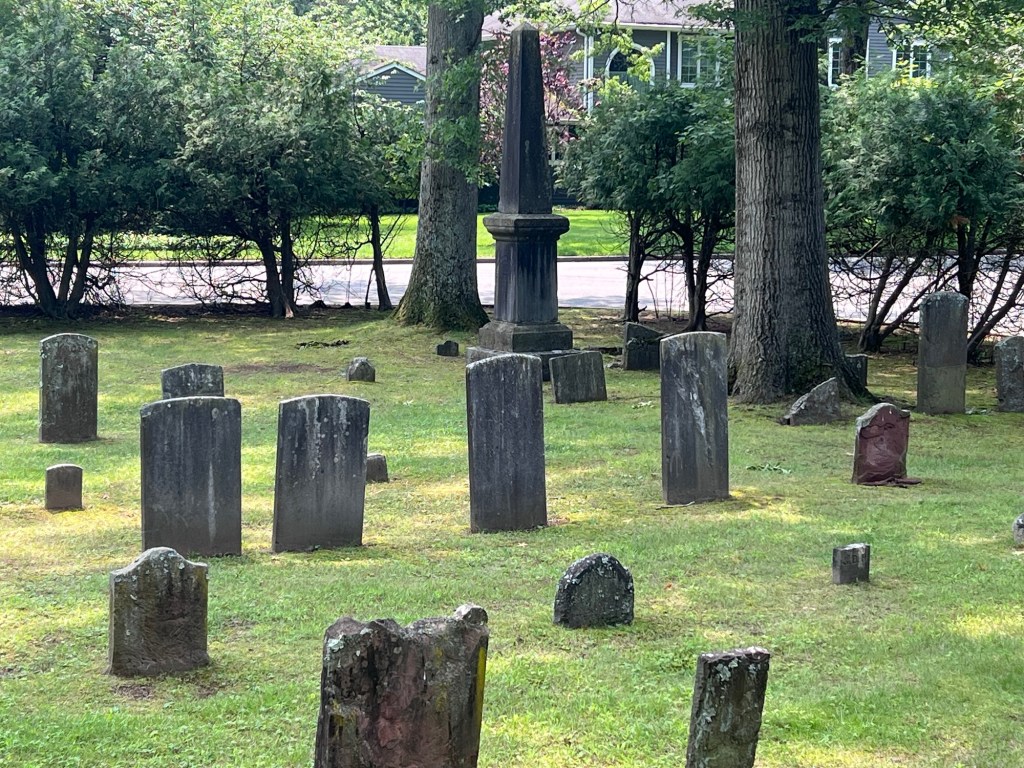
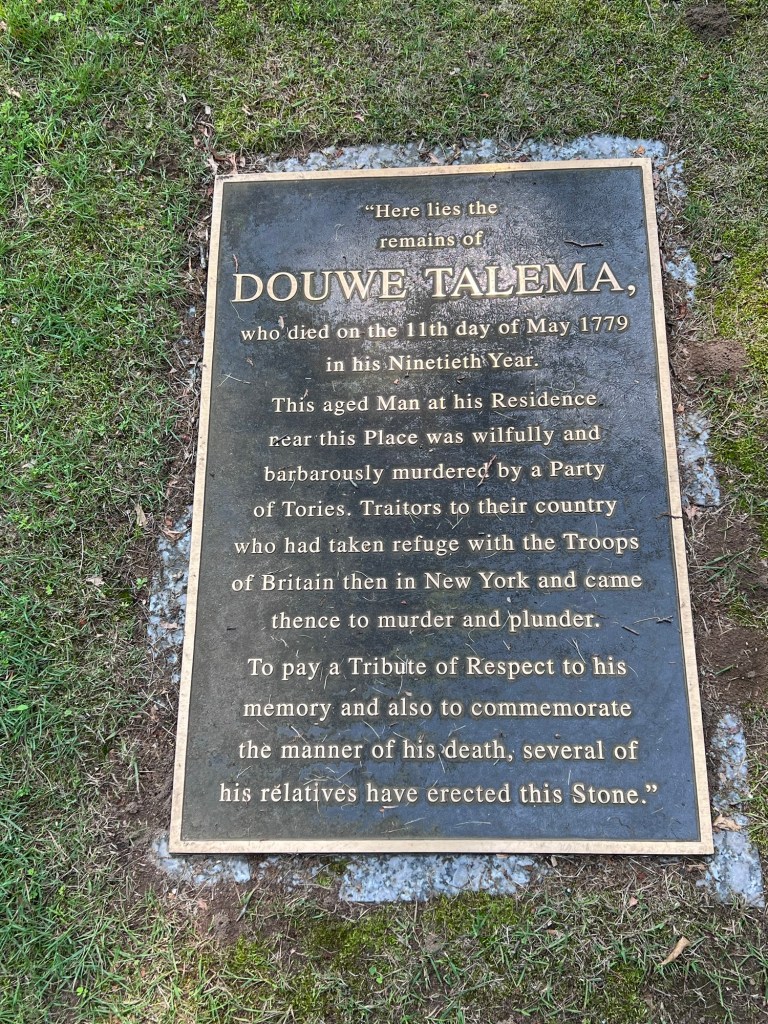
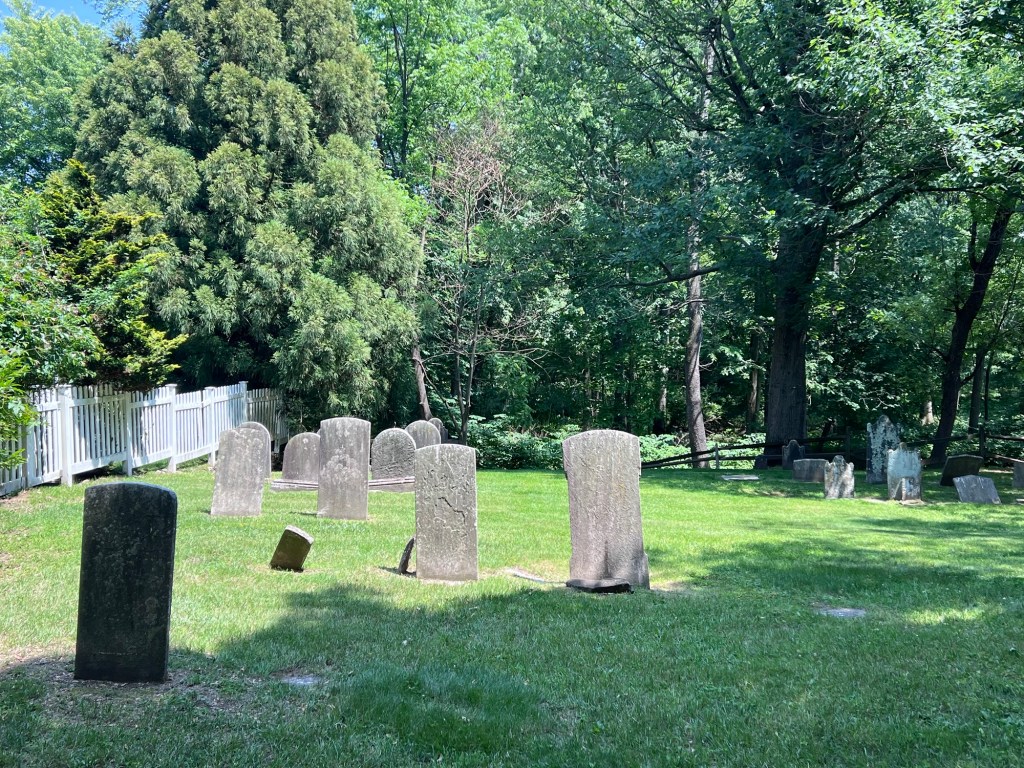
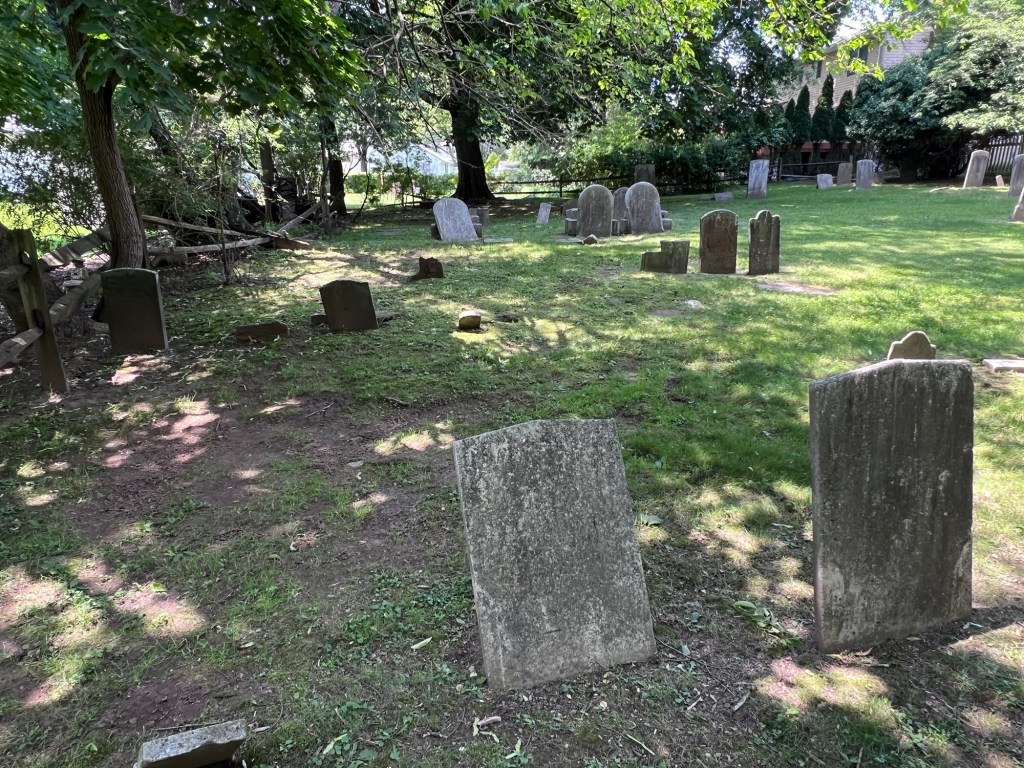
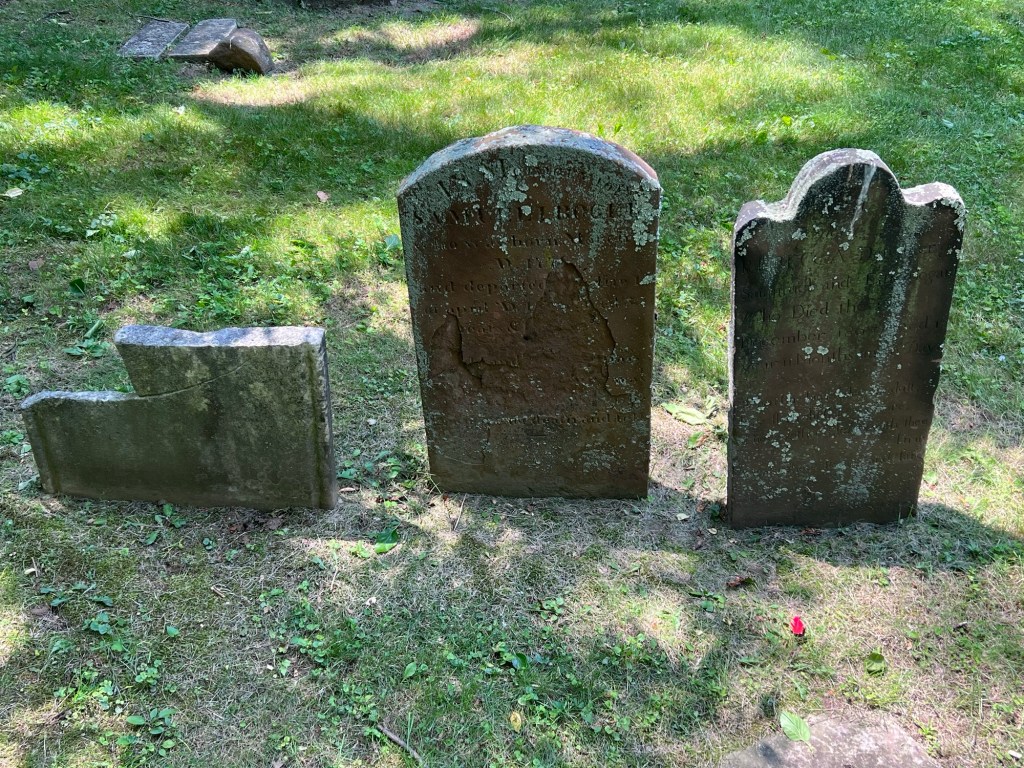
The stone marker sign at the entrance to the family cemetery. This cemetery is the final resting place of Captain John Outwater from the local militia who fought in the Revolutionary War and his family.
The memorial to Captain Outwater in the center of the cemetery dedicated to his contributions to Revolutionary War
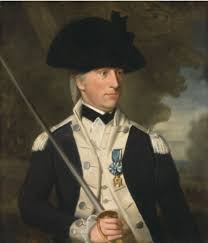
Captain John Outwater during the Revolutionary War
When John J. Outwater was born on 9 February 1780, in Hackensack, Bergen, New Jersey, United States, his father, Captain John Outwater, was 33 and his mother, Hendrickje Dirck Lozier, was 34. He married Cathalina Van Bussum on 1 February 1813, in Old First Reformed Church, Passaic, Passaic, New Jersey, United States.
They were the parents of at least 4 sons. He died on 25 September 1842, in Wilson, Wilson, Niagara, New York, United States, at the age of 62, and was buried in Glenwood, Lewiston, Lewiston, Niagara, New York, United States.
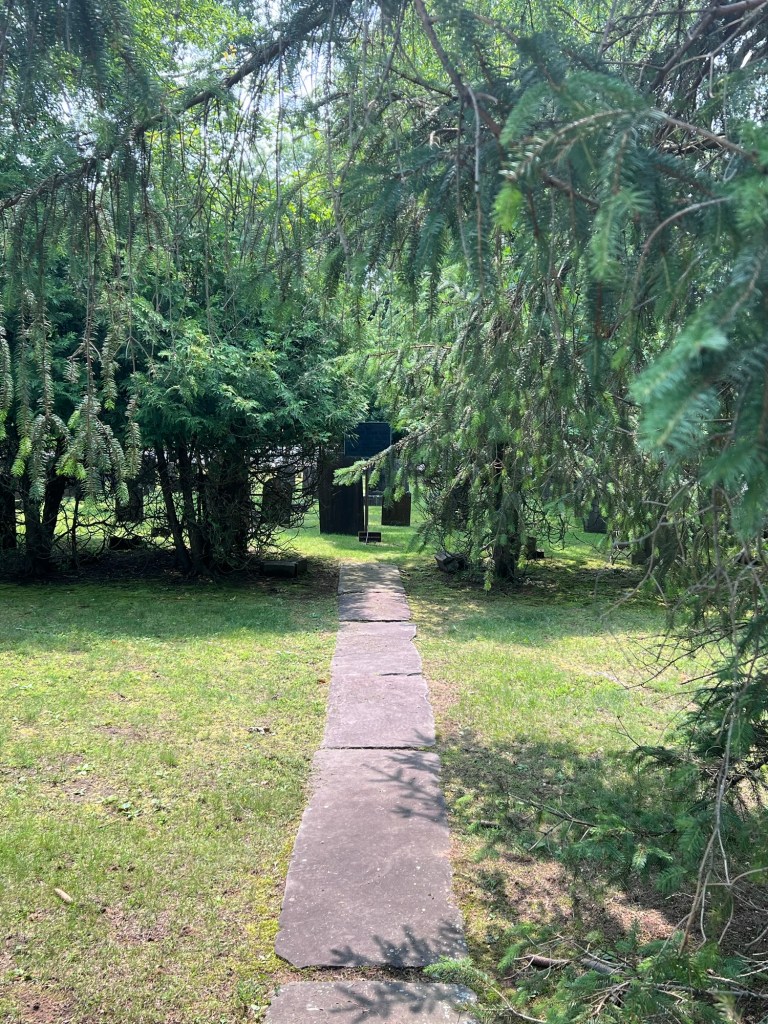
The original entrance to the cemetery must have been on Moonachie Avenue in the distant past.
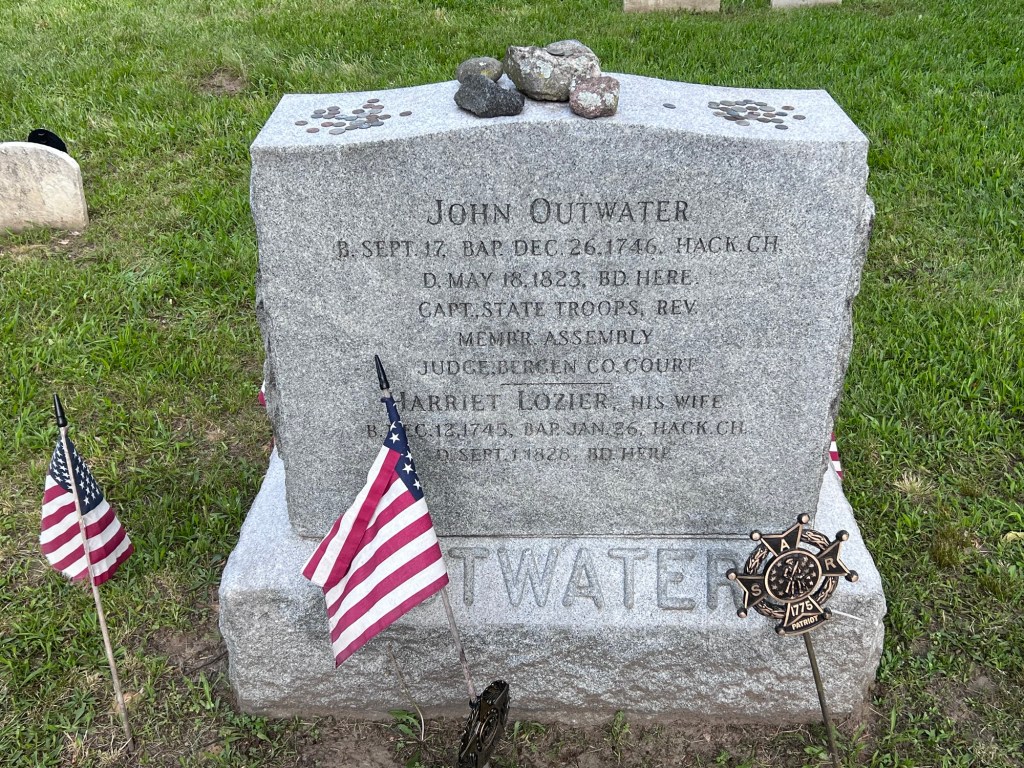
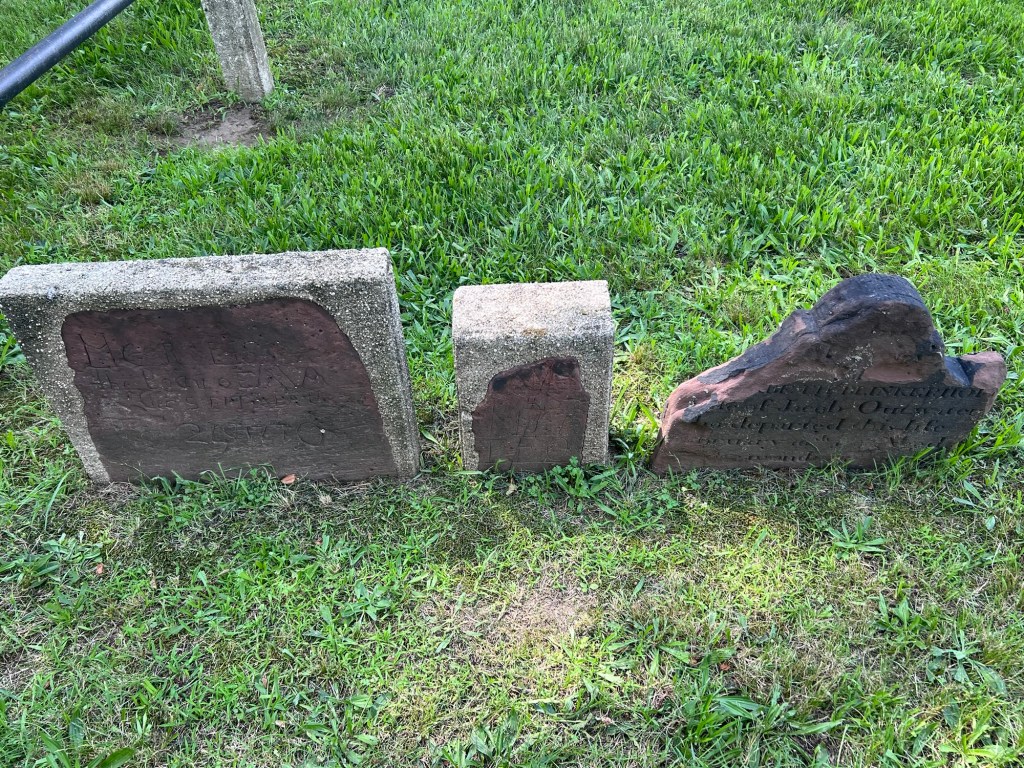
The original graves of Captain John Outwater and his wife, Louise Lozier
Across from their graves is the memorial to the family
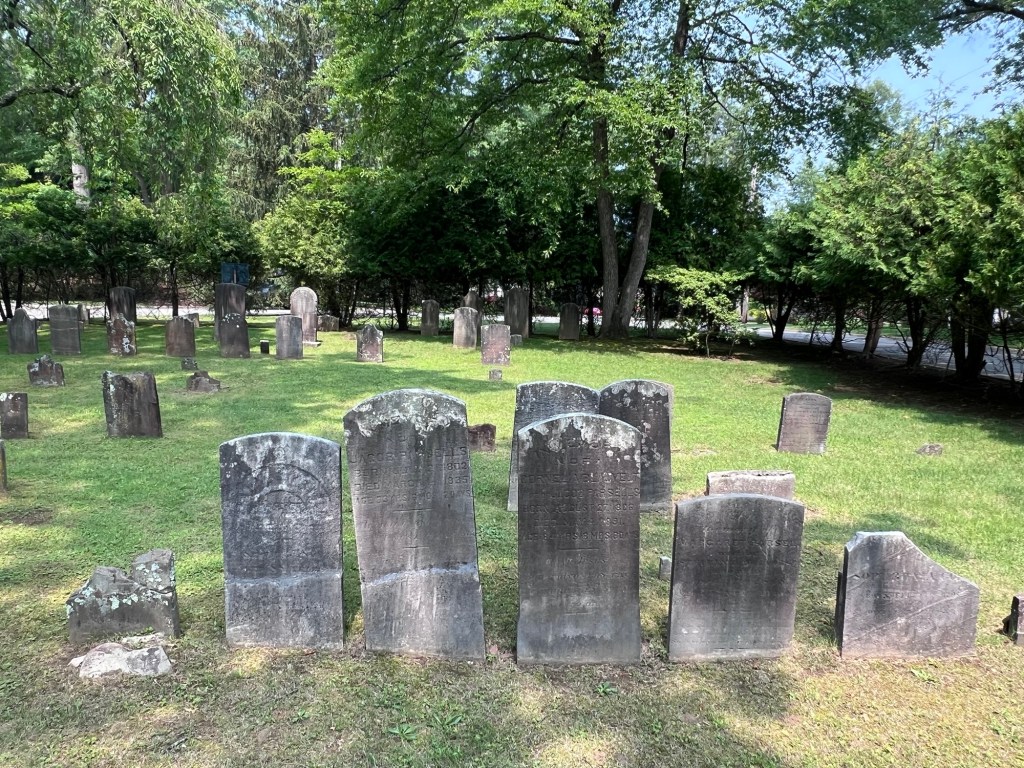
Various members of the Outwater family including parents, brothers and sisters and children are buried here.
The grave of Jacob Outwater and his family
The tombstone of Jacob Outwater
The grave of Jacob’s son who died as an infant
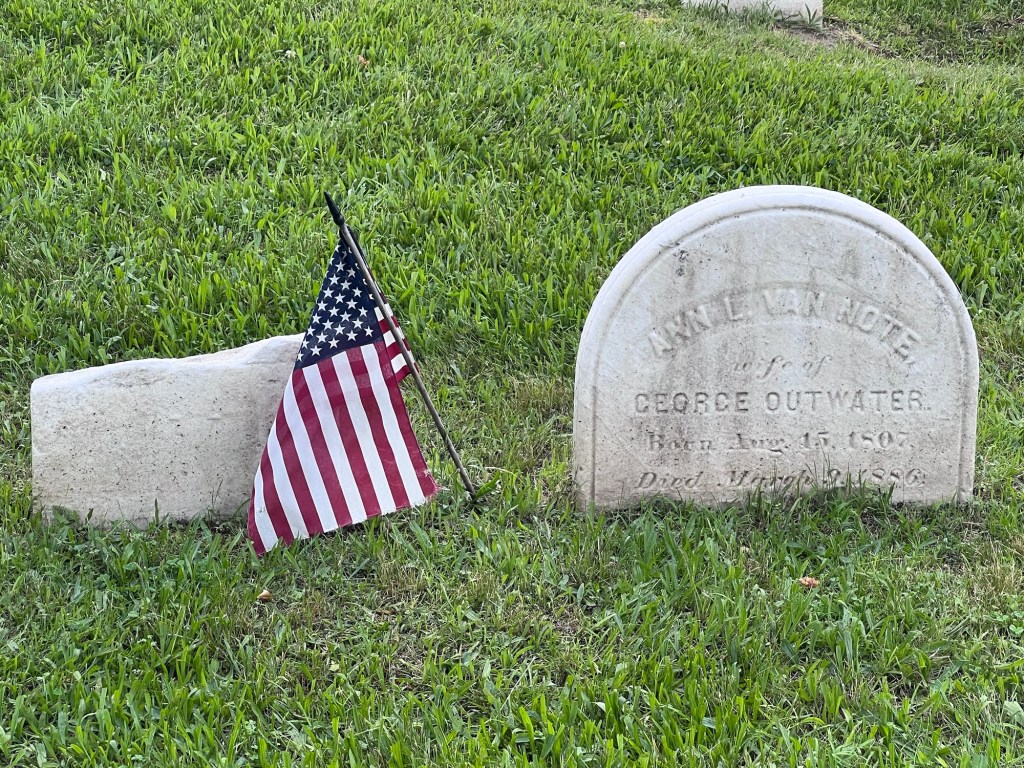
The graves of George Outwater and his wife, Ann Van Note
I think this is the grave of George Outwater’s first wife, Mary
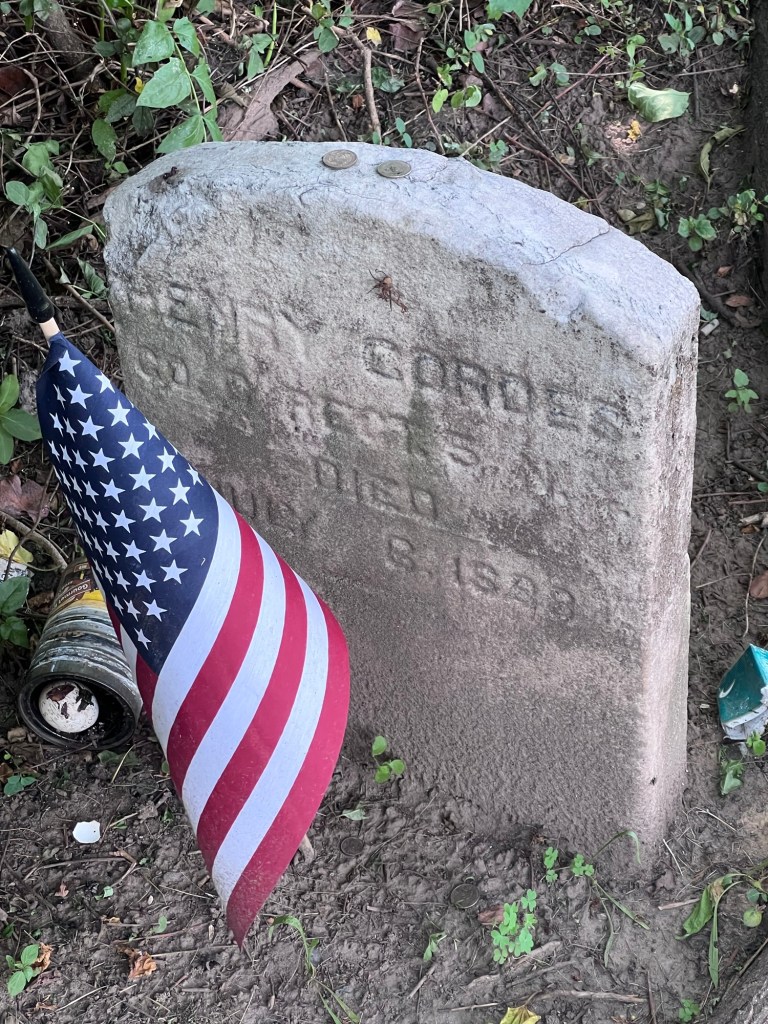
Buried outside the family plot is the grave of Henry Cordes
The Outwater family cemetery sits on a small hill overlooking a Quick Check store and gasoline station. Talk about modern progress.
I took a quick tour of the cemetery:
My video of the Outwater Family Cemetery and the grave of Captain John Outwater of Revolutionary War fame.
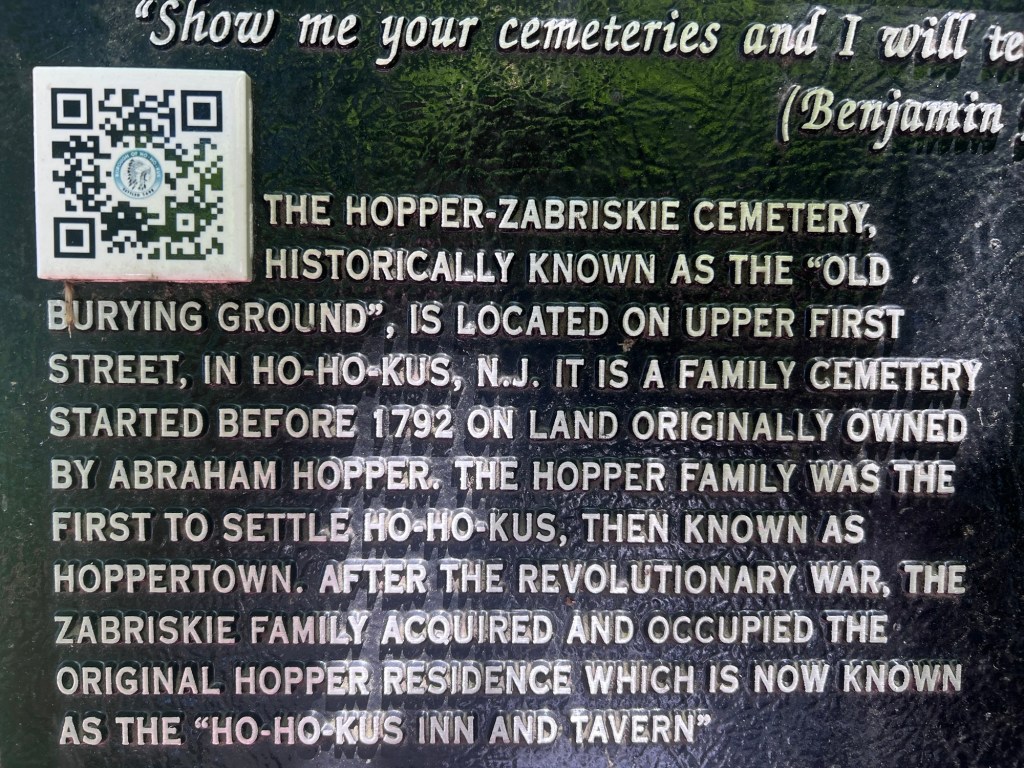
It is a family cemetery started before 1792 on land originally owned by Abraham Hopper. The Hopper family was the first to settle Ho-Ho-Kus, then known as Hoppertown. Many Dutch families also settled the area including the Zabriskie, Ackerman, Blauvelt, Bamper, Banta, and Terhune families. Most were members of the Old Paramus Reformed Church nearby.
While family members were commonly interred in the church graveyard, some chose to bury family members in small local plots closer to their residences. Such was the case with the Ackermans who had a plot on the northeast side of town near the Saddle River, and the Hopper and Zabskie families who were buried in the small plot in Hoppertown near the Ho-Ho-Kus brook.
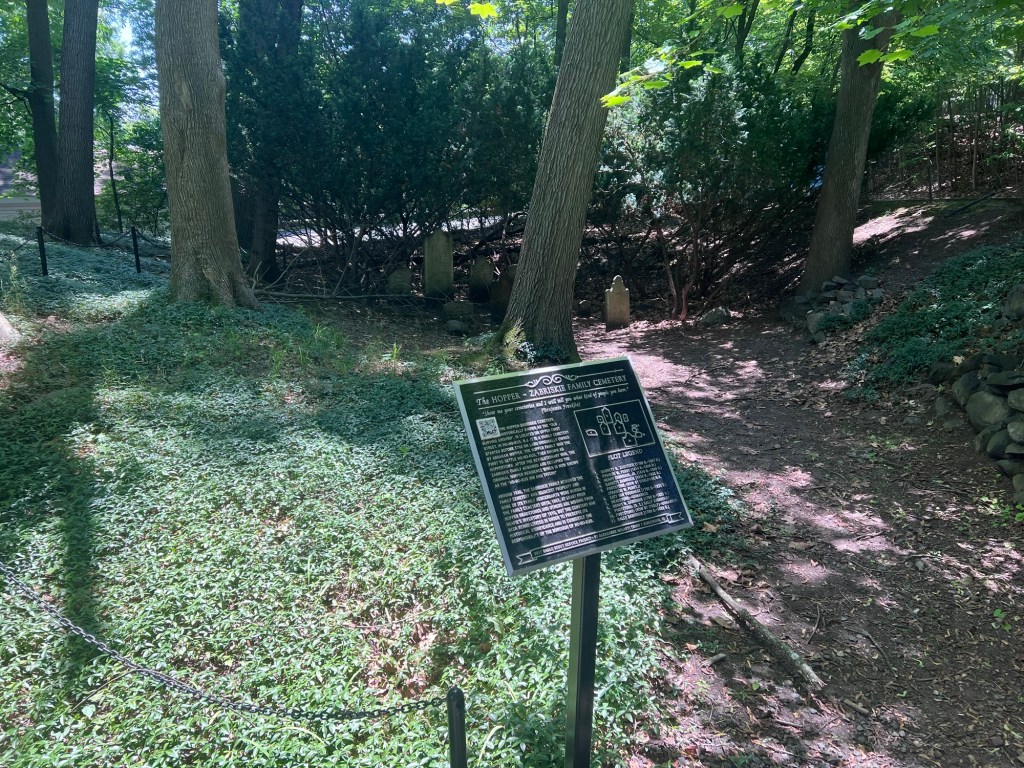
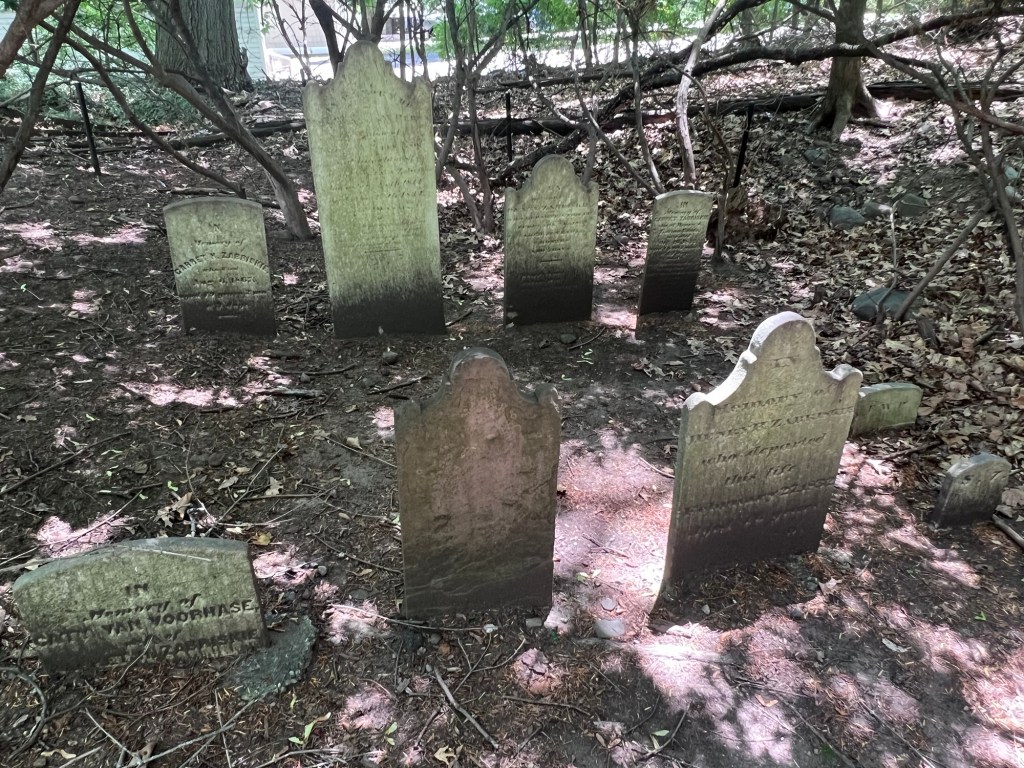
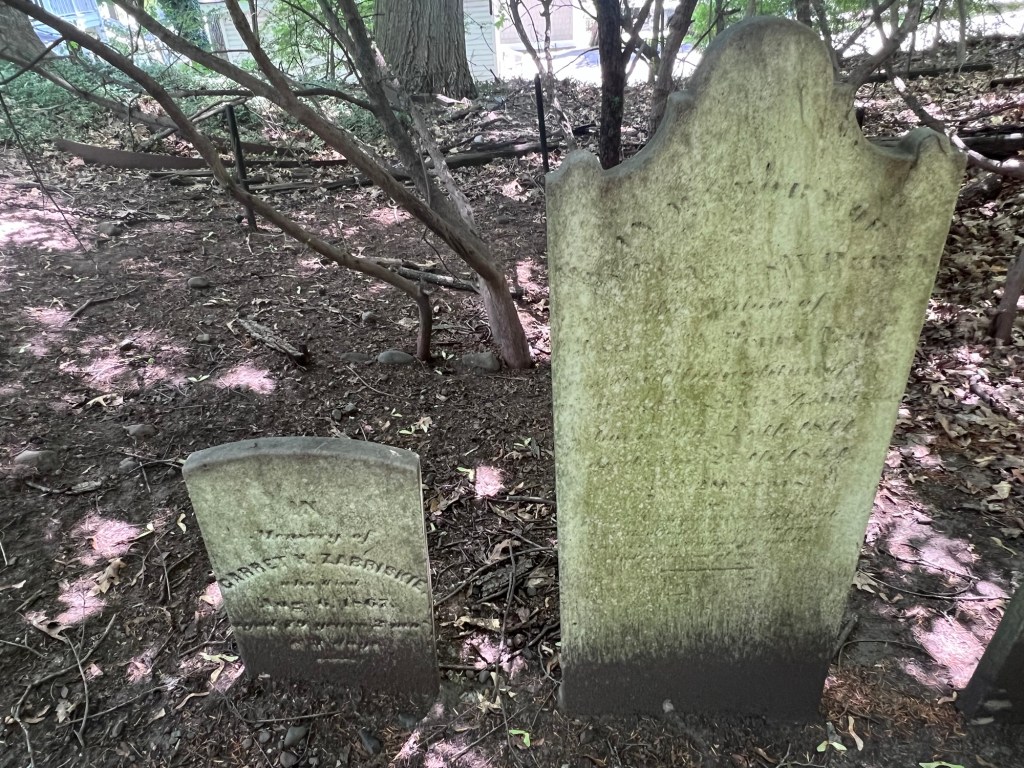
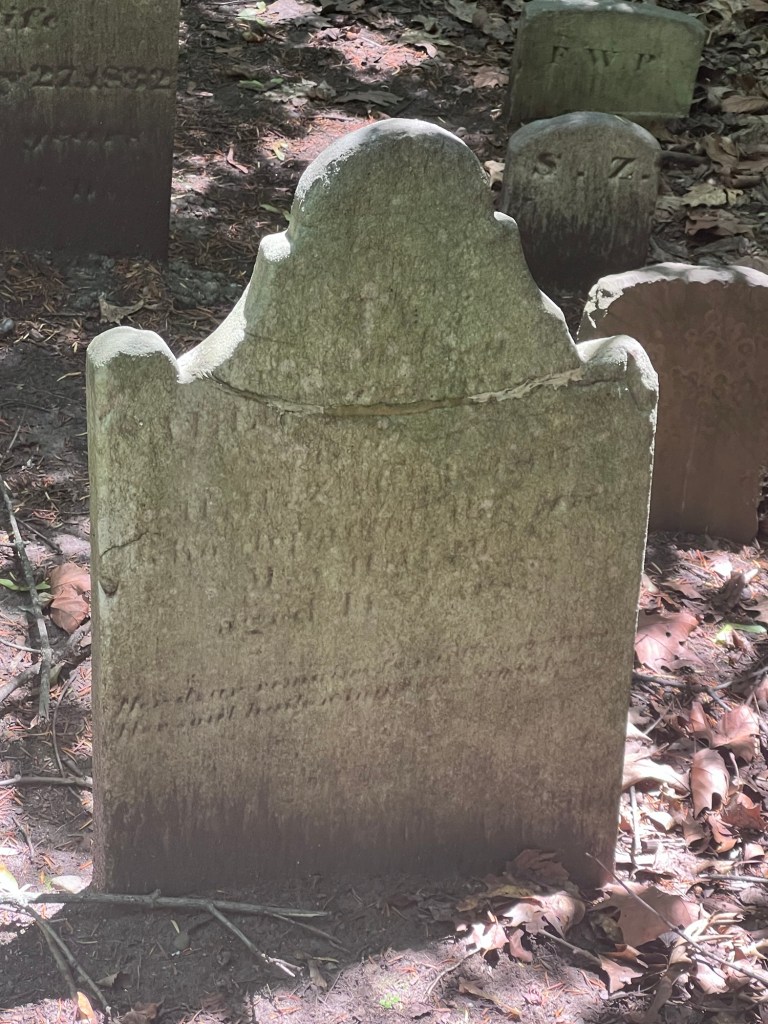
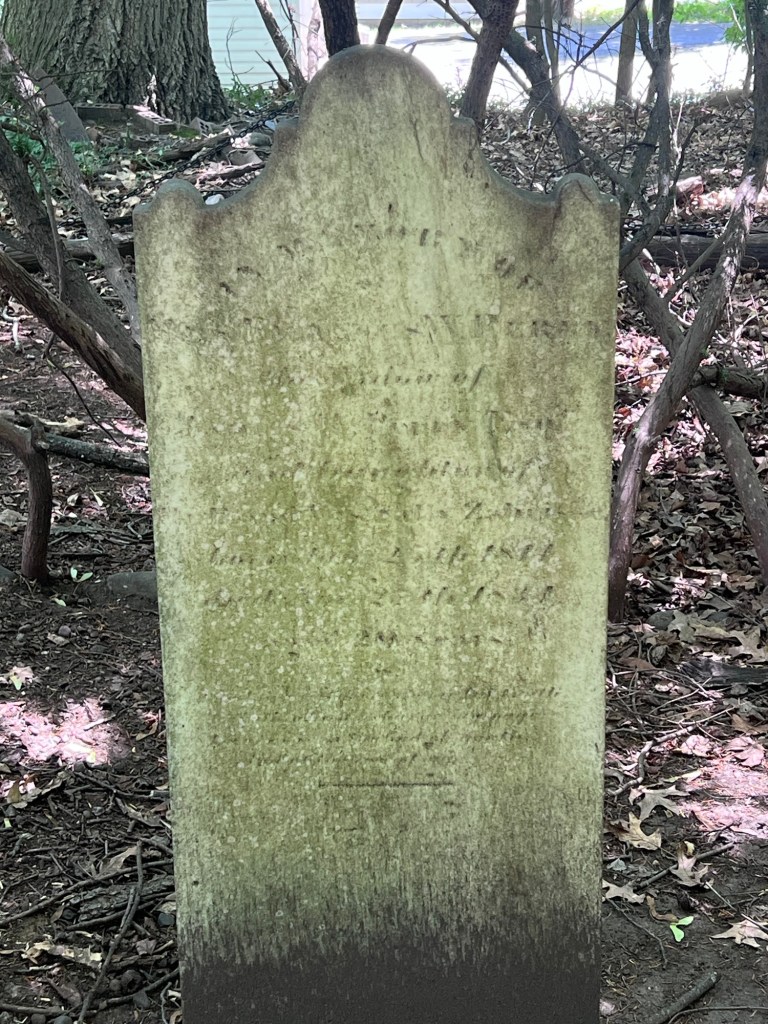
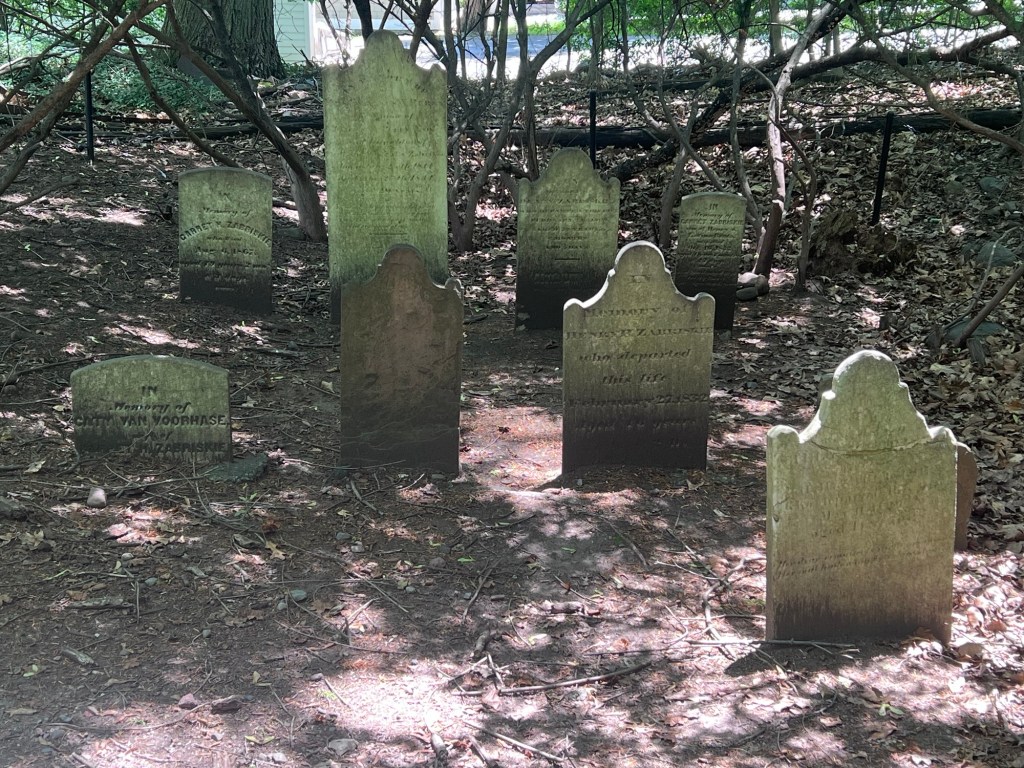
The small cemetery
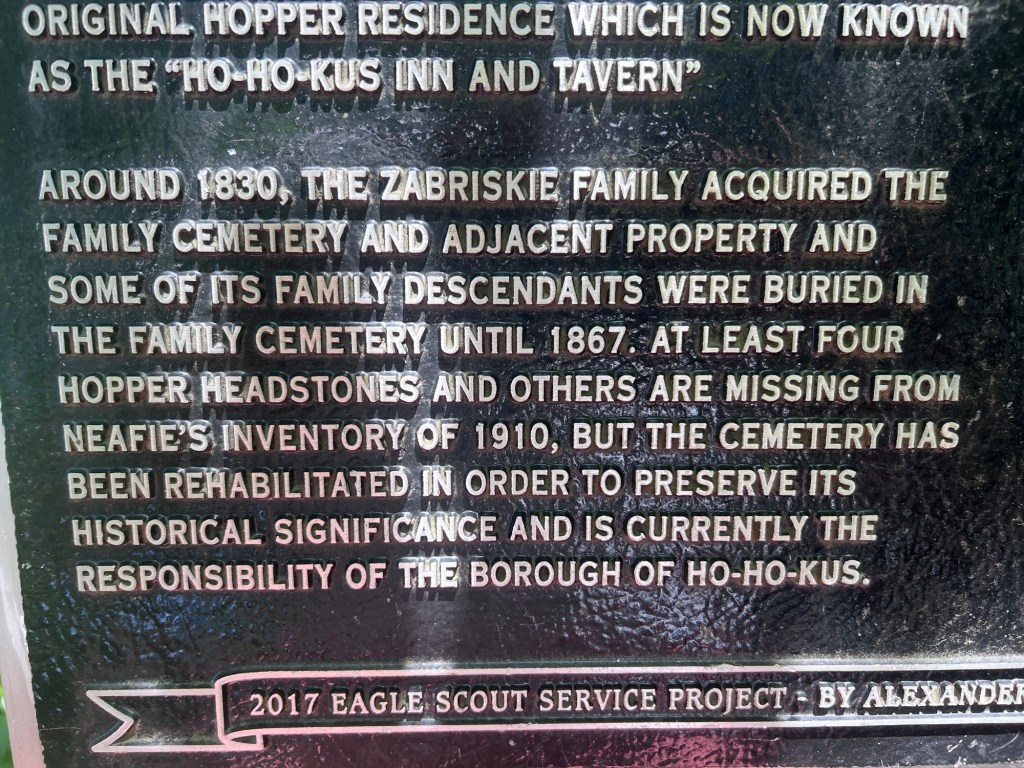
The historic sign
The original family cemetery of the Hopper family when the original name of the area was ‘Hoppertown’ for the family whose land dominated the area. While some would bury their loved ones at the family church’s graveyards, some preferred their loved ones closer and would be buried on the family farm. Some families picked the highest point, usually a small hill that would over look the land. This particular cemetery is located in a small cove at the bend of the road.
This small historical cemetery is another example of history lost in time. The generations of distant family members no longer care for this historical spots and they were left for the elements. This cemetery was cared for by Veterans of the Wars and the Boy Scouts who put a lot of care in it. Now it is under the Borough of Ho Ho Kus, NJ.
The history of the cemetery
The history of the Zabriskie family
The family plot map of the tombstones.
The small family burial plot common to farms in Bergen County at that time.
Who is buried here:
(From the Borough of Ho Ho Kus, NJ website)
There were a number of descendants from the Hopper and Zabriskie families who were interred in the small cemetery between 1792 and 1867. In 1910, an archivist named John Neafie from New York City cataloged the names on the headstones and provided a copy to the Bergen County Historical Society. Some of those appearing in this catalog included:
Garret Hopper, died Feb.17, 1792, age 69 years
Elsey Hopper, wife of Garret Hopper, died March 8, 1816, age 89 years
Mary Zabriskie, wife of Henry Zabriskie, died June 3, 1821, age 69 years
Francis W. Perry, wife of James H. Perry Esq. and daughter of H. and Sally Zabriskie, born June 25, 1814, died Nov. 27, 1834
Henry Zabriskie, died Feb.23, 1839, 22 years
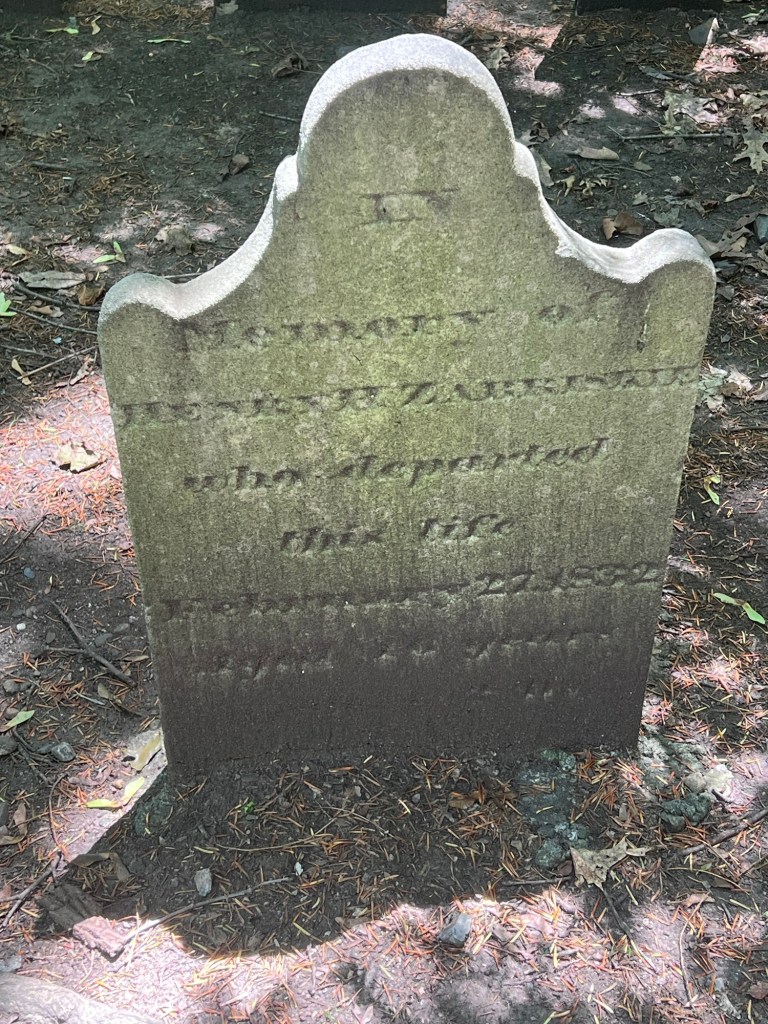
Henry H. Zabriskie, died Feb. 27,1832, age 46 years
Sally Zabriskie, wife of H.H. Zabriskie, died May 11, 1829, age 41 years
Garret H. Zabriskie, died Aug. 6, 1867, age 79 years
Caty Van Voorhase, wife of Garret H. Zabriskie, died Nov. 6, 1833, age 41 years
Garret Zabriskie, son of Henry and Lavinia Banta, died Oct. 16, 1832, age 4 years
Ann Bamper, wife of Jacob Bamper, died Feb. 26, 1844, age 90 years
C.I.Z. (probably refers to Casparis, son of Mary Zabriskie)
The grave of Henry Zabriskie
The graves Henry and Garrett Zabriske
The graves Garrett Zabriske and Francis Perry
The grave of Caty Van Voorhase
The grave of Sally Zabriskie
The grave of Francis Perry
The cemetery is a testament to the family and their love of the land they owned.
The History of the Hopper and Zabriskie families in the area:
(From the Borough of Ho Ho Kus, NJ website)
The Hopper’s owned homesteads in the center of town on both sides of the brook and operated a grist mill. During the American Revolution, they were committed to the patriot cause and served with the Bergen County Militia. The British made several raids into Hoppertown during the war while foraging for military stores, farm animals, and other goods. One notable siege took place at Hoppertown on April 16, 1780. John J. Hopper was seriously wounded. His home and those of his brothers were burned down. The grist mill on the brook was also destroyed. The Zabriskie family would later acquire and occupy the original Hopper residence which was placed under siege. The building is now known as the Ho-Ho-Kus Inn & Tavern. Materials from John Hopper’s original house razed during the raid are believed to be incorporated into the foundation of the inn.
Around 1830, John J. Zabriskie took up residence in the former Hopper home, which became known as the Mansion House. The Zabriskie’s owned several farms and buildings nearby and built a dam and mill on the brook. The Zabriskie family also acquired the Hopper family cemetery on the hillside adjacent to the mill. When the first Zabriskie mill dam breached in 1862, John Jacob would build a much grander dam out of brownstone blocks to create Sylvan Lake while at the same time expanding cotton mill operations.
The Sautjes Tave Begraven Ground Cemetery is an example of an early Dutch Cemetery of some of the first Colonists in Bergen County with some families arriving in the early 1600’s .
The entrance to the Sautjes Tave Begraven Ground Cemetery in Demarest, NJ
The historic sign at the entrance placed by the David Demarest Chapter of the Daughters of the American Revolution
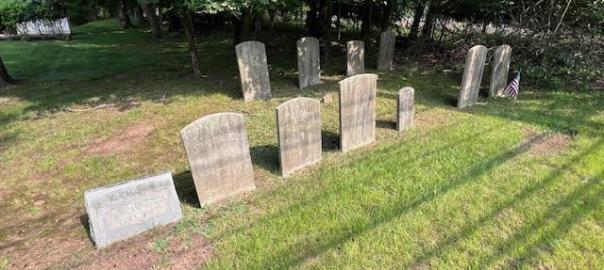
The inside of the historic cemetery
These early families once owned farms under royal patents of hundreds of acres and these would be passed down from generation to generation. These small family cemeteries were once located on the edge of family land that have since been replaced by modern suburbs. This is now in the middle of a traffic circle surrounded by homes. The cemetery is a wonderful shape and is nicely landscaped.
The cemetery from the south side
Generations of a Bogarts, Blauvelts, Haring, Demarest, Du Bois, Van Scivan and other prominent families all inter married into each family were buried here.
The Bogart-Bauvelt family plot
The Bogart-Blauvelt family plot
The Demarest family plot
The Demarest-Haring family plot
The Ann Marie Demarest grave
The Cornelius Demarest grave site, a Revolutionary War veteran
Patriot Douwe Talema, who was killed by the Tories during the Revolutionary War
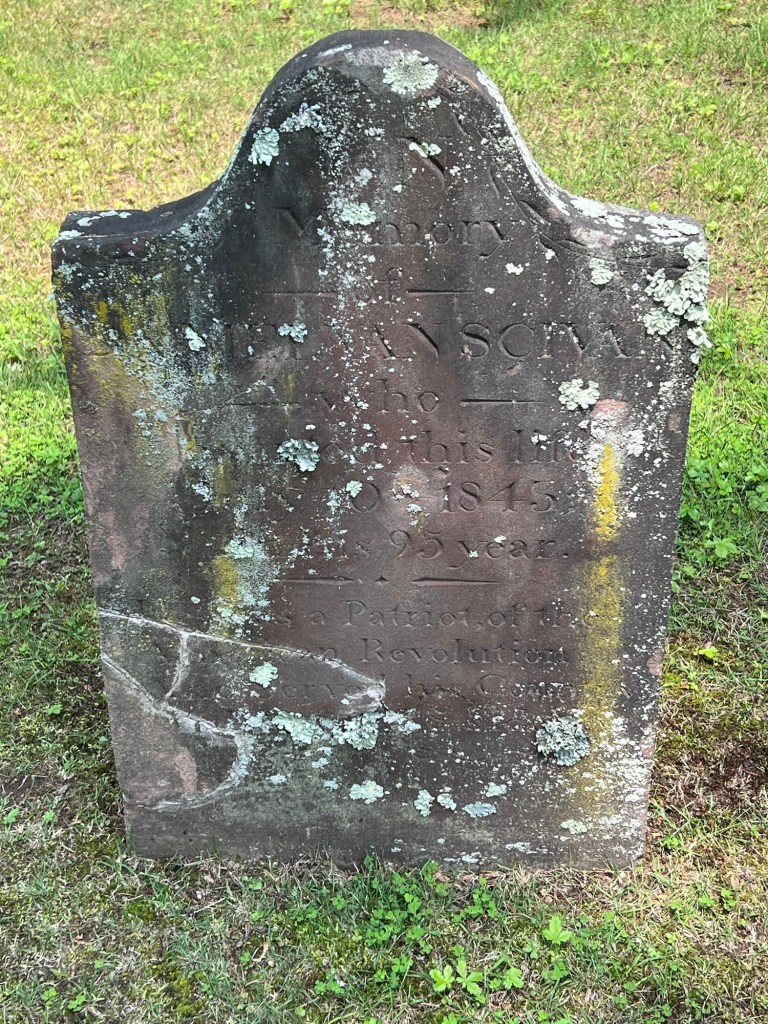
The Daniel Van Scivan grave, another Revolutionary War veteran
The Haring Family plot
The Haring family plot
The James Haring grave
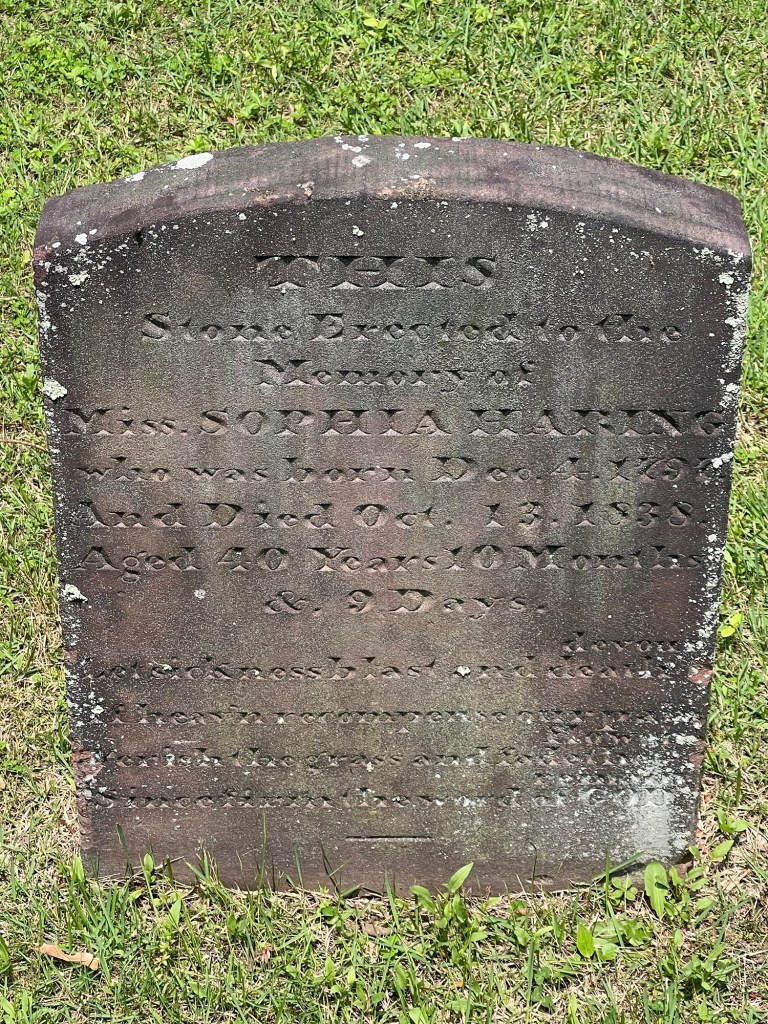
The Sophia Haring grave
The Du Bois family plot
The Cemetery view from the southern corner
My video of Touring the Cemetery and its historic roots:
My tour of the cemetery
Leaving the cemetery you can see the landscaping offers these families privacy in both life and death.
After the tour of the cemetery, I explored Downtown Demarest, NJ and discovered a beautiful little town with small local stores and a beautiful set of parks surround the streams and the train station just off the downtown.
The town of Demarest Veteran’s display
The town of Demarest has its own rich beauty and you can see this by visiting its Downtown area and its parks.
The breathtaking Duck Pond Park attracted a lot of painters who set their easels by the banks of the streams.
The Duck Pond is really beautiful
They also have a really nice railroad terminal that is now a senior center
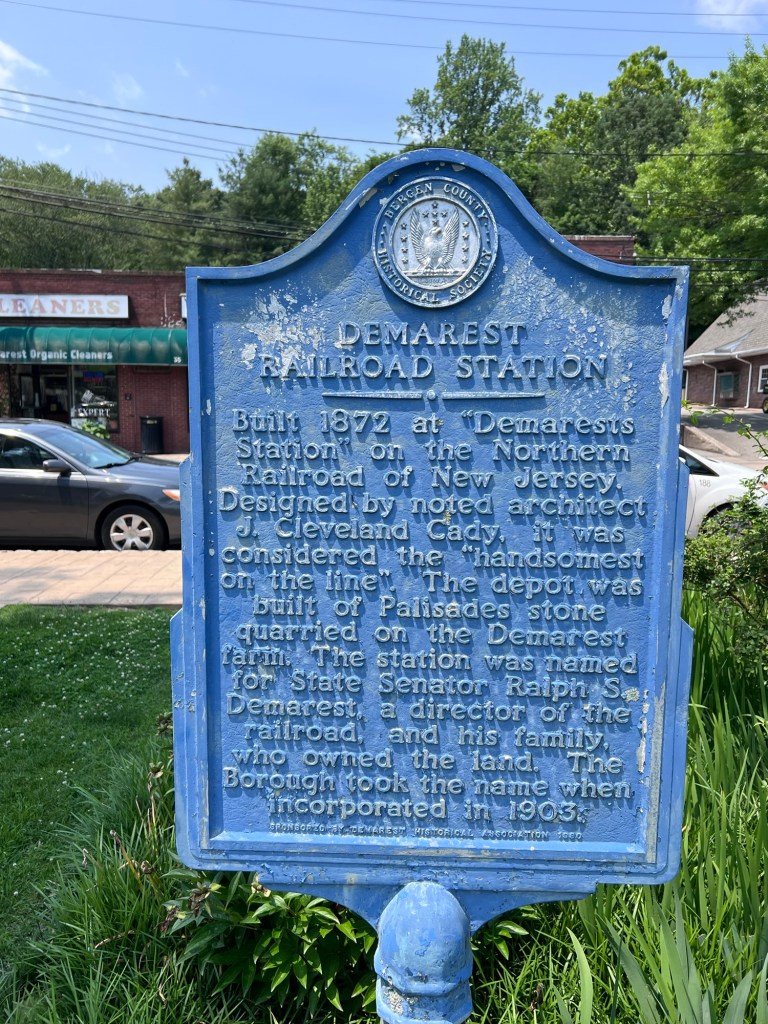
The historic Demarest Railroad Station
This wonderful community has so many wonderful attributes.
The Dewolf-Haring family cemetery sits on a homeowners front yard
The Dewolf-Haring Cemetery is one of the most unusual of the small cemeteries in Bergen County that I have seen. It sits right in front of someone’s front yard.
The cemetery probably at one time sat at the very edge of the farmland which is now a golf club and a neighborhood of McMansions. It shows the progress of the area as the farmland was sold off.
The gravesite of John Haring
The DeWolf-Haring family; grandparents and grandson
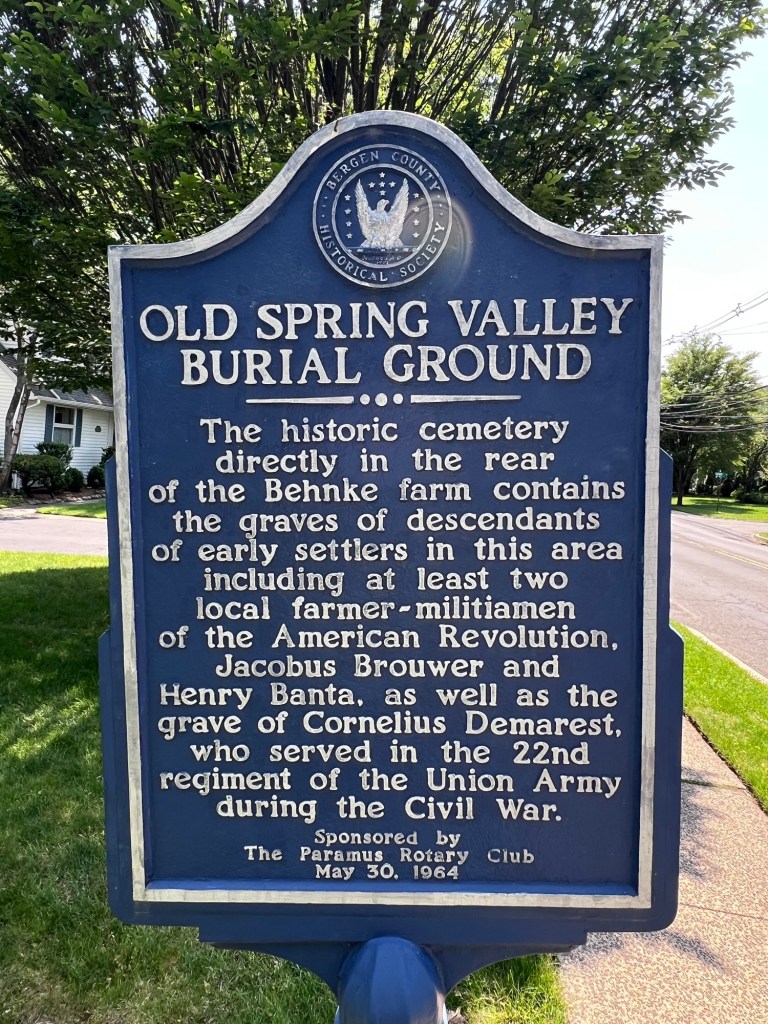
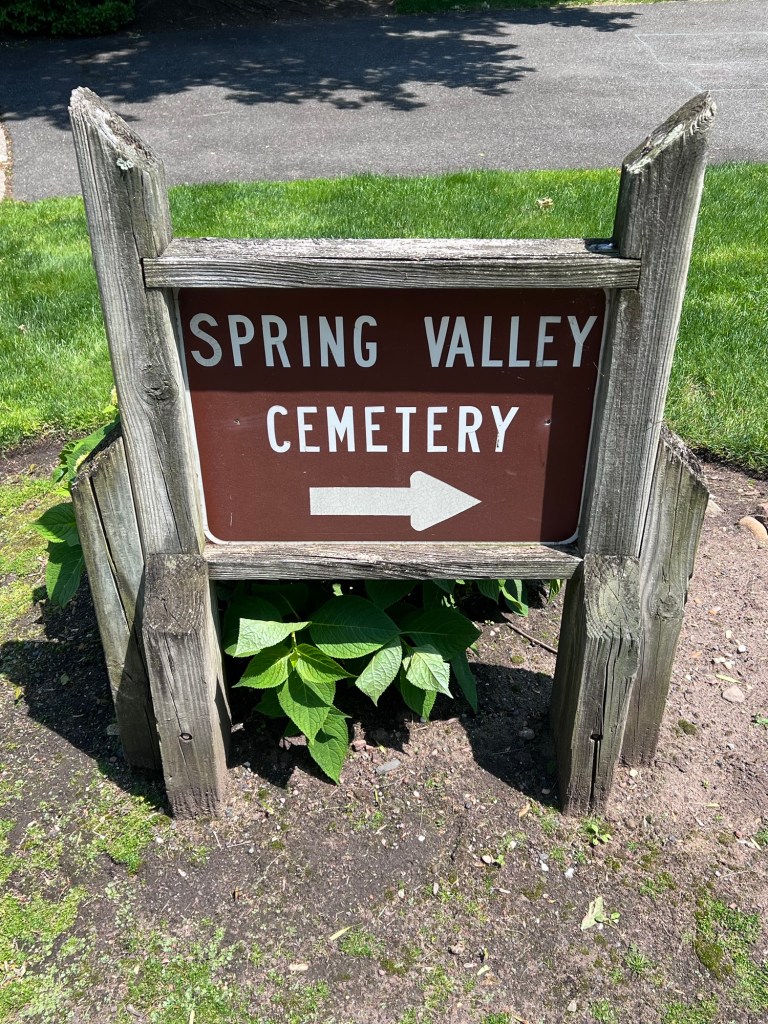
The historical marker that leads you to had path to the cemetery
History of the Cemetery:
(From the Historic Marker sign)
The historic cemetery directly in the rear of the Behnke farm contains the graves of descendants of early settlers in this area including a least two local farmer-militiamen of the American Revolution, Jacobus Brouwer and Henry Banta, as well as the grave of Cornelius Demarest, who served in the 22nd regiment of the Union Army during the Civil War (From Paramus Rotary sign).
The only way into this tiny cemetery is through z path located on Viola Road
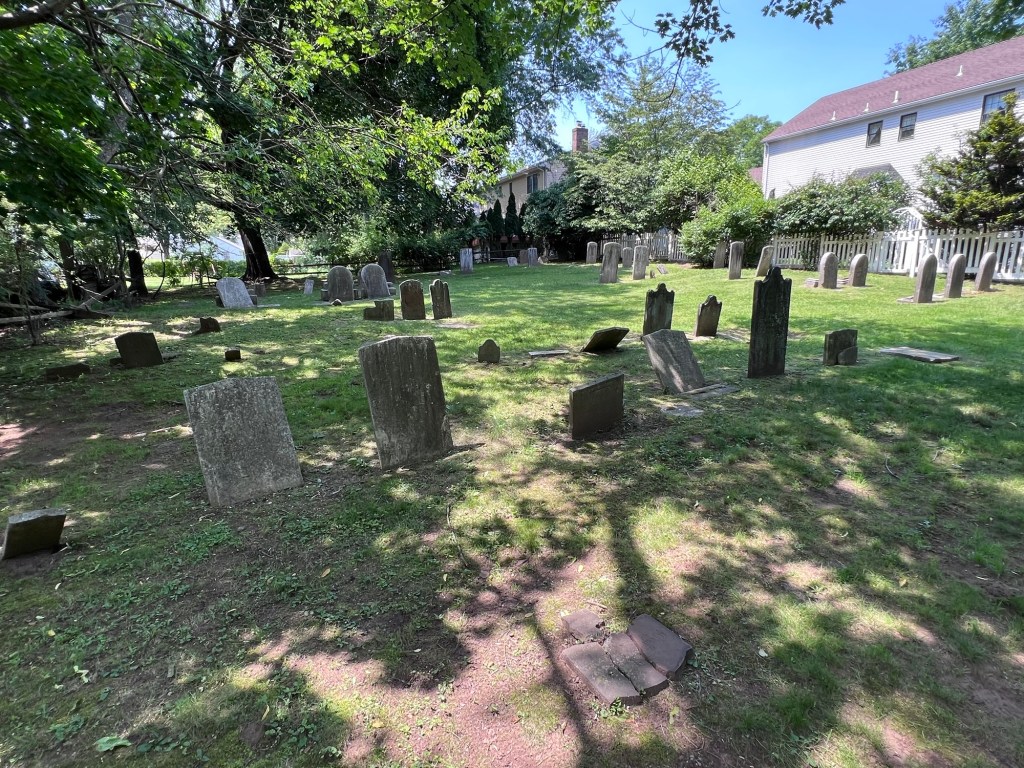
The historic little cemetery is rich in history of the first families of Bergen County including Revolutionary War and Civil War veterans
The cemetery is the resting place of members of the Banta, Bogert, Terhune, Van Saun, Demarest, Kipp and Voorhis families
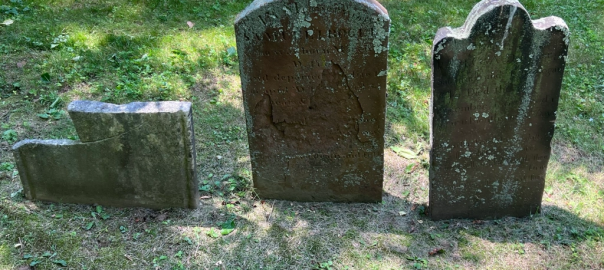
The Van Saun family graves
The Bogart family graves
Video of the Cemetery tour:
My tour of the Old Spring Valley Burial Ground on June 3rd, 2025
Every semester for my Business Marketing, Management and Communications classes, I create one big Team assignment for my students. In a Commuter College, it is a lot tougher for students to get to know one another between their studies and their jobs, so I create these projects to foster learning, creativity and especially Teamwork.
This was the first time I had ever taught International Marketing and it was a challenge I really wanted to tackle. With International Tourism in a state of flux due to the economy and politics, what type of creative programming and offerings do we have to attract a foreign customer?
Promoting Bergen County, NJ for tourism has been one of biggest challenges I have had and how we get all these places to enter the modern era with a fresh approach to getting people to visit their establishment. The ‘Bergen 250-the 250th Anniversary of the Revolutionary War in Bergen County’ has been our most ambitious project to date. We took the website and plans the County of Bergen had planned and expanded it in every direction.
We added in special events, fundraising ideas, scavenger hunts and walking tours along with a new direction in promoting these sites through Digital Marketing and outlets like Tik Tok, YouTube and using QR codes so that the younger generation can use their phones interactively.
In the past, I have created these projects under the Bergecco-Parc Consulting Inc. banner, the main consulting company, the Orion Malls banner, a Mall design company and the Buscomonzefi.com banner, my Tech Division. Each business does its best to be creative, forward thinking and have a thought producing presentations. I also challenge the students to top on another in their presentations and build on what they have seen others do in the past.
Professor Justin Watrel, CEO Bergecco-Parc Consulting Inc.
Our Corporate site (created my one of my former President’s:
As my International Marketing class entered its second month and before I ran the Midterm, I introduced the Team Project, similar to the one I created in 2020 just as COVID hit “From Revolution to Renewal-Exploring Historic Bergen County, NJ”:
The project that we started right before COVID closed the college:
With that class, I had planned a series of field trips once we got back from Spring Break but we never went back to campus. That project was done with work that had to be done online and with what we had because we could not leave our houses at that time. This project was to do what that project could not accomplish.
So I approached Vivian Davis, of the Bergen County Historic Division, who I had worked with for years in my time at the Department of Disabilities Services for the County, and who I initially worked with on the first project and asked her to help me again. She is running the ‘Bergen 250-the 250th Anniversary of the Revolutionary War in Bergen County’ event. Would she let me help her coming up with a different angle on advertising the event and some new ideas for special events and a fresh perspective on looking at the event from the students viewpoint?
It would be one of the most ambitious projects that I had ever attempted for this company model. She agreed to let me help in my own way plus be available for being a listening ear for the students and assist us on the Team site visits and tours.
It was a great partnership as she got much needed research and ideas for advertising while the students learned something new about their communities that they did not know. Even I learned about historical sites that I never knew existed and I have lived here off and on for the last thirty years. Everyone got something positive out of it and it was a win-win partnership.
I put together the project and had Vivian look it over and with some adjustments, it was a go and I presented to my students two weeks before the Spring Break in March. We would work on this project for the next seven weeks along with a series of site trips to places in the ‘Bergen 250’ roster. It would be an eye opener project for everyone involved.
The initial project concept for the Bergecco-Parc Consulting Inc. Team Project “The Bergen 250”:
I chose my Executive Team from a series of what I call “Alumni Students”, who I had in other classes and I knew their work and how they had performed in other Team Projects that I had run. I chose the remainder Student Executives from a look series of papers I had them write for the class promoting Foreign Tourism and Advertising.
Paper Two: Promoting McDonalds Foreign Food items for the American Market:
These two papers are how I determined who would be on what Teams and how they might perform on that section of the project. For the most part I was right. I saw this at the end of the project.
I broke the class into the following Teams: Marketing, Talent, Historical and Food Service with each Team having their own responsibilities (Please read the project). They were led by the President and Senior Vice-President of Operations, who reported to me as their CEO. Both of these students had participated in previous projects that had been equally ambitious.
The two weeks before the Spring Break, the Student Consultants got their game-plans together, divided the responsibilities and started their research on the historical sites being promoted by the ‘Bergen 250’. There are a lot of historical sites in Bergen County that date back to the Revolutionary War and before To the time of Dutch settlements.
When we arrived back from the break, I arranged a series of Field Site visits that I took my student to so that they could experience and tour the sites up close. These were also location trips for of Food Service division who would be arranging a series of special meals at these sites.
The first place the Team visited was the Garretson Forge & Farm in Fair Lawn, NJ. This historic home and grounds were going to be one of the locations for a special event for the Food Service Division.
The Garretson Forge & Farm at 4-02 River Road in Fair Lawn, NJ
We had done a promotional project on the site a few semesters before with much success and now we would be arranging a ‘rustic’ Afternoon Tea on the grounds and promoting the gardens with a Flower sale.
The Student Consultants starting a tour of the Garretson Forge & Farm led by historian Vivian Davis.
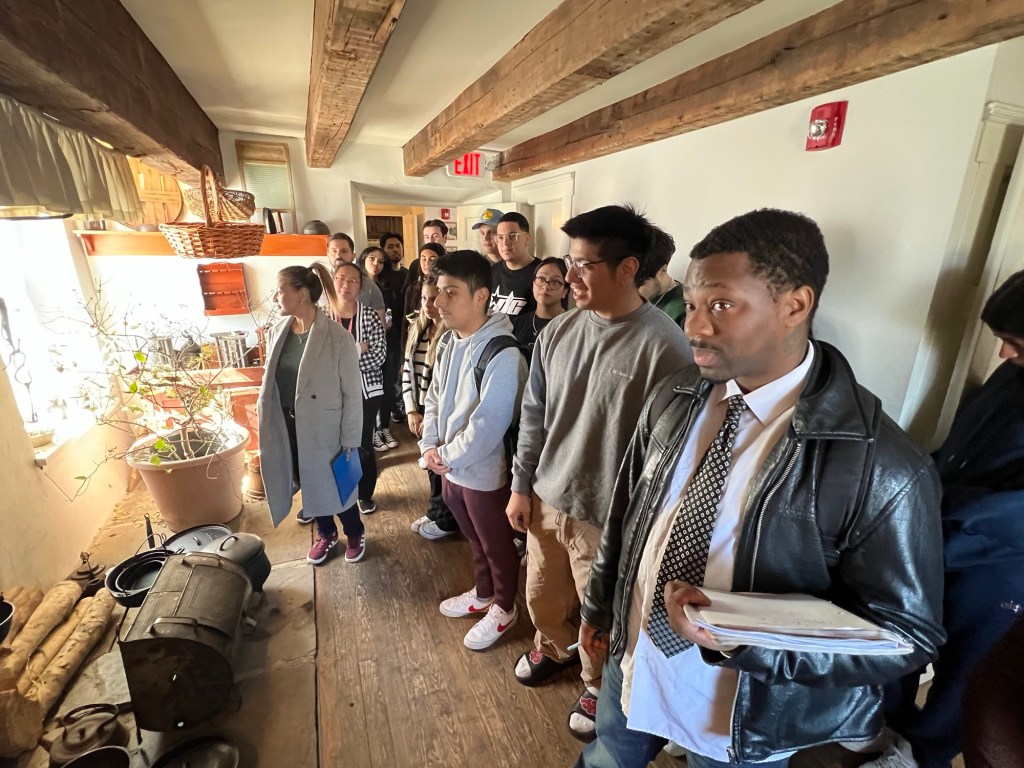
The students touring the historical kitchen
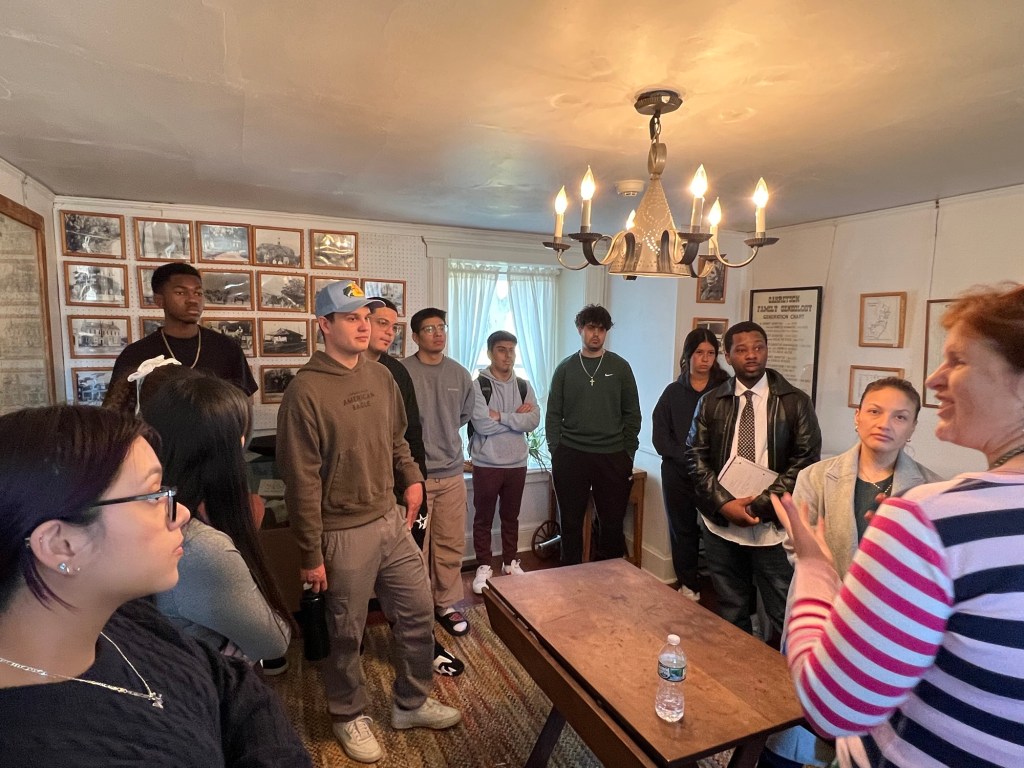
The students touring the historical room at the Garretson Forge & Farm
Our class picture at the site
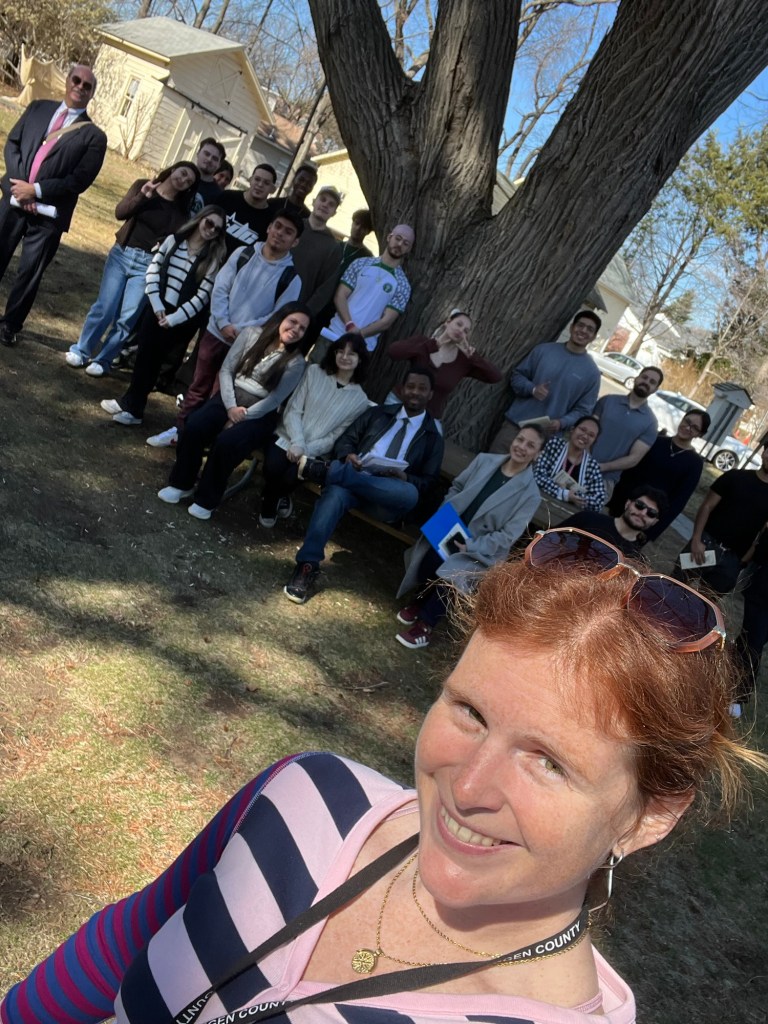
Our host and ‘Client’ Vivian Davis joining us in the group picture
The trip to the Garretson Forge & Farm was one of a series of trips that I thought would be important to the students to get a feel for these sites rather than just passing by. We also could incorporate layouts and use of historical items for our Scavenger Hunt that people could download to their phones that our Marketing Team was creating for their part of the project.
The next week we went out into the field again, this time to the Baylor Massacre site in Old Tappan, Nj and the Haring Farm Cemetery, a tiny family plot on what used to be the Haring Farm both in Old Tappan, NJ.
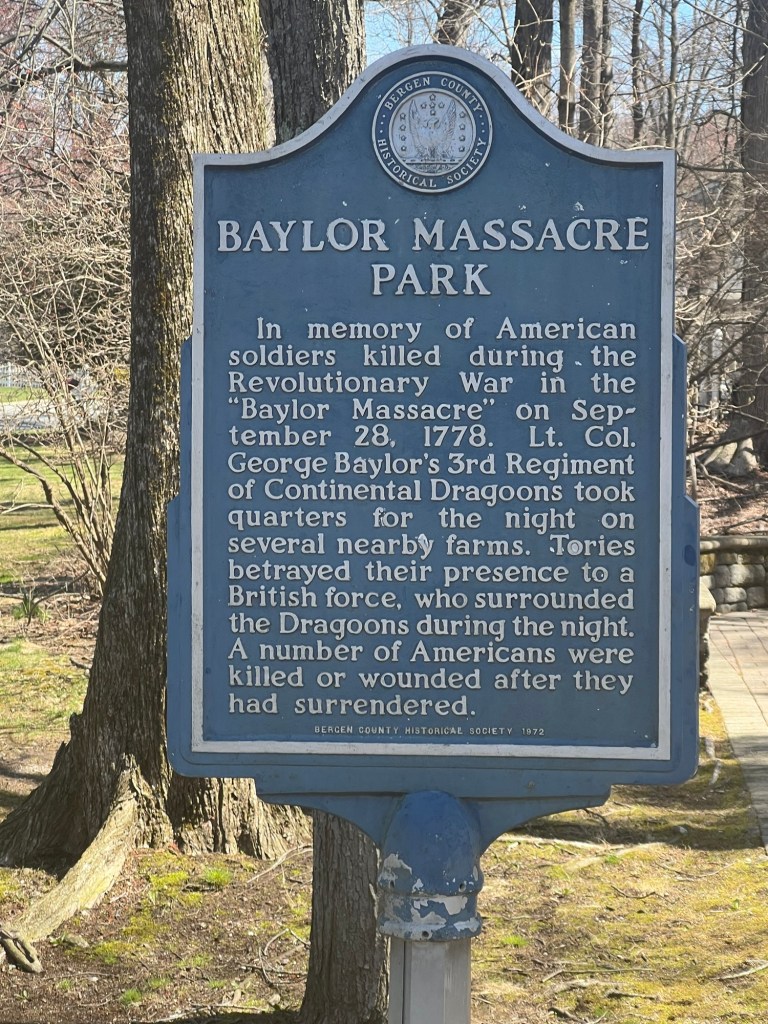
The Baylor Massacre site is where the Patriots had gotten ambushed by the British on a tip from a local resident and instead of following protocol of war, the British bayoneted the troops and through their bodies in a ditch. The bodies had been rediscovered only in the last fifty years when they wanted to develop the land.
With the Haring Farm Cemetery, this was the final resting place of Abraham Haring, a prominent farming family in the area, on what was once hundreds of acres of land of the Haring family. As Vivian explained to us, these families always assumed that the farm would be there and in the family hands.
The Baylor Massacre site at 486 Rivervale Road in River Vale, NJ
Walking around the site before the students arrived
The site of the graves
The location of the old mill where the bodies were thrown
Vivian’s counterpart in the Historic Division, Colin, joined us on this day for this tour and was better than me on explaining everything.
Before everyone got there, I had been to the sites the day before and while the Baylor Massacre site is well taken care of by the County, the Haring Farm Cemetery was a mess of fallen fences, fallen trees and branches all around the site, making it dangerous to walk around. I even touched a dead branch and it came crashing down.
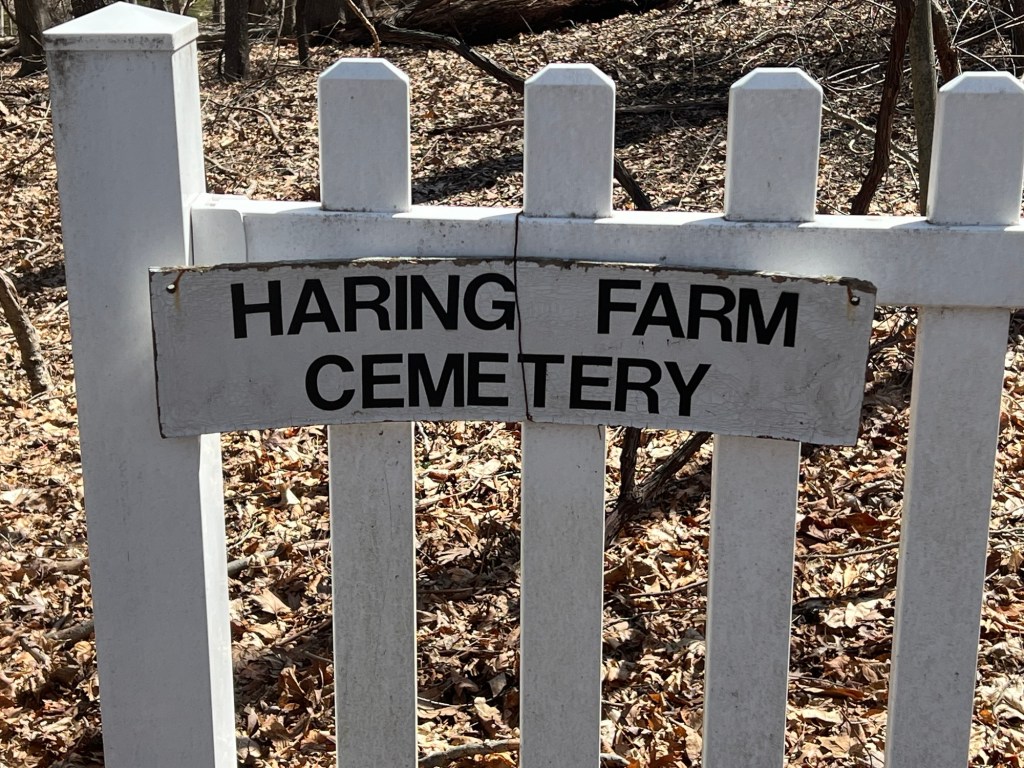
The entrance to the Haring Farm Cemetery at Old Haring Farm Court in River Vale, NJ
The cemetery looked so much nicer when it was cleaned up
I always felt like the family was watching me as I had such a positive feel at the site
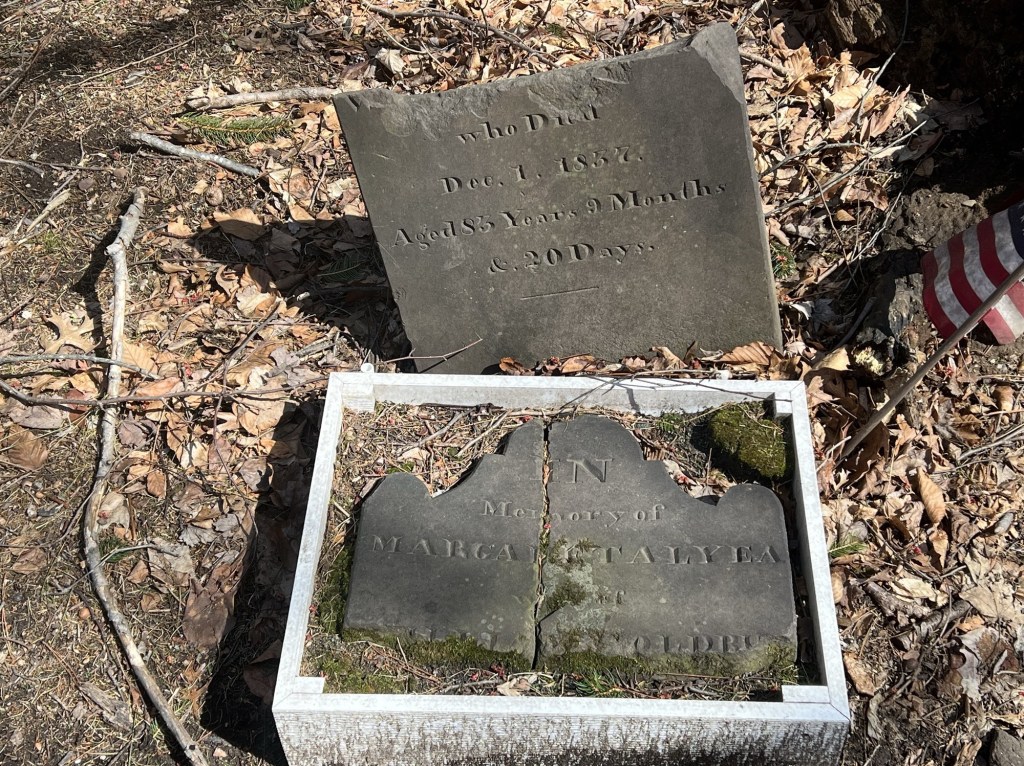
Even the family tombstones looked a lot better
Being married into the Haring family via my father’s older brother’s wife sister in law, I felt an obligation to clean this place up. So in a two piece suit the next day, I got to the graveyard early, removed all the branches, raked the whole site, fixed the fence and raked the entire site, cleaning the tombstones while I was doing all this.
There is a good feeling when you honor and respect the dead
After cleaning the site, I got myself together and went back to the Baylor Massacre site and started to meet the students. Some arrived early and started to walk around to get a feel for the site.
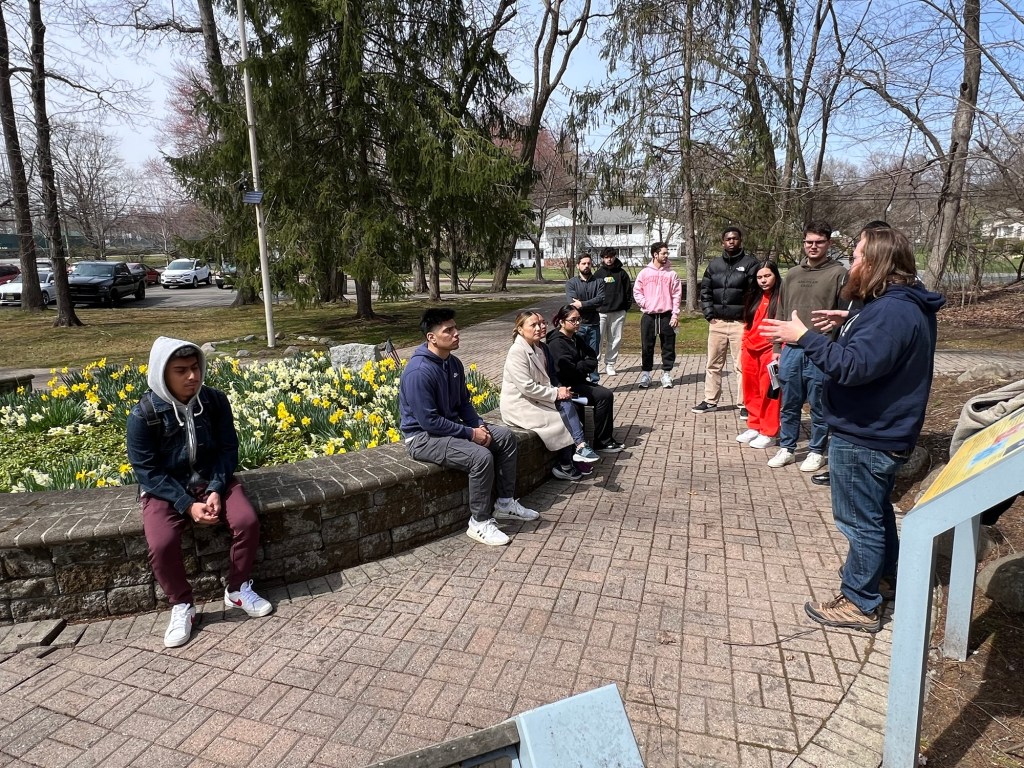
Colin and I talking to the students about the incident at the site during the Revolutionary War
The Baylor Massacre site was going to be used for a Jazz Concert to honor the soldiers and Patriots whom had passed with a food truck event to go with it along with historical walking tours that evening. The evening event was planned with luminaries lining the paths and the gravesite being lit for the evening to honor those who had passed.
First we walked the entire site to understand the logistics of the event
After the tour and discussion of the site we took a few group pictures of us at the site. In some cases, this was the first time almost all the students had visited the site. This shows how these sites need to be better publicized.
My class at the site with the Memorial in sight
The Bergecco-Parc Consulting Inc. Team Picture at the Baylor Massacre site
After the tour of the Baylor Massacre site, we headed up to the Haring Farm Cemetery, which was up the road. When we all got there, Colin explained to us that rather than burying their loved ones in a church graveyard, some families wanted to have their loved ones buried close by and again these families thought these farms would always be in the family hands.
Vivian had explained to the students at the initial meeting that one of the past times people had during the Revolutionary War was picnics at cemeteries and graveyards. This is where we got the idea of graveyard tours with a box lunch. We would create an interactive map with QR codes that people could tour with their ‘to go’ lunch.
We arrived at a cleaned up cemetery
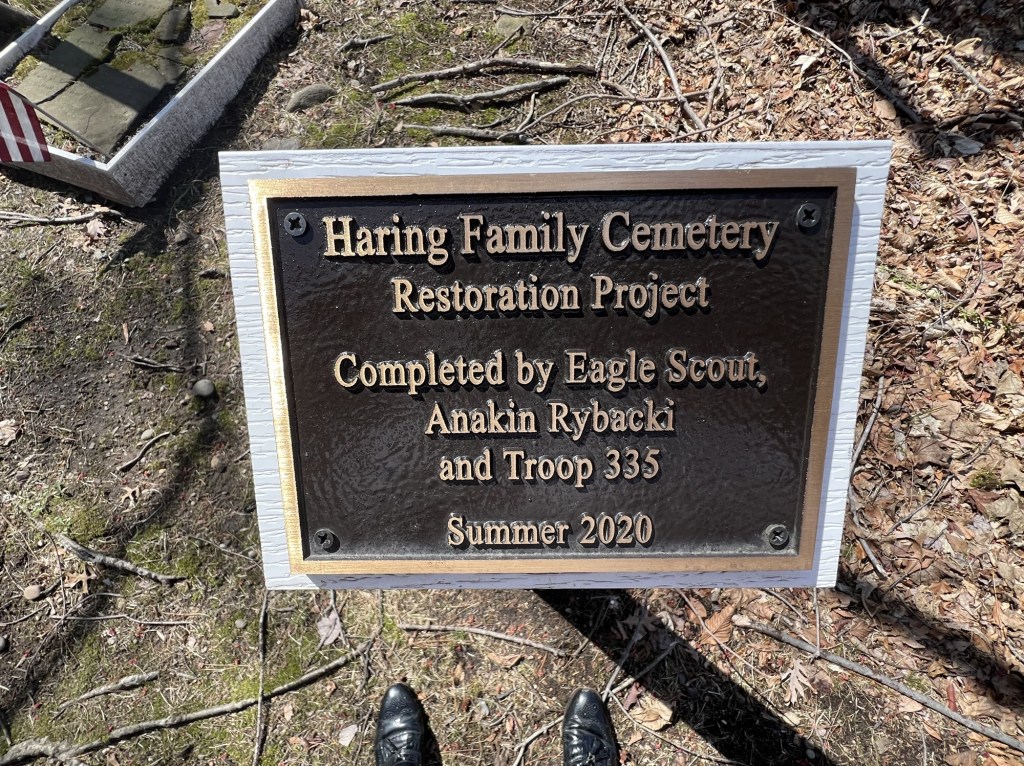
The renovation of the site was done by an Eagle Scout
We took some time to understand burial rights of farming families and get a feel for the family members
We toured the small site and Colin explained to the students that Bergen County was dotted with these types of sites because of the number of family farms that once made up Colonial Bergen County, NJ.
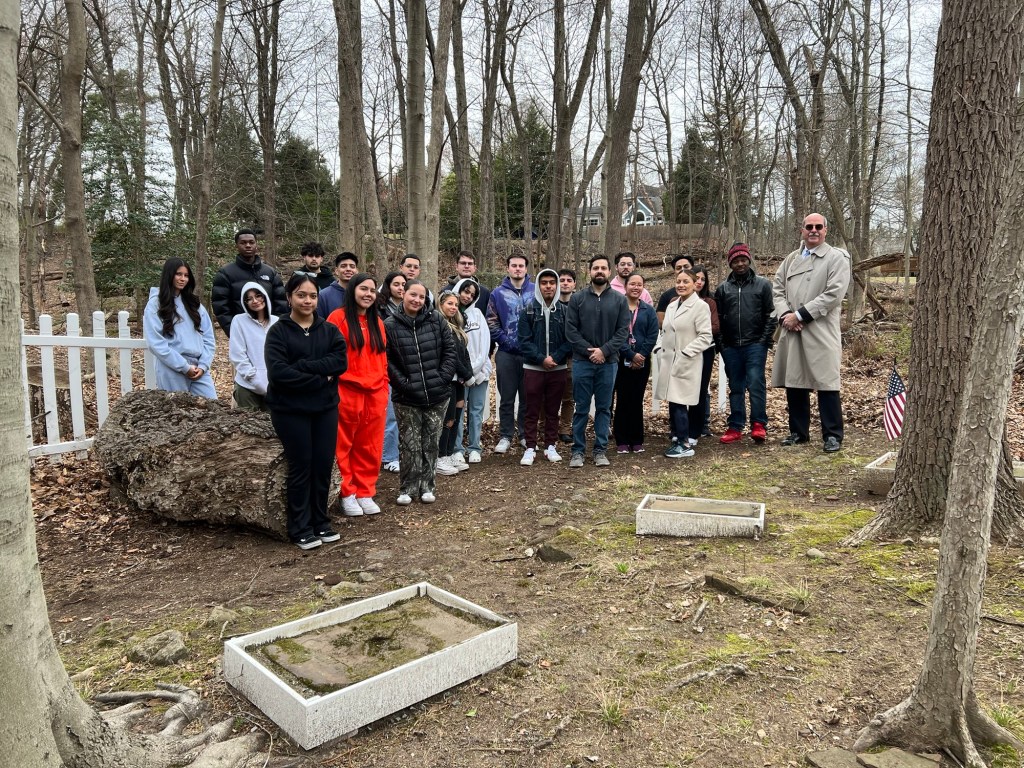
We took our group shot while respecting the resting place
After all my students left after the both tours, I went back for one more look and again, I felt such a positive presence as if the family were so happy that we visited.
The weather prevented the next field trip and we had to concentrate on the project so after lecture, the students worked with their groups. Throughout this part of the semester, I would alternate between lecture one day and being ‘out in the field’ the other. This the students had a better experience of being ‘in the industry’.
As the project progressed and started to come together, we took our last and most ambitious field trip to Park Ridge, NJ, to the sites of the ‘Farm to Table Dinner’. This site tour included the Wortendyke Barn, the Pascack Reformed Church, where the Candlelight Tour of the Wortendyke family graveyard would take place and then to the Pascack Valley Historical Society, where the Cocktail Party would take place to open the event.
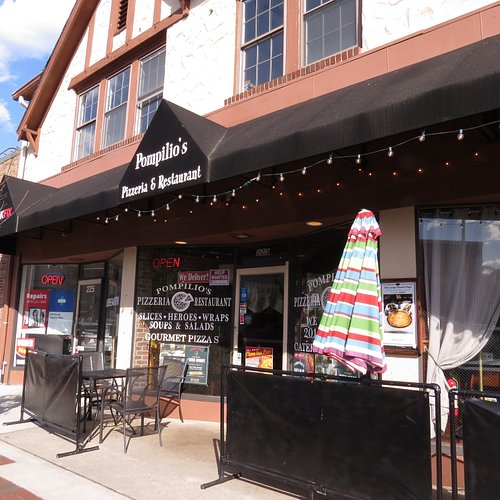
Then after the site visit, I would be wrapping the afternoon with lunch at Pompilios Pizzeria in Downtown Westwood, NJ for a Team dinner. It was a long afternoon but the students got to experience so much and see a lot.
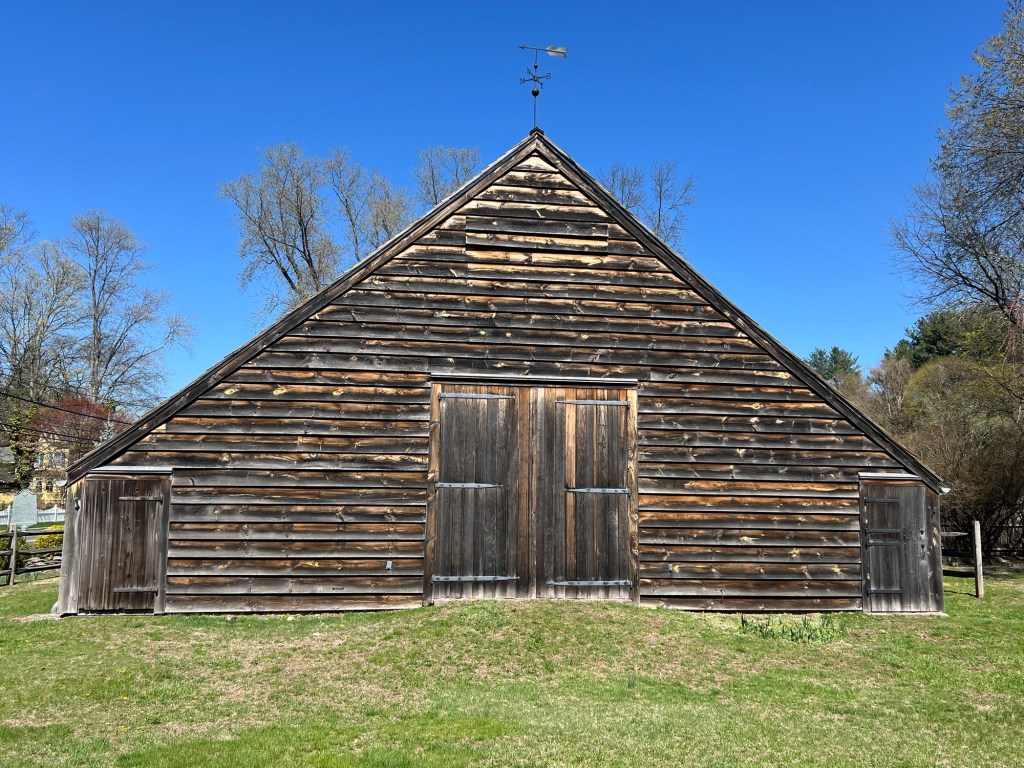
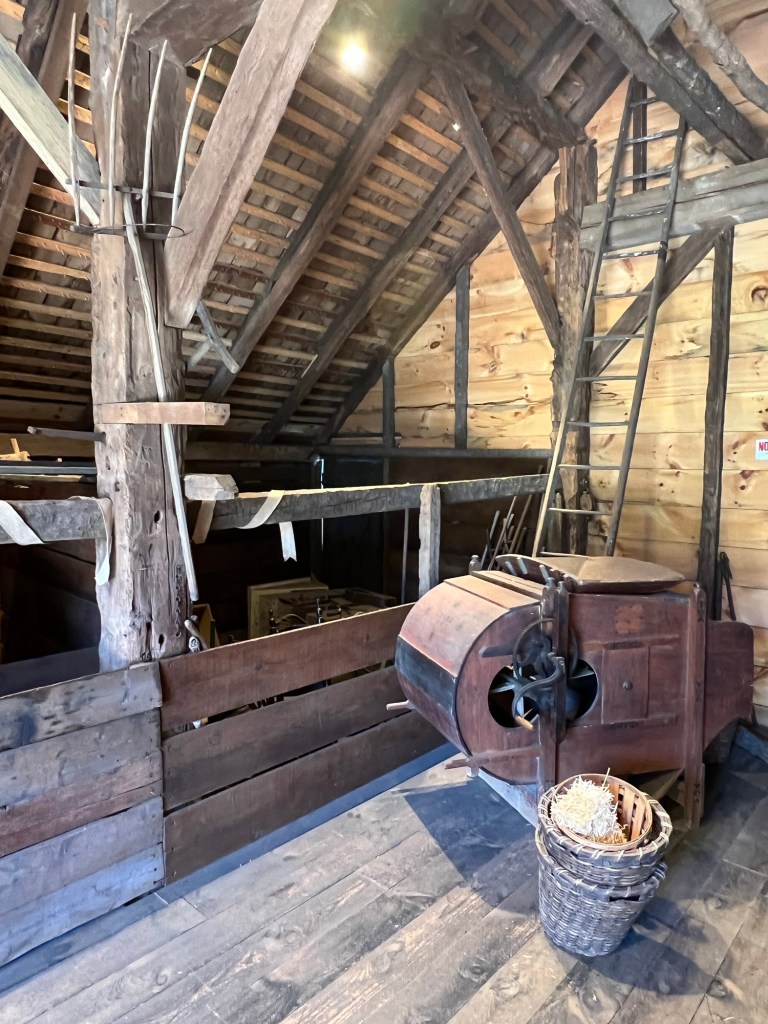
Our first stop was the Wortendyke Barn, one of the few surviving Dutch-American examples of early American barns.
The barn in the early Spring on one of the few nice days of the week
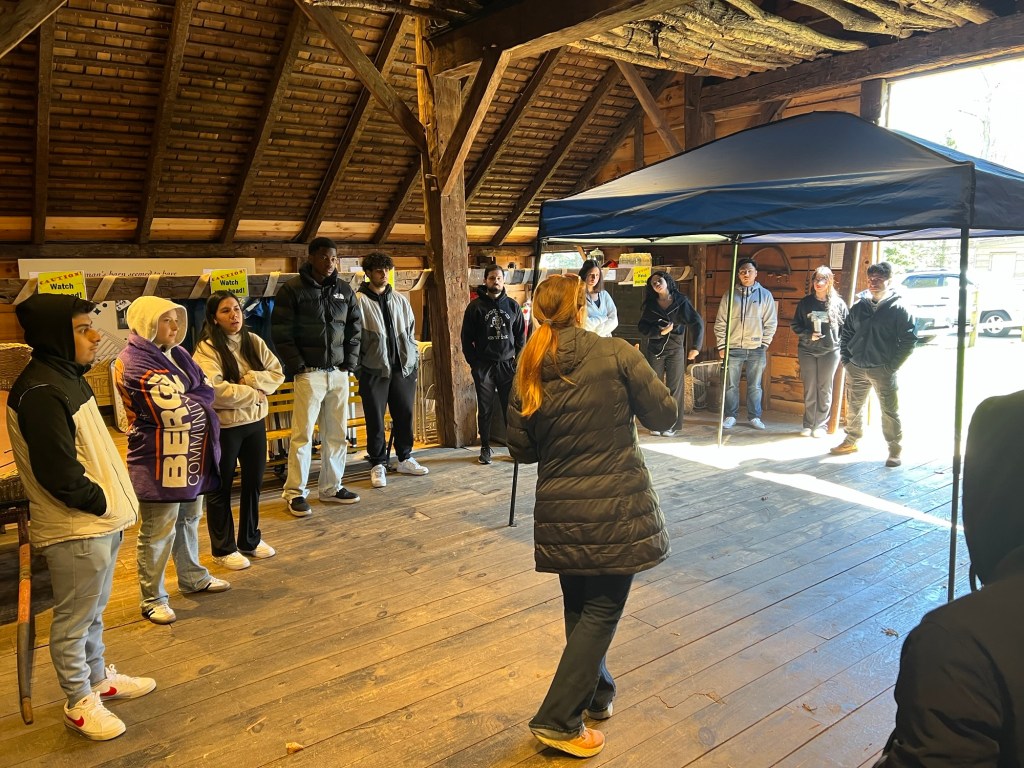
Vivian met us again for the first part of the tour and explained how the barn was designed, who the Wortendykes were as a family presence in Bergen County and the use of the barn since it became County parkland.
We then moved on to take the next tour at the Pascack Reformed Church, one of the oldest churches in the State of New Jersey. Our tour was hosted by Pastor Sharon Gross-Gill, who had joined the church and loved the idea of the project promoting the church and its historic values.
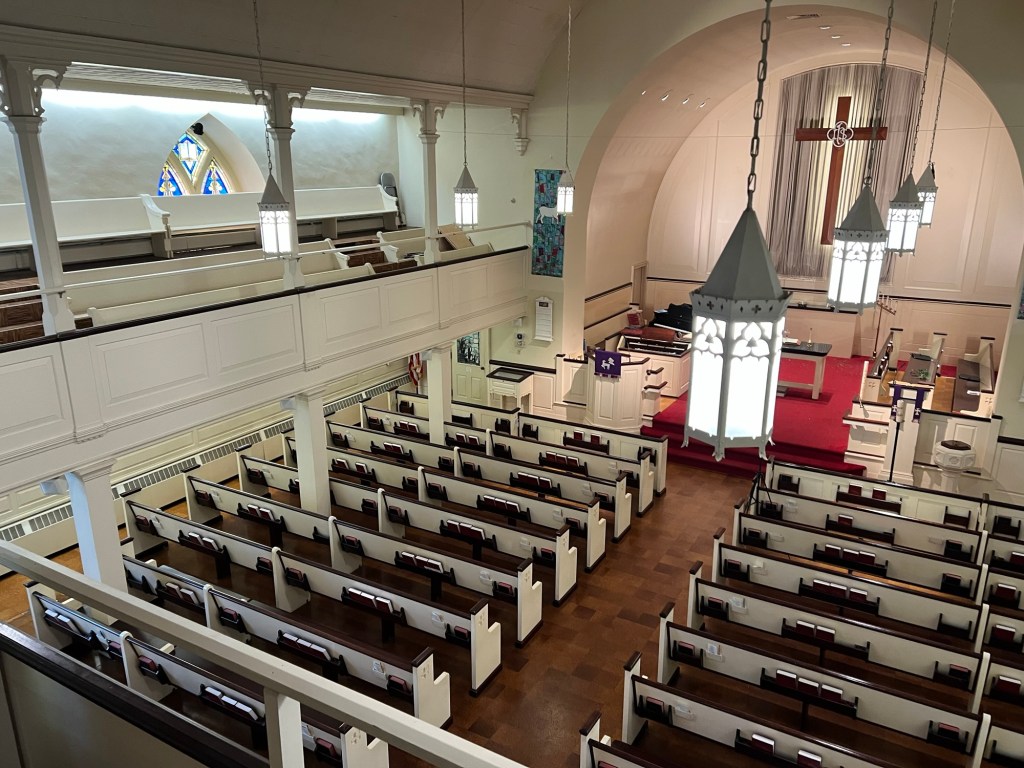
The Team touring the second level of the church
The team touring the bell tower of the church
Our Vice-President of Marketing ringing the church bell. Each Team member could ring the bell if they wanted to try it.
We were then joined by the church historian who gave us the tour of the Wortendyke family plot
Touring through the Wortendyke family plot
Our Team picture with Pastor Sharon Gross-Gill at the Pascack Reformed Church graveyard
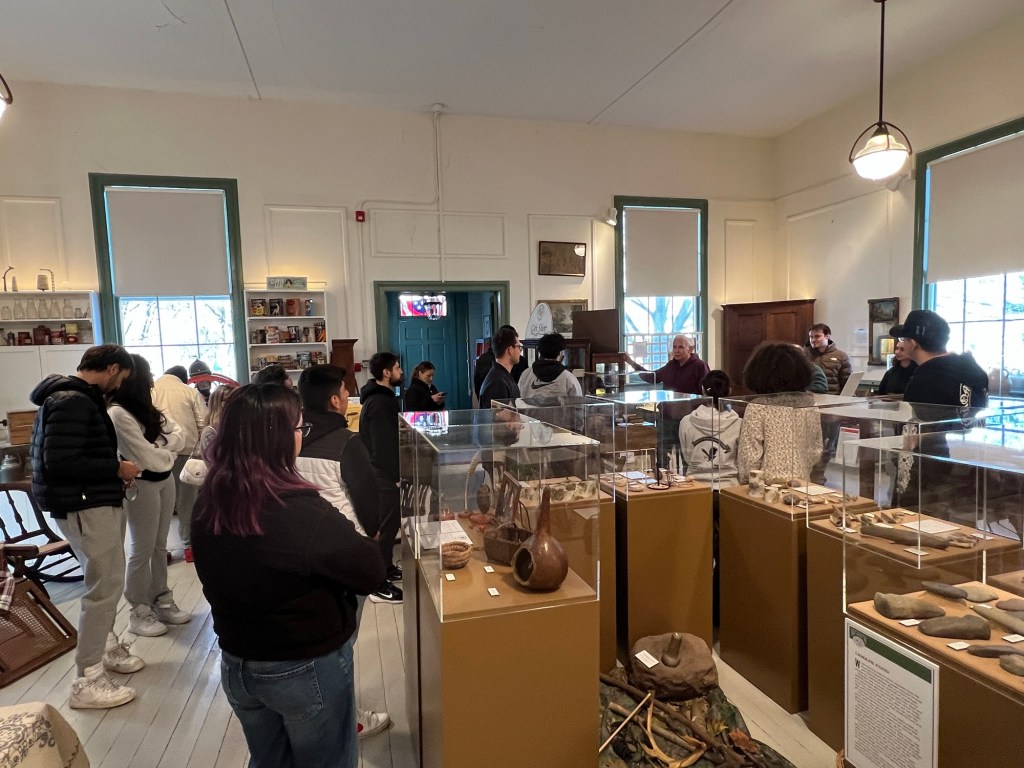
We then moved on to a quick tour of the Pascack Historical Society, which has an interesting display of early Dutch artifacts and only Wampum making machine (Native American currency) in the United States Almost all my students had not seen these things before.
The Pascack Valley Historical Society at 19 Ridge Avenue in Park Ridge, NJ
I have to thank the amazing support of the Pascack Valley Historical Society Board for coming out in full force to help support this project.
The Board touring with us at the museum
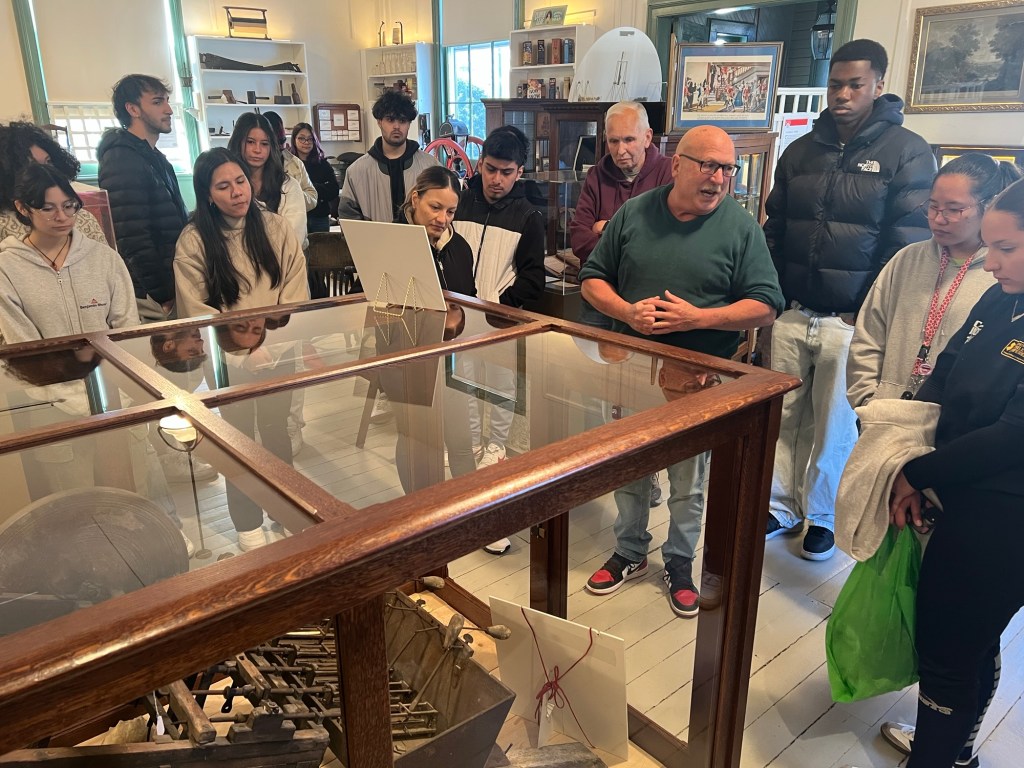
The Team with Board member, Peter Meany, as he explains how the Wampum machine worked.
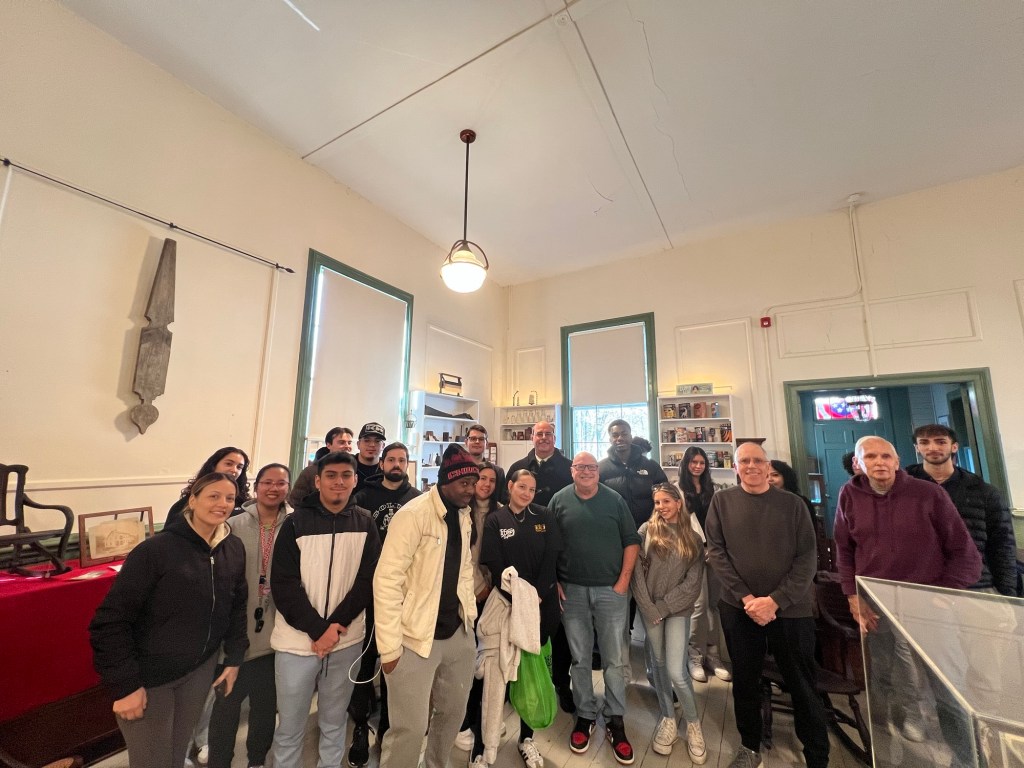
Our Team group picture with the Board of the Pascack Historical Society
I wanted to thank Board Members Kristin Beuscher, Peter Meany, Ralph Donnell Jr., Christopher Kersting and Patrick Dolan for being our hosts, leading the tours and some of them showing up for our presentation of the final Presentation.
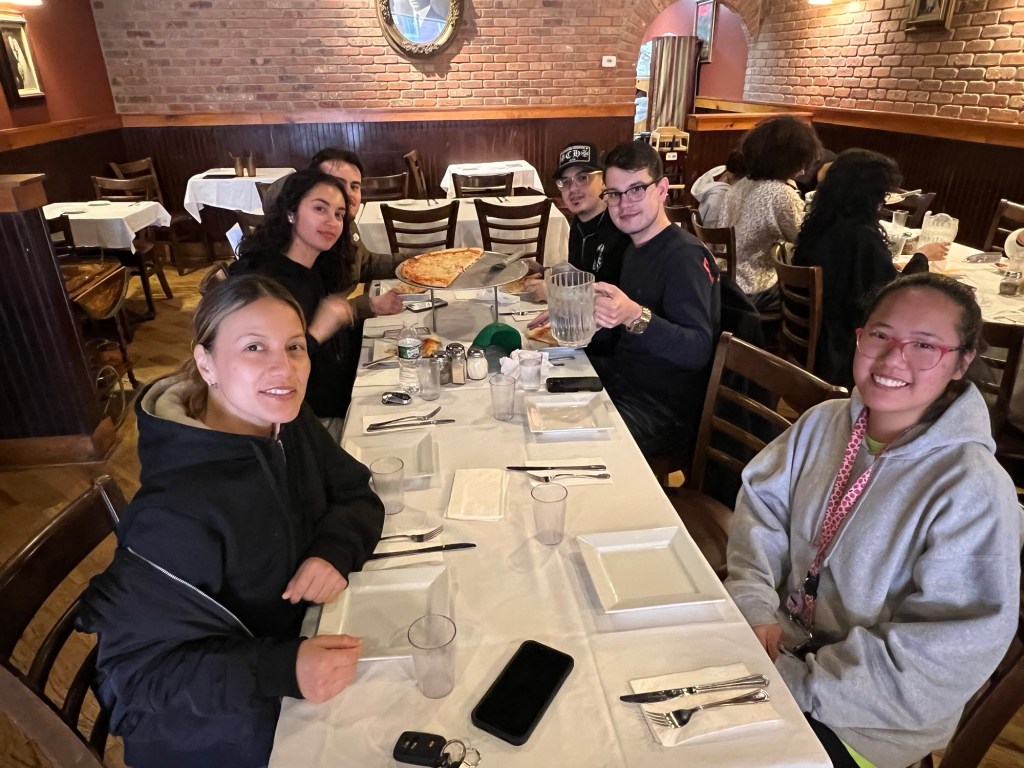
After the tours were all over, I took the entire Team to lunch in Downtown Westwood for a Team building pizza lunch/dinner. It had been a long day and the students had worked so hard the whole day, it was nice to break bread with the Team plus the pizza here is excellent. We had a really good time at lunch and everyone got to know each other a little better.
Pompilio’s Pizzeria & Restaurant at 233 Westwood Avenue in Westwood, NJ
Members of the Talent Team with the Marketing Team
Members of the Historical Team dining with the Executive Team
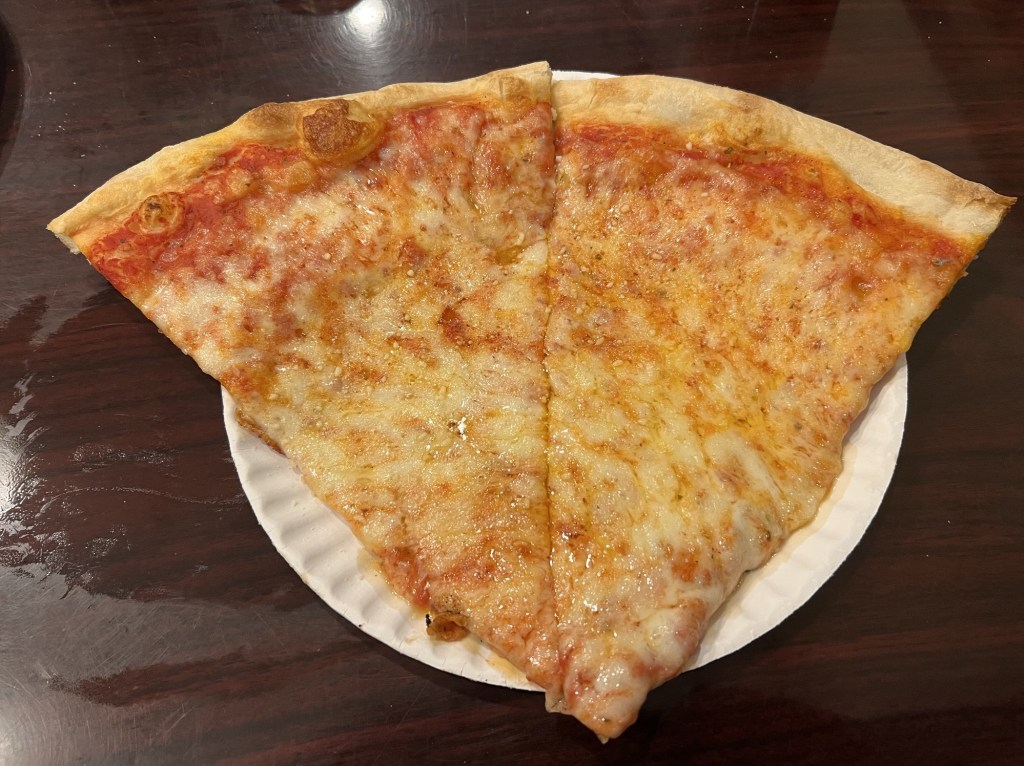
The pizza here is delicious and I love taking my Teams here for lunch
This was the last of the field trips before the presentation two weeks later. One of the pitfalls of the projects that I did that semester was the Spring Break in March and then the Easter Break in late April which had some of my students traveling for the break. I am happy to say that everyone showed up and did their work.
The presentation went by really well and was well attended for an afternoon event. Several parents as well as boyfriends and girlfriends showed up. Vivian and Colin both showed up with their boss from the Division, so the real life ‘clients’ were there for the presentation.
The formal Presentation on YouTube of Bergecco-Parc Consulting Inc. “Bergen 250-The 250th Anniversary of the Revolutionary War in Bergen County, NJ”:
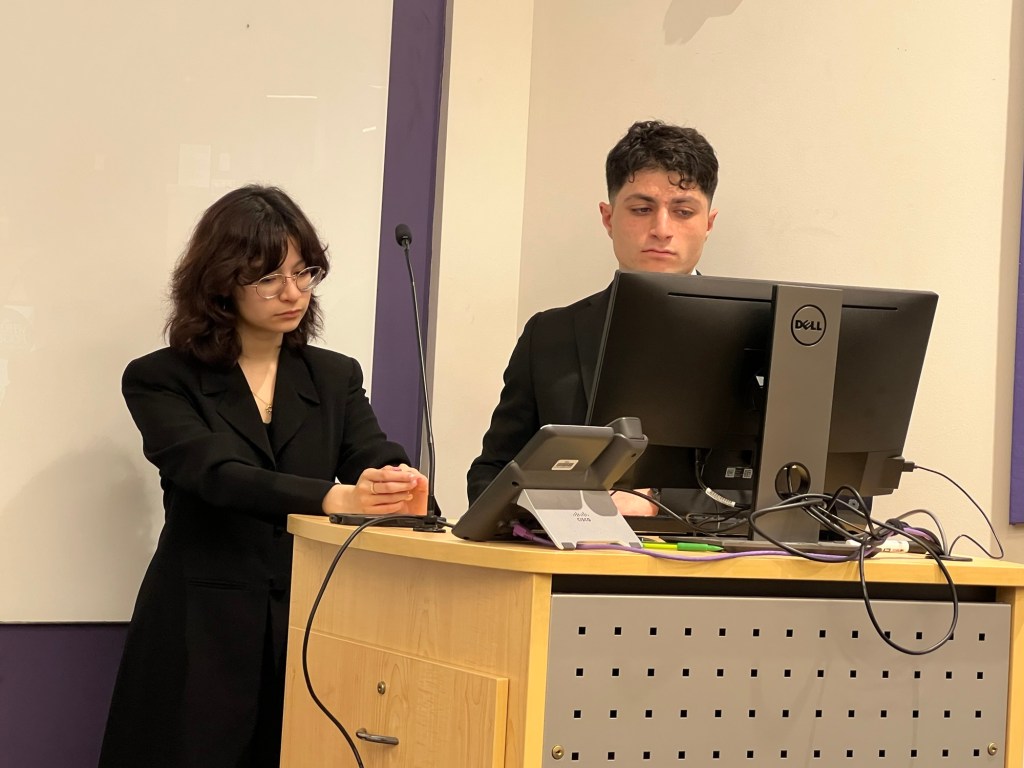
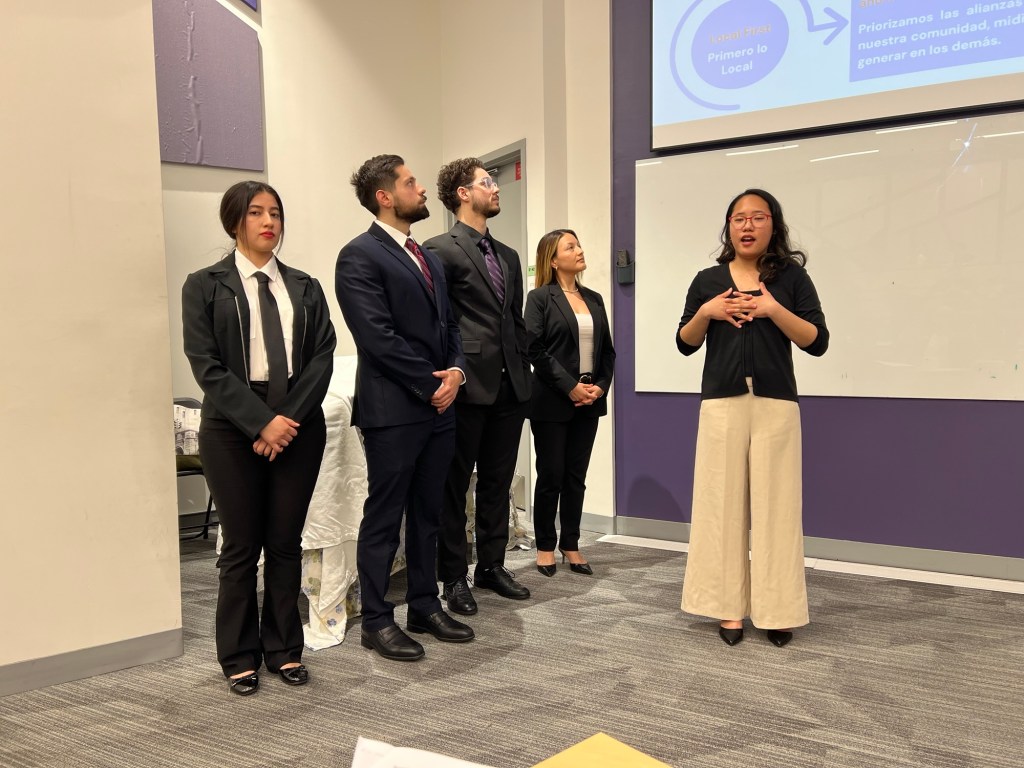
Senior Vice-President of Operations Gabriela Chavasco welcomes everyone
The Executive Team leading the Presentation
Vice-President of Operations Brandon Robertson leads the presentation of Foodservice Special Events
Vice-President of Marketing Bart Potensky leads the Marketing Team in their presentation of the Advertising gameplay
Vice-President Kate Trinidad leads the Talent Team on the inside operations of keeping the company well supported from Corporate
After the successful Presentation was over, we took the official Bergecco-Parc Consulting Inc. Corporate pictures.
It was a job well done for the entire Team. I also want to thank Vivian Davis and Colin Fitzpatrick from the Historic Division of the County of Bergen in New Jersey for all their support and guidance and feedback on this assignment. It really was a “Team Effort” from everyone involved.
The Northwest Bergen History Coalition 6th Annual History Day Theme: ‘Spreading the News: Rail, Mail & the Press in Days Gone By’
Special Exhibitions at each Museum
Come discover how we communicated when letter were left at the local inn, when postcards were our ‘twitter feed’ and the operator listened to all our calls on the party line. See how mail was delivered by train and what our local newspapers were like in 1900.
I took a day out of touring in the city to tour my own county, Bergen County, New Jersey is rich in Revolutionary, Civil and WWI &II history yet we still have a big link to our Colonial past in each town in Bergen County.
The unfortunate part of this tour is that it only covers a small portion of the county and it was hard to get to all of the sites in one day and really see them once a docent took over. I just didn’t want to leave the sites quickly because each tour was special in its own way.
I got off to a late start and got lost in Ridgewood because the Map Quest was not very good in describing the location of the first site on the west side of Route 17 South on the Ridgewood side of the highway. From there it just got easier.
My first stop was at the Schoolhouse Museum at 650 East Glen Avenue in Ridgewood, NJ (see my reviews on TripAdvisor and VisitingaMuseum.com). This quirky little school house sits at the edge of a vast cemetery next to Route 17 South in Ridgewood.
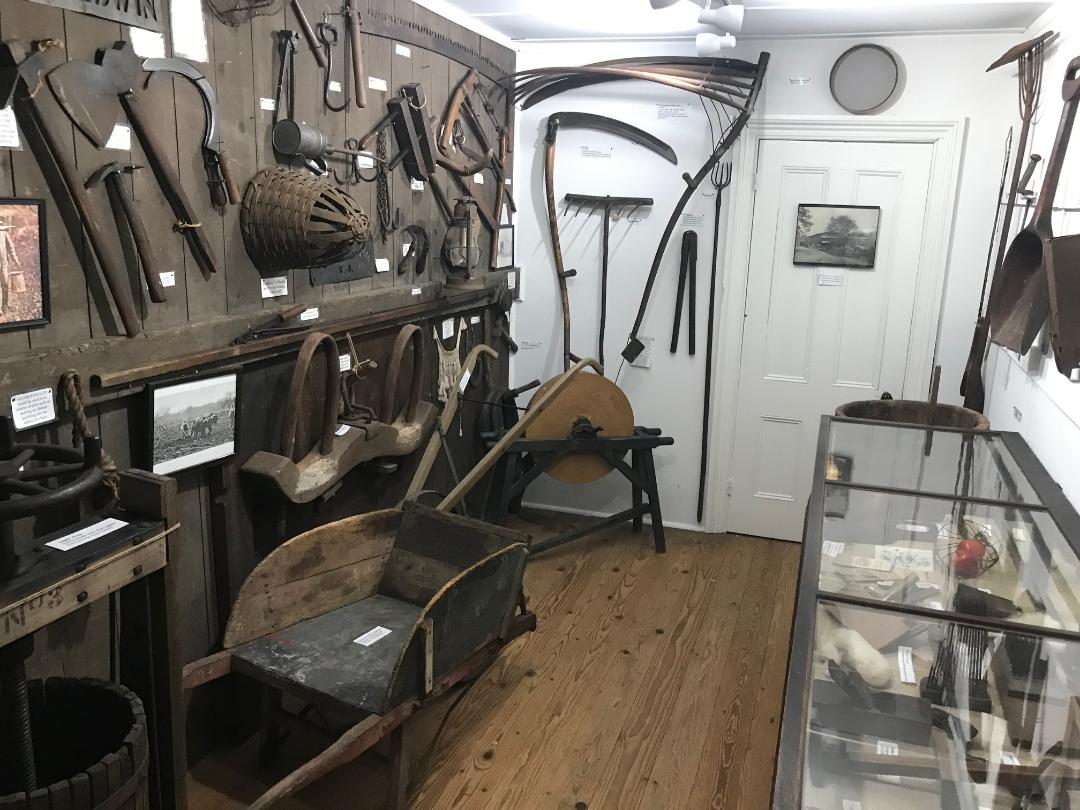
The School House Museum, built in 1872, is maintained by the Ridgewood Historical Society. This year’s exhibit is ‘Farm to Home: Exploring Our Agrarian Roots with Artifacts from the 18th and 19th Centuries’. Objects on display include early Dutch artifacts, farm tools, home furnishings, quilts, coverlets, pottery and tin ware. During the Spring, there will also be a special small exhibit featuring letters and writing tools as well as newspapers communicating important events. For History Day only, a letter from George Washington will be on display. The current exhibition is called ‘Farm & Home: Exploring our Agrarian Roots with Artifacts from the 18th & 19th centuries’. The museum is open from 1:00pm-3:00pm on Thursdays and Saturdays and 2:00pm-4:00pm on Sundays.
Schoolhouse Museum at 650 East Glen Avenue in Ridgewood, NJ
I bought my pass here to start the tour and a nice donation of $10.00 let me into all the sites on the tour. Since I was the first one to the museum, I got a personal tour by Dot, a retired teacher from Ridgewood who taught in Hasbrouck Heights. It’s a small world.
The Schoolhouse Museum is a step back into Bergen County’s rural past with many interesting displays from the Lenape Indians who first lived in the area and taught the Dutch how to farm and fish to early Colonial clothing and its purpose when working. The displays were beautifully presented and well noted by their cards. The section on cooking utensils and their changes over time with modernization was interesting. How to bake on an open hearth versus a modern cast iron grill is the difference from a rotary phone to a smartphone.
Farm equipment in the collection
The fact that many of these items came from people’s basements and private dwellings was the most interesting part. That people kept these heirlooms for so long and then gave them up when they moved and donated them to the museum really tells the story of Ridgewood’s farming past.
The museum’s antique toy collection
We had good conversation for over an hour and the ladies volunteering that day invited me back in the future and then provided me with chocolate bites and bottled water, which I thought was a nice touch.
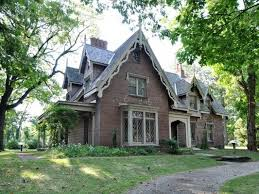
My next stop on the tour was The Hermitage located at 335 North Franklin Turnpike in Ho Ho Kus, New Jersey (see my review on TripAdvisor and VisitingaMuseum.com). The old homestead sits on a rather large parcel in the middle of a residential and commercial area that shows how time has progressed on in this town.
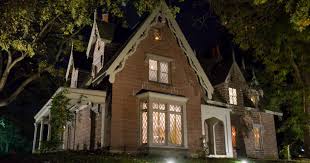
The Hermitage at 335 North Franklin Turnpike in Ho Ho Kus, NJ at Halloween
The Hermitage, a National Historic Landmark and house museum, incorporates an 18th century stone house that was visited during the Revolutionary War by General George Washington. It was also the site of the marriage of Aaron Burr and Theodosia Prevost. Its picturesque Gothic Design dates to the 1847-48 Gothic Revival renovation by architect William Ranlett for Elijah Rosencrantz. The house was willed to the State of New Jersey by his granddaughter Mary Elizabeth in 1970 and is furnished as it appeared in the 1890’s. A special exhibition in the 1888 summer kitchen honors the legacy of Bergen County historian, Claire K. Tholl. Her maps, books and drawings are on display.
The Hermitage in the Summer months
Bumping your head on some of these tours is easy as parts of the homes visited were built when people must have been smaller. When you start the tour of the Hermitage, you enter through the kitchen which was built in the late 1700’s and it is small. The rest of the house was built before the Civil War with high ceilings and a more Victorian flair. The rest of the house had been modernized in the 1920’s.
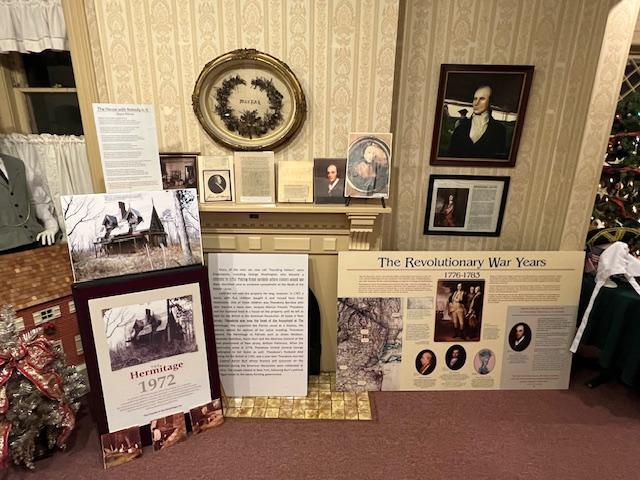
The Revolutionary War display in the house
The later history was hardly the glory days of when Aaron Burr married there. The last of the Rosencrantz descendants had gone broke after the Crash and their source of income which was a tearoom to traveling tourists from New York City when the Franklin Turnpike was a major thoroughfare, had dried up as fewer cars were traveling through the area. It had gotten to the point where the family was living in the back room of the house and the rest of the house was shut down. The house is still in need of a lot of repairs so donations are accepted by the foundation. It is an unique house with an interesting history so take the time and tour the house in detail.
Revolutionary War display at The Hermitage
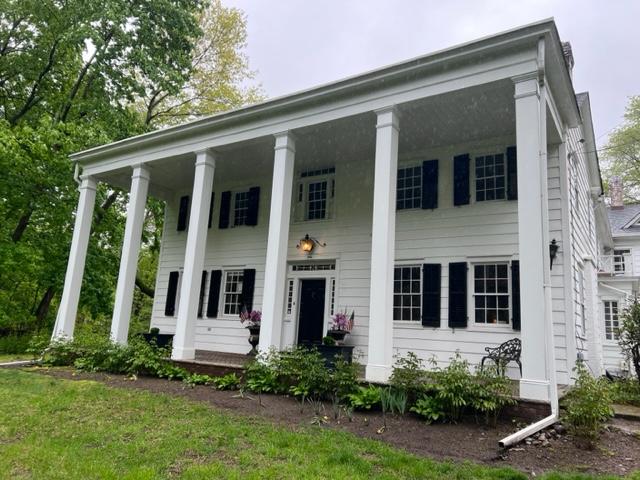
The next home on the tour was The John Fell House at 475 Franklin Turnpike in Allendale, New Jersey (see my review on TripAdvisor and VisitingaMuseum.com). The house was vacated by the former owner and was scheduled to be knocked down for townhouses. The community rallied together and saved the house from the wrecking ball. Now the house is being renovated room by room to its former glory.
The John Fell House at 475 Franklin Turnpike in Allendale, NJ
The historic John Fell House is named in recognition of Founding Father, John Fell, a revolutionary war patriot, who purchased the property circa 1766. The house was also home to Colonel Joseph Warner Allen, a Civil War hero for whom Allendale is named.
This 22 room Colonial Revival mansion was home to a Founding Father, a Civil War Colonel and a Sunday School that led to the first church in Allendale. The stately house is set on a hill on 2.8 acres near the center of town. The property also includes a late 19th Century Barn, exceptional wetlands and a stand of old-growth.
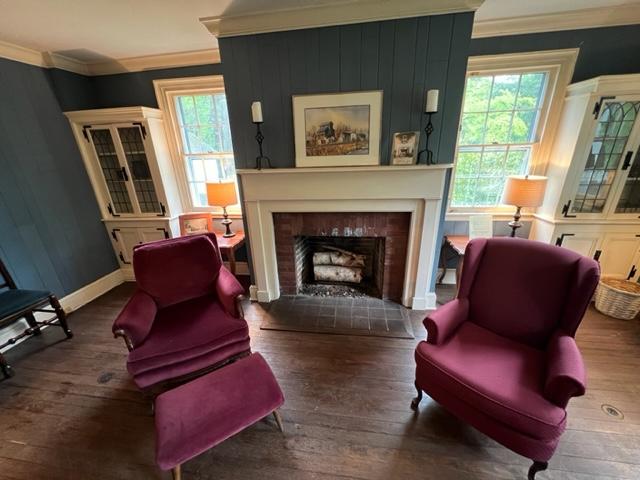
The Fell House Living Room
The history is very unique. John Fell led the local resistance movement against the British. He was arrested at the house by 25 armed Loyalist and imprisoned in New York City, where he kept a secret diary documenting the British Army’s horrific treatment of American prisoners of war. Located across the street from the house is the Celery Farm Natural Area, 107 acres of wetlands and woods originally known as “Wolf Swamp” and later “Fell’s Meadows”, which was originally part of the Fell estate.
The original section of the John Fell House
The home, which was built circa 1760 and originally called Peterfield, has had several subsequent owners, including John H. Thompson, John G. Ackerman, the Stephen Cable family and the Joseph B. Taylor family, who enlarged it in the Colonial Revival style in the early 1900’s. Colonel Joseph Warner Allen for whom Allendale is named, stayed at the house while he surveyed the route for the Paterson-Ramapo Railroad. He was a key New Jersey figure at the beginning of the Civil War. The house is listed on the National Register of Historic Places.
Exhibits will include recreations of early 18th and 19th century broadsides, early local 20th century newspapers featuring historic military news, copies of historic letters, photos and railroad news. Jim Wright gave a brief talk and a slide show on “Revolutionary Communications: Getting the Word Out in John Fell’s Day.”
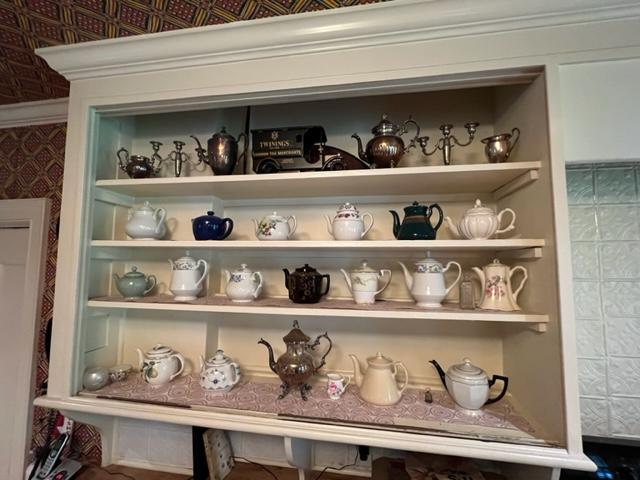
The Teapot Collection in the Kitchen
The Fell House is owned and operated by the Concerned Citizens of Allendale, a 501(c) 3 nonprofit group, which saved the house looked mostly modern to me as it had just been lived in by a family before the sale. The exterior of the house needs lots of work saved the property from being bulldozed to make way for a controversial townhouse development. The house is home to a tearoom, community events, school events, nature programs and an annual holiday open house.
The organization has also developed several history programs that inform the public and students about the history of the John Fell House, including reenactments of his arrest at the house. During every open house, docents inform visitors of the timeline of the house and its important role in American history. Historic preservationists have studied the house and produced a Preservation Plan that document the history of the home, barn and landscape while suggesting how to best restore, preserve and maintain the house and property. As a member of the Northwest Bergen History Coalition, the organization works with eight other historical sites to encourage both children and adults to learn about the region’s amazing history. (The Historic John Fell House Pamphlet)
The house tour was very interesting and the docents lead some of us to the outside grounds to show some of us some new discoveries such as an old well that was discovered. The only problem with the tour was that house was modernized for current times as it was a private home until just recently and needs more period furniture and decorations to it. While the outside looks historical on the outside, the interior is quite modern. The Fell House has a rich history but is a work in progress. It is still worth the trip just to see the grounds and hear about its rich history.
The next site on the tour was The Waldwick Signal Tower at 1 Bohnert Place, which had just finished a renovation (see my review on TripAdvisor and VisitingaMuseum.com). The tower sits in a rather obscure place by the railroad tracks up the tracks from the station. You have to make several twists and turns to get to the tower.
Waldwick Signal Tower at 1 Bohnert Place in Waldwick, NJ
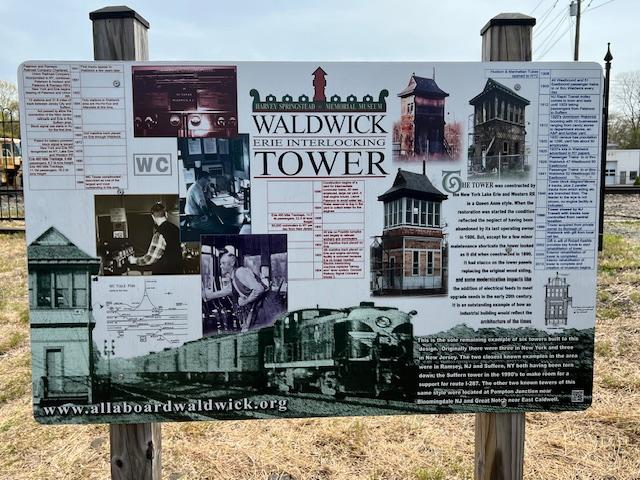
Built in 1890 by the New York Lake Erie and Western Railroad, the Waldwick Signal Tower was the key to the movement of railroad traffic within the newly created yard facility. Eventually it also handled 4 tracks of heavy m service on the Erie’s route between New York and Chicago. Manned 24 hours a day, seven days a week for over 50 years, it was also the hub for maintenance of the signal systems between Ridgewood, NJ and Suffern, NY. The tower museum is dedicated to the railroad workers of the area and educates visitors about the variety of jobs and operations of the Waldwick Facility. Check http://www.allaboardwaldwick.org for a schedule of events. (Historical pamphlet)
The train sign inside the Signal Tower
Waldwick’s Train Signal tower is both historically and architecturally significant. It is a rare historical treasure for its residents and railroad enthusiasts from far and wide. Before the turn of 20th Century, the Waldwick rail yard was an active repair depot and turn station for the Erie Main Line from Jersey City, NJ to Port Jervis, NY and was a major employer in Waldwick thus contributing to the bough’s residential and commercial growth.
The ornate Queen Anne style building was built in 1890 and housed the mechanism connecting switches and signals allowing trains to safely move from one track to another. The tower men who operated the switches by hand had a great power indeed in their time. By the mid 1980’s upgrades in computerized signal equipment warranted the elimination of the tower.
The lighting display at the Signal Tower
The tower was slated for demolition in June 1987. The Waldwick Historical Society members led by Kay Williams campaigned to place the tower on The National Registry of Historical Places. This accomplishment allowed the tower to at least stay dormant till the next wave of enthusiasts came along in 1999. Michael Brunkhorst and Glen Corbett banded together a group of citizens to form the All Aboard committee of Waldwick’s Historical Society. Curtis Springstead of Wanaque who is the great-great grandson of the renowned locomotive engineer Harvey Springstead, got wind of the tower’s trials. He stepped up to the plate and purchased the tower for $6,000 then gave the Tower to the Borough of Waldwick as a gift to preserve for future generations in honor of the trainman’s family name. The small All Aboard group set out to create awareness of the tower’s existence and it’s plight.
The historical sign of information
Before long, fund drives were organized and grant applications were filed. The response of the number of supporters including Mr. Robert Keeble have given this project a solid start. Meticulous measures are currently being made can now be witnessed at the track end of Bohnert Place, to maintain the tower’s historic authenticity. Attention is being given to the placement of exact shaped decorative shingles and the repair and replacement of the original slate roof are among the initial stage of it’s restoration.
The railroad tracks outside the Signal Tower
Mission Statement: The All Aboard continues seeking membership and financial support to complete the tower with the vision of becoming “The Harvey Springstead Memorial Tower at Waldwick” for generations of Waldwick citizens and for rail enthusiasts everywhere. If funding continues the tower is sure to be the pride of Waldwick with time and care. (All Aboard Pamphlet of the Waldwick Historical Society).
I was the only one at the tower that part of the afternoon. It was a colorfully decorated tower full of pictures and timelines. The docent who was there that afternoon could not believe the number of visitors that the tower was getting that afternoon. I told him if it were not for the tour, I would have never known the tower even existed. The history of the tower and how it played a role in the town of Waldwick. It was considered very innovative at that time. The fact that it was still being used into the 80’s was pretty amazing. Now they want to bring back some of the equipment that was being used at the time that is just sitting in warehouses. It will be an interesting place to revisit once those items are put into place.
I double backed on the tour with only an hour left and I went to the Zabriskie House at 421 Franklin Avenue in Wyckoff, New Jersey (See my review on TripAdvisor and VisitingaMuseum.com). This old home is a combination of historic home and modern day living as it was in the family’s hands until 1973.
Zabriskie House 421 Franklin Turnpike in Wyckoff, NJ
The original stone structure of the house was built by William Van Voor Haze in 1730 on a 550 acre of tract of land and is believed to be the oldest house in Wyckoff. Prior to 1806, a small parcel of land was purchased from William’s son and heir, Albert, to build the Wyckoff Reformed Church. In 1824, Albert completed a major addition to the house in the classically Dutch Colonial style and the original section of the home became the dining room.
The entrance to the house
The house was purchased by Uriah Quackenbush in 1867 and was willed to his granddaughter, Grace Quackenbush Zabriskie, the wife of the late County Judge John B. Zabriskie. In 1964, Mrs. Zabriskie, the last resident owner, donated the pond and the surrounding acreage to the township of Wyckoff. Upon her death in 1973, she bequeathed the house and the antique furnishings to the town. Throughout its history, the Zabriskie House has been used, at different times, as a village store, a candy store, a tavern, a hotel and a ballroom.
The kitchen in the original section of the house
Under the guidance of the house’s Trustees, the Zabriskie House is continuing restoration for future generations to enjoy. The Trustees have recently overseen extensive work on the porch and stairs, re-oiling of the roof, stone step repairs and limited gutter installation. Children can try colonial toys and all can guess the at the ‘What It’ table.
The Zabriskie House gardens
This was one of the quickest tours I went on as the house was closing down for the day and I was in the kitchen looking at one of the docent’s daughter’s wedding pictures. I excused myself and walked through out the house. It had been left the way it had when Mrs. Zabriskie was still living there. There were many antiques mixed in with the modern furniture. Nothing remains of the original owners but the docents told me that a clock was still in the house from the Quackenbush family. Most everything left in the house was owned by Mrs. Zabriskie.
The grounds outside the house
The docents described all the rooms to me and how the house was added on through the years. Watch your head as some of the places have low ceilings. The kitchen really gives you an idea of how old the home really is in comparison to the rest of the house. It was a nice mix of the old and the new. At the end of the tour, the members of their Friends group had the nicest selection of homemade treats and lemonade. It was nice to talk to members and what goals they have for the house. It looks over the pond in the park next door and is a picturesque view.
The house gardens outside the home
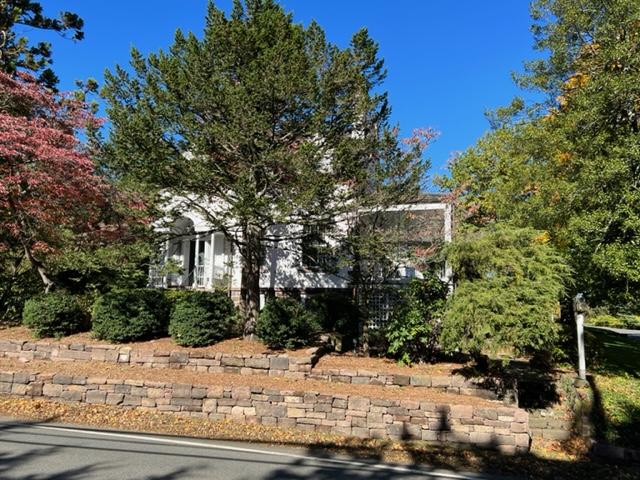
I had just enough time to visit my last house, the Van Allen House at 3 Franklin Avenue (corner of Route 202 & Franklin Avenue) in Oakland, New Jersey. Most of the volunteers were leaving for the day but let me still walk around as many of them were talking around a table. The house is falling apart and the grounds are over-grown.
Van Allen House at 3 Franklin Avenue in Oakland, NJ
The Van Allen House was host to George Washington and troops on July 14, 1777 and helped get word to his field officers by allowing him to compose documents there which were dispatched by carriers along the Ramapo Valley trail, now Route 202. In 1915-1919 owners of the Van Allen House and builders of the Stream House adjacent were the publishers and editors of the Sussex Register of Newton, NJ. Edward Page often published trade and economic articles in the NY Times, inspiring his son Allen to take over the Sussex Register until Allen’s death in 1917, passing on ownership to the father Edward until he died 12/26/1918. The Sussex Register joined the NJ Herald in 1928. (Tour Pamphlet)
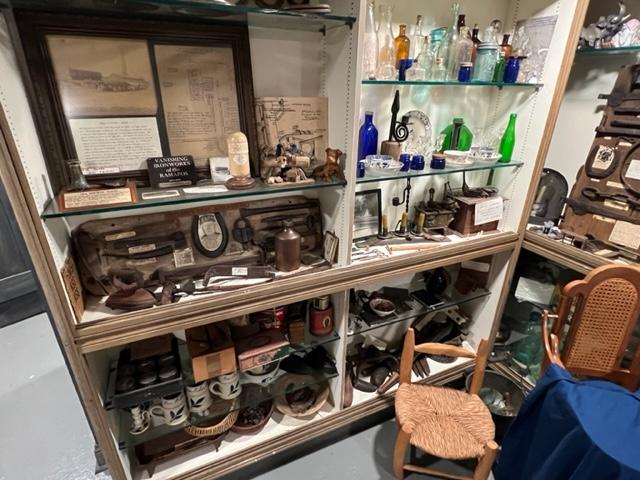
Van Allen House artifacts
I was able to tour the Van Allen House and grounds on my own. Most of the docents were relaxing after a long day. I walked up and around the house and there was not much to see as the house needed a serious renovation. The new roof had just been put on the house but there still were leeks in it. The grounds were loaded with weeds and was in need of a good landscaper. The one thing the house had going for it was their gift shop. They had the most interesting sewn dolls that one of the members makes and they had a beautiful selection of Christmas ornaments.
Van Allen House artifacts
One the Van Allen house goes through some form of restoration, it will really be a jewel on the tour as it sits on a nice piece of land that was part of the original estate.
Overall it was a nice tour of the historical sites and gave me a real insight to old Bergen County when it was still called Franklin Township that was formed in 1771. The population was small. The families who lived here all knew one another , worshipped together and intermarried. It showed the important role that Bergen County played in the American Revolution. If you are able to take time out to visit these sites, you will be pleasantly surprised on what you will learn. I did not realize how much history was right in the neighborhood. (Tour Pamphlet)
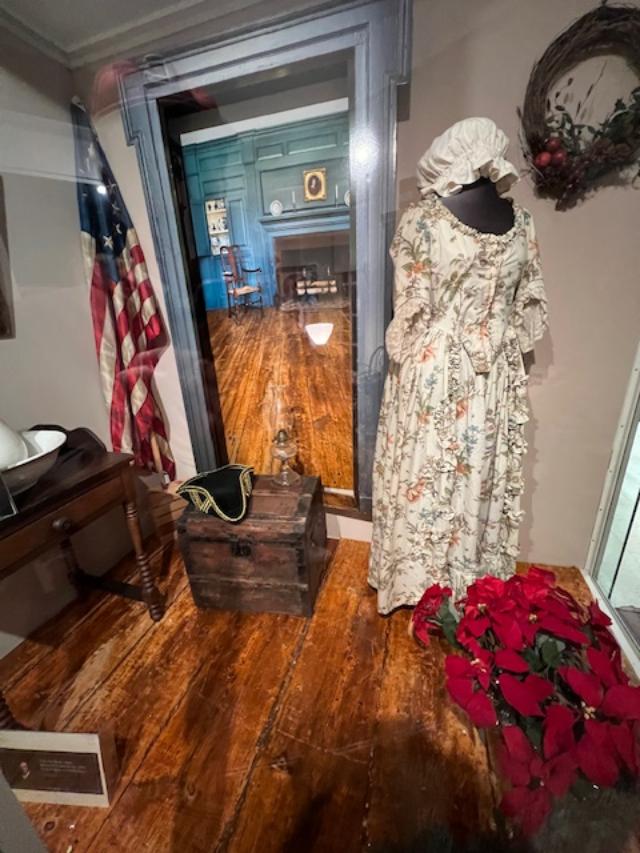
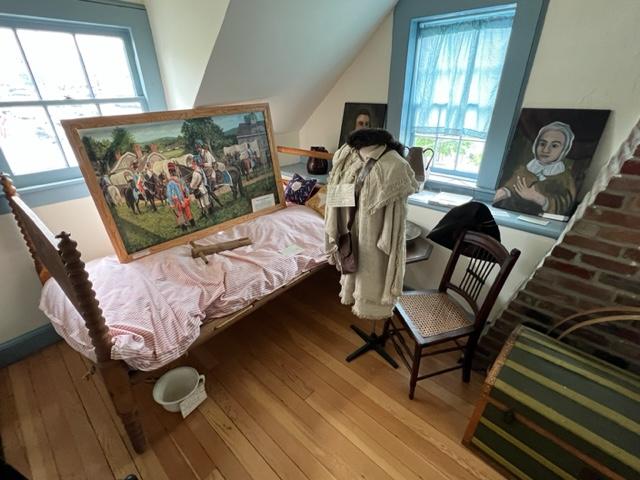
Van Allen House bedroom
Don’t miss this amazing tour of Historical sites in Northern Bergen Country each May.
Places to Visit:
The Schoolhouse Museum-Ridgewood Historical Society