I recently revisited the African Museum of Art on the SMA Father’s and on this trip really took my time to learn about the Mission and study the art in the various displays. Each country that the Mission is involved with is represented here with detailed information on the meaning of the art and its purpose. It is an interesting approach to understanding the culture of each of these countries.
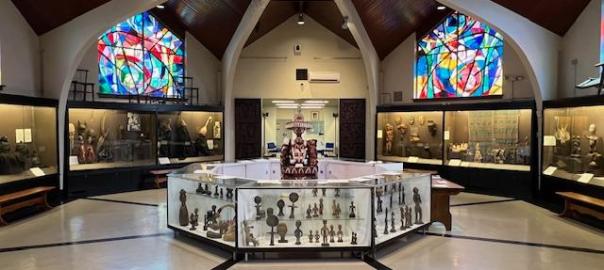
The beautiful stained glass windows line the ceiling and walls and has a beautiful effect in the room on a sunny day.
The sculpture in the middle of the main hall
The History of the Museum:
(From the museum website)
This museum was established in 1980 and is one of the only rare few in the United States dedicated solely to the arts of Africa. Its permanent collections, exhibited on a rotating basis, offer a unique advantage in the study and research of sub-Saharan sculpture and painting, costumes, textiles and decorative arts, religion and folklore.
The main hall of the museum
The history of the Mission
The history of the Mission
The history of the Mission
The African Art Museum of the SMA Fathers is one of five museums around the world founded and maintained by the Society of African Missions, an International Roman Catholic missionary organization that serves the people of Africa.
The display case that line the main hall
The display case that line the main hall
The art works up close
The descriptions of the works
The display case that line the main hall
Some of the works up close
The description of the masks
The display case that line the main hall
The museum is the continued vision of SMA’s founder, Bishop Melchior de Marion Bresillac (1813-1859). The French-born clergyman urged his Society to respect and preserve the culture of the peoples they serve, the unique among the missionaries of his time. (This information is provided by the museum).
Some of the works being featured in the exhibition
Their current exhibitions is on the “Africanizing of Christian Art” which shows the 20th Century encounter between Catholic Christianity and the visual culture of the Yoruba, a prominent west African people of southwest Nigeria under the conditions of late colonization (This information provided by the museum).
The hallway off the main room
Linking the walls of the main room are wooden carved doors from a palace in Africa. The interesting detail work tells it own story.
The description of one of the doors
Panel One
Panel Two
Panel Three
Panel Four
The collection contains many works in the form of masks, textile work, religious figurines and decorative arts. Each display case shows a different theme in the art.
The works of art in the cases
The puppets in the case
The works of art lining the cases
The engaging Mask collection
The museum is the main hallway of the church. I found it a quiet place where you could really concentrate on the beauty of the art. It grounds are also nice to walk around in in the nice weather.
The Chapel just off the museum is interesting to visit. I wondered how many people came to serve here and how the service was performed.
The main chapel of the mission
The beautiful stained glass windows in the chapel
The museum is a true hidden gem of wonderful and interesting testimonial and contemporary art. An inspiring museum if you take the time to really enjoy it.
One of the things I love about being a member the Metropolitan Museum of Art is the private Member’s Night ‘Met After Hours’ they hold about four times a year. The museum is open after the closing hours and it is a night of wondering the museum galleries, great music and entertainment and wonderful tours and talks in the galleries. You really experience the museum at its best and it does shine.
The lines move very quickly to get into the museum and with traffic getting into the City that night, I arrived about twenty minutes after opening and there were no crowds to face and I got right in. There’s always a sense of excitement on these nights.
The Grand Hall in the front of the museum decorated with Spring flowers
The beautiful Spring flowers lined all the urns around the Great Hall
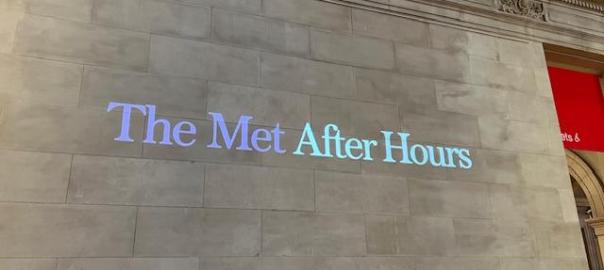
The museum welcoming all the members of the museum at ‘The Met After Hours’
I started my walk around the galleries in the Greek Wing touring the main hallway. It still boggles my mind how old these statues are and I am looking at something almost two thousand years old.
The Museum’s collection of Greek and Roman art comprises more than thirty thousand works ranging in date from the Neolithic period (ca. 4500 BCE) to the time of the Roman emperor Constantine’s conversion to Christianity in 312 CE. It includes the art of many cultures and is among the most comprehensive in North America. The geographic regions represented are Greece and Italy, but not as delimited by modern political frontiers: Greek colonies were established around the Mediterranean basin and on the shores of the Black Sea, and Cyprus became increasingly Hellenized. For Roman art, the geographical limits coincide with the expansion of the Roman Empire. The department also exhibits the art of prehistoric Greece (Helladic, Cycladic, and Minoan) and pre-Roman art of Italic peoples, notably the Etruscans (Metropolitan Museum of Art website).
One of the statues that stood out that evening
I spent some time admiring the statues and the craftsmanship of the works along the hallway. The only problem is that most of the Greek and Roman Galleries were closed for the evening so I headed off to the Renaissance Wing. I love the luxury objects in the collection of silver and gold and again their craftsmanship is still unrivaled today. To make these objects takes intensive work and talent.
The timepieces show how advanced science had become and the importance of it in not just measurements but in beauty.
The lobby of the American Wing with the facade of what was a former bank and a Wall Street private mansion. I love the quiet elegance of this building and to think they moved it here piece by piece. The American Wing Cafe was open for the evening and the area was busy throughout the evening. It is nice to just sit and enjoy the views by the fountain. The artwork is beautiful.
Visitors to the American Wing will experience in more than 75 galleries on three floors varied art, design, and culture from the mid-seventeenth to the mid-twentieth century, with some contemporary expressions, by a diverse array of artists from across North America. Since our founding in 1924, this curatorial department has evolved its collecting to include some 20,000 artworks in many mediums by African American, Asian American, Euro-American, Latin American, and Native American makers, affirming ever more inclusive definitions of American art and identity. These dynamic holdings include painting, sculpture, drawing, furniture, textiles, regalia, ceramics, basketry, glass, silver, metalwork, jewelry, as well as historic interiors and architectural fragments, produced by highly trained and self-taught artists, both identified and unrecorded (Metropolitan Museum of Art website).
The evening then moved to the Egyptian Wing and the Temple of Dendur, where the entertainment and the cocktail bar was located.
The Temple of Dendur is the hub of activity on Members Nights
This small temple, built about 15 B.C., honored the goddess Isis and, beside her, Pedesi and Pihor, deified sons of a local Nubian ruler. On the outer walls between earth and sky are carved scenes of the king making offerings to deities who hold scepters and the ankh, the symbol of life. The figures are carved in sunk relief. In the brilliant Egyptian sunlight, shadows cast along the figures’ edges would have emphasized their outlines. Isis, Osiris, their son Horus, and the other deities are identified by their crowns and the inscriptions beside their figures (Metropolitan Museum of Art).
These scenes are repeated in two horizontal registers. The king is identified by his regalia and by his names, which appear close to his head in elongated oval shapes called cartouches; many of the cartouches simply read “pharaoh.” This king was actually Caesar Augustus of Rome, who, as ruler of Egypt, had himself depicted in the traditional regalia of the pharaoh. Augustus had many temples erected in Egyptian style, honoring Egyptian deities (Metropolitan Museum of Art).
The area was packed with patrons enjoying music and talking by the bars. The crowds were so large at the beginning of the evening that I waited until after 9:00pm for the second performance of the group playing. So I headed into the section of the Egyptian Wing to look at the galleries that were open. I love walking around the Egyptian Wing of the Met. It is one of the most extensive collections outside of Egypt and the most fascinating Mummy exhibition.
Admiring one of the Mummy exhibits in the Egyptian Wing
The Department of Egyptian Art was established in 1906 to oversee the Museum’s already sizable collection of art from ancient Egypt. In the same year, the Museum’s Board of Trustees voted to establish an Egyptian Expedition to conduct archaeological excavations in Egypt. Between 1906 and 1935, The Met’s Egyptian Expedition worked at a number of important sites, including Lisht in the north and Thebes in the south, and the objects gifted to The Met by the Egyptian antiquities service form the core of our collection. Over the years, the Department of Egyptian Art has also been able to acquire, through purchase and bequest, several important private collections (Metropolitan Museum of Art website).
The ancient tablets outside of the Mummy Exhibition
The Egyptian artwork outside the Mummy Room
The tablets outside the Mummy Room
When the whole gallery is open, it is a treasure trove of objects and information from each Dynasty. I have been mind-boggled by these galleries since I first visited the museum in the third grade for a class field trip. I remember sketching artifacts for a class project and am still fascinated about how old some of these objects are and condition they are still in after thousands of years. It is my favorite part of the museum.
By 9:00pm, the entertainment was starting again, so I joined other members for a cocktail and enjoyed the music in the Temple of Dendur Gallery.
The Temple of Dendur fully lit for the evening before the start of the entertainment
The signature cocktail of the evening, the Starlight Spritz
Enjoying a Starlight Spritz while listening to the music
The bartenders can mix a drink
After a long week at work, it was nice to relax and enjoy the music. The music that night was performed by artist Jasim Perales and Friends, an Afro-Latin Jazz performance. The music was relaxing and soulful and the crowd had a wonderful time.
The start of the music again at 9:00pm
The trio performing
A clip from the entertainment that night
The Master of Ceremonies that night, Jasim Perales
All good things come to an end and it was time leave. The night was dark and the winter air was crisp creating the perfect Winter evening to set out into for the walk back to Port Authority. The Upper East is so beautiful at night.
The front of the Met that night
The artwork is always so impressive outside the Met
It was in the low 40’s that evening and the perfect night for a walk around the Upper East Side and Midtown. It still surprises me after all these years of walking around Manhattan how beautiful the City really is at night.
It was another spectacular evening at the Metropolitan Museum of Art. Thank you to the Membership and Special Events Departments for hosting another wonderful evening.
The members of the Bergen County Firemen’s Home Association met at the Harrington Park Fire House to start the stuffing of the envelopes for the fundraising efforts of the organization. Monies raised by the fundraiser help pay for entertainment, refreshments, the food for the barbecue, gifts to the residents and for items that residents might need.
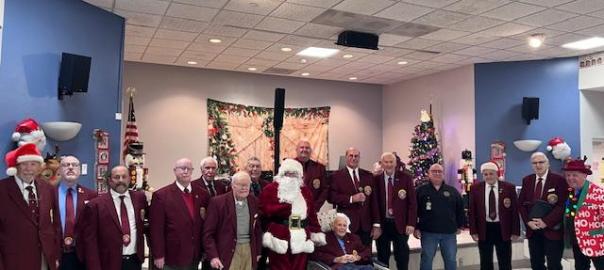
The members of the Bergen County Firemen’s Home Association at our 2025 Christmas Party for the residents
Santa joining us for the Annual Christmas party at the home
This fundraising effort does so much for our fellow firefighters at the home. It provides entertainment, refreshments, gifts at the holidays, special projects at the home that benefit everyone and funds for us to run our annual barbecues and Christmas parties.
Chef Prince cooking at our Annual Barbecue in August 2025
The wonderful barbecue feast made for the residents of the NJ State Firemen’s Home at the August 2025 Barbecue
If you are interested in becoming a member of the Bergen County Firemen’s Home Association, please attend one of our meetings at the Boonton Firemen’s Home in Boonton, NJ. Our meetings are in February, April, June, August, October and the first weekend in December for our Annual Holiday Party.
Members enjoying breakfast at our November meeting hosted by the Wyckoff Fire Department
The members of the Bergen County Firemen’s Home Association
If you would like to make a donation to our organization, please send it to:
BCFHA
C/O Jeff Parma
277 Harriott Avenue
Harrington Park, NJ 07640
Please make the checks out to the Bergen County Firemen’s Home Association
Our 2026 Meeting Schedule:
All our meetings at the home start at 12:00pm at the NJ State Firemen’s Home in Boonton, NJ:
February 15th
April 19th
June 13th (June Barbecue)
August 15th (August Barbecue)
October 18th
December 6th (Annual Christmas Party)
A big “Thank you” from The Bergen County Firemen’s Home Association Executive Board 2026
Over the years I have heard newspapers saying some negative things about the City of Bridgeton, NJ in Cumberland County. The crime, the problems and the rows of rundown housing. I have to admit that the city has its share of problems like any city but Bridgeton is a paradox. For all its problems, it has so many interesting things to see and do. As I have been exploring historical sites of South Jersey, I have made many trips through the city and driven through the neighborhoods and walked the downtown and its really interesting.
When you leave the city on any side, you are in the countryside. There are all sorts of fields of crops as far as the eye can see and many Farmers Markets just outside its borders. When you return though, you know immediately that you are in the city’s borders as housing just seems to pop out of nowwhere.
When I was visiting museums and historical sites for a blog I was writing on Southern New Jersey, I left Greenwich, NJ and took a local country road that took me through the back roads and farm country to the big city of Bridgeton, NJ where I explored their now rundown downtown. I then explored the crown jewel of the community, the Old Presbyterian Church and Cemetery.
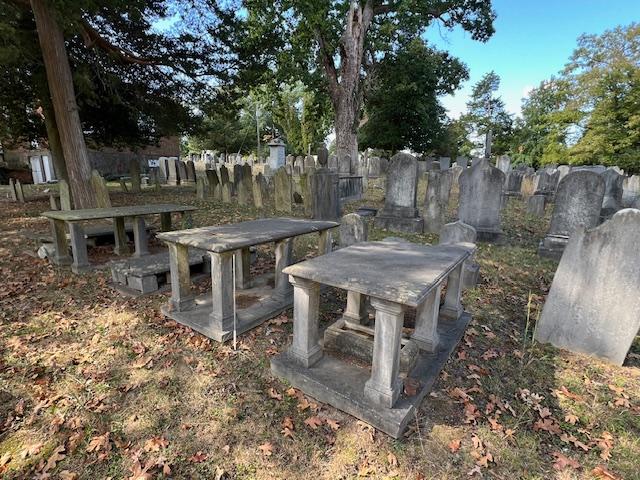
The church stands out like a stately jewel in the middle of the town and is so beautiful and graceful at any time of the year especially in the late Spring and the early Fall when it is perfect for taking pictures. I love its historic cemetery with its Colonial era church and the gravesite that dates back to the 1700’s.
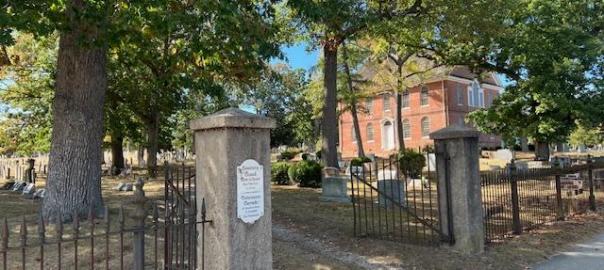
The Old Presbyterian Church and Cemetery at 54 West Avenue South in Bridgeton, NJ
Visiting the Old Presbyterian Church and Cemetery was an interesting experience. While trying to get from Greenwich to Bridgeton should have been a straight run but there were no names on the signs, and you just had to figure it out. I found the right road and it led me right to the cemetery.
The Presbyterian Church itself is only used now for special occasions and events but is an elegant building that sits on top of a bluff overlooking the downtown area. During the daylight hours you are allowed to roam around the cemetery looking at the gravesites (See my reviews on TripAdvisor and VisitingaMuseum.com).
So many famous politicians, war heroes, founding fathers of the City of Bridgeton and entrepreneurs at the turn of the last century are buried here.
The church and the historic cemetery.
What I found interesting about the cemetery was the family plots with the generations of people buried next to one another and their stories. It was sad when the parents buried their children and then died a few years later. Trying to figure the narrative of these families can be heartbreaking.
The family plots at the cemetery
The really sad part of such a historic cemetery is that it is so overgrown. I was walking through in some parts a foot of weeds. I know that taking care of a cemetery this size must be hard, but I would think there would be more care of the dead considering this is a destination for historians.
The historic cemetery in the Summer of 2024
When I finished touring the church grounds, I took a tour of the Bridgeton Historical Downtown. It was such a waste to see a bunch of old buildings falling apart and most of the businesses closed or small run-down businesses located in them. A block away was a more modern downtown with newer buildings. The shopping district caters to the very large Hispanic population that lives here and is great if you are looking for provisions for a picnic.
The one place that did stand out for me was the Century Bakery at 525 North Pearl Street in Downtown Bridgeton. They have some of the best and most creative doughnuts around. I could never make up my mind.
Century Bakery at 525 North Pearl Street in Downtown Bridgeton
The bakery just smells good when you walk in and the staff could not be nicer and more accommodating. I could barely make up my mind with all the delicious doughnuts to choose from.
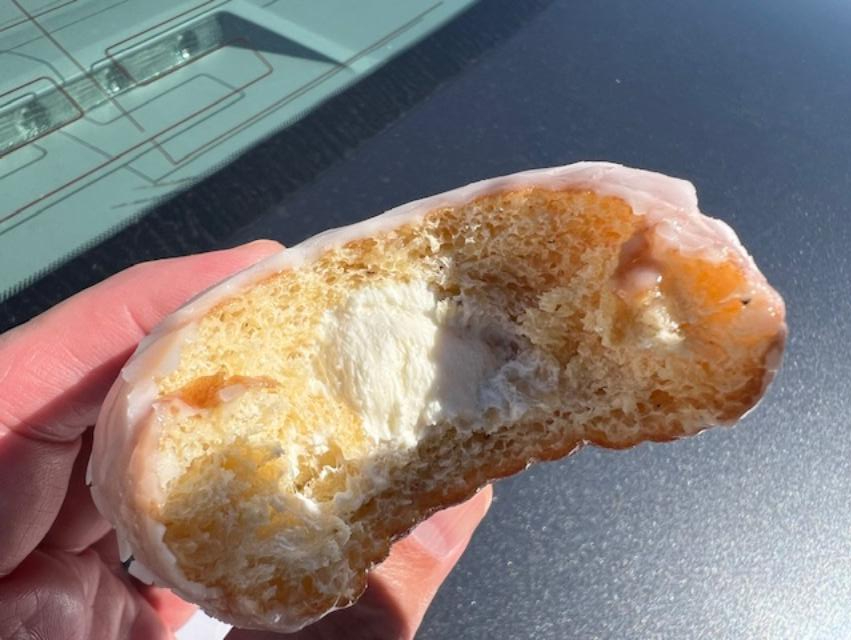
I could not figure out what I wanted with all these delicious choices displayed in the cases. I finally decided on a Glazed Cream filled doughnut that was just mind blowing. It was so delicious. I had wanted to go back for another but did not want to ruin my appetite for lunch. For another trip.
This was like biting into a piece of heaven
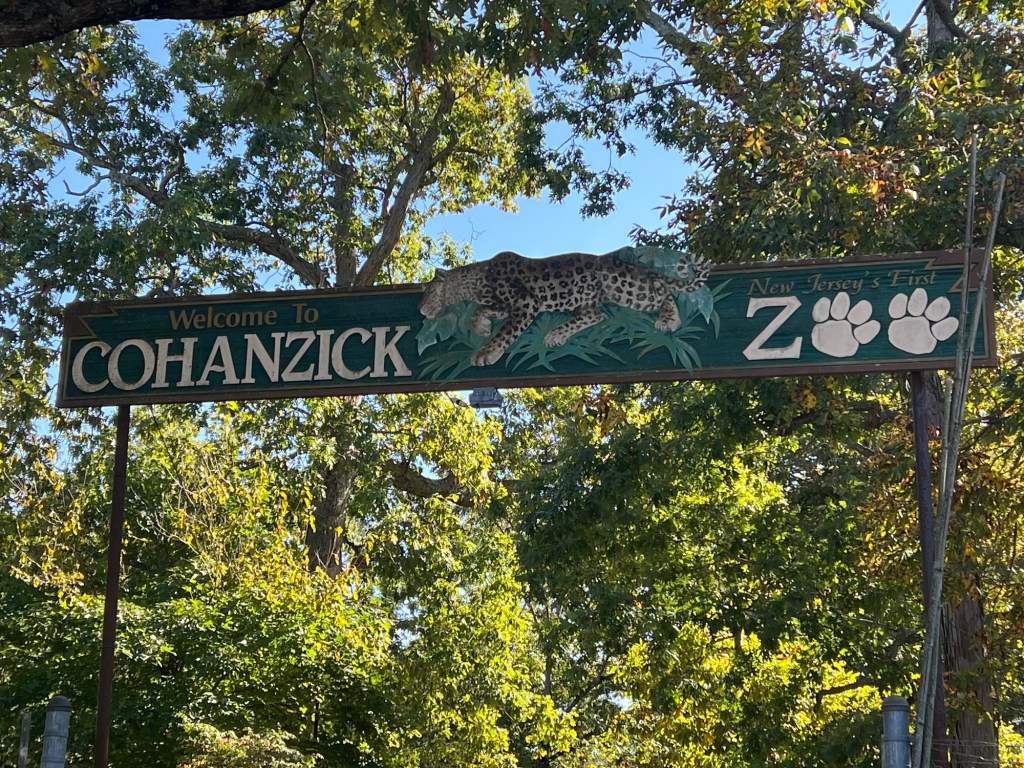
When I visited Bridgeton in the Fall of 2024 for Halloween, I took the time to visit the Cohanzick Zoo and that was an interesting detour. The Zoo is part of the Bridgeton Park system like it is up in Bergen County. It is a small County zoo that takes about an hour to visit.
The zoo has an old fashioned feel with smaller rescue animals and equally not too large cages. The zoo is mostly comprised of animals who were rescued from either being poached, illegally transported or had been used as pets, many of them being neglected and abused.
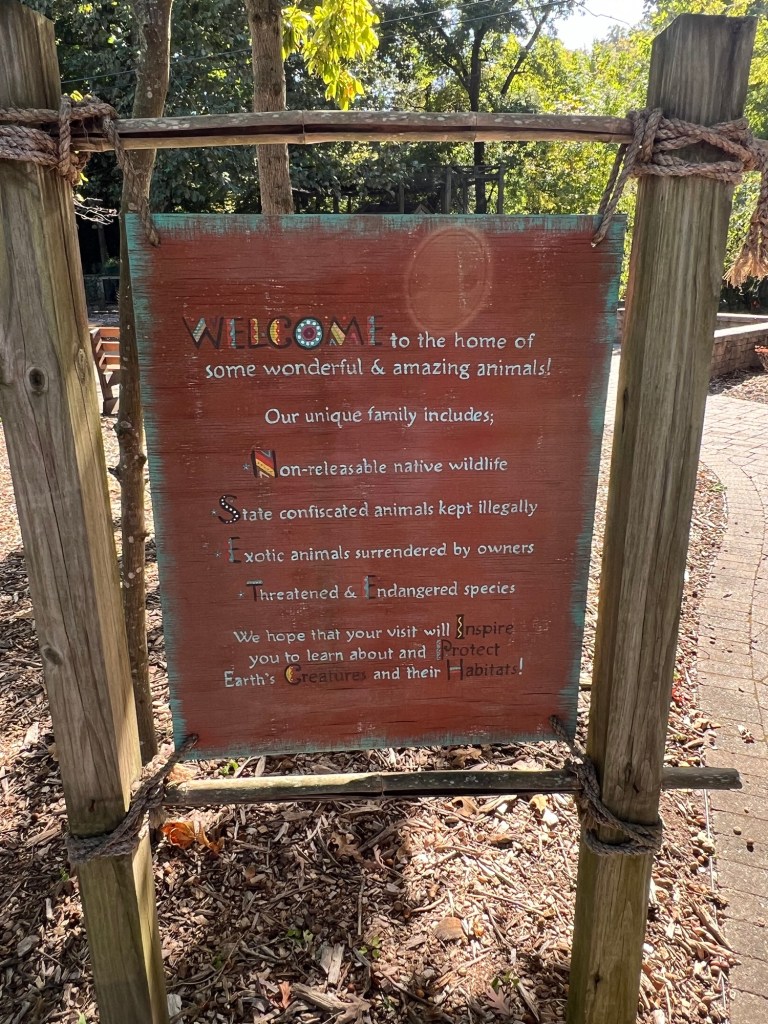
The sign that welcomes you to the park at the Cohanzick Zoo
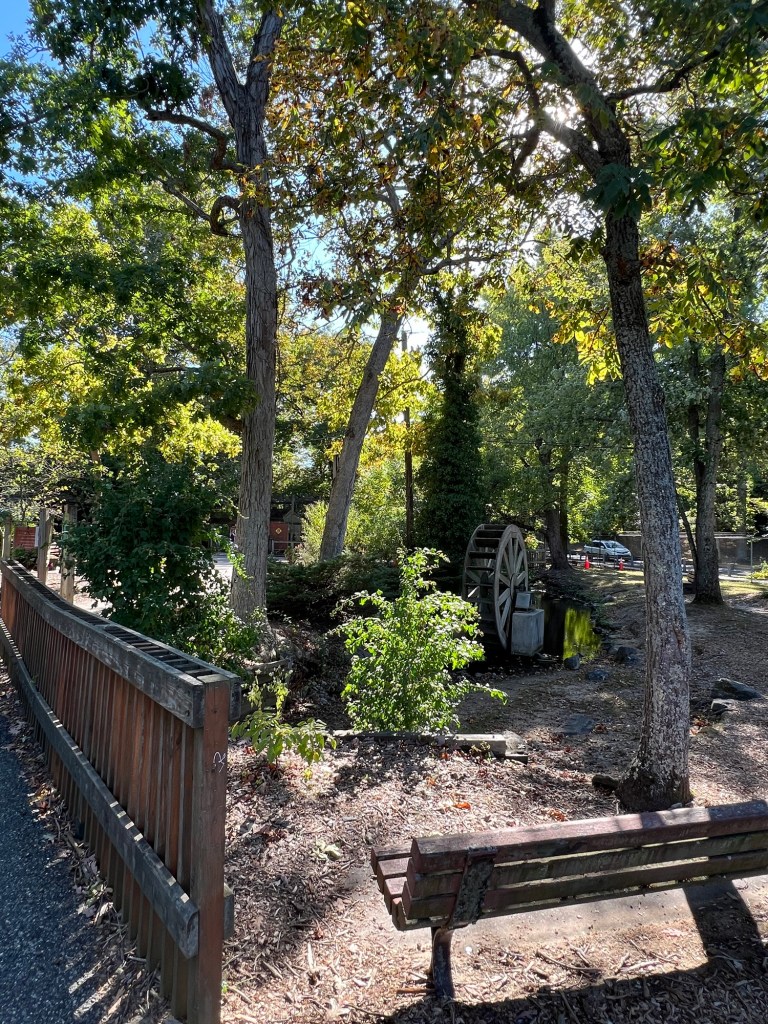
Throughout the park amongst the cages of wildlife are strolling gardens and animal related statuary.
The pathways and gardens were still in bloom the afternoon that I was there and it is a nice way to spend do the afternoon.
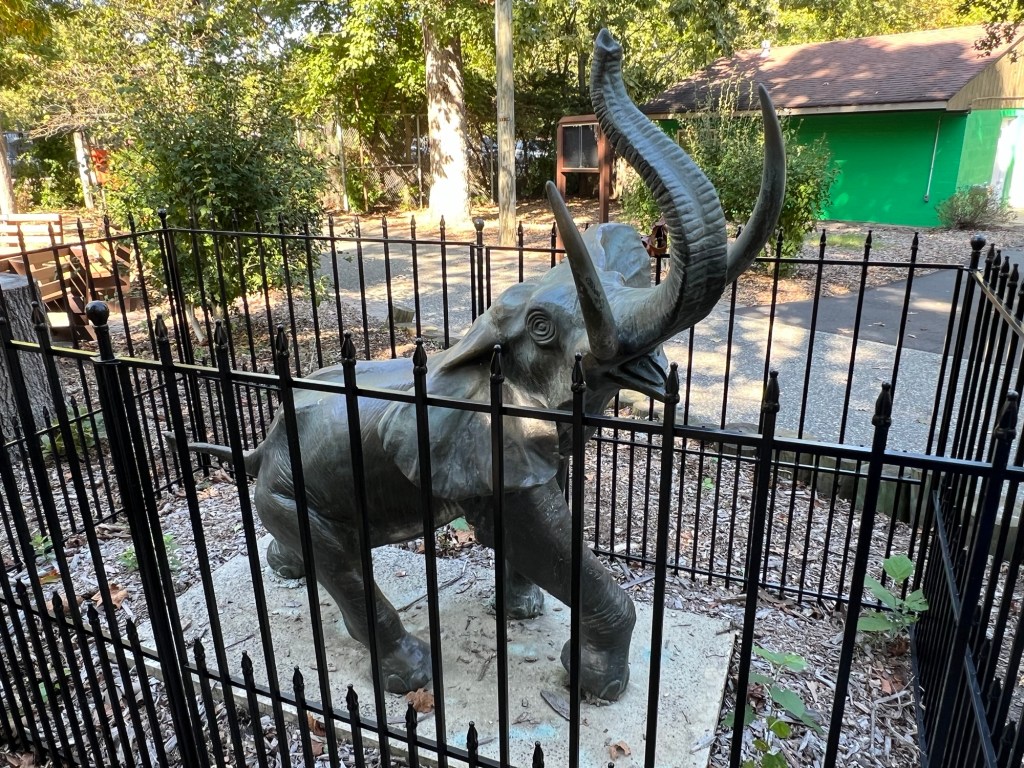
The Elephant statuary at the entrance of the zoo
The status of how some animals found their home here
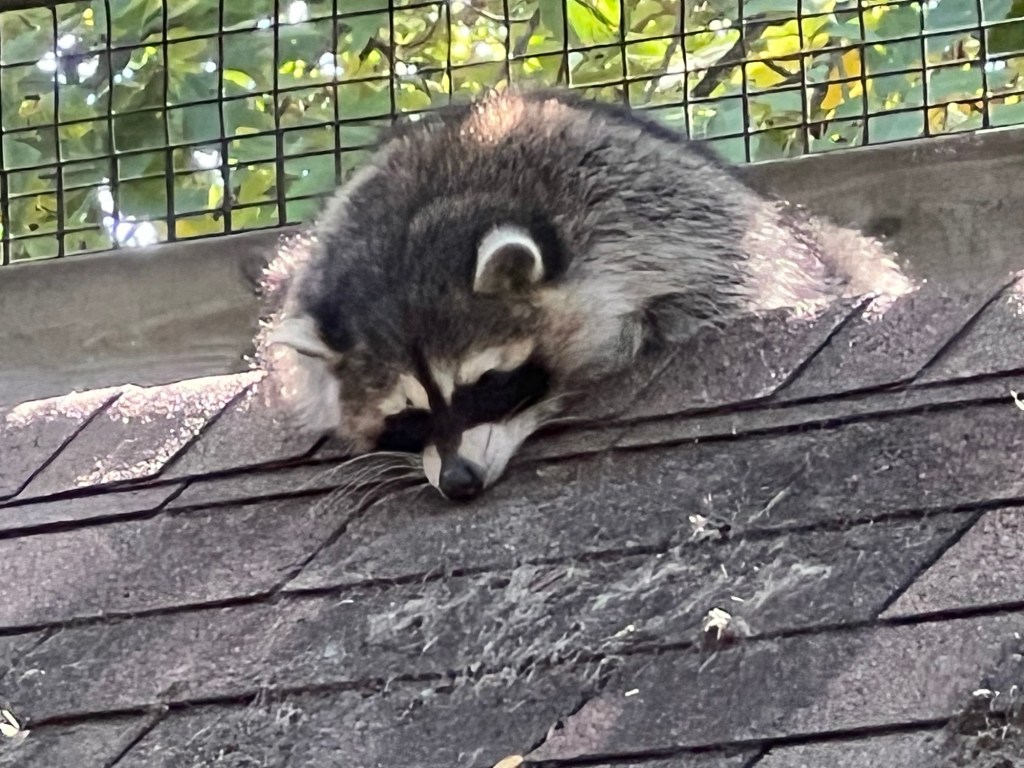
The first resident I finished was the Raccoon House, where it looked like the raccoon was taking a snooze. He really looked out of it when I passed the cage.
The Raccoon House
The Raccoon Crossing sign
This poor little guy was out like a light
The zoo is one of the smaller more localized ones that I have visited so you can see the whole zoo in a short amount of time. Then you can walk leisurely around the paths and revisit the exhibitions again. Some of the animals like the peacock family, just wonder around the park and do their thing.
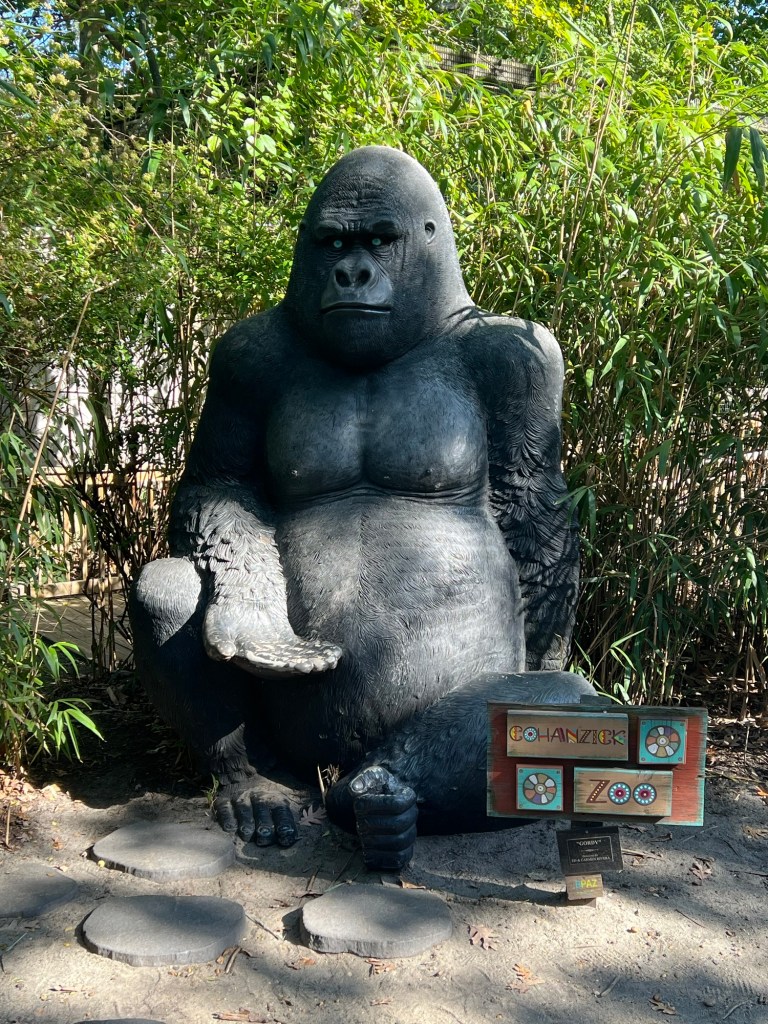
This gorilla sculpture that greets you in the back part of the zoo
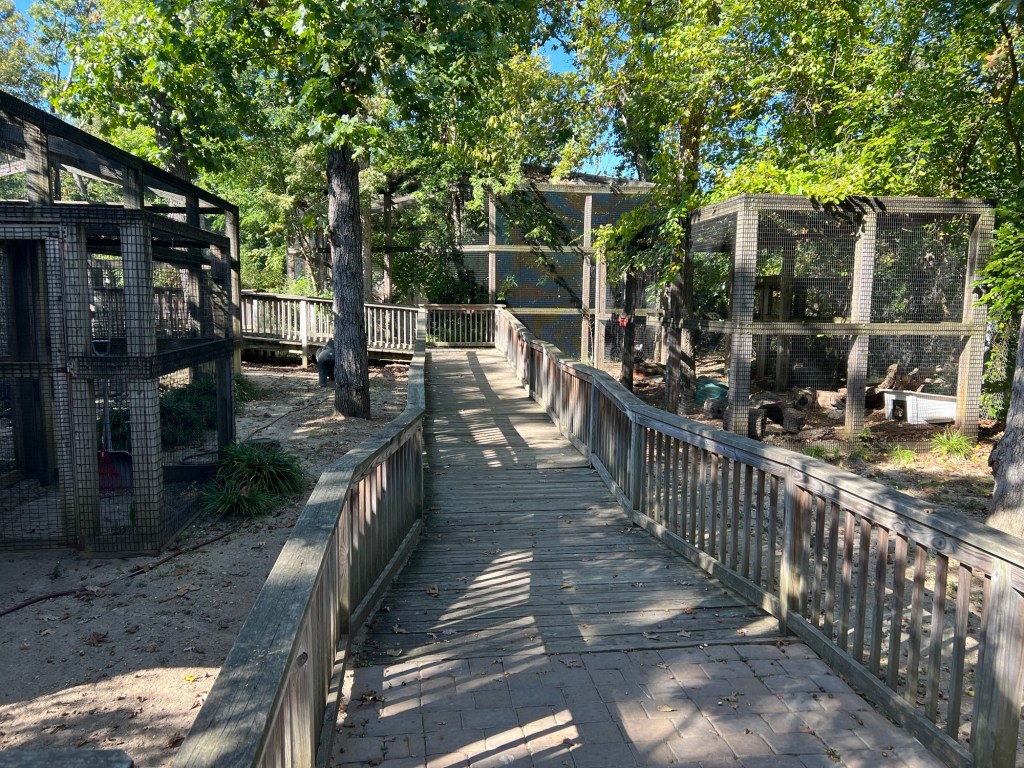
Following the walkway to the back pens where a lot of the small animal and bird displays were located
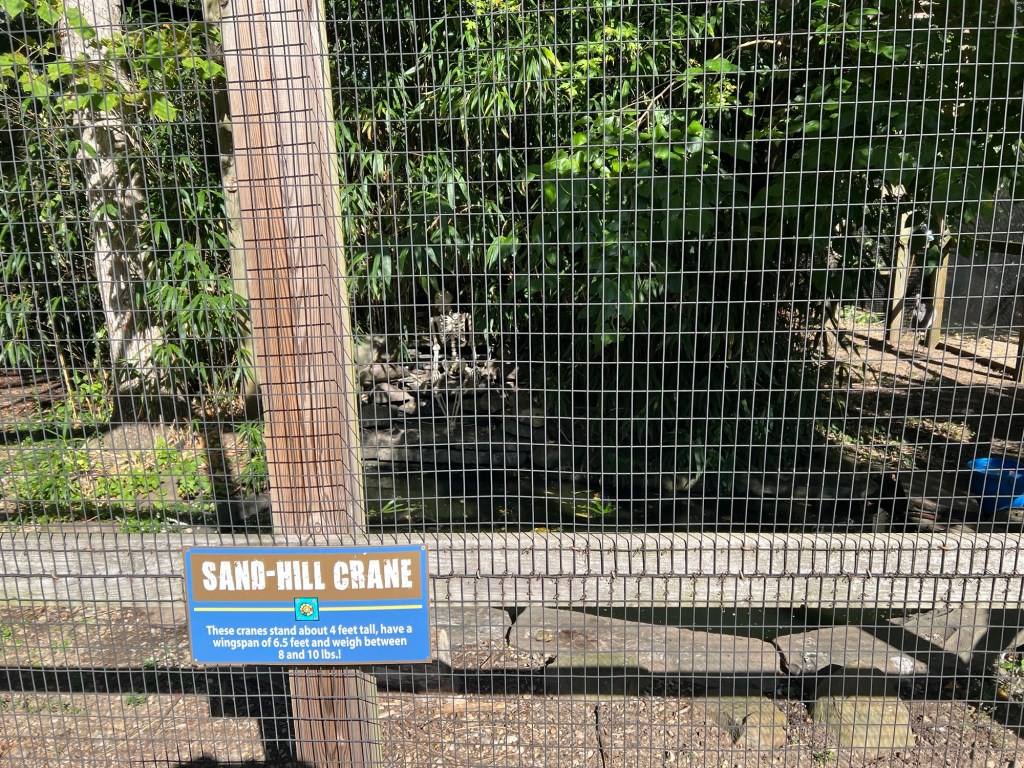
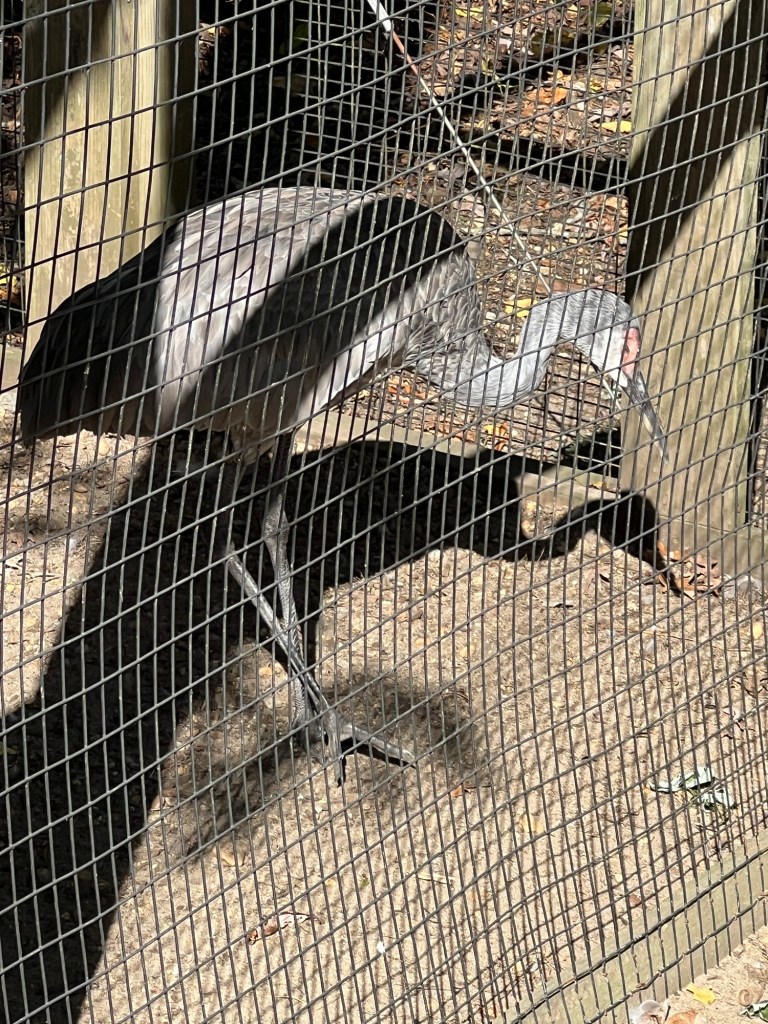
The next exhibition that I visited was the Sand Hill Crane and I read that the poor little guy had been injured. He seemed a bit more optimistic when I passed the cage. I think that the animals just want some attention.
The Sand Hill Crane display
The Crane was watching all of us as we passed his cage
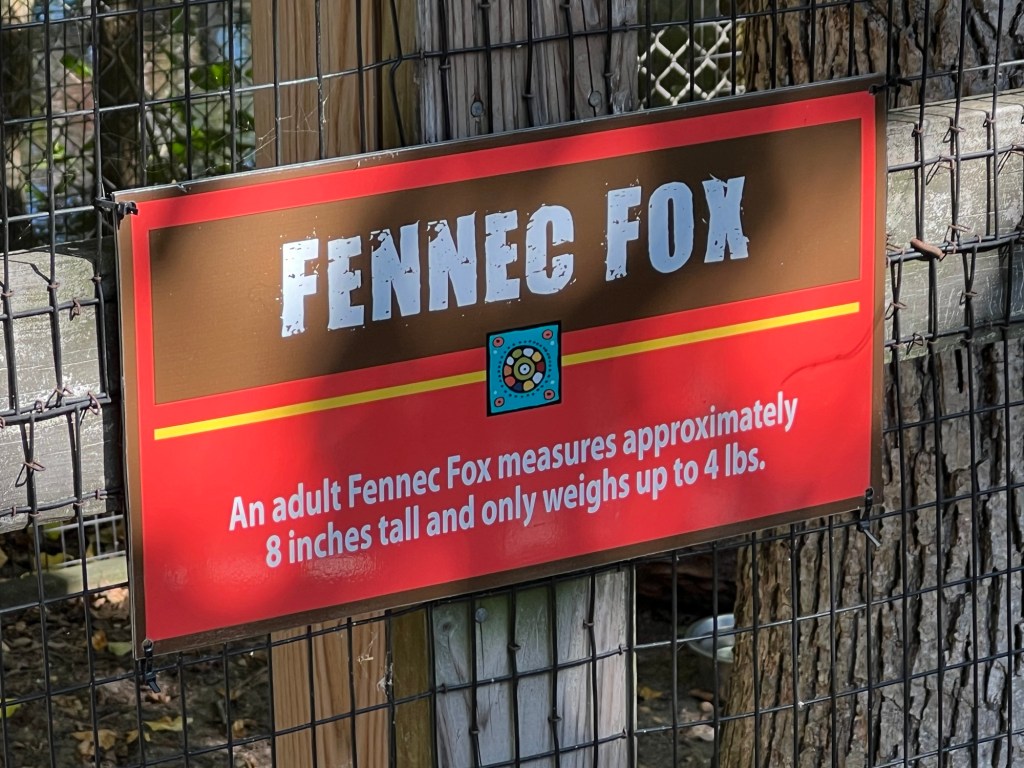
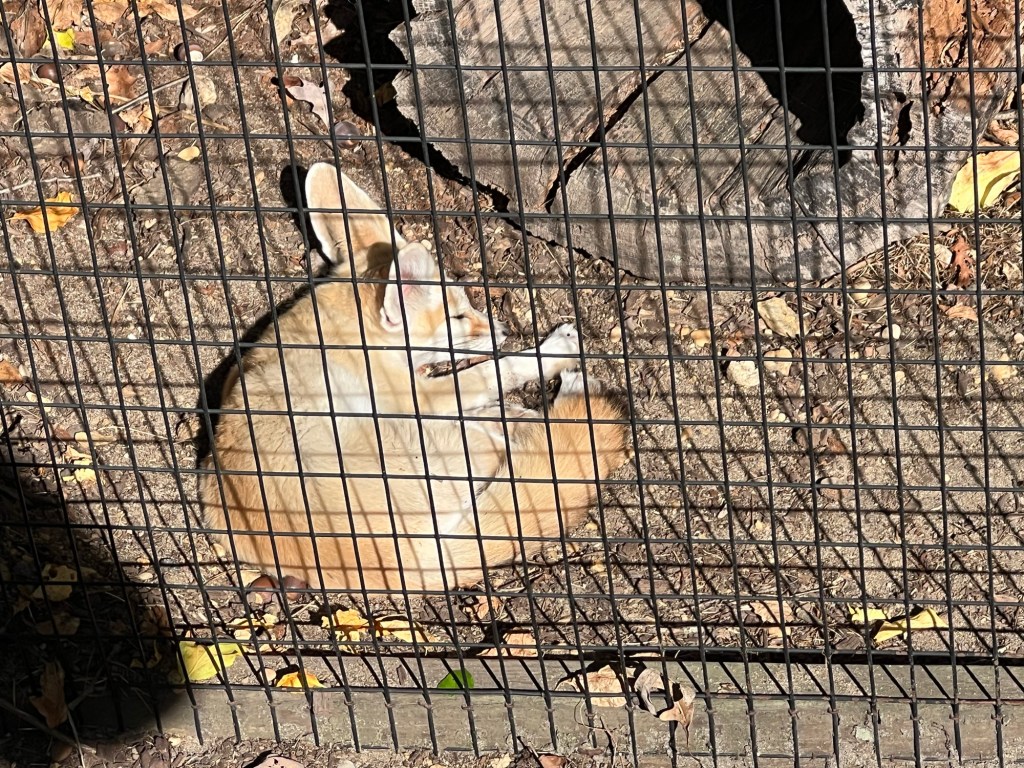
The next small animal that I visited was the Fennec fox and the two that I saw were fast asleep on this warm afternoon. They must have had a busy morning.
The Fennec fox cage
The foxes that I saw that day were fast asleep
One of the historical sites that I had wanted to visit was the historic Potter’s Tavern across from City Hall. I tried twice to stop in to see the Potters Tavern in Bridgeton but then double checked the guide and found out that it is only open on Sundays in July from 1:00pm-4:00pm.
Finally in the Summer of 2024, Potter’s Tavern opened for touring again and is now open on Sundays. It is well worth stopping and touring this important part of our Revolutionary War history.
Potters Tavern at 49-51 West Broad Street in Bridgeton, NJ
The tavern is one of the city’s connections to the Revolutionary War where patriots from that time met and plotted their strategy during the war. It was also a meeting place for men who need to gather after a hard day on the farm. These taverns were part of the social factor at a time before electronic communication.
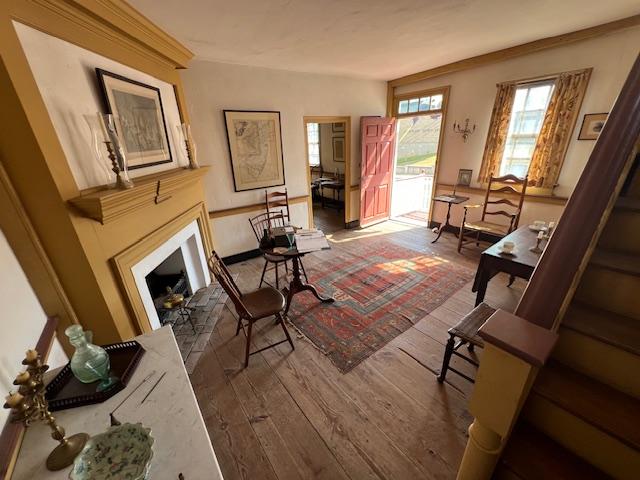
The Entrance room of the Potter’s Tavern
The Hearth in the Kitchen in the Potter’s Tavern
The Bar at the Potter’s Tavern
The tavern has been rebuilt and furnished to reflex the time period. There are three floors to tour with the first floor being the tavern itself, the bedrooms upstairs where travelers would stay after a long stagecoach journey. The lower floor was the kitchen and store room where meals would be prepared and staff would sleep.
The upstairs of the Potter’s Tavern was the overnight accommodations
The lower level of Potter’s Tavern
It is an interesting tour that should not be missed but the museum’s hours can be sporadic even as they are posted online and are seasonal so plan accordingly.
On a recent trip to Bridgeton, I was able to finally see the Bridgeton Liberty Bell that sits in a display case across the street from Potter’s Tavern in Bridgeton’s modern courthouse.
The Bridgeton Liberty bell is located in the lobby of the Bridgeton Courthouse, which is open only during the week. You can walk in through the back door from the parking lot and walk through the metal detector to get to the bell that is displayed in the hallway.
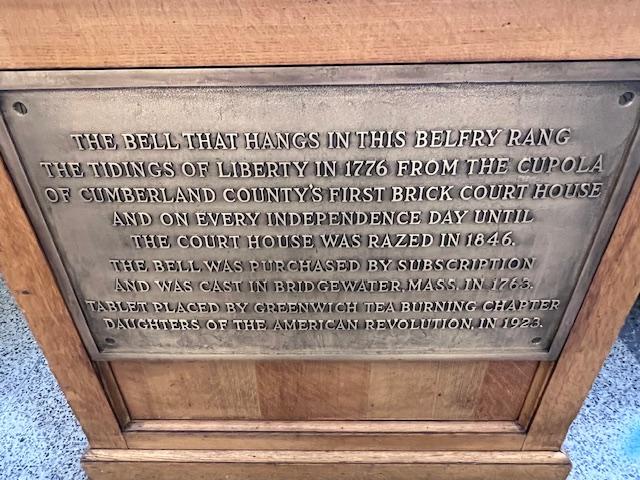
The bell was cast in Massachusetts in 1765 and was a source of information during Colonial days.
The Bridgeton Liberty Bell
It was used to call people together for important news and meetings when hanging in the courthouse in the Courthouse that was built in 1760-61. It rang for liberty when the Declaration of Independence was signed and as a warning signal for the War of 1812 (South Jersey Early American Historical Trail pamphlet).
A close up look at the bell
The historic marker of the bell
While walking in the downtown area one afternoon in the summer, I was trying to stop in the Bridgeton Library to visit the Robert Woodruff Museum of Indian Artifacts (that is only open by appointment only). Since nobody was there to help me that afternoon I left the library.
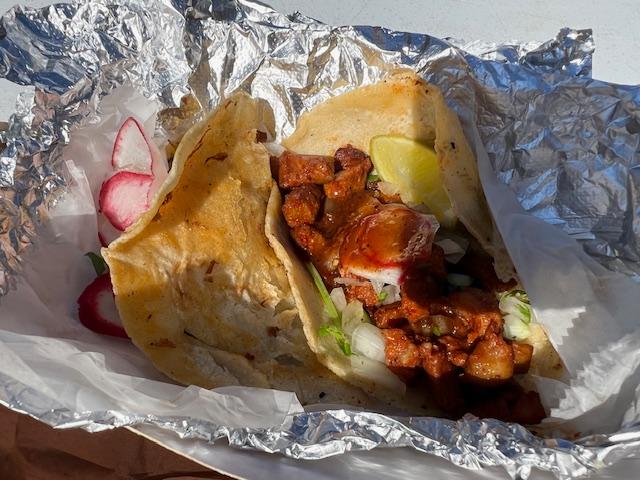
Across the street, a mother-daughter team was barbecuing and preparing tacos and tamales for locals and some workers on the construction site around the corner. The tacos were amazing and they only charged $3.00 for two small tacos and a Coke. I thought this great and the tacos were excellent. The ladies could really cook.
The fresh tacos from the pop up taco stand across from the library
Continue to follow this blog as I explore more of Bridgeton and its historical downtown and all it has to offer. There is so much that can surprise you in the City of Bridgeton, NJ.
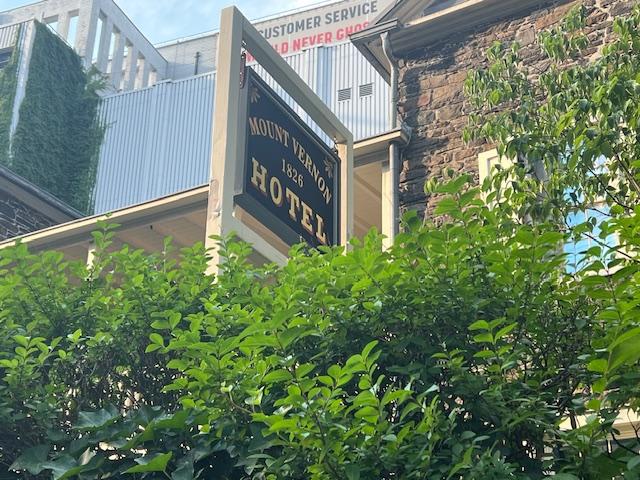
The Mount Vernon Hotel Museum at 421 East 61st Street
Mount Vernon historical sign during the summer months
The history of the building
The model of the building
I had come across the Mount Vernon Hotel Museum when I was walking on East 61st Street for my blog and went to take the tour of the building. It is a one hour (or more as I there for almost two hours but I was by myself) tour of both floors. You start with a film and a quick talk about the history of the building. The hotel building has had several owners and uses over its over hundred years.
I visited the museum during the holiday season in 2025 and I got to see all the decorations around the hotel. There was elegant decorations in most of the rooms and got to see how people ate during the holiday season as well as with visits guests would have indulged in when they came for the day.
Then you start the tour of the upper room where the ladies would gather and talk. This is where they might have tea, musical recitals and read and sew. They would gather with other women for conversation and debate.
The Upstairs foyer gallery
The foyer landing decorated for the holidays with the former traveler, James Taylor, who discussed in his memoir about visiting the hotel
The Ladies Parlor
The upstairs is where the sleeping rooms and the ladies parlors are located, where female guests would enjoy tea, games, music and reading. The main landing was for dancing and for gatherings.
The Ladies Palour with the Chinese writing desk and festive decorations.
The room set for tea with Englishware
The holiday set up afternoon service
The sleeping rooms were kept simple and functional
The Men’s game room
The main floor was the Men’s gaming rooms, where there is a bar and two rooms for male activities such as cards, gambling and reading. Here the men would discuss politics and business over a drink and games of chance.
The main games room
The main entrance was used as the dining room for dinner (our lunch), which was the biggest meal of the day served around 2:00pm.
The bar area where spirits are sold
The afternoon supper was part of the package and couples would join one another for a several course meal, which would serve as the main meal of the day.
Dinner time at the Mount Vernon Hotel Museum
The tour guide went over what would have been served, menu’s and meal times. Dinner would have been served at 2:00pm, tea time would have been around 4:00pm-6:00pm and Supper around 8:00pm.
The multi course meal for everyday on display
The meal would include popular dishes such as turkey and oysters and a specialty, Turtle soup. Fresh vegetables and fancy desserts would be part of the package.
The tour of the kitchen show preparation of foods, recipe books and all kitchen equipment including the stoves and baking materials.
The kitchen for both the hotel and house
The kitchen used to cook afternoon meals
The area used for baking and roasting
If you like the history of “Old New York” and like old homes, hotels and buildings, this is a very interesting tour that deals with the City’s growing middle-class and the new ‘leisure time’ that was coming with the changes in the work week. There are many pieces of period furniture all over the building that show the growth of affluence of the time.
The side board set with holiday desserts
The side board ladened with holiday treats
Don’t miss the formal walled in garden in the back. It is a place of relaxation from the rest of the city. There are stone walk ways and landscaped gardens as well as an herb garden. The building is owned and maintained by the Colonial Dames of America.
The walled gardens during the winter
The walled garden in the winter
I revisited the museum for the holidays and the hotel was decked out in garland and holy based on the decor traditional for the Revolutionary War era Christmas. The archways and tables were lined with greenery and the tables were loaded with oranges plunged with cloves to give the homes at that time a rich citrus smell.
The downstairs dining table was set for a Christmas meal of wild turkey, mock turtle soup, and apple and pumpkin pies. This would have been served in the afternoon as the main meal while it was still light out.
Holiday goodies at the Mount Vernon Hotel Museum getting ready for the holidays
There had been a light snow while we were touring the hotel so when we visited the gardens, it really did have that Christmas feel to it with that light snow all over the pine and the bushes.
How the neighborhood has changed
The old stable area
During the time of the Revolutionary War and afterwards, homes were not as elaborately decorated as they would have been during Victorian times after the Civil War. Homes were lined with greenery that would have given the home the fragrant smell of pine and strings of cranberries and popcorn would have been used to decorate mantles.
The hotel decorated for the holidays
The hotel was getting ready for one of its many special events during the holidays so there was a lot of commotion going on downstairs. It is a very festive looking place for the holidays so try to tour it when it is open in the month of December.
The museum in the 2025 holiday season
What is the Museum:
Constructed in 1799 as a carriage house and converted into a ‘day hotel’ in 1826, the Museum transports visitors back to Mount Vernon Hotel, a 19th Century country resort for New Yorkers escaping the crowded city below 14th Street.
The model of the original house layout
Recognizing the building as one of the few remaining 18th century sites and the only surviving day hotel in New York City Historic Landmark in 1967, added to the National Register of Historic Places in 1973 and accredited by the American Association of Museums in 1983.
History of the House:
The Mount Vernon Hotel Museum & Garden presents the period of the Mount Vernon Hotel which operated from 1826 until 1833.
Constructed in 1799 as a carriage house for a 23 acre estate and converted into the Mount Vernon in 1826, this stone building sits on land originally owned by Colonel William Stephens Smith and his wife, Abigail Adams Smith, the daughter of John Adams.
This fashionable country resort was popular among New Yorkers who wished to escape the hustle among the bustle of the city, which at that time extended only as far north 14th Street. The Hotel advertised “free from the noise and dust of the public roads and fitted up and intended for only the most gentle respectable” clientele. In those days, one could take the stagecoach or steamboat up to 61st Street spend the day at the hotel sipping lemonade in the ladies parlor or playing cards in the gentlemen’s.
In 1833, the house became the home for three generations of a New York City family. In 1905, as the area became more industrialized, the building was purchased by Standard Gas Light Company (today’s Con-Edison). The Colonial Dames of America, a woman’s patriotic society purchased the building in 1924 and did an extensive restoration to the structure, the Colonial Dames opened the site to the public in 1939. The building endures as a rare reminder of an important era in New York City’s history.
What the organization does:
*Welcome 5000 school children annually in grades-pre-K through high school for field trips.
*Summer History Weeks for children ages 6-12
*A Summer High School Internship for 15 students to support college readiness skills and career exploration.
*Two summer Hearst Fellowships for undergraduates or graduate students.
*40+public programs each year, including:
-monthly free Story time
-monthly Lunchtimes lectures
-holiday programs, garden concerts, hands on craft and cooking workshops.
*Temporary exhibitions on facets of life in early 19th century NYC, some promoting local contemporary artists.
*Special programs for individuals with Alzheimer’s and their caregivers.
*Outreach programs to schools, senior centers and homeless shelters.
*Themed group tours focused on 19th century food, decorative arts or literature.
*Three options for team building events.
*Two free admission days: Smithsonian Museum Day and Open House New York.
Programs are made possible in part by the support of the New York City Department of Cultural Affairs in partnership with the City Council and Council Member Ben Kallos, the New York State Council on the Arts with the support of Governor Andrew Cuomo and the New York State Legislature, the Manhattan Borough President Gale Brewer, the Institute of Museum and Library Services, the Rosenthal Foundation and the Michael Tuch Foundation.
(Mount Vernon Hotel Pamphlet)
The Colonial Dames of America:
With these words, spoken in April 1890, Maria Denning “May” Van Rensselaer imitated what was to become the oldest colonial lineage society for women in the United States. The Colonial Dames of America. Its mission is to preserve historic sites and objects, award scholarships, educate the public about American history, inspire patriotism and promote fellowship among its members.
The front of the library and museum in the Fall of 2025
The historic sign
I recently visited the Beach Haven Library and Museum in Beach Haven during the holiday season and discovered a historical library with a rich history in both the community and on Long Beach Island.
The museum on the second floor
On the second floor of the library is the history room of the Beach Haven Library that contains a collection of historic artifacts and ledgers from hotels and businesses on the island. Each of the case lines tells a different story of the community from the grand hotels that once lined the shore and have since disappeared to the lives of the families that once called the island home. When I talked with one of the librarians, she told me that estates from the area donate these items to the library and this has established their collection.
The second floor fireplace
The antique kitchen equipment
The second floor of the library has another fireplace where vintage pottery and kitchen items are on display. There are also decorative pieces of pottery lining the shelves.
Historic China inside the Emily Lloyd Wilson Secretarial desk. Her father designed the Baldwin Hotel in Beach Haven.
The historic ledger from the Parry Hotel
The library has another fireplace where extensive collection of hotel ledgers and artifacts.
Letters from Elizabeth Pharo proposing the Library in 1923
Short History of the Library:
(From the library pamphlet)
Mrs. Pharo presented to the library board a proposal to build the library entirely at her own expense. She contacted Philadelphia architect, R. Brognard Okie to design the library. He chose the model of a Pennsylvania Farmhouse. The library was completed in the Fall of 1924. The museum is now over a hundred years old.
The dedication to Elizabeth Pharo, who dedicated the museum.
The Long Beach Island House Guest Ledger and historic items from the historic Bond Hotel
The records of the past resort town Long Beach Island used to be with guests coming from New York City, Philadelphia and beyond.
Historic items from the Tuckerton & Long Beach Building Land and Improvement Association
The Engleside Hotel ledger and items from the hotel
The New Jersey Declaration towards the Declaration of Independence
Historic books and periodicals
The library has an interesting collection of vintage and antique books that have been donated to the collection.
Photo display on historic sites in Beach Haven and pictures of the original library
Some of the pictures are from the old library and the artifacts come from ships ground ashore. The library has a diverse collection of items to view.
The Compass from the historic shipwreck ‘Fortuna’ that wrecked off Ship Bottom in 1910 and historic boat
The second floor museum gallery holds the diverse collection of artifacts
The second floor of the 1928 building
The first floor of the library has all sorts of historical artifacts along the walls
The Holiday Kickoff in 2025:
I visited during the library’s Holiday Open House with games, trivia and activities. There was also live music in the afternoon. It was a way that the library gives back to the community. It was a nice family event with good food and nice conversation with people from the community.
The Holiday Open House
The fireplace was going when I was talking to the librarians
It was a very nice family event where patrons families could relax, have something to eat and play games with their children. The Liberians could not have been more friendly and engaging with the public.
The Children’s Room had a holiday challenge
The museum is a rare gem tucked not just on the second floor but along the shelves and tables of the entire historic library giving visitors a chance to see all these historic artifacts mixed in with the library book collection.
The History of the Beach Haven Library:
(from the library website)
Attempts to establish a library in Beach Haven had begun as early as the 1880’s with a gift of books for the town’s children by Dr. Edward Williams. Williams, along with Charles Parry of the Parry House and the Baldwin Hotel, was a partner in the Baldwin Locomotive Works. The library collection was first housed in the home of Samuel Copperthwaite on Engleside Avenue. It was later moved into one of the Sunday School rooms of the Kynett Methodist Church, which had been built in 1890.
After the old Quaker Meeting House was donated to the town by Walter Pharo, the Reverend Alexander Corson of the Methodist Church began work, with the help of his wife, to turn the former Meeting House into a viable library. By the time they left in 1908, it was well on its way.
In 1923, Walter’s widow, Elizabeth Pharo, presented the library’s board of trustees with a proposal to build, entirely at her own expense, a new library for the town. It would be sited two blocks away from the Methodist church on a corner lot which she owned at Third Street and Beach Avenue. The library would be dedicated to the memory of her husband’s parents, Archelaus Ridgway Pharo and Louisa Willits Pharo–the founders of Beach Haven–as well as to her late husband Walter.
Mrs. Pharo contracted R. Brognard Okie, one of Philadelphia’s finest architects, to design the new library. He chose as his model a Pennsylvania farmhouse–not an early lifesaving station, as some believed. Unlike a traditional farmhouse, however, it would be constructed entirely of brick and steel and include several stunning features: three working fireplaces, a vaulted ceiling, and an interior balcony encircling the first floor.
Tons of concrete were poured and steel girders for the new, two-story structure were already up by the spring of 1924 on the southeast corner of Beach Avenue at Third Street. Okie moved to Beach Haven to supervise every step of the construction, which was all done by local builder Floyd Cranmer. Ten railcar loads of bricks were used to build the solid outer walls and it was soon evident that the town was to have the finest library on the New Jersey coast.
As the library neared completion in the late fall of 1924, its beauty was already drawing praise. Every window in the structure was framed with long shutters of pale green, which gleamed against the white brick exterior. A sweeping, multi-dormered black roof added a grace seldom seen in a public building. Surrounded by a low, white picket fence and later, a well-kept green lawn, it added an incomparable dignity to what, in that time period, was the town’s main street, Beach Avenue.
There are two large colonial-style working fireplaces on the first floor. One is in the main room and the other is behind it in the long back room on the ocean side of the library. Today this room houses the Mystery collection and its solid, ten-foot table makes it useful as a meeting room. In the early years, however, it served a different function–it was designated as the men’s reading room, and there male patrons could sit in large comfortable chairs to read magazines and newspapers. It was well lit by two tall French windows and it opened out onto the screened porch on the north side.
The main reading room with its vaulted ceiling is encircled with a balcony reached by a spiral stone staircase, its steps topped with thick slabs of slate. The balcony flooring is of oak, as are all of the spindles in the railings. The upstairs walls are lined with books. One great window on the west side rises ten feet to the ceiling. The rest are all set into dormers. On the east wall behind the upstairs balcony there is a door where one may step down into a well-furnished little museum with high, beamed ceilings and a huge stone fireplace. It is filled with old hotel registers, deeds, diaries, photographs and other mementos of Beach Haven’s vibrant history.
The Beach Haven Public Library is a prime architectural treasure on Long Beach Island and a direct link to a colorful past that is the town’s most precious heritage. Mrs. Elizabeth Pharo’s gift to the town, itself now almost 100 years old, is as stunning as the day it was built. The taxpayers who support it are proud of its status as the only independent library in Ocean County and have chosen to keep it that way.
There is always a lot of excitement when a new art exhibition is ready to open. It is even better when the museum opens it to its members first before the public gets a glimpse. The lines always wrap around the corner from the museum.
The long line of MoMA members waiting to get into the museum for the opening night of Artist Ruth Asawa’s exhibition
I noticed this year especially and right before Thanksgiving, all the museums are throwing open their doors for Member’s Nights. I have been invited to five Members Nights at museums all over the City. You can’t attend them all but when you can, it is a lot of fun.
The excitement the museum creates for these evenings
Video of entering the museum at the start of the opening with 80’s Japanese Pop Music
I think in an economy like this, these Members Nights are one of the best ways to engage with the membership for both donations and renewals of memberships especially before the holiday season. Plus it gives the members a wonderful night out to see the exhibitions ahead of time and enjoy the evening after a long week at work.
Born on a farm in Southern California, Asawa began her arts education when she was a teenager and she and her family were among the thousands of persons of Japanese descent who were forcibly incarcerated by the US government during World War II. It was at the internment camp that Asawa began taking classes in painting and drawing. After her release, Asawa studied to be a teacher but was unable to get a license because of her Japanese heritage, so she enrolled at Black Mountain College, an experimental art school in North Carolina. Asawa took classes from and worked alongside fellow artists Josef Albers, Robert Rauschenberg, Merce Cunningham, and R. Buckminster Fuller. Black Mountain was also where she met her husband, the architect Albert Lanier.
I loved her wire woven sculptures. They were the real standouts of the show.
The wire woven sculptures were the standouts of the exhibition
I thought these were a unique design
I liked here colorful paintings, these are of her child’s footprints. I loved the idea that her children were involved with the art
The patrons enjoying the art
The display of the wire art
The displays were impressive and graceful
The colorful faces looked tired
The look of nature in the wire art in the form of trees
I loved her works of food
At the end of the exhibition and the evening, I joined everyone on the main floor where the bar and gift shop were located. The main floor was the busiest part of the museum. I wondered if some of these people even went upstairs to see the exhibition or just stayed downstairs to socialize.
The main floor of the museum is always packed with people
Share in the excitement of the Membership opening
These evenings always get my mind off the stress of life. It is nice to just be in Midtown Manhattan and be in the moment. It is nice to see art, hear music and walk through the museum.
The Shivers House at 68 North Main Street in Woodstown, NJ
The front of the Shivers House Museum at 68 Main Street from across the street
I got a personal tour of the Shivers House Museum and the Sign of Key Tavern, which is attached to the main house of the Shivers Family. The first part of the tour was of the Sign of Key Tavern, which consisted of The Hearth Room, where all the cooking took place and the Cage Bar room, where meals would be eaten and used for socialization.
I could see that the family business was very popular at the time when transportation was slower and these areas in the early 1700’s were barely populated. So this became the focal point of the communities. These taverns were part of the communication and transport systems of the country up until the Revolutionary War.
Later, family members built the the main house of which the tavern would be attached and thus began the home’s transformation to modern times. The house from the outside has a more symmetrical appearance but these changes on the outside altered the historic inside.
The History of the Shivers House:
In 1668, John Shivers at the bequest of King William of England was given thousands of acres to promote the hamlet development with what was then known as West Jersey.
Upon arrival, Shivers constructed on the property, utilizing Native American labor, a dam and saw mill on what would become Woodstown Lake. From here he milled the timber for his tavern. The tavern, The Sign of the Key, operated for 65 years on the corner of what is today Routes 40 and 45. Travelers could sleep, eat meals, communicate and trade furs from the area. After Shivers death, it was moved to its present location by his son, Samuel, as an addition to the current house.
The Shivers family owned the house through marriage through the Nineteen century.
The outside sign of the house
The informational sign on the history of the home and construction
The sign of the clock repair and antique shop business inside the house
(Much of the following research comes from owner Gregg Perry’s personal research on the house and family and from the personal tour Mr. Perry gave me of the house and grounds).
The first part of the house tour I took was of the old tavern section of the house. This had once been in a different area and moved here by the family and connected to the newly built house around 1726 when Tavern owner, John Shivers died.
The Cage Bar/ Dining room
The Dining Room area
The pewter materials in the Dining Room
The tavern was open in 1669 for business. The tavern has been here open for business from 1669 to 1720 until John Shivers died. The first part of the building served as the Kitchen area with an open hearth for cooking and serving. Meals were prepared here as well as keeping the building warm for guests who might stay overnight upstairs.
The second part of the building served as the Dining Room for the old Tavern. Visitors would have their meals served here and converse and socialize in this room. There is a rebuilt Cage Bar for serving alcohol. The old Tavern section of house has since been restored and has period furnishings and decorations.
The Cage Bar in the Tavern Room
The Tavern kitchen
The Hearth of the Kitchen is eleven feet wide by three feet deep by five feet high in opening containing two mobile cranes. The back firebox bricks are laid in a herringbone style pattern. A tavern hearth of this dimension would have allowed the cook to have multiple fires going in the firebox (Gregg Perry research).
The Kitchen of the Tavern
This is the room where all meals were prepared and served. It was also used as the central heating for the tavern in colder weather. It is decorated in period furnishings and pewter ware decorates the walls. This would have been used in serving at that period in the 1700’s.
The pewter materials
For the price of a penny today, a patron could have his choice of a tankard of ale or hard cider and a plate of whatever the entree was of the day as well as have the option to spend the night on the floor of the second floor with a burlap blanket. They could also have the horse fed and boarded if needed. The tavern had been in business in one form or another until the 1930’s when it closed for business during the Great Depression (Gregg Perry research).
The Main Part of the house was build 1723. This section of the home was built by John Shivers, whose portrait sits above the mantle.
The Grand Reception Room
The Grand Reception Room was built to impress visitors to the house and for entertaining for this prominent family. As the family accumulated wealth and social prominence in the area, the house was meant to impress people with its large fireplaces and tall ceilings.
The Portrait of John Shivers in the Grand Reception Room
The Grand Room
Much of the period furniture of the room has been restored back to its original form and the woodwork to the room is from the original house. Period clocks and decorations are from that period and part of the owners collection.
The Grand Room looking into the old Tavern
In the back of the Grand Reception room is the Keeping of Family Room where things were less formal. The room had been set up for Christmas. In the Keeping Room is the portrait of Samuel Shivers, John Shivers son above the fireplace.
The Keeping Room
This cosy room was set up and lit for the holidays. The lights put a nice glow on the original woodwork.
The Keeping Room at Christmas
Samuel Shivers painting in the Keeping Room
The house decorated for the Christmas holiday season
It was a beautiful afternoon in the Hudson River Valley with the leaves changing and a clear sunny sky. I was exhausted from all the running around with classes and needed a break from everything. With Midterms next week, I figured that I needed a change of pace and decided to head to the Sheep and Wool Festival at the Duchess County Fairgrounds.
Looking at the beautiful foliage on Route 87
I finally was able to sleep in after many early mornings and relax and enjoy breakfast. I got on the road after 10:00am and it seemed like everyone was headed in the same direction. The highway was packed until we got to Route 84 and then things calmed down.
Route 87 going up to New York
I had to stop several times just to take pictures of the foliage on the New Jersey side of the border. Unfortunately the best angles I could not get due to the fact there was no shoulder to step at on the highway. Still the colorful mountain was a site to see.
The foliage on the way up
With a rain storm coming up the coast, I wanted to be sure I got pictures of all the foliage with this brilliance.
The mountains were so beautiful I had to stop the car and photo them
Going through Hyde Park first, I stopped at the Hyde Park Farmers Market. I have been coming to this Farmers Market for years and it is always so nice.
It must have been just as the Market was closing because it was so quiet. All the vendors had time to say hello to me.
Walking by all the tents of produce and freshly made products
There were all sorts of produce, baked goods and craft products. The one thing I did notice was how expensive things have gotten. Egg Custards for $3.50 and breads for $10.00.
The colorful display of Fall produce
The Fino Farms who always has such great product
I took a quick walk through the market and then headed to the fairgrounds. That was just as packed as well.
The entrance of the festival on a beautiful sunny afternoon
The Sheep and Wool Festival is not as big as the Dutchess County Fair but had a lot of the same food and merchant vendors. On a smaller scale, it is much more manageable but with the number of people who attend this every year, they could use more food vendors for the event.
The sign and directions in the fairgrounds
The foliage was so beautiful that afternoon
The Festival takes place the second week of October just when the Duchess County foliage is coming to its peak. The fairgrounds were covered in golds and reds.
Entering the Midway at the Sheep and Wool Festival where the food vendors were located. The foliage was at peak color.
The Midway was not as packed with vendors as the fair but is had a nice selection of food vendors
Entering the middle of the festival was getting busy
The foliage was amazing both inside and outside the fairgrounds
I got up to the fair late this time, not arriving until 2:00pm ( I thought the festival ended at 6:00pm but it ended at 5:00pm) and needed to get done lunch. Amongst all of my choices, I still always head to Janek’s, the barbecue/hamburger truck that has been my favorite for years.
Janek’s food truck is always at the same location
For years I have been getting the Piggy Back burger with Cheddar cheese and pulled pork on top(which I highly recommend) but I decided to do something different and have the Burger with freshly made Pastrami and Swiss Cheese. A very nice substitute.
The Pastrami and Swiss burger
The burger was perfectly cooked with slices of smoked pastrami on top
Yum!
The dining areas of the festival were busy from the time that I got there until the festival closed that evening. Even up to closing time and just after, people were ordering food.
The crowds kept getting bigger at the Midway at lunch and dinner time
After a good lunch and getting my energy back, I headed over to the animal pens and the craft stalls to see all the handmade products. My first stop was the Sheep pens, where sheering was going on and they were many contests to showcase the livestock. The Sheep were being shown, sheered and were talking amongst themselves as we walked around the pens admiring them.
I found that the sheep looked really relaxed and seemed to have more fun staring at us
This little guy kept smiling at me watching him
While the livestock contest was going on to a huge crowd, I toured the Crafts stalls. In the Summer for the fair, this was full of cows and goats, it now had all sorts of wool vendors, knit items, handcrafts and cosmetic items.
The colorful wool items on display
These wool dragon sculptures I thought were really interesting
Bonny’s Beasts were back with more creative gifts
Bonny’s creative beasts
More creative beasts
I also revisited my favorite wood carvers to see their Santa wares. This was the first year that my mother did not want something!
The Santa Carvings
The Santa Carvings
After touring the stalls and the open museums on the fairgrounds, I decided just to take a walk around and see what things were open since the fair.
The 4H Building was closed and there were no milkshakes now. Just coffee and hot beverages. I thought I saw someone walking around with a milkshake.
The foliage around the fairgrounds was just dazzling
By 4:30pm, they kept making announcements that the show would closing by 5:00pm, so I just wondered around and observed everyone having a good time on this warm and sunny afternoon. I had been watching the football games on my phone to watch Michigan State lose again to number three Indiana. Cornell won the Bucknell game so I figured Bucknell must have been pretty bad.
The last of the patrons at the end of the afternoon with the beautiful foliage in the background by the food vendors
As I left at 5:00pm at the end of the show, I observed the old signs from previous shows. Time has flown since my first show a decade ago. I still can’t believe it will be 2026 soon.
The shoe sign from 2021, post COVID
The last show I went to pre-COVID in 2019
After the show was over, I decided to tour around Rhinebeck. I was going to attend the Cemetery walk at St. James Church again in Hyde Park at 7:30pm so I had plenty of time. I had taken this tour back in 2021 just as everything had opened up and it was a lot of fun.
St. James Church before twilight at 6:15pm
The staff was just setting up the lights at the cemetery (technically a graveyard)
The inside of St. James Church in Hyde Park, NY, parish of the Roosevelt family
I got to the church an hour before my tour and just relaxed and admired the beauty of the church. I never saw an hour fly by before my tour started. Then darkness came and my tour started.
Darkness came by 7:30pm and the cemetery looked much different
We started the lantern tour with a talk of the spirits who were buried in the grave yard. Each of the actors was waiting for us at each stop. I still could not believe these actors were waiting alone in the dark in a graveyard for people to walk by the them.
Each of the actors told their tales of when they were living and stood beside the place that they were buried. It was very intriguing.
The first person we met was Mrs. Emma Victoria Pitkin Marshal
Mrs. Marshall was once known as the ‘Poet Laureate’ of Dutchess County. She was well known in the world of publishing.
The second spirit I met was Mrs. Harper, Mrs. Mill’s housekeeper up at the Staatsburgh mansion. She told us the story of her life working for the Mills and Livingston families.
Mrs. Catherine Kennedy Harper
Mrs. Harper told us about her life working for the Livingston family and her relationship with Ruth, who she was her nanny and then housekeeper.
Our conversation with Mrs. Harper
Our next spirit we visiting was the ghost of Gertrude ‘Gerdie’ Livingston who talked about her time in the Hudson River Valley and in New York City.
Gertrude ‘Gertie’ Livingston
Mrs. Livingston telling her tales of the Hudson River Valley
In between our conversations with the spirits of the past, we walked through the graveyard as twilight gave way to darkness. The graveyard was illuminated with lanterns and lights to follow the paths. It is easy to trip over a tombstone while you are walking around the paths. They did give us lanterns to light the way but there were not enough to go around.
The vaults are illuminated at night to follow the ghostly trail
Our next with the spirits was the ghost of Reverend John McVickar, who was the Rector at St. James Church starting in 1811. He married Eliza Bard, the daughter of Dr. Samuel Bard of Bard College and raised their nine children together.
The spirit of Reverend John McVickar telling his tales of his life in the church
Walking past the church at night
The last apparition we met that night was the spirit of Mr. Augustus C. Colman, the son of a sailing captain who invested heavily in Manhattan real estate on the advice of his boss. John Jacob Astor.
The spirit of Mr. Colman telling his tales of the City
Both himself and the Reverend went at it in the graveyard
The stained glass windows at the church
The church at the end of the tour
After the tour was over, I drove to downtown Kingston , NY to talk pictures of the Dutch Reformed Church at night.
There was no cemetery walk this year here and I just wanted to visit this graveyard looked like at night with the full moon. It was more intriguing than scary.
The Kingston Old Dutch Reformed Church at 272 Wall Street
Even without a graveyard tour the ground can be a little spooky
After my tour of the Old Dutch Church and the graveyard, I walked around Downtown Kingston. I have never seen a town like this that rolls up its sleeves so early in the evening. It seems like a majority of the restaurants close at 8:00pm. I can understand the stores but the restaurants?
I stopped at my favorite go to restaurant in The ‘Stockade District’ Wing Shui at 53 North Front Street. The food is consistently wonderful and extremely reasonable and you can sit down inside the restaurant.
I was surprisingly hungry even after the big burger at lunch. It got cooler that evening so I ordered the Wonton Soup, the Steamed Dumplings and one of their wonderful eggrolls. It was such a great meal and really warmed me up. For such a small hole in the wall restaurant/take out place, the food is excellent.
My dinner that evening at Wing Shui
The Wonton Soup had for large wontons that you could barely fit in your mouth in the rich chicken broth. That warmed up after a graveyard walk in the dark.
The Wonton Soup with the oversized Wontons and rich chicken broth
The steamed dumplings were plump and moist and filled with spiced pork mixture.
The dumplings here are delicious
Their egg rolls are always a treat and are the first thing that I ever tried here years ago.
The egg rolls here are excellent
Yum!
I was nice to sit in the restaurant and just warm up. The temperature really dropped that evening and it was a rather cool October in comparison to other years.
After dinner, I walked around Downtown Kingston some more and admired some of the decorations and store windows decorated for the holidays. It seems like Halloween is now the lead into Christmas rather than Thanksgiving (some places have already decorated for Christmas).
The ‘Jack Pumpkin’ decoration that looked like it out of “The Nightmare before Christmas” in Downtown Kingston, NY
A lot of windows were decorated for the Halloween holidays. The merchants in Downtown Kingston are so creative and here are some of my favorites.
This was displayed in the window on a North Front Street store.
The faceless entities in the windows
They face this witches hat
The skulls and pumpkins in the window. The merchants get quite creative at the holidays in the downtown area.
I walked back to my car and contemplated the upcoming Halloween holiday and all the interesting events I planned to see. It is no longer just Trick or Treating anymore.
The front of the Old Dutch Church at night
While waiting for a friendly ghost to come and greet me.
I was out exploring the Route 46 corridor several years ago from Budd Lake to the Delaware Water Gap and I visited a series of small farm stands along the way. RH Farm at 590 US 46 was one of the standouts that I visited .
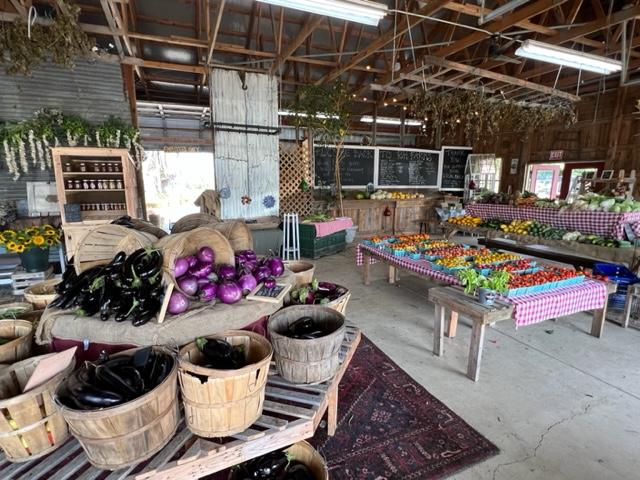
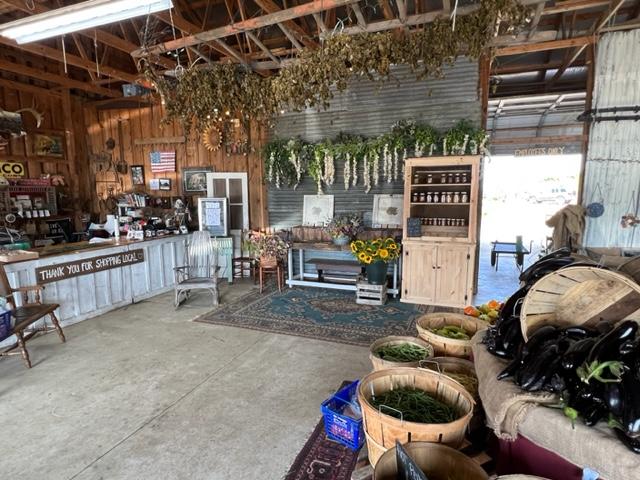
It was not just the selection of fresh produce I saw on each of my visits in both in the Spring and Fall, but it was the selection of the variety of goods there was to purchase and the way they were displayed.
There was also a nice selection of freshly baked goods, arts and crafts items and plants and flowers all beautifully displayed like a boutique.
The inside of the farm
The selection of pumpkins in the Fall
I love the way they decorate the farm for each holiday. They decorated not just the selling space but other parts of the farm as well like the grounds and the barn area.
The display of holiday crafts and pumpkins
The holiday display of pumpkins and flowers
The Halloween decorations
They have a wonderful selection of pumpkins and gourds for the Halloween and Thanksgiving season.
The pumpkin display
Even their barn which looks like it is falling down looks picturesque. The property has such a unique feel to it.
The outside grounds
Both in the Spring and the Fall, the trip to both Budd Lake and the Delaware Water Gap are a real treat. What beautiful views.
The beautiful foliage in the Fall of 2025 by Budd Lake
.
The sun blazing in the Fall of 2025
The sun simmering on the lake at Budd Lake
The foliage by the lake
The views of the surrounding community in the Fall of 2025
Visiting the farm in the Spring:
Before I left Budd Lake I stopped at RH Farm stand, a small farmstand at 500 Route 46 West. I would spend most of my day exploring various farmstands along to way to see the selection and prices of the items. For the most part, everyone was charging New York City farmers market prices for produce. Some stand were charging $6.99 a pound for peaches and $12.00 for a small pie. I guess many of these people were hoping people from Manhattan were coming out for the day. I did find some decent prices but for the most part most of the stands were pretty expensive.
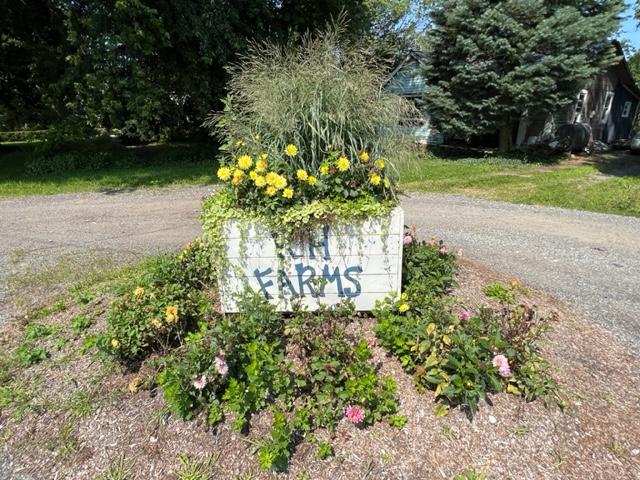
The entrance of RH Farms
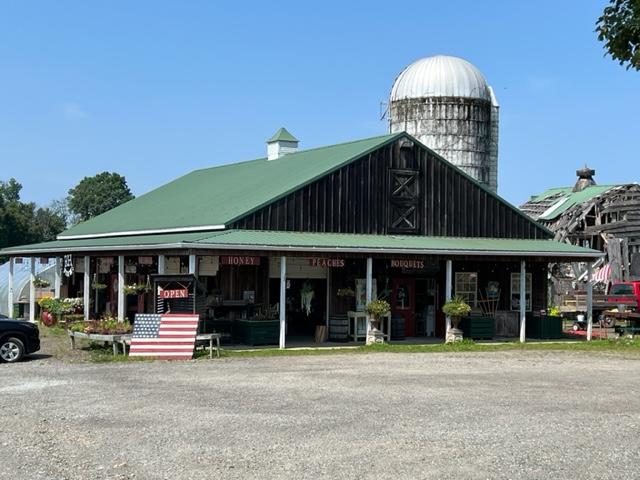
RH Farm Farm Stand at 500 Route 46 West
This picturesque little farm stand has been in business since 2012 (I would have thought much longer) and offers an array of produce, gourmet products and flowers. I just thought it looked really nice. The prices are a little high though. Still quality does have a price tag to it.
The entrance of RH Farm Stand
The inside of RH Farms Farm Stand
The inside of RH Farms
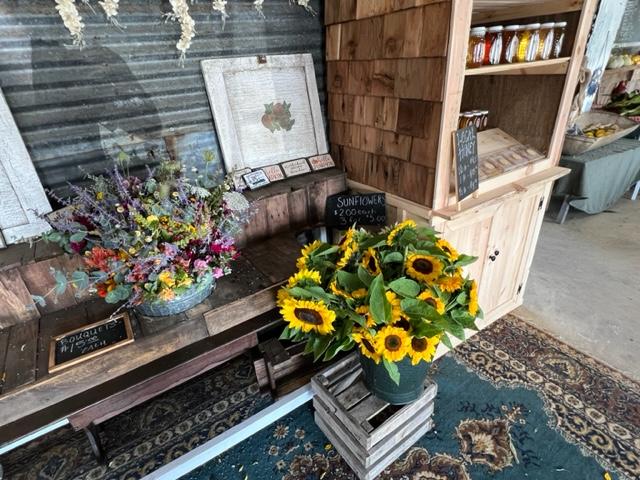
The beautiful flower arrangement at RH Farms
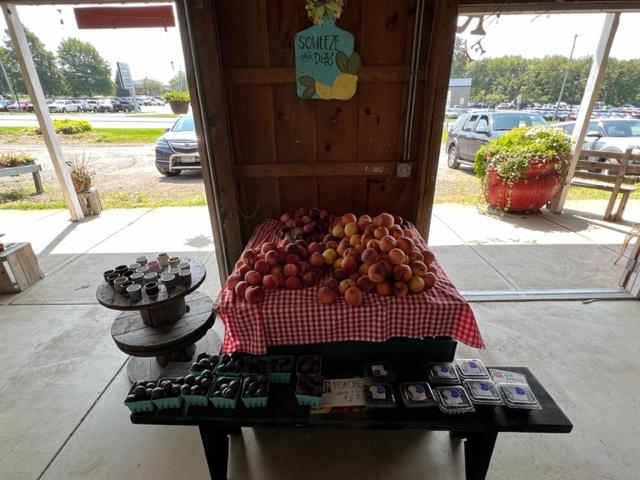
The peaches and produce at RH Farms
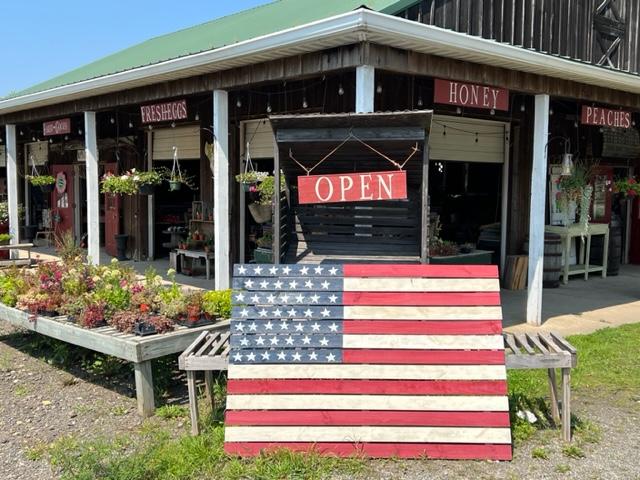
4th of July display in Summer of 2024
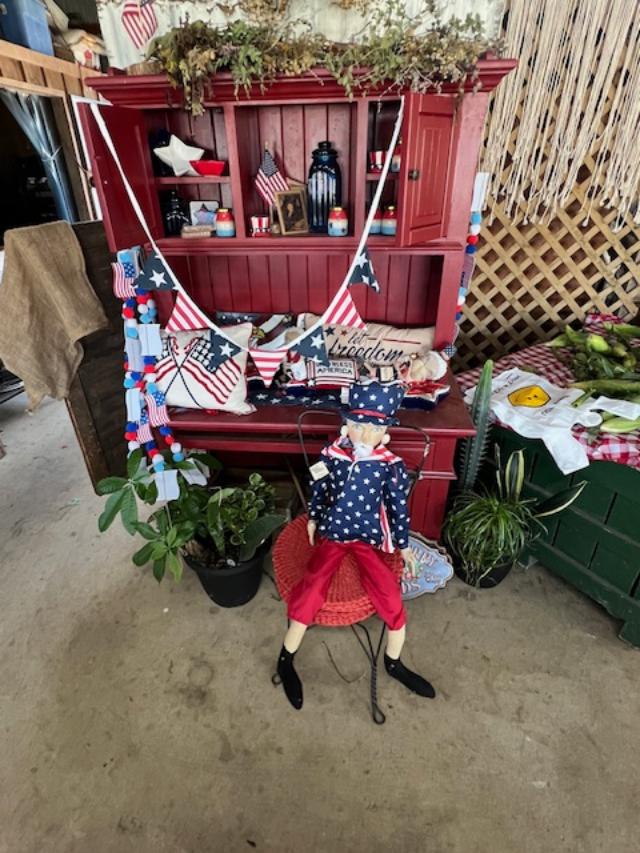
4th of July display in the Summer of 2024. Uncle Sam looks on
Christmas display in the Summer of 2024
The plant display in the Summer of 2024
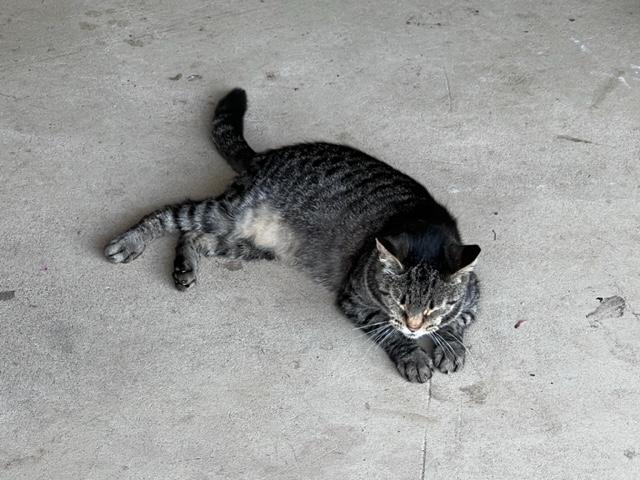
Their little cat welcome me with a couple of charming rubs to my legs.
History of the Farm:
(from the farm website)
RH Farms LLC is a local family-run Farm that has been producing delicious fresh products since 2012. We strive to make the most of everything the great outdoors has to offer. Our products are fresh from the field, so you can be sure you are buying the best quality produce. Come visit us with your family for a day of fun at RH Farms LLC.
We’re dedicated to providing a traditional farm experience to everyone in The Northern New Jersey area. Our crops, flowers and home furnishings bring visitors closer to nature while providing a memorable experience. We pride ourselves on our advanced farming methods so we can protect the environment while providing the community with only the freshest food. Contact us to learn more about our goals and missions.