There are times you are walking around a neighborhood and there are restaurants that just stick out to you. It might be the number of people waiting to eat there, it may be the smell of the food cooking that drives you in or just maybe you are hungry.
The afternoon I passed Kam Lai 94 Restaurant, it was all of those things and I am glad that I stopped for a late lunch. The food and the service were wonderful in this tiny take out restaurant with just a few tables.
The delicious Beef and Broccoli with Pork Fried Rice with an Egg Roll
I ordered the Beef and Broccoli combination based on seeing another customer eating it at another table. It was excellent! The rich brown sauce of Soy and Hunan sauce really brought the flavor of the beef out.
The tender beef and the well cooked broccoli was a nice combination in a dish that will sometimes not work if either is not cooked right.
The Beef and Broccoli was delicious
The Egg Rolls were wonderful
The Egg Rolls were delicious. They were filled with lots of chopped roast pork and shredded cabbage and spiced perfectly. With a little Duck Sauce it made the perfect addition to this combination lunch special.
The egg rolls here are amazing
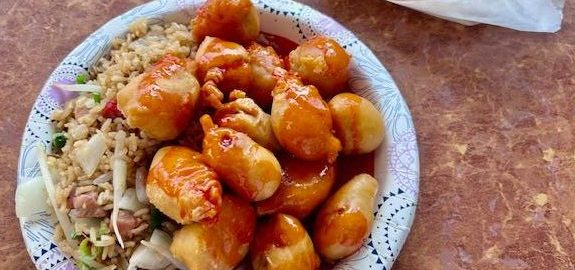
I recently came for a late lunch after visiting a museum on the Upper West Side and ordered the General Tso’s Chicken combination platter with an Egg Roll and it was delicious. The food came out steaming hot and wafted the smell of honey, hot peppers and soy sauce.
The General Tso’s Chicken combination platter with a Coke.
The chicken was steaming hot when it came to the table
The General Tso’s Chicken was a wonderful combination of sweet and savory with hints of ginger, honey, hot peppers and Hunan and Soy sauces. It was crisp and crunchy and had nice pieces of tender broccoli.
The pieces were lacquered with sauce
I love the Egg Rolls here. They are fried to a crispness and are a bit greasy but crunchy and flavorful.
The Egg Rolls are so good
They are filled with chopped cabbage and nice sized pieces of roast pork. They are really good and the perfect accompaniment.
Yum!
Don’t let the appearance of this little hole in the wall restaurant fool you. The food is excellent and the family running it is really nice. You will have a good meal here.
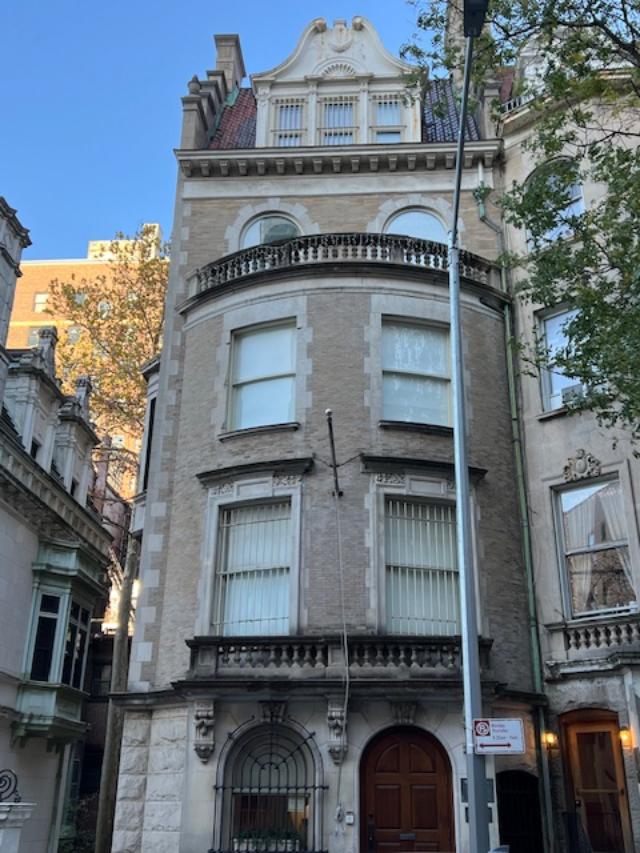
This small museum in the Upper West Side neighborhood of Manhattanville is easy to miss. It is in a small brownstone on West 107th Street right near Riverside Drive. You can see the plaque for the museum to the right of the building and there is a side door to get in. The admission is free but they do ask for a donation if you can do it.
The gallery on the second floor
The museum is a specialty collection of the works of artist Nicholas Roerich. They are mostly landscapes and religious themed that cover three floors of the museum.
The is a beauty to all his works especially the ones concentrated in the Himalayas with their colorful and spiritual themes.
The artist’s portrait of his mother on the third floor
It takes about an hour to an hour and a half to see all the floors. A nice touch they had in the afternoon that I was there was a piano player whom you could hear play throughout the brownstone. When you go, it will be a pleasant afternoon where you are not fighting the crowds of the larger museums.
The art pieces enlighten you and I felt gave you a sense of hope.
(The following information is from the museum website)
Artist Nicholas Roerich
(From the museum website)
The Nicholas Roerich Museum was founded in 1949 to house a permanent collection of over two hundred paintings by the Russian-born artist, poet, philosopher and humanitarian, Nicholas Roerich. The museum also houses a library of books and maintains an archive and a collection of artifacts relating to the areas of Roerich’s interests (Museum guide).
The Mission of the Museum:
The mission of the Nicholas Roerich Museum is essentially a narrow one: to make available to the public the full range of Roerich’s accomplishments. These, however, are not narrow; they cover the realms of art, science, spirituality, peacemaking and more. Because Roerich’s activities ranged widely, so do the museum’s.
The second floor galleries
The Museum Collection:
Nicholas Roerich is known first and foremost as a Russian-born artist. His paintings, of which there are thousands around the world, explore the mythic origins, the natural beauty and the spiritual strivings of humanity and of the world.
One of the more spiritual paintings in the collection
The museum houses approximately two hundred of these works and keeps most of them permanently on display for visitors who come from around the world. Indeed, for many of these visitors, the museum is a destination of great importance; the paintings speak to them of their own inner yearnings and possible fulfillment. For them, Roerich’s paintings are a kind of teaching-about spiritual development about culture and its role in human life and about opportunities for the achievement of peace in a fractious world.
The second floor galleries
The beautiful landscapes on the second floor
Publications & Booklist:
The museum also keeps in print a number of books by and about Roerich and his life and work and a substantial stock of postcards and reproductions of his paintings. These too are seen by many as more than just prints; they are hung in homes with a degree of appreciation that is not often given to such things.
The gallery on the first floor with some of the more religious works
Cultural Events:
In addition to these functions, the museum also maintains an active schedule of cultural activities.
The second floor galleries
It was Roerich’s fervent belief that the role of cultural development in the peace and evolution of the world is fundamental and that it is therefore the responsibility of those who work in creative and cultural fields to strive always for that peace and evolution and for those goals to be the chief impulses guiding their creative work. Information about these ideas is always available.
The second floor gallery with Asian themed art
The Roerich Pact & the Banner of Peace:
The museum sustains an ongoing effort to spread public awareness of the intermingled roles of peace and culture and the ways in which each sustains the other. Information and materials about The Roerich Pact and the Banner of Peace are always available.
The patronage of the museum through the Katherine Campbell-Stibbe Foundation
Throughout this century of wars and national struggles, the yearning of the public for ways of achieving peace has been great; the ideas of the Pact and the Banner provide a welcome answer to those yearnings.
The history of the museum through the years
As Roerich’s ideas become better known around the world, attendance at the Museum grows and requests for information and materials about him and his art and social achievements increase.
The gift shop on the first floor. The director of the museum even sells honey from the beehives on top of his building.
*This information is from the Museum’s website.
Disclaimer: This information was taken from a combination of the museum’s website and from the biography of the artist.
The Van Bushkirk Burial Ground behind the residence at 45 East Saddle River Road
The Van Bushkirk Burial Ground is part of the history of Saddle River, NJ’s early settlement period. The burial ground has about 40 tombstones that are arched and shaped. These are some of the first residents both of Saddle River and Bergen County, NJ.
The burial ground lies next to a creek off East Saddle River Road and can only be accessed by going through private property of the residents living at 45 East Saddle River Road. Please do not enter without permission of the owner of the home. These pictures were taken with a long distance camera from the street.
The Van Bushkirk Burial Ground at 45 East Saddle River Road
The History of Saddle River:
(from the Saddle River Town website):
In 1675, Lenni Lenape tribal leaders sold a large amount of land on the Eastern side of the Saddle River (known as Werimus) to Albert Zabriskie. In 1708, Zabriskie sold this tract of land to Thomas Van Buskirk. The first house in Saddle River was built by the Van Buskirk family in 1709. The original Van Buskirk homestead still stands at 164 East Saddle River Road across from Borough Hall.
In 1709, the Lenni Lenape sold the land on the west side of the Saddle River to the English as part of the Ramapo Tract. Property on the west side of the Saddle River was acquired from this Tract throughout the 1700’s. The Ackerman Family was the most prolific buyer of these early Saddle River parcels and first settled on the West side of the Saddle River in 1745 when Johannes Ackerman acquired 245 acres.
The graves of George and Margaret Achenbach
Saddle River continued to grow and populate during the 18th century. Families such as the Van Buskirk’s, the Ackerman’s, the Achenbach’s, the Hopper’s, the Zabriskie’s, the Stilwell’s and the Baldwin’s farmed and developed the area.
The grave of George Achenbach
The first of many Saddle River mills was built in 1714 and the first school was constructed in 1720. Another early 18th century business was the blacksmith shop operated by the Ackerman family. Over the years, these 1st families built the quintessential “Old Dutch Homesteads” from actual sandstone that was found in town.
The Revolutionary War era tombstones
The Revolutionary War was a horrendous time for the residents of Saddle River. The townsfolk had spent the entire 18th century developing the area into a well established community and all growth essentially stopped during the war. Since the Jersey Dutch initially considered the revolution to be an English issue, it was particularly shocking when the fighting came to their backyards. From December 1776 until the end of the war, both American and British forces traveled through Saddle River and many times set up camp in the center of town.
Residents were in constant fear of the British employed Hessian soldiers who would terrorize families by raiding the houses for food and then burning the fields before leaving. Although no major battles took place in Saddle River, there were small skirmishes to fend off raids and the Blue Mill on East Saddle River Road was destroyed. Even George Washington, the future father of our country, passed through Saddle River on multiple occasions and tradition has him staying overnight at the Ackerman Homestead on the East road.
When the Revolutionary War ended, Saddle River residents picked up right where they left off in terms of community and industry development. The Ackerman’s built a Foundry on what is now Waterford Gardens. Tice and Berdan both opened stores in town and the Bulls Head Tavern opened its doors to weary travelers in 1802. Old mills were re-opened and new ones such as Van Riper’s Saw Mill and Basket Factory were established. The post war growth continued for decades and culminated in the 1820s with the construction of the Zion Lutheran Church in 1821 and a new schoolhouse behind the church in 1825.
The worn tombstones in the cemetery
History of the Van Bushkirk family in Bergen County during the Revolutionary War:
(From the Bergen County Historical Society website):
Loyalists in Bergen County came from all backgrounds, religions and economic classes. At the beginning of the war, a number were officers in the militia, the military force composed of all able-bodied males maintained by each province, and later the states. The lieutenant colonel of the militia was John Zabriskie of New Bridge. Zabriskie understood the sentiments of many of his neighbors, particularly those of Abraham Van Buskirk, whose property was directly across the bridge in Teaneck. Van Buskirk was a surgeon in the militia under Zabriskie, and with whom he served on Bergen County’s Committee of Correspondence, an entity established to keep in touch with other New Jersey counties and the events occurring there.
The front of Lyla’s Bodega at 177 West 83rd Street
When I was walking the upper streets of the Upper West Side to update my blog on the neighborhood, I came across Lyla’s Bodega. It was near the local school and the kids were coming in for their lunch special of the Empanadas and a drink. I was starved and love empanadas so J had to stop in to try some.
They were having a special of three empanadas for $6.00 and that sounded fair to me. I tried all three available the beef, chicken and cheese and they were all delicious.
The inside of Lyla’s Bodega and its selection
My lunch that day
The restaurant makes its own hot and chili sauces in house and that gives them a little kick. They also have some unusual flavors of sodas. I got the tropical Seven Up that I had never seen before.
Their delicious Empanadas
The empanadas were perfectly cooked and filled to the brim with delicious fillings.
The Chicken Empanada
The Beef Empandas
There is a small counter to eat at but after school the kids tend to take this spot. Try to come before school ends for the afternoon to get a space and eat indoors. There are lots of parks in the area to eat lunch.
The Van Houton Family Cemetery at 108 Delaware Lane on what was once the family farm
The historic Marker from 1822
The family plot from the entrance of the cemetery
About five generations of Van Houton’s have been buried in this spot, with an impressive list of family members who have served in all the nation’s wars.
From the Revolutionary War up to World War II, the family’s contribution extends not just to Bergen County but our entire country.
The family extends to other older ‘first families’ of Bergen County, such as the Snyder’s, the Demarest’s, DeBuan’s and the Van Ripper’s.
This multi-generational cemetery is still used today by the descendents of John Van Houten, who left the property in his will. The grounds of the cemetery are well maintained. A metal fence around the property could use some minor repairs. Unfortunately a couple of the obelisk markers have fallen off their bases.
In the August 1992 Cemetery Inventory Booklet, published by the Bergen County Department of Parks, Division of Cultural and Historic Affairs, they listed Andrew Schaaf as a contact person for the cemetery, with an address of 749 High Mountain Road, Franklin Lakes, NJ 07417. The same publication mentions that an inventory of the cemetery was done by John Neafie in 1911.
In the 17th century, Lenape Indians traveled the land we now call Franklin Lakes. They made winter camp in the “Clove” near Buttermilk Falls and fished in Micharagrape Pond ( now Franklin Lake).
Slowly, the Dutch settlers made their way west from the Hudson River Valley. In 1701 the East Jersey Proprietors confirmed to Michael Hawden the land around the Pond. In 1772 Franklin Township was formed and included much of northwestern Bergen County. Farming was the major occupation of the early inhabitants, mostly Dutch with the names of Van Winkle, Van Houten, Ackerman, Pulisfelt, Van Blarcom, etc. They built solid farmhouses of sandstone and fieldstone. Fourteen of these historic homes still stand in our Borough.
Some of the original family member tombstones in the cemetery
Mills sprang up along the creeks: sawmills, gristmills, tanneries and forges. Daniel Youman’s Grist Mill on Franklin Lake was probably the first business established (it later served as a saw mill and a cider mill).
The 1876 Walker Atlas showed Franklin Lakes had about 100 residences, 5 mills, 1 tannery, 3 schools, 4 blacksmith and wagon shops, 1 church, 2 hotels, 1 store, and 2 railroad depots.
The railroad stations were built in 1869 when the New Jersey Midland Railroad was extended to Oakland. One station stood at Campgaw on Pulis Avenue, the other at Crystal Lake on High Mountain Road. Residents used the train for commuting, moving goods and mail.
Around the turn of the century, estate houses and mansions began to appear in the area. The industrial revolution brought wealth, and many of the wealthy became “gentleman farmers,” sometimes living here only in the summer. Examples of these houses include the Bartholf-Hughes house on Somerset, the Post-Terhune house on Franklin Lake Road, and the Atterbury-Brockhurst house on Ewing Avenue.
Eventually, the Campgaw section became the civic center of our Borough. In 1922 Franklin Lakes separated from Franklin Township, incorporated, and elected William V. Pulis as its first Mayor.
Edward May built three lakes and started the Shadow Lake Swim Club, which evolved into Shadow Lakes Estates. On the other side of the Borough, J. Nevins McBride purchased land around Franklin Lake and began building single-family homes in Urban Farms.
When Route 208 was extended to Oakland in 1959, Franklin Lakes became more accessible, and by 1980 there were more than 8,500 residents. The completion of Interstate 287 in the early 1990’s stimulated another boom in building. Today, the population of our Borough is 10,422.
From a sleepy rural community to an affluent metropolitan suburb, Franklin Lakes has changed extensively, continuing to be a desirable place to live and raise families.
The Franklin Lakes Historical Society was created to help preserve our Borough’s rich history, while at the same time looking to the future of our unique community and those who choose to make this their home.
The family still uses the cemetery into the twenty-first century
Part of the cemetery into modern times
Multiple family members are often buried together
The cemetery in modern times
The children of Ralph Van Houten who passed within a few years of one another
The grave of Abraham Van Houton and his wife, Bridget
The front part of the cemetery shows the different branches of the family and when they were buried.
The back part of the cemetery is rather old
The Snyder branch of the family
Another branch of the Van Houten family is buried together here
Members of the Ackerman and Cooper side of the family
Conrad and Elizabeth Van Houten
Jacob and Elizabeth Van Houten
Some of the modern graves of the Van Houten’s and Ackerman sides of the family
Many of these small family plots sit on buffs and have the most amazing views. It is as if the final resting place was to be a place of beauty and contemplation.
Unfortunately the family farm is long gone and the cemetery is now surrounded by McMansions. Talk about progress!
I love coming to the Pancake Cafe (formerly the Country Pancake House & Restaurant) when visiting Ridgewood, NJ. The portion sizes are huge, the dishes are creative and the food is delicious. The service is really nice and very patient when you come in with a big group and the prices are fair.
I have been here several times over the years and the food has always been consistent and the quality is excellent. The one thing that does stand out with them is that their prices are very fair for the amount of food you are served. The breakfasts I have had here have lasted at least two other meals.
The inside of the restaurant at Sunday breakfast
The first two times I had eaten here, I had ordered the over-sized pancakes. I thought they were kidding when people who had eaten here before had commented that they are the size of large plates. They are larger than that as they fall off the plate. One of these large pancakes is more than enough for one meal.
The “Do it Again” Blueberry pancakes are excellent
The first time visit I ordered the ‘Do it again’ pancakes with pancakes and blueberries. I could barely finish one of these huge pancakes! They were fluffy, well-caramelized on the outside with the rich flavor of butter and loaded with fresh fruit.
The corn bread that comes with the meal.
The second time I visited, kept the complimentary chocolate chunk and plain cornbread that they bring to the table at a minimum so that I could enjoy the meal. I had the ‘Apple Cinnamon Pancakes’ ($9.95) with a side of sausage.
The Chocolate Chip and Corn bread is irresistible
This even was too much. The pancakes were light and fluffy with a rich cinnamon flavor accented by the mashed apple in the pancake batter. It tasted almost like a turnover. The sausage was a pork sausage with the nice flavor of sage. These were over-sized and reminded me of the sausage we used to get from the Amish markets.
The most recent time I visited I had a Meat Lovers Omelet with sausage with cheese, which came with a side of hash browns and a side of pancakes. The omelet contained six eggs and was loaded with grilled sausage, bacon, ham and cheese. It also came with one pancake and I ordered the blueberry one again.
It was fluffy and well seasoned. It filled most of the plate and I could barely finish it. I ended up bringing part of the omelet home which was finished when I got home.
The Meat Lovers Omelet with a side of Hash browns and a Blueberry Pancake
The pancakes were breakfast the next morning. Just 250 degrees for five minutes on each side and they were just as good the next day. The restaurant gives you two nicely sized buttermilk pancakes on the side and the platter is enough to feed two people comfortably for breakfast.
Everything I have tried here has been delicious. The omelets you can barely finish and they even come with a side of Hash Browns that are a meal in itself
The service is always been very friendly and welcoming every time I have visited here. The breakfast menu also includes selections of waffles and French Toast and egg Frittatas.
Yum!
The selection of dishes for both lunch and dinner are extensive. The menu is loaded with gourmet salads, crepes, over-stuffed country sandwiches, steaks and chops and chicken dishes. The portion sizes are really large and can feed two people comfortably. The best part is most entrees are not priced over $20.00. This is a nice deal for an excellent meal.
The extensive breakfast and lunch menu
Author’s note: The long time owner of the Country Pancake House just passed away.
I recently revisited the African Museum of Art on the SMA Father’s and on this trip really took my time to learn about the Mission and study the art in the various displays. Each country that the Mission is involved with is represented here with detailed information on the meaning of the art and its purpose. It is an interesting approach to understanding the culture of each of these countries.
The beautiful stained glass windows line the ceiling and walls and has a beautiful effect in the room on a sunny day.
The sculpture in the middle of the main hall
The History of the Museum:
(From the museum website)
This museum was established in 1980 and is one of the only rare few in the United States dedicated solely to the arts of Africa. Its permanent collections, exhibited on a rotating basis, offer a unique advantage in the study and research of sub-Saharan sculpture and painting, costumes, textiles and decorative arts, religion and folklore.
The main hall of the museum
The history of the Mission
The history of the Mission
The history of the Mission
The African Art Museum of the SMA Fathers is one of five museums around the world founded and maintained by the Society of African Missions, an International Roman Catholic missionary organization that serves the people of Africa.
The display case that line the main hall
The display case that line the main hall
The art works up close
The descriptions of the works
The display case that line the main hall
Some of the works up close
The description of the masks
The display case that line the main hall
The museum is the continued vision of SMA’s founder, Bishop Melchior de Marion Bresillac (1813-1859). The French-born clergyman urged his Society to respect and preserve the culture of the peoples they serve, the unique among the missionaries of his time. (This information is provided by the museum).
Some of the works being featured in the exhibition
Their current exhibitions is on the “Africanizing of Christian Art” which shows the 20th Century encounter between Catholic Christianity and the visual culture of the Yoruba, a prominent west African people of southwest Nigeria under the conditions of late colonization (This information provided by the museum).
The hallway off the main room
Linking the walls of the main room are wooden carved doors from a palace in Africa. The interesting detail work tells it own story.
The description of one of the doors
Panel One
Panel Two
Panel Three
Panel Four
The collection contains many works in the form of masks, textile work, religious figurines and decorative arts. Each display case shows a different theme in the art.
The works of art in the cases
The puppets in the case
The works of art lining the cases
The engaging Mask collection
The museum is the main hallway of the church. I found it a quiet place where you could really concentrate on the beauty of the art. It grounds are also nice to walk around in in the nice weather.
The Chapel just off the museum is interesting to visit. I wondered how many people came to serve here and how the service was performed.
The main chapel of the mission
The beautiful stained glass windows in the chapel
The museum is a true hidden gem of wonderful and interesting testimonial and contemporary art. An inspiring museum if you take the time to really enjoy it.
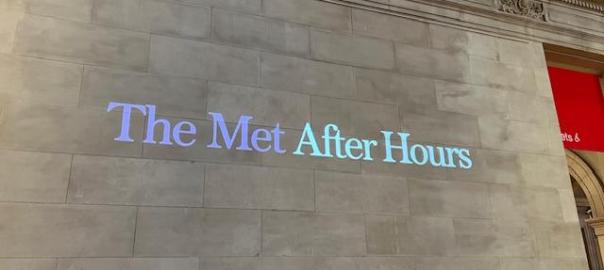
One of the things I love about being a member the Metropolitan Museum of Art is the private Member’s Night ‘Met After Hours’ they hold about four times a year. The museum is open after the closing hours and it is a night of wondering the museum galleries, great music and entertainment and wonderful tours and talks in the galleries. You really experience the museum at its best and it does shine.
The lines move very quickly to get into the museum and with traffic getting into the City that night, I arrived about twenty minutes after opening and there were no crowds to face and I got right in. There’s always a sense of excitement on these nights.
The Grand Hall in the front of the museum decorated with Spring flowers
The beautiful Spring flowers lined all the urns around the Great Hall
The museum welcoming all the members of the museum at ‘The Met After Hours’
I started my walk around the galleries in the Greek Wing touring the main hallway. It still boggles my mind how old these statues are and I am looking at something almost two thousand years old.
The Museum’s collection of Greek and Roman art comprises more than thirty thousand works ranging in date from the Neolithic period (ca. 4500 BCE) to the time of the Roman emperor Constantine’s conversion to Christianity in 312 CE. It includes the art of many cultures and is among the most comprehensive in North America. The geographic regions represented are Greece and Italy, but not as delimited by modern political frontiers: Greek colonies were established around the Mediterranean basin and on the shores of the Black Sea, and Cyprus became increasingly Hellenized. For Roman art, the geographical limits coincide with the expansion of the Roman Empire. The department also exhibits the art of prehistoric Greece (Helladic, Cycladic, and Minoan) and pre-Roman art of Italic peoples, notably the Etruscans (Metropolitan Museum of Art website).
One of the statues that stood out that evening
I spent some time admiring the statues and the craftsmanship of the works along the hallway. The only problem is that most of the Greek and Roman Galleries were closed for the evening so I headed off to the Renaissance Wing. I love the luxury objects in the collection of silver and gold and again their craftsmanship is still unrivaled today. To make these objects takes intensive work and talent.
The timepieces show how advanced science had become and the importance of it in not just measurements but in beauty.
The lobby of the American Wing with the facade of what was a former bank and a Wall Street private mansion. I love the quiet elegance of this building and to think they moved it here piece by piece. The American Wing Cafe was open for the evening and the area was busy throughout the evening. It is nice to just sit and enjoy the views by the fountain. The artwork is beautiful.
Visitors to the American Wing will experience in more than 75 galleries on three floors varied art, design, and culture from the mid-seventeenth to the mid-twentieth century, with some contemporary expressions, by a diverse array of artists from across North America. Since our founding in 1924, this curatorial department has evolved its collecting to include some 20,000 artworks in many mediums by African American, Asian American, Euro-American, Latin American, and Native American makers, affirming ever more inclusive definitions of American art and identity. These dynamic holdings include painting, sculpture, drawing, furniture, textiles, regalia, ceramics, basketry, glass, silver, metalwork, jewelry, as well as historic interiors and architectural fragments, produced by highly trained and self-taught artists, both identified and unrecorded (Metropolitan Museum of Art website).
The evening then moved to the Egyptian Wing and the Temple of Dendur, where the entertainment and the cocktail bar was located.
The Temple of Dendur is the hub of activity on Members Nights
This small temple, built about 15 B.C., honored the goddess Isis and, beside her, Pedesi and Pihor, deified sons of a local Nubian ruler. On the outer walls between earth and sky are carved scenes of the king making offerings to deities who hold scepters and the ankh, the symbol of life. The figures are carved in sunk relief. In the brilliant Egyptian sunlight, shadows cast along the figures’ edges would have emphasized their outlines. Isis, Osiris, their son Horus, and the other deities are identified by their crowns and the inscriptions beside their figures (Metropolitan Museum of Art).
These scenes are repeated in two horizontal registers. The king is identified by his regalia and by his names, which appear close to his head in elongated oval shapes called cartouches; many of the cartouches simply read “pharaoh.” This king was actually Caesar Augustus of Rome, who, as ruler of Egypt, had himself depicted in the traditional regalia of the pharaoh. Augustus had many temples erected in Egyptian style, honoring Egyptian deities (Metropolitan Museum of Art).
The area was packed with patrons enjoying music and talking by the bars. The crowds were so large at the beginning of the evening that I waited until after 9:00pm for the second performance of the group playing. So I headed into the section of the Egyptian Wing to look at the galleries that were open. I love walking around the Egyptian Wing of the Met. It is one of the most extensive collections outside of Egypt and the most fascinating Mummy exhibition.
Admiring one of the Mummy exhibits in the Egyptian Wing
The Department of Egyptian Art was established in 1906 to oversee the Museum’s already sizable collection of art from ancient Egypt. In the same year, the Museum’s Board of Trustees voted to establish an Egyptian Expedition to conduct archaeological excavations in Egypt. Between 1906 and 1935, The Met’s Egyptian Expedition worked at a number of important sites, including Lisht in the north and Thebes in the south, and the objects gifted to The Met by the Egyptian antiquities service form the core of our collection. Over the years, the Department of Egyptian Art has also been able to acquire, through purchase and bequest, several important private collections (Metropolitan Museum of Art website).
The ancient tablets outside of the Mummy Exhibition
The Egyptian artwork outside the Mummy Room
The tablets outside the Mummy Room
When the whole gallery is open, it is a treasure trove of objects and information from each Dynasty. I have been mind-boggled by these galleries since I first visited the museum in the third grade for a class field trip. I remember sketching artifacts for a class project and am still fascinated about how old some of these objects are and condition they are still in after thousands of years. It is my favorite part of the museum.
By 9:00pm, the entertainment was starting again, so I joined other members for a cocktail and enjoyed the music in the Temple of Dendur Gallery.
The Temple of Dendur fully lit for the evening before the start of the entertainment
The signature cocktail of the evening, the Starlight Spritz
Enjoying a Starlight Spritz while listening to the music
The bartenders can mix a drink
After a long week at work, it was nice to relax and enjoy the music. The music that night was performed by artist Jasim Perales and Friends, an Afro-Latin Jazz performance. The music was relaxing and soulful and the crowd had a wonderful time.
The start of the music again at 9:00pm
The trio performing
A clip from the entertainment that night
The Master of Ceremonies that night, Jasim Perales
All good things come to an end and it was time leave. The night was dark and the winter air was crisp creating the perfect Winter evening to set out into for the walk back to Port Authority. The Upper East is so beautiful at night.
The front of the Met that night
The artwork is always so impressive outside the Met
It was in the low 40’s that evening and the perfect night for a walk around the Upper East Side and Midtown. It still surprises me after all these years of walking around Manhattan how beautiful the City really is at night.
It was another spectacular evening at the Metropolitan Museum of Art. Thank you to the Membership and Special Events Departments for hosting another wonderful evening.
In post Valentine’s Day season, we conducted our first meeting of the year. It has been a good start to the year with donations coming in from Bergen County Fire Department’s and their continued generosity. We are trending ahead of last year so far and appreciate the support we always get for our fundraiser.
We talked about the plans for the upcoming summer barbecues, the Christmas Party in December, which seems to come faster and faster and talking at the Bergen County Caucus in August, where we want to spread the word about our organization and the benefits joining the organization does.
After the meeting was over, we joined the residents in the main hall to enjoy the entertainment and refreshments. Crowd pleaser, Gigi, entertained the residents with a series of uplifting love songs and ballads. It was still Valentine’s Day at the NJ State Firemen’s Home.
Crowd favorite Gigi entertaining everyone
Gigi singing ‘Everlasting Love’
The concert continued with more popular songs from contemporary pop songs to popular live ballads. The residents really loved it, especially on this gloomy afternoon.
The continued through the afternoon
Gigi singing ‘They can’t take that away from me
We then got up to introduce ourselves to the crowd of residents. We thanked them for their years of service to their fire departments and hoped they enjoyed the Christmas Party a month and a half ago. They really appreciate all the things we do for them and we are most happy to do it. Then we took our group shot.
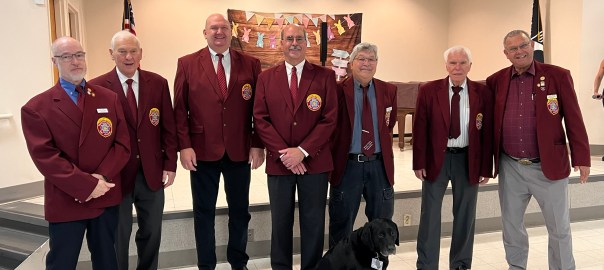
The members of the Bergen County Firemen’s Home Association
We ended the concert and the afternoon with Gigi singing both ‘I love you more than Yesterday’ and ‘God Bless America’.
Gigi belting out ‘I love you more today than Yesterday’
Another wonderful song
It was a great afternoon and both the residents and ourselves enjoyed it. We predict another great year!
Mills Bakery at 275 Valley Boulevard in Wood Ridge, NJ
Mills famous Crumb Cake
Their delicious doughnuts
The History of Mills Bakery and the business story:
Head Master Baker, John Cabrera started at Mills Bakery in November of 1998 at the age of 14 to earn a few dollars during his freshman year in high school. Starting out as a dishwasher, John quickly learning simple baker tasks such as dipping cookies with sprinkles and chocolate to learning how to use a pastry bag. All through high school he worked side by side with seasoned bakers and realized this business was for him.
He later received his associates degree in baking & pastry arts from Johnson & Wales University in Providence, Rhode Island. Upon graduation he became Head Baker of the Mirage Hotel & Casino in Las Vegas. After Vegas, he knew he wanted to own his own business. An opportunity came about to own Mills Bakery, the very place in which he learned his craft, and he jumped on it. He is proud to say that he is the owner of a small town landmark which has been around for almost a century.
Video on the the Business:
The store is always decked out so nicely for each holiday so you have to visit to see all the creative treats.
Coming to Mills on the holiday of love
The store decked out for the holiday of love
Cookies and cakes that everyone loves
Cakes and pies and things that people love
Sweet Heart cookies are always the perfect gift
The store comes to life at the holidays. At Christmas every year, it is a fantasy land of cakes, cookies and pastries beautifully decorated and smiling back at you. The store is always nicely decorated.
There is nothing like Mills Bakery at the Christmas holiday season. I stop in for all sorts of baked items to take to my mother’s, who loves their doughnuts and turnovers. I will bring desserts down too when we are having a meal at the house. Over the years, I have taken the best pictures at the store as Christmas has gotten bigger every year since the renovation.
The store at Christmas time
Mills has such delicious treats at the Christmas holidays
The penguin cupcakes at Christmas time
Christmas and Butter Cookies at Mills Bakery
The store has a nice selection at every holiday
The joyful cookies at the holidays
The beautiful cakes
The beautiful Gingerbread houses at Christmas time
In the Christmas holiday season of 2025, Mills really went all out with the declarations both inside and outside of the store.
The front of Mills Bakery Christmas Eve 2025
The gingerbread lady outside the store
The gingerbread man outside the store
The beautiful display of holiday goodies
The window display for the holidays
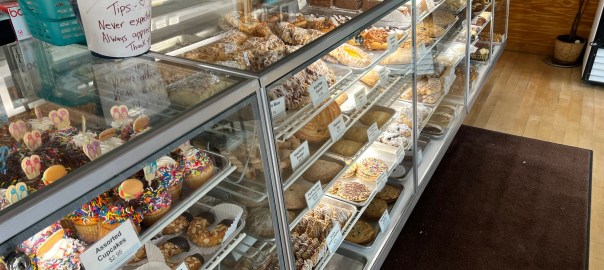
The display cases bursting with holiday cookies, cakes and pies
Case lines topped with gingerbread men and holiday butter cookies
Holiday cookies smile and wink
Bunche De Noel’s lined up for Christmas
Snowmen cakes at Christmas time
An igloo cake at Christmas time
Mill’s Bakery is very creative at all the holidays and adds that special touch to all their products.
The bakery has a lot of interesting baked items for St. Patrick’s Day as well.
The delicious cookies at St. Patrick’s day
The selection of delicious looking cakes at St. Patrick’s Day
The delicious cakes at the holidays
St. Patrick’s Day cakes at Mills Bakery
Halloween offers such colorful and artistic baked goods. I loved the Frankenstein cake.
The decorations during the Halloween season
The Halloween treats in the bakery case
The Ghost cookie
The Mummy cookies
I had to come back and buy one of these. It scared me that it was $5.00!












 mywalkinmanhattan