Tag Archives: fiction

Nathan Cooper Gristmill 66 Route 24 Chester, NJ 07930

Nathan Cooper Gristmill

66 Route 24

Chester, NJ 07930

(908) 879-5463

https://en.wikipedia.org/wiki/Nathan_Cooper_Gristmill

https://www.facebook.com/pages/Nathan%20Cooper%20Gristmill/495480777136425/#

Open: Sunday 10:00am-3:00pm/Monday-Thursday Closed/Friday 10:00am-4:00pm/Saturday Closed

Admission: $5.00 for everyone for everyone taking the tour; For special events it might be a different fee. Walking around the grounds is free.

My review on TripAdvisor:

https://www.tripadvisor.com/ShowUserReviews-g46355-d10355549-r1076722884-Nathan_Cooper_Gristmill-Chester_Morris_County_New_Jersey.html?m=19905

The location of the Cooper Gristmill:

(from the Cooper Gristmill website)

Located on 14 acres along the Black River, the Gristmill is the only restored water-powered mill in New Jersey and is listed on the State and National Registers of Historic Places. It’s a living example of the state’s transition from an agricultural to an industrial economy. Costumed staff lead guided tours of the mill, running restored machinery to harness the power of the Black River to grind grains, using two sets of massive 2,000-pound mills

The Nathan Cooper Gristmill

The sign welcoming you to the site

I spent an afternoon walking the grounds of the Nathan Cooper Gristmill after a trip to Hacklebarney Park and was able to tour the outside of the mill and the pathways around the property.

The historic sign welcoming you to the site

The front of the mill building

The front of the old mill had been decorated for the “250th Anniversary” of the nation and the grounds were really beautiful. The mill lined the Black River in the back of it and the lawns were filled with lush trees. The mill was not open for the day but you could walk around the grounds.

The Washington Turnpike historic sign

The front grounds and the water pump

The water pump marker in the front of the building

The water pumps at the front of the mills were closed off at this point but must have been used as a water source for the people working there at the time.

The stairway to the back of the mill

The pump by the front of the stairs

The back of the building is where the water wheel is located by the Black River water source. When I took the tour later the next month, the tour guide showed me how it worked. The mill is still a functioning mill and they still do produce flour for sale but on a limited basis.

The waterwheel that moved all the equipment inside

The Waterwheel and the water source to power it

The waterwheel

The history of the Water Wheel:

The Fitz water wheel was made in 1927 for a mill in Pennsylvania that burned down before it could be installed. It was then purchased for a mill in Pottersville, NJ in 1935 and powered until 1955. In 1974, the wheel was donated to the Morris County Park Commission and moved to the Cooper Gristmill (Cooper Gristmill pamphlet).

The video of the waterwheel working:

The historic sign on the waterwheel and the water source

The pathway to the Black River and the trails

The back trails of the gristmill have the most beautiful views of the river and the steams around the property. At the end of the Summer of 2026, it offers the most amazing views of the grounds. All the trees were still in bloom and the trails take you far back into the park. I just walked to the river stream and looked at the small waterfalls. This was the water source that powered the mill.

The historic sign on the Black River

The grounds and paths along the river are really picturesque but watch the paths when the paths are wet. It can be a muddy experience.

The Black River from the trails

The Black River water source

Video of my walk along the river:

The history of the Cooper Gristmill:

(from the site pamphlet)

A gristmill was apparently built at this site in the early 1700’s by the first Europeans to settle the Chester area. Records show that is was offered for sale in 1761. Later in the 18th century, it was owned by Ellis Howell. The property was purchased by Nathan Cooper in 1825 and then Cooper rebuilt the mill in 1826, since the original structure had been damaged by an earlier fire. This is the mill building that remains standing.

Following the death of Nathan Cooper in 1826, the mill was passed to his nephew, Nathan A. Cooper. The younger Cooper, who became one of Chester’s wealthiest and most important citizens, owned the mill property until his death in 1879.

Mills were built at close intervals. In 1832, the town of Chester reported five sawmills and three gristmills. Surrounding these mills were small settlements that developed followed by good roads so that the farmers could haul their grain to the site. Soon it was followed by a blacksmith shop and a general store. This was the beginning of the town of Milltown, later called “Milldale”.

Once in the forefront of technology and economic progress, village gristmills had become largely obsolete by the end of the 19th century. By then, milling had become a vast factory enterprise and the dynamic railroad system made it possible to ship grain and flour over great distances. No longer the bustling centers of activity, mills like the Cooper Gristmill came to be viewed as relics of a bucolic past.

In modern times and now restored, the mill once again hums with activity. The water wheel has been replaced and some of the mill’s mechanical equipment has been put back into place and now operates. In the place of farmers with wagon loads of grain, busses filled with school children arrive to see the millstones once again grinding flour. Cooper Gristmill and the Village of Milltown are good examples of the many small agricultural and industrial communities that once dotted the landscape of Morris County, NJ.

The back pathway to the front of the site

The first floor:

When I toured the facility a week later when the museum was open, I got a glimpse inside the mill’s past and how it was the economic engine of the area during Colonial times. The inside of the mill was in working shape and was still being used to produce flour when in season.

The first floor of the mill

The inside entrance to the mill on the first floor with the fireplace to the left and the millstones to the right. The stairs led to three floors of the workings of the mills from grinding to bagging and shipping of the flour produced by local wheat.

The inside framework of the mill in the process of milling wheat

The large gears that made these rocks special waterwheel work that harnessed the Black River power source. The river and lake that have been dammed are across the street.

The millstones for the grinding of wheat

The millstones on the first floor of the mill

The millstones used to process flour

The second floor:

The second floor of the mill displays contain the office of the manage of the mill, the flour separating area for the grades of flour and the old bagging area of the flour product for shipping.

The recreation of the manager’s office

The milling and bagging area

The flour processing machine

The flour grade sorting machine is off to the left. The machine would sort the grades of flour based on the weight and bulk.

The machines processing and sorting the milled wheat

Pieces of millstones

Pieces of the millstones used in the production. The pieces would be shipped individually and then assembled when they arrived at the mills because of their sheer weight.

The attic room

The Attic:

The attic was the last part of the tour and where a lot of the inner workings of the mill were located. Just watch your head.

The Visitors Center:

When I finished the inside tour of the mill museum, I returned to the Visitors Center with the tour guide where a small museum on historic Morris County and the county’s rural past and development was displayed.

The small museum inside the Visitors Center

The inside of the museum tells the story of the development of Morris County, NJ

The small gift shop inside the museum

After the tour of the inside of the mill and museum was over, I explored the grounds of the property and admired the foliage. I decided to explore the power source of the mill on the advice of the tour guide who was preparing to close up for the day.

The grounds of the mill building and the beautiful surrounding foliage

The tunnel under the road taking you to the damned river and the lake on the other side of the road.

The video of the walk through the tunnel:

The path underneath the tunnel lead to the lake that was the original and still the power source to the mill. It still makes the water wheel run and is its source of power.

The lake and the waterfall are the source of power for the mill

The Water source of the Cooper Gristmill:

(from the Cooper Gristmill site pamphlet)

Unlike the electric machinery of today. the water powered gristmill drew upon the natural environment for its power. The miller chose a location close to a water course that has a drop in elevation. A dam was built to form a pond that would store the water needed to power the mill even in the dry summer months.

A sturdy building was required to support the water wheel and its associated machinery. The water was brought from the pond in a wooden trough, headrace or flume. The height from which the water would fall when it reached the mill was called the ‘head’. It determined the amount of power that could be generated. A tailrace carried the water away from the wheel and returned it to the stream. The turning shaft of the water wheel transferred its mechanical power into the mill. The gears and belts then transmitted the power throughout the building. The four sets of millstones at the Cooper Gristmill originally required two water wheels to operate.

The mill was often the social center of an agricultural community and the miller was a community leader. The miller lived nearby in order to attend to the constant stream of customers and keep his machinery in good order.

The beautiful foliage on this side of the road

I walked through the pathway and looked into the pond to see the small waterfalls in the distance. The foliage colors on the background of the water was quite spectacular.

The Visitors Center and the mill complex from the other side of the road

It was a very interesting visit to see part of New Jersey’s manufacturing past and how it was still being utilized in the present. The tour guide explained that at certain times of the year, they still mill flour and sell it to the public.

So it is still a working mill in production and you can still see that production in the warmer months. You can also buy the finished product on premise.

Not only is it an interesting tour but the surrounding foliage in the Fall is breathtaking. It really was a fascinating tour of New Jersey’s past.

Take you time and enjoy the paths and trails around the mill building

In the whole time I toured the gristmill did the tour guide say the place was haunted. I never saw or felt anything but according to many videos, the place is haunted.

The Ghost Investigation
The Little Apple Toy Shoppe 2484 Broadway New York, NY 10025

The Little Apple Toy Shoppe

2484 Broadway

New York, NY 10025

(646) 389-6172

https://thelittleappletoyshoppe.com/password

My review on TripAdvisor:

https://www.tripadvisor.com/Profile/R4960NKjustinw/mediabatch/14524291?m=19905

The front of the Little Apple Toy Shoppe at 2484 Broadway

When I was walking my Broadway Walk, which is the 13 mile walk down Broadway from 242nd Street to the Bowling Green, I took my time and walked through many stores I found interesting. Some had colorful displays and some just had playful merchandise in the windows. Then I passed The Apple Toy Store at 2484 Broadway and saw the cheerful sign at the door and had to walk in. What a delightful, whimsical store.

The sign that greets you on Broadway

The displays inside and out of the store really showcase the merchandise and the store has that colorful, playful appeal that attracts both children and adults.

The inside of the store with interesting costumes and wooden products

What I loved about the store was there was not a plastic toy in sight but more smaller vendor wooden toys, more toys that spark imagination and creative play. In some toy stores in the City, they are just stacked with the same toys that you see in other stores. Piles of Legos, Playmobile and construction toys that while popular and interesting and fun to play with don’t offer that unique shopping experience of seeing some of the smaller toy vendors that are not available in every toy store. This is what makes Little Apple Toy Shoppe stand out.

The unique display of costumes

The store also has an array of costumes just in time for the holidays. Halloween and Christmas are just around the corner and it will soon be dress up time. Everything is so nicely displayed and not crammed in to fit every piece in the store. There is a nice selection of sizes and varieties to both boys and girls of different ages.

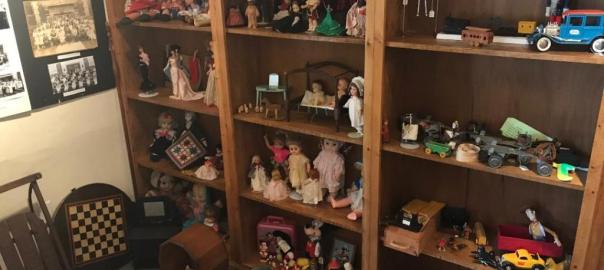
The dolls on display smile and wink at you almost asking you to take them home.

What was really nice was talking with the owner that afternoon as she just opened this shop. She had told me that West Side Kids, which was located on West 84th Street had closed their doors after Christmas of 2025 and there was no toy store in this part of the City. She wanted to fill that gap and create a store that would be part of the community. A place where families could gather and shop together. I think she is on the right path with the business with all the engaging toys and whimsical displays.

The selection of books, crafts, wooden toys and clothes

These are the type of toys I loved to receive when I was small. These are the type of playthings that enhance creativity and play and a child’s imagination.

The soft opening that day gave the owner a chance to meet people in the neighborhood and tell them about her business (she did not even have the sign over the door done yet. Just the sandwich board outside the front door). The store reminded me of the mythical store ‘Shop Around the Corner’ in the movie the movie, “You got Mail!”, creating an environment where families can meet and chat with both the owner and their neighbors.

I wish this establishment the best of luck because New York City needs more creative small businesses.

The scene in “Shop Around the Corner”

The spirit of small businesses all America and what happens when we don’t support them.

Day Three Hundred and Eight-Nine Visiting the Orange County Fair in Orange County, NY and the 4H Fair in Bridgewater, NJ July 26th, and August 7th, 2026

I took a ride to Upstate New York in July to visit museums and historical sites in Orange County, NY that had been on my bucket list but most were closed on the sunny Sunday. I made a U turn on the local highway and stopped to visit the Hill-Hold Museum in Campbell Hill, NY.

The Hill-Hold Museum at 128 NY 416 in Campbell Hill, NY

https://www.orangecountyny.gov/1477/Hill-Hold-Museum

https://en.wikipedia.org/wiki/Bull-Jackson_House

Open: Sunday 12:00pm-4:00pm/Monday-Friday Closed/Saturday 12:00pm-4:00pm Seasonal Tours from May to August.

Admission: Adults $5.00/Children $3.00/Group Tours $4.00-Group Tours for over 20 people have to arranged in advance.

My review on TripAdvisor:

https://www.tripadvisor.com/ShowUserReviews-g47402-d27087686-r1070368379-Hill_Hold_Museum-Campbell_Hall_New_York.html?m=19905

After the tour of the house was over, I decided to stop at the Orange County Fair for the evening and get something to eat.

Being a frequent visitor of the Dutchess County Fair, I expect all the fairs to be of the size and scope of that fair. This one was much smaller but still had a lot to offer.

The entrance to the Orange County Fairgrounds in Middletown, NY

https://www.orangecountyfair.com

https://www.facebook.com/OrangeCountyFairNewYork

When I arrived in the late afternoon, the fair was rather quiet as it was the late afternoon and most of the demonstrations and entertainment would be later that evening.

Walking through the entrance of the fairgrounds past the rides and the concessions

Still there was a sizable crowd already at the fair riding the rides, playing games of chance and eating at the somewhat over-priced concession stands.

There were a nice variety of rides and things to do while I walked around surveying the grounds to what there was to do and experience.

Looking over the rides which were filled with families

The first tent I visited was the Livestock Tent and the petting zoo. While the fair did not have the livestock displays that the other fairs did or the 4H presence, the tent had friendly selection of animals to see and feed. They looked so happy to see humans with food.

Walking through the petting zoo

Walking through the petting zoo

The sheep and llamas were waiting by the edge of the pens for treat from a human hand. I found them inquisitive of us especially as we fed them.

Watching the llamas decor an ice cream cone filled with treats

The next tent I visited was the 4H tent with all the craft and food items on display. The judging had taken place and all the ribbons were on display.

Walking through the crafts tents

The Scarecrow Contest in the Crafts Tent

We even got to vote on a scarecrow. I thought that was interesting.

Nightmare Manor, the haunted funhouse

The preview of the movie “The Funhouse”

I next walked along the Midway past a whole series of rides and attractions. The first ones were the funhouse and the glory, the Nightmare Manor haunted ride. The lines were short so most people were getting in quickly.

The next thing I did was visit the grandstands where they were having a demonstration on Monster Trucks. This I had to see.

The Monster Trick Rally competition

They were offering rides to patrons before the show (which was a separate fee), so I got to see people driving around the field having a great time.

I did not want to stay for the show as those lines were getting long and I wanted to head home before it got dark. I left the ever growing line to head to the concession to get something to eat.

Stopping for dessert at Tootsie’s Fried Dough Concession

Someone had just walked by me with a steaming funnel cake and then I had to have one. The one thing I have to say about Tootsie’s Fried Dough is that everything is made fresh to order and the quality of the funnel cake was better than any one that I had at the Dutchess County Fair, which are always premade and soggy by the time you get them.

The Funnel Cake was made to order and out of this world

Yum! These were the best!

The last thing that I attended was the circus, which had just started at 6:00pm as I was leaving the fairgrounds. I decided to stay for the most of the show. I enjoyed the high wire acts and the acrobatic displays.

The high wire acts

These brothers from South America were extremely talented and do the most amazing tricks on the high wire.

The bicycle ride over the high wire

Skipping rope on the high wire acts

I really had a nice time at the fair. While it was not as big as either the Dutchess or Ulster County fairs that I attended in the past, there was a lot to see and do at the Orange County Fair.

The Bridgewater, NJ 4H Fair:

Going to the 4H Fair in Bridgewater, NJ was like a step back in time. I used to come here with friends after swim team practice as kids and we all used to garbage up eating our way through the Food Tent. After that, we would enjoy the fair.

The entrance to the Somerset County 4H Fair in Bridgewater, NJ

https://4histops.org/visitors

https://www.facebook.com/SCNJ4H

Walking into the 4H Fairgrounds was like stepping back over forty years as I had not been here since 1981. I even searched all the tents to find someone I knew (I did not know anyone).

The various displays of crafts, hobby cars, crafts and gardening tips

I first visited the Craft and Hobby tents with the displays of model trains, planes, automobiles and artwork. It was mostly families talking amongst themselves. The I next visited the Cow pens.

The cow pens

The cow pens

The cows were getting their afternoon feeding

I next visited the Sheep tent and they were in the middle of having their lunch as well not paying too much attention to us humans.

The sheep were enjoying their lunch when I got there and stopped for a second to see what I was doing

They all went back to feeding

There was a llama tent as well and they seemed very welcoming to human interaction

While walking around the fair, I could see the dark clouds coming in the distance. I had thought the storms were not coming until that evening, so I hustled through the rest of the tents.

Walking down the Midway of the fair with dark clouds in the distance

Entering the Poultry Tent

There were all sorts of varieties of chickens, ducks and geese to visit at the fair.

The prize chickens in their pens

The chickens were eating their lunch and pecking away

The highlight of the 4H Fair to me as a child was the Food tent with all the hot dogs, hamburgers, fried dough and funnel cakes and the popcorn and cotton candy for dessert.

The Food Concession tent

The Food tent

Just as I was deciding what to eat for dinner, there was a panicked announcement over the loudspeaker that they were closing the fair due to incoming storm clouds and lightening.

Everyone made a mad dash for their cars and I actually felt for all the concessions, who had all this food to sell and now how to shut down quickly. Some of the patrons had a ‘screw it’ attitude and kept eating probably until they kicked them out of the tent.

It started to rain while I was in the parking lot and I just checked messages on my phone and worked on blogs until most of the traffic got out of the parking lot. Then I drove into Bridgewater and had dinner at Joe’s Pizzeria at 1938 Washington Valley Road in Martinsville.

Joe’s Pizzeria at 1938 Washington Valley Road in Bridgewater, NJ

https://www.joespizzamartinsville.com/

Open: Monday-Saturday-11:00am-9:30pm/Sunday-4:00pm-9:30pm

My review on TripAdvisor:

https://www.tripadvisor.com/Restaurant_Review-g46604-d3395400-Reviews-Joe_s_Pizza-Martinsville_New_Jersey.html?m=19905

My review on DiningonaShoeStringinNYC@Wordpress.com:

I had been coming to Joe’s since I was five and the pizza has not changed on bit since then. The next and the current owner both use the original Joe’s recipe for tomato sauce for the pies and calzones. Dinner here is another step back in time to my teen years. The inside of the pizzeria has not changed much in 35 years.

I was in the mood for a sandwich but I did not see any on the menu. They no longer make them so I ordered the Sausage and Pepperoni Roll. When it came out, it looked like a small pizza folded over. They made it fresh for me.

The Sausage and Pepperoni Roll with a side of red sauce

The roll was stuffed with a half pound of sweet fried sausage and spicy pepperoni, tucked in a pizza dough shell and baked to perfection.

It was the perfect meal for me covering both lunch and dinner. This could have been shared by two people.

The food here has been excellent since I started to come here in the 1970’s and has not changed since.

The dining area has not changed much since I was a kid

There’s more fairs to see and many more experiences to be had at them.

Cinnamom Gourmet Cinnamon Rolls/Cinnamom Bakery 5015 South Saginaw Street Flint, MI 48507

Cinnamom Gourmet Cinnamon Rolls/ Cinnamom Bakery

5015 South Saginaw Street

Flint, MI 48507

(810) 866-4342

The Cinnamom logo

I was at the NYC Fancy Food Show in 2025 and this is one of the vendors that stood out to me. Cinnamom produces some of the most delicious baked goods I have tasted. The giant Cinnamon buns are ooey and gooey and topped with thick icings and then more toppings. They are a Cinnamon bun on over-drive and produces the best rush of sweetness. I had to go back three times to try all the samples and indulge in these delectable treats. It is a small company that is just starting their global shipping but watch out when they do. Everyone will want to sample these delicious treats.

The products being offered at the Fsncy Food Show

The regular Cinnamon bun with white icing on it was my favorite but the one with Chocolate and White icing was another. All the products I tried were wonderful and the owner and her daughter could not have been nicer. They let me try all the samples with a big smile on their faces. They seemed happy that I was so happy!

The History of Cinnamom:

(from the company website)

The Journey started 50 years ago:

When Shirley Welch came up with the ultimate recipe for a household favorite, cinnamon rolls. For holidays and special occasions, she would roll out these one-of-kind treats for family and friends to enjoy. Early on she had a little helper in the kitchen by her side, assisting with the baking process. This little helper would grow up to be the founder and owner of CinnaMom, Rebecca Nagy.

For years people would come up to Rebecca telling her she needed to start a cinnamon roll business, as hers were the best in the world. After happily retiring from her nursing career, in 2013 she finally listened to everybody’s encouragement and officially opened the first CinnaMom location in Lapeer, Michigan. Since then, the business has grown in size and popularity, both locally and nationally.

Over the last few years CinnaMom has doubled the size of its main bakery in Grand Blanc, Michigan and is featured on QVC. CinnaMom ships to anywhere in the United States and wholesales these CinnAmazing (TM)  rolls to over 40 locations in the U.S.  CinnaMom has been featured on ABC’s Good Morning America and The View, along with several other TV networks.  What’s next?

Soon, CinnaMom will be exporting to other countries so that more customers have the opportunity to taste these delicious, ooey-gooey cinnamon rolls. CinnaMom is still on a Roll!