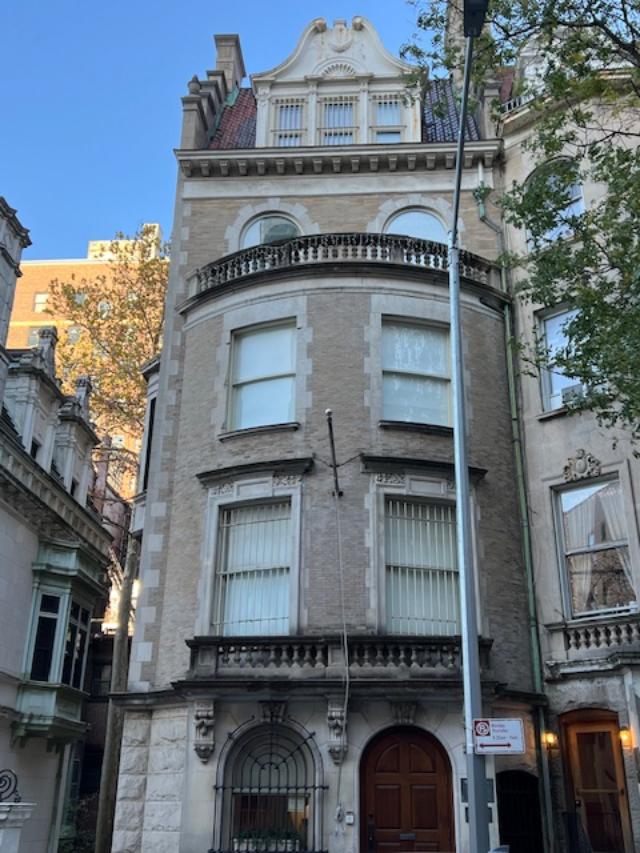
This small museum in the Upper West Side neighborhood of Manhattanville is easy to miss. It is in a small brownstone on West 107th Street right near Riverside Drive. You can see the plaque for the museum to the right of the building and there is a side door to get in. The admission is free but they do ask for a donation if you can do it.
The gallery on the second floor
The museum is a specialty collection of the works of artist Nicholas Roerich. They are mostly landscapes and religious themed that cover three floors of the museum.
The is a beauty to all his works especially the ones concentrated in the Himalayas with their colorful and spiritual themes.
The artist’s portrait of his mother on the third floor
It takes about an hour to an hour and a half to see all the floors. A nice touch they had in the afternoon that I was there was a piano player whom you could hear play throughout the brownstone. When you go, it will be a pleasant afternoon where you are not fighting the crowds of the larger museums.
The art pieces enlighten you and I felt gave you a sense of hope.
(The following information is from the museum website)
Artist Nicholas Roerich
(From the museum website)
The Nicholas Roerich Museum was founded in 1949 to house a permanent collection of over two hundred paintings by the Russian-born artist, poet, philosopher and humanitarian, Nicholas Roerich. The museum also houses a library of books and maintains an archive and a collection of artifacts relating to the areas of Roerich’s interests (Museum guide).
The Mission of the Museum:
The mission of the Nicholas Roerich Museum is essentially a narrow one: to make available to the public the full range of Roerich’s accomplishments. These, however, are not narrow; they cover the realms of art, science, spirituality, peacemaking and more. Because Roerich’s activities ranged widely, so do the museum’s.
The second floor galleries
The Museum Collection:
Nicholas Roerich is known first and foremost as a Russian-born artist. His paintings, of which there are thousands around the world, explore the mythic origins, the natural beauty and the spiritual strivings of humanity and of the world.
One of the more spiritual paintings in the collection
The museum houses approximately two hundred of these works and keeps most of them permanently on display for visitors who come from around the world. Indeed, for many of these visitors, the museum is a destination of great importance; the paintings speak to them of their own inner yearnings and possible fulfillment. For them, Roerich’s paintings are a kind of teaching-about spiritual development about culture and its role in human life and about opportunities for the achievement of peace in a fractious world.
The second floor galleries
The beautiful landscapes on the second floor
Publications & Booklist:
The museum also keeps in print a number of books by and about Roerich and his life and work and a substantial stock of postcards and reproductions of his paintings. These too are seen by many as more than just prints; they are hung in homes with a degree of appreciation that is not often given to such things.
The gallery on the first floor with some of the more religious works
Cultural Events:
In addition to these functions, the museum also maintains an active schedule of cultural activities.
The second floor galleries
It was Roerich’s fervent belief that the role of cultural development in the peace and evolution of the world is fundamental and that it is therefore the responsibility of those who work in creative and cultural fields to strive always for that peace and evolution and for those goals to be the chief impulses guiding their creative work. Information about these ideas is always available.
The second floor gallery with Asian themed art
The Roerich Pact & the Banner of Peace:
The museum sustains an ongoing effort to spread public awareness of the intermingled roles of peace and culture and the ways in which each sustains the other. Information and materials about The Roerich Pact and the Banner of Peace are always available.
The patronage of the museum through the Katherine Campbell-Stibbe Foundation
Throughout this century of wars and national struggles, the yearning of the public for ways of achieving peace has been great; the ideas of the Pact and the Banner provide a welcome answer to those yearnings.
The history of the museum through the years
As Roerich’s ideas become better known around the world, attendance at the Museum grows and requests for information and materials about him and his art and social achievements increase.
The gift shop on the first floor. The director of the museum even sells honey from the beehives on top of his building.
*This information is from the Museum’s website.
Disclaimer: This information was taken from a combination of the museum’s website and from the biography of the artist.
I recently revisited the African Museum of Art on the SMA Father’s and on this trip really took my time to learn about the Mission and study the art in the various displays. Each country that the Mission is involved with is represented here with detailed information on the meaning of the art and its purpose. It is an interesting approach to understanding the culture of each of these countries.
The beautiful stained glass windows line the ceiling and walls and has a beautiful effect in the room on a sunny day.
The sculpture in the middle of the main hall
The History of the Museum:
(From the museum website)
This museum was established in 1980 and is one of the only rare few in the United States dedicated solely to the arts of Africa. Its permanent collections, exhibited on a rotating basis, offer a unique advantage in the study and research of sub-Saharan sculpture and painting, costumes, textiles and decorative arts, religion and folklore.
The main hall of the museum
The history of the Mission
The history of the Mission
The history of the Mission
The African Art Museum of the SMA Fathers is one of five museums around the world founded and maintained by the Society of African Missions, an International Roman Catholic missionary organization that serves the people of Africa.
The display case that line the main hall
The display case that line the main hall
The art works up close
The descriptions of the works
The display case that line the main hall
Some of the works up close
The description of the masks
The display case that line the main hall
The museum is the continued vision of SMA’s founder, Bishop Melchior de Marion Bresillac (1813-1859). The French-born clergyman urged his Society to respect and preserve the culture of the peoples they serve, the unique among the missionaries of his time. (This information is provided by the museum).
Some of the works being featured in the exhibition
Their current exhibitions is on the “Africanizing of Christian Art” which shows the 20th Century encounter between Catholic Christianity and the visual culture of the Yoruba, a prominent west African people of southwest Nigeria under the conditions of late colonization (This information provided by the museum).
The hallway off the main room
Linking the walls of the main room are wooden carved doors from a palace in Africa. The interesting detail work tells it own story.
The description of one of the doors
Panel One
Panel Two
Panel Three
Panel Four
The collection contains many works in the form of masks, textile work, religious figurines and decorative arts. Each display case shows a different theme in the art.
The works of art in the cases
The puppets in the case
The works of art lining the cases
The engaging Mask collection
The museum is the main hallway of the church. I found it a quiet place where you could really concentrate on the beauty of the art. It grounds are also nice to walk around in in the nice weather.
The Chapel just off the museum is interesting to visit. I wondered how many people came to serve here and how the service was performed.
The main chapel of the mission
The beautiful stained glass windows in the chapel
The museum is a true hidden gem of wonderful and interesting testimonial and contemporary art. An inspiring museum if you take the time to really enjoy it.
There is always a lot of excitement when a new art exhibition is ready to open. It is even better when the museum opens it to its members first before the public gets a glimpse. The lines always wrap around the corner from the museum.
The long line of MoMA members waiting to get into the museum for the opening night of Artist Ruth Asawa’s exhibition
I noticed this year especially and right before Thanksgiving, all the museums are throwing open their doors for Member’s Nights. I have been invited to five Members Nights at museums all over the City. You can’t attend them all but when you can, it is a lot of fun.
The excitement the museum creates for these evenings
Video of entering the museum at the start of the opening with 80’s Japanese Pop Music
I think in an economy like this, these Members Nights are one of the best ways to engage with the membership for both donations and renewals of memberships especially before the holiday season. Plus it gives the members a wonderful night out to see the exhibitions ahead of time and enjoy the evening after a long week at work.
Born on a farm in Southern California, Asawa began her arts education when she was a teenager and she and her family were among the thousands of persons of Japanese descent who were forcibly incarcerated by the US government during World War II. It was at the internment camp that Asawa began taking classes in painting and drawing. After her release, Asawa studied to be a teacher but was unable to get a license because of her Japanese heritage, so she enrolled at Black Mountain College, an experimental art school in North Carolina. Asawa took classes from and worked alongside fellow artists Josef Albers, Robert Rauschenberg, Merce Cunningham, and R. Buckminster Fuller. Black Mountain was also where she met her husband, the architect Albert Lanier.
I loved her wire woven sculptures. They were the real standouts of the show.
The wire woven sculptures were the standouts of the exhibition
I thought these were a unique design
I liked here colorful paintings, these are of her child’s footprints. I loved the idea that her children were involved with the art
The patrons enjoying the art
The display of the wire art
The displays were impressive and graceful
The colorful faces looked tired
The look of nature in the wire art in the form of trees
I loved her works of food
At the end of the exhibition and the evening, I joined everyone on the main floor where the bar and gift shop were located. The main floor was the busiest part of the museum. I wondered if some of these people even went upstairs to see the exhibition or just stayed downstairs to socialize.
The main floor of the museum is always packed with people
Share in the excitement of the Membership opening
These evenings always get my mind off the stress of life. It is nice to just be in Midtown Manhattan and be in the moment. It is nice to see art, hear music and walk through the museum.
Also known as the U.S. Coast Guard Station No. 126, this is the only life-saving station (now museum) of its design in NJ (1 of 6 in the country) still in existence. The designer and architect was James Lake Parkinson in a Carpenter Gothic style. This building is one of 42 stations built in New Jersey. It was also the workplace of the brave surfmen who were the beachfront First Responders of the day.
The anchor outside the building
The historical plaque outside the building
The History of the Building and Museum:
(from the State of NJ Historic website)
The U.S. Life Saving Station in Ocean City is significant as an example of a significant type of life saving station and for its association with the activities of the U.S. Life Saving Service. The building was constructed in 1885 in what was referred to as the “1882 type.” There were 25 life-saving stations constructed in this style. In 1905 the building’s footprint was expanded to nearly twice its original size. The expansion was done in a style unique to New Jersey Life Saving Stations.
In 1915 the U.S. Life Saving Service and the Revenue Cutter Service were combined to form the U.S. Coast Guard. The Coast Guard continued to utilize the building until it was decommissioned during the 1940s and sold. It was used as a private residence until the City purchased it in May 2010.
The first room inside was the formal dining room where guests who visited or who had been rescued had dined. It was a rather formal affair.
I visited the museum on a weekend day to learn of the rescue procedures and the job these men did on a day to day basis. The first thing I learned was how shifting tides can change an island.
This building which now sits about four blocks inland was once at the shoreline a hundred years ago. Talk about change and Mother Nature’s role in this.
The first room I visited was the formal dining room in the newer extension of the building. This would be where the officers and men would entertain guests and visitors to the building. It could be a casual or formal affair.
The first floor formal dining room
The entertainment for the evening was either board games or a music box
Some of the items salvaged from the sea
The Life Guard officer formal outfit was worn for formal affairs
The officers would be dressed formally to receive guests
The next room over was the Rescue room and door where the boats and other equipment would be held when the alarm sounded.
The docent discussed how the doors were opened and the boats needed to be pulled out on a stormy night. Everything you needed had to be close by, in good shape and ready to go.
The rescue boats and pulleys that would be used in the sea
The ropes and pulleys used to assist in the rescue
The lanterns were used as communication between shore watch and the tower
The equipment used to repair the items used for rescue
The rescue boat and the items used for a water rescue
The additional boats used in rescue
Some boats were used for fishing and collecting shell fish
The Sneak Box was used for duck hunting to camouflage yourself
The sneak box
We then toured the second floor sleeping room for the crew. This offered a great view of the sea when the building was at shore line. These men were given good accommodations for the time.
While not very private, it was comfortable and served its purpose for a job where you might not get a good nights sleep.
The sleeping quarters
The main sleeping room was for a crew of six
The loft lead to the tower where the look out for the evening would sleep (it is not open to tours right now).
The loft area from the window
We then headed back downstairs where we toured the station manager’s room and office.
The station manager’s room off from the kitchen
The station manager’s office where all the monthly paperwork was done and business was conducted.
The kitchen
The Station Manager’s office was right next to the kitchen stove so that the room was kept warm during the winter months and on cool nights.
The kitchen stove
All the meals for the crew and visitors were cooked either by the men or their wives might be allowed to visit and assist in duties in the building.
The kitchen
All the storage of the foodstuffs has to be accounted for because getting them was rough with no cars for transportation and no bridges to cross to the mainland.
The gift shop
The museum and grounds
The museum offers a glimpse of the everyday life of these brave men who were on call 24/7 and performed such dangerous work. Ocean City has done a wonderful job preserving this legacy.
The museum has docents on hand for more formal tours and are very detailed on their knowledge of the building and its contents. It is a very interesting look at Ocean City’s past.
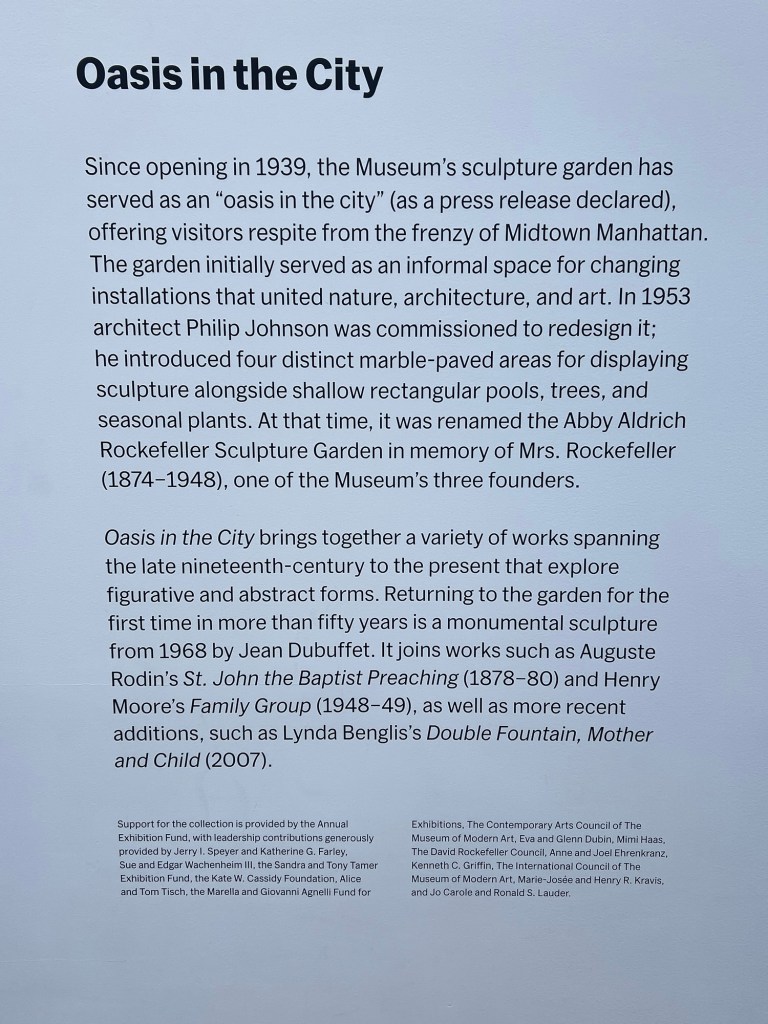
What I love about being a member of the museums in New York City is that there is an opportunity to see the museum in the early hours for private events. This morning I got up early to experience Manhattan on a spectacular sunny morning for the event ‘Oasis in the Garden’, a talk on the design, purpose and art in the MoMA outdoor garden.
We met inside the museum before the tour
Since the museum opened at 9:30am and there was no one at the museum at that hour, we had the outdoor garden to ourselves for almost an hour and a half.
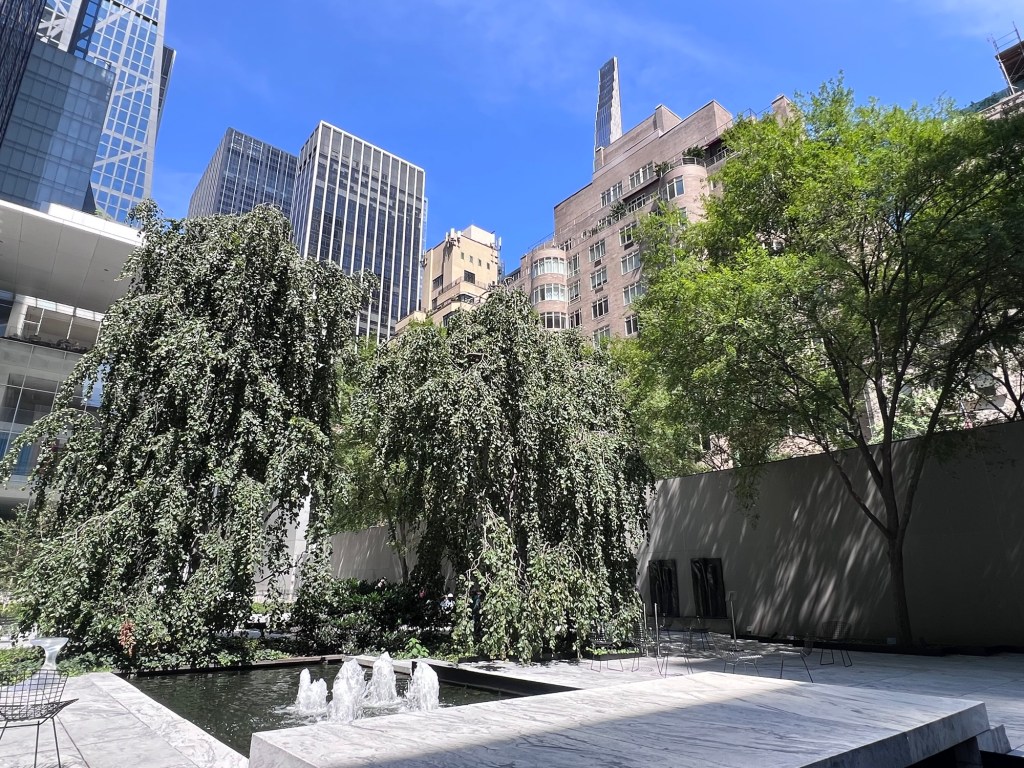
The outdoor garden at the MoMA at 10:00am in the morning
Our tour guide led about fifteen of us through a history of the creation of the gardens, the purpose in the museum, its renovation in 2004 when I joined and the sculpture in the garden.
She also talked about taking her students here and that some of them wanted specific answers to what the art meant rather than forming their own opinion. It is funny how I see this in my own students.
What I liked about our tour group was that it was an older, very educated crowd of people who brought different opinions on how the art we were seeing should be thought about. From the time the artist created it to it modern interpretation by the ‘politically correct police’, I was amazed by the other members take on each piece of art.
The gardens are a refuge from the noise and crowds of the museum and the City
Video of the fountain
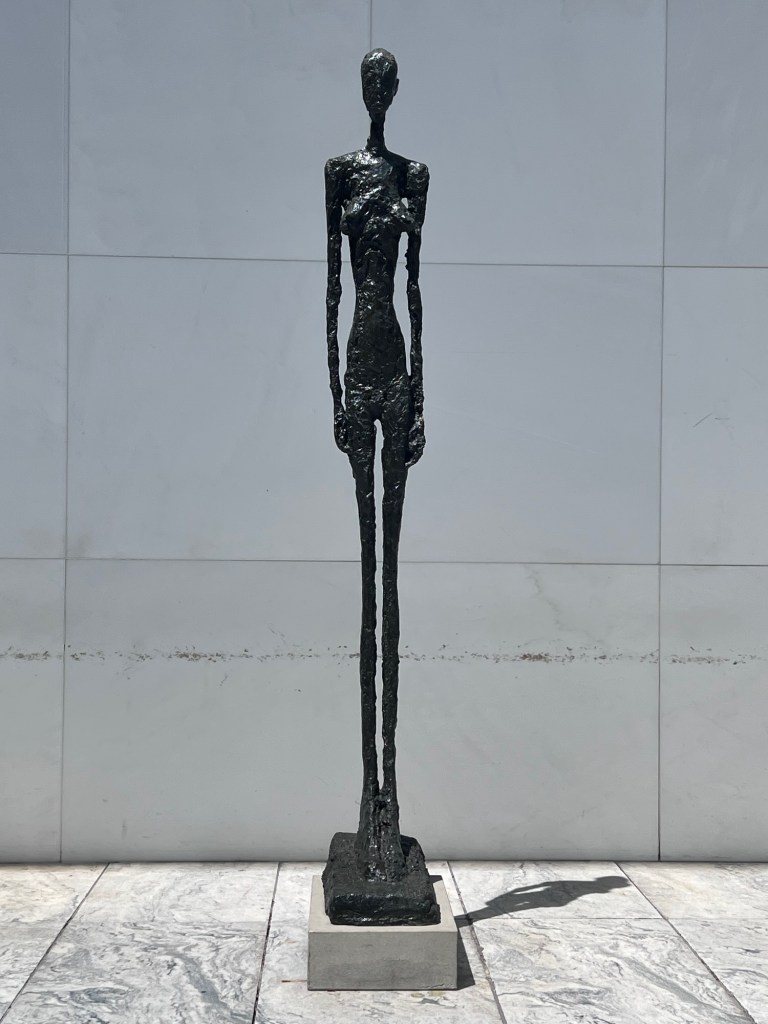
The Albert Giacometti ‘Talk Figure III’
Each piece of sculpture we touch upon was chosen specifically for the gardens and we talked about its place from when it was made to the modern interpretation and how they differ. Our first discussion was about the Albert Giacometti sculpture ‘Tall Figure III’. Some people talked about hunger and the stance on poverty. I asked if her students had different thoughts of the statue when it was made versus today.
She explained everything is seen differently through the artist’s eyes versus the modern I perception. It was hard to compare the two opinions without a debate. I thought today’s students needed to lighten up a little and stop taking art at face value and just enjoy it. The context of work over a hundred years ago is very different from how it can be looked at today.
We had time to talk and relax between art pieces and I swear the sound of the fountains relaxed me so much I almost feel asleep.
The fountains were so calming that morning
Video of the Japanese fountain
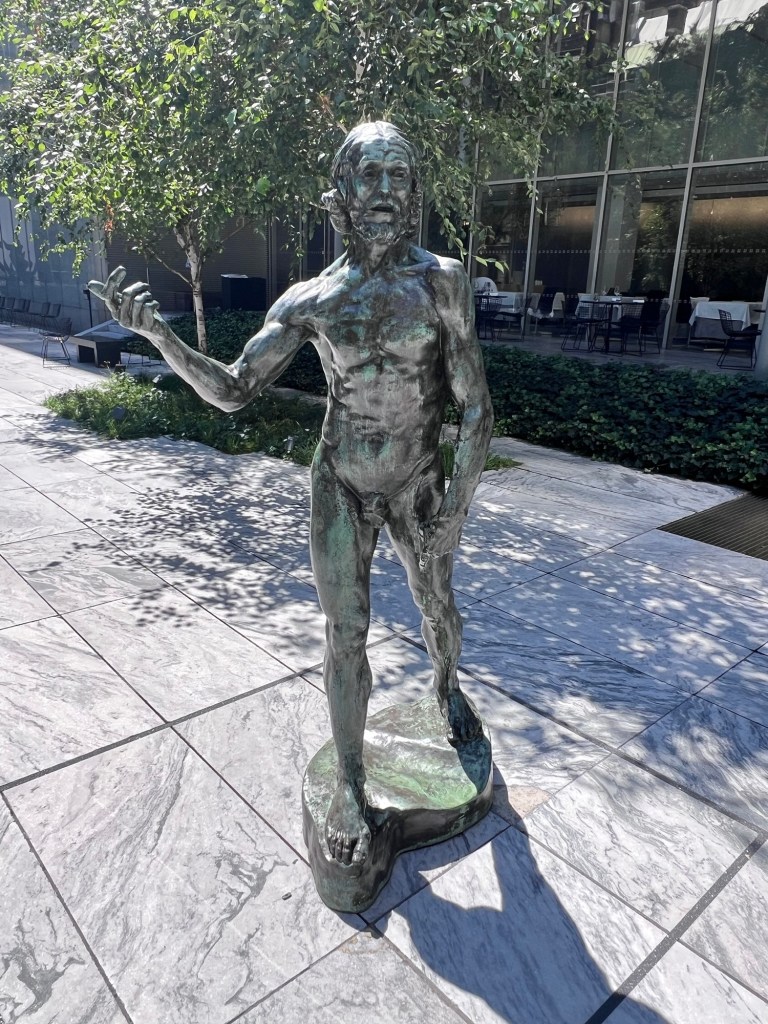
The August’s Rodin ‘St. John the Baptist Preaching’
We talked about the religious standpoint of the sculpture versus its place in modern society. I thought it was a naked guy hitchhiking. It’s funny how you see art.
The Jacques Lipchitz ‘Figure 1926-30’
With the ‘Figure’ many of the member talked about their interpretation of the modern take of Cubism and some members asked about whether these were arms and legs or something else.
The back of the gardens
The back of the gardens were so peaceful. I stood back from the tour so I could just hear the water rumble.
The Henry Moore sculpture ‘ The Family Group 1948-49
We discussed the modern family unit of today versus when the sculpture was created.
The back of the gardens
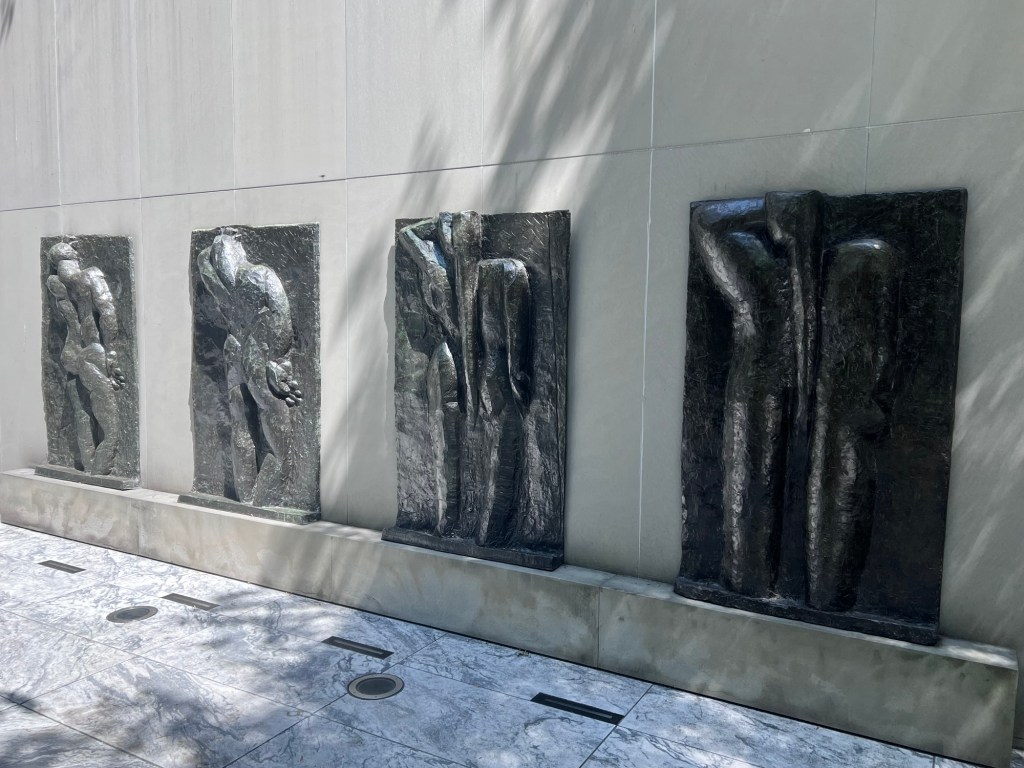
The Henri Matisse ‘The Back (III) 1913-16
The Aristide Maillol ‘The River’
We talked about the fall from God. One person said it looked like someone was tripping into the fountain. I thought that was clever.
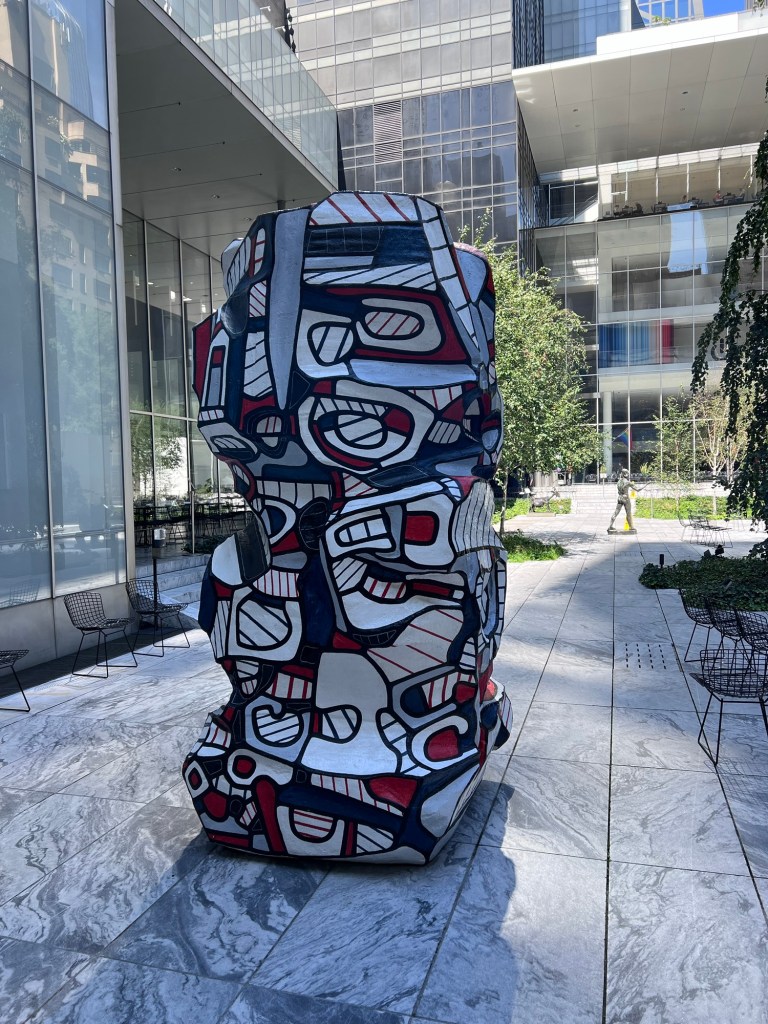
The Jean Dubuffet ‘Study for Tower with Figures’
This was the last figure we discussed and we were asked as a group what was the first thing that came to our minds when we saw this. I said ‘Juxtaposed’. So much going on and a lot being said. We talked about children and their make up in the family unit. How they change things.
I have to say that I saw the art in a different light this morning. It was interesting to hear the artist’s interpretation versus what members thoughts were on what the art meant. I thought it was a good take away when we finished the tour. There were so many interesting opinions on the art. What I liked was the weather was so amazing, and it was so nice to be outside.
The garden as the public entered later that morning
I know I got a lot out of the tour. It’s always nice to see different points of view of what the art means and how we interpret it. This is why it is fun to be a member of the MoMA. It’s nice to see the museum when it is quiet and you can just take your time.
Hours: Tuesday-Saturday: 11:00am-6:00pm/Closed on Sunday and Monday
Admission: Free
My review on TripAdvisor:
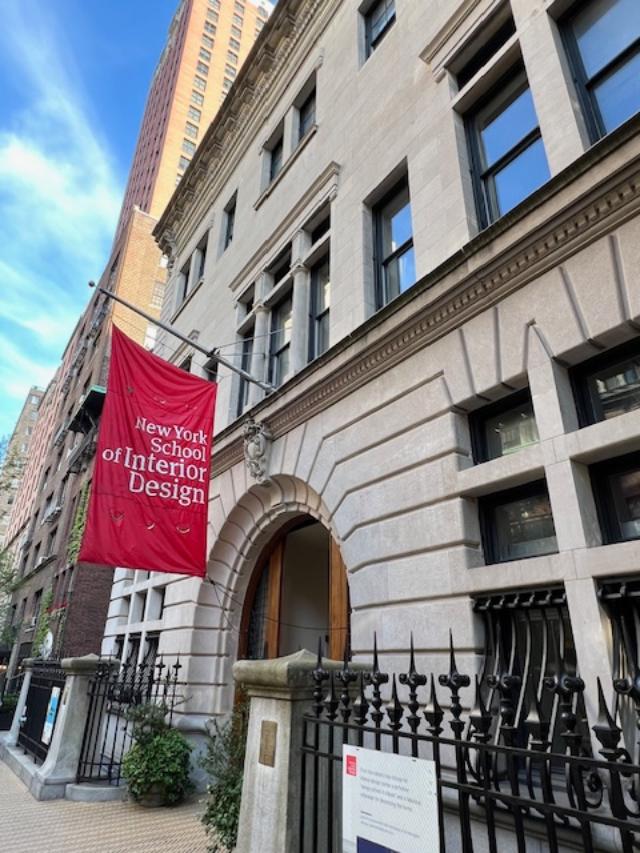
New York School of Interior Design at 170 East 70th Street
I came across the Gallery of the New York School of design when walking the Upper East Side for my project, ‘MywalkinManhattan.com’ when covering the lower part of the Upper East Side.
The entrance to the Gallery
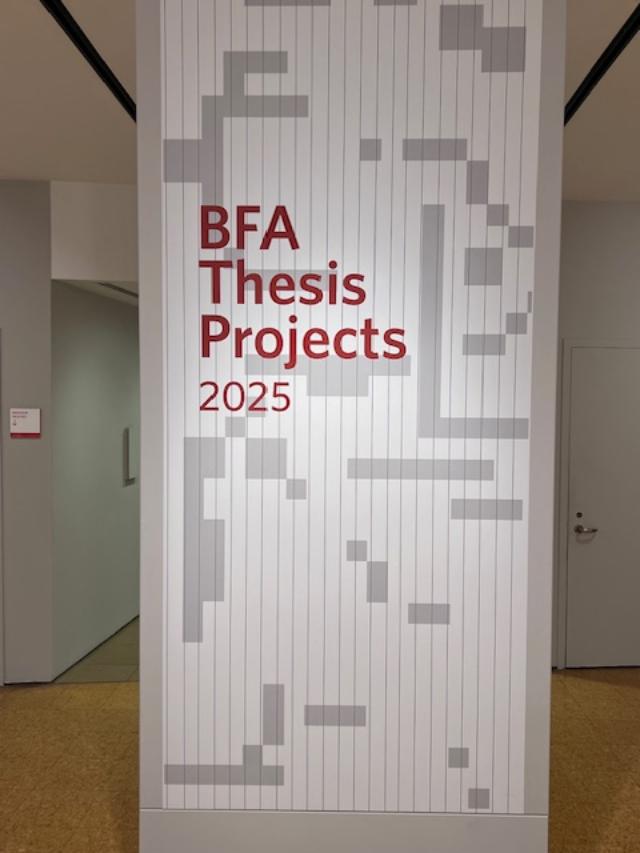
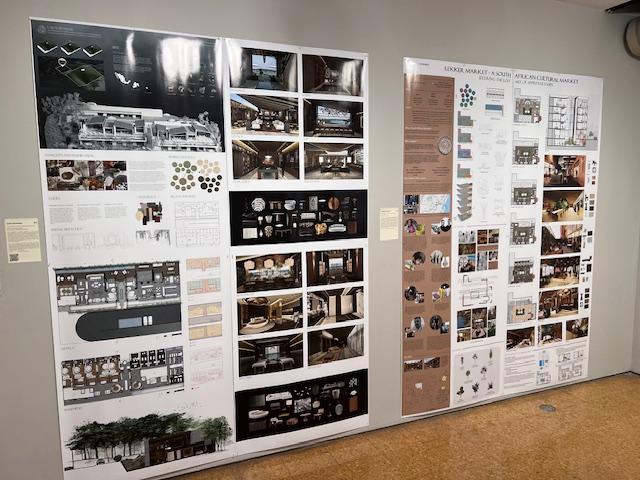
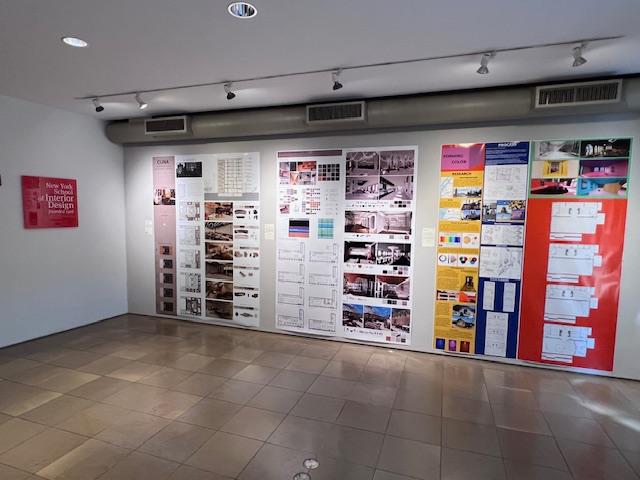
The New York School of Interior Design was displaying their Senior projects as most the college galleries I visited were doing at this time (this takes place between May and June around graduation time). It was interesting to see how the seniors at the college reused space in old buildings for new purposes. The seniors use their creativity to recreate these spaces. It is the student’s project to take a space and redesign it for a new purpose.
The entrance sign to the gallery
We had done similar projects in college but did not have the computer technology that students do today and they really went above and beyond the things we did back then. You can take this project into 3-D if you want and how real it looks. These kids are so talented that their creativity reminds me of us when we were in school. If only we had what they have today.
The Student Projects line the walls
Take time to look at the detail work and space design of each project. Some of the students even include samples of fabrics and stone/wood work that will be used for the surfaces.
The Gallery is located on the Upper East Side in the back of the school’s building on the first floor. The admission is free and the Gallery is open when the school is open. There are only two shows a year. You just have to show your ID to get into the galleries.
The student project along the walls
The student project along the walls
What I like about the museum is that you get to see the student creativity and how they imagine the space will be designed. The use of color and shape play a roll in all the designs. It looks like the students get to choose their own space to design.
The best part is the you get to go in for free with you ID and just enjoy the show and see the students creativity.
History of the Gallery/Museum at the College:
The New York School of Design’s gallery presents two public exhibits yearly on design and architecture. Exhibitions have included ‘Paris in the Belle Epoque’, rare photographs from the years 1880-1914; Perspective on Perspective, an exploration of artistic technique; ‘The Great Age of Fairs; London, Chicago, Paris, St. Louis’, selective coverage from the first World’s Fair in 1851 to the last in 1904; ‘Venice’s Great Canal’, architectural drawings of the buildings along the famous thoroughfare; ‘Stanford White’s New York’, a survey of that classicist’s many metropolitan buildings and ‘Vanishing Irish Country Houses’, a look into the preservation crisis facing these not infrequently grand structures.
The gallery’s Thursday-evening lectures have included ‘Palladio’s Villas’; ‘Beaux-Arts New York’ and a survey of the Grands Projects undertaken in Paris during the tenure of French President Francois Mitterrand.
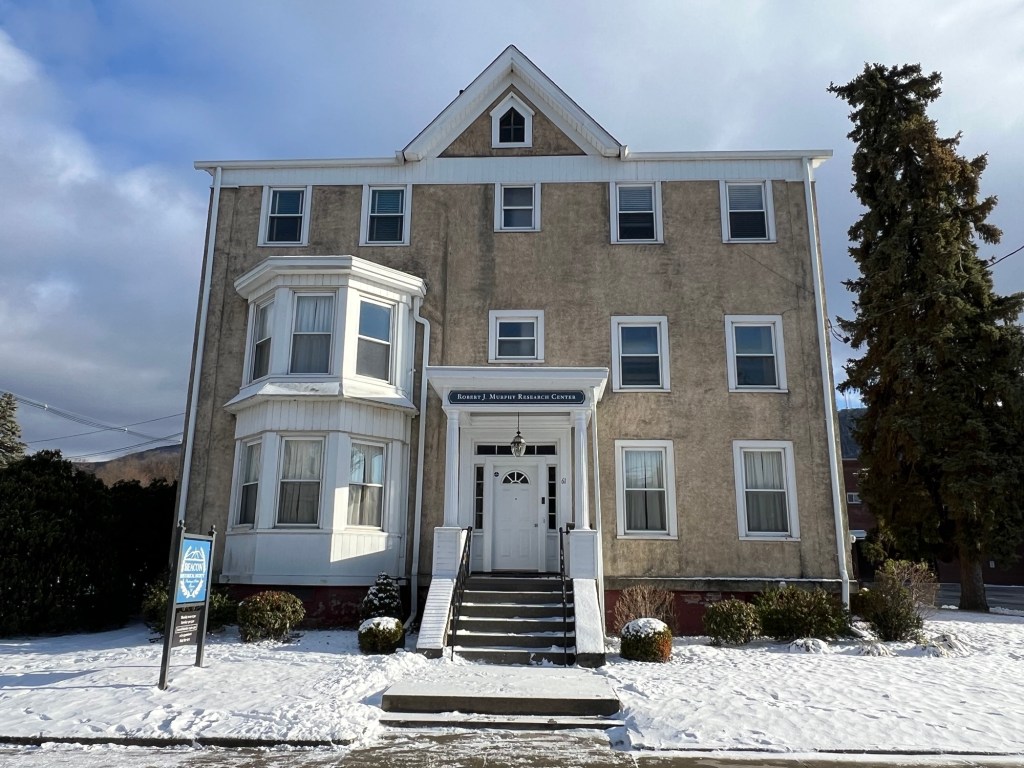
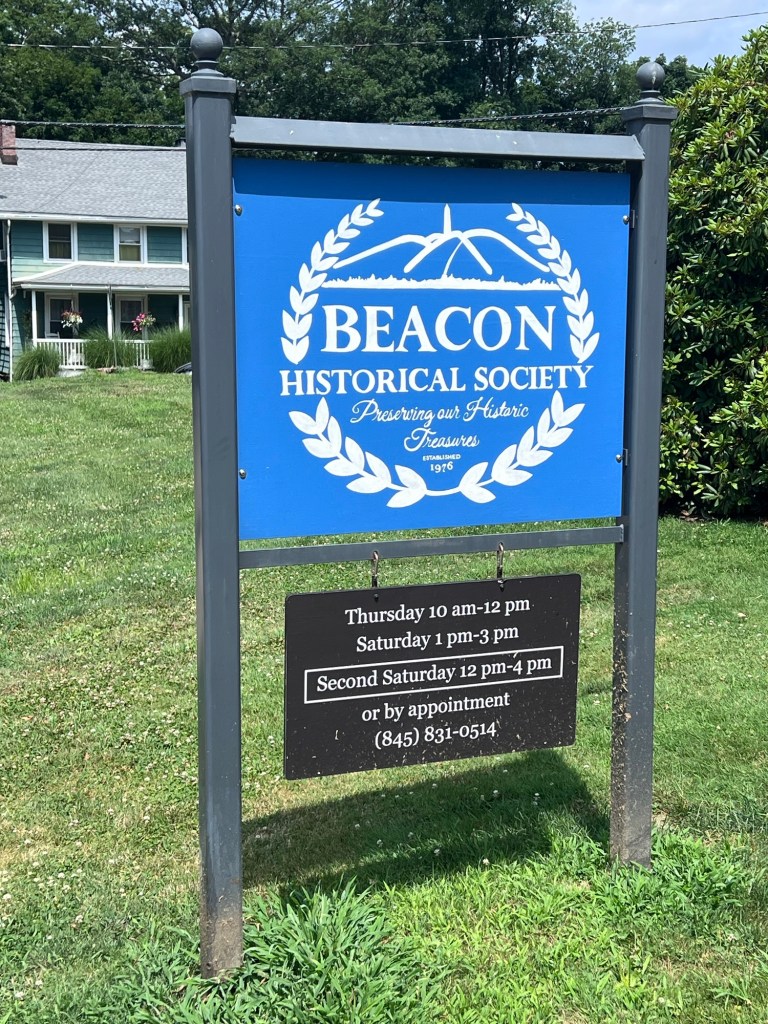
The Beacon Historical Society at 61 Leonard Street at Christmas time
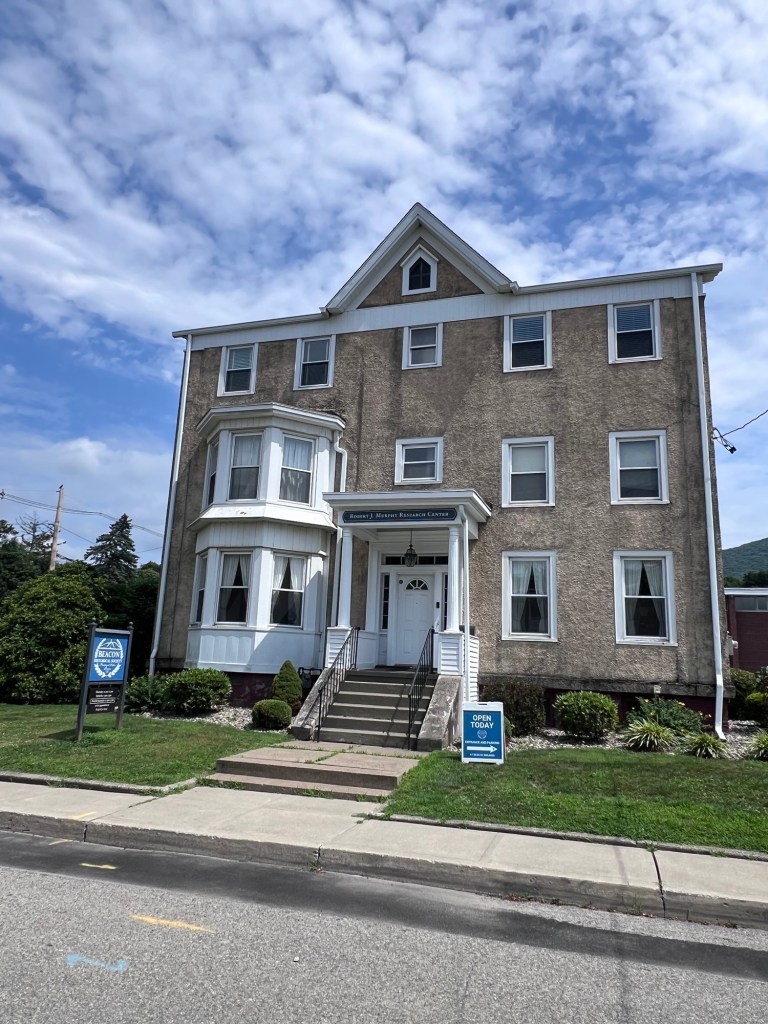
The outside of the building in the Summer
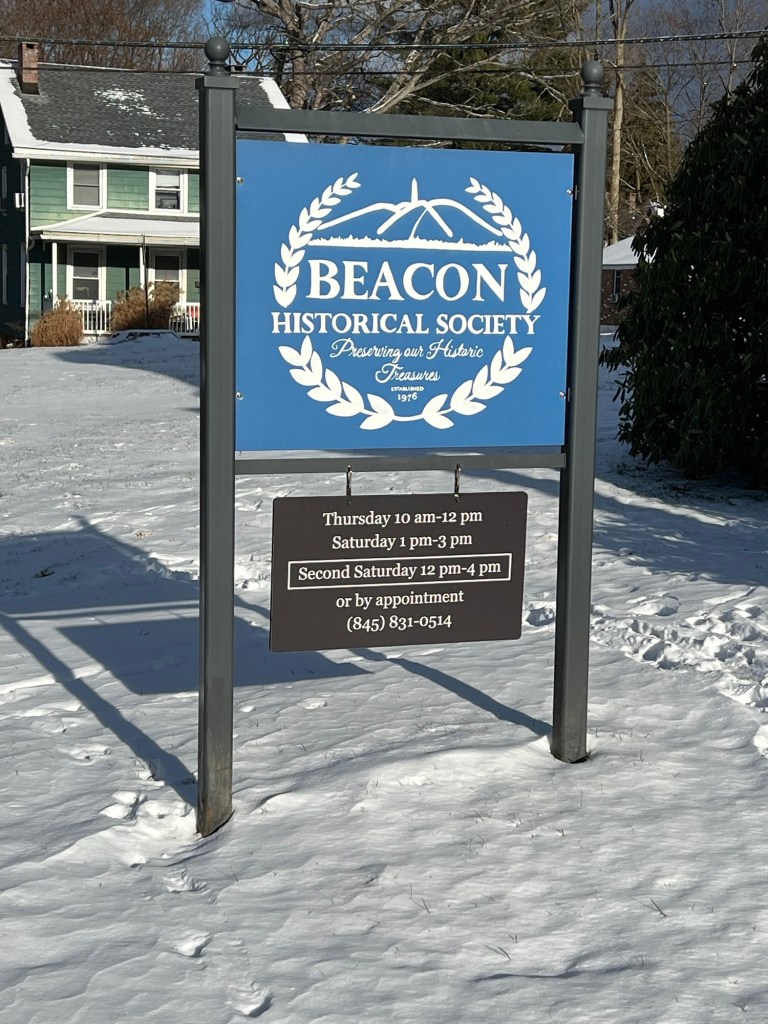
The sign for the Beacon Historical Society at Christmas time
The outside sign in the Summer
The Mission of the Society:
(From the Society pamphlet
The Beacon Historical Society was founded in 1976 to preserve, collect and interpret the rich history of the City of Beacon and its predecessor Villages of Fishkill Landing and Matteawan.
History of the Society:
(From the Museum website)
Established in 1976, the Beacon Historical Society showcases Beacon’s history through exhibitions, collections, programs, books and an informative monthly newsletter. The Beacon Historical Society is proud to serve as Beacon’s repository of rare photographs, paintings and prints, Hudson River ship models, objects and ephemera from local factories and Main Street businesses, records of local cemeteries and Civil War veterans, maps of Beacon, Fishkill Landing and Matteawan.
I recently did a walking tour of Downtown Beacon, NY and was impressed by the numbers of restaurants, bars and stores in the downtown area. It is an impressive downtown with very few empty stores and impressive and lively street life. On my first trip to the Beacon Historical Society I learned this was not always the case.
I recently visited this small historical society packed with information on the history not just of the City of Beacon but the surrounding Hudson River area. The museum gives an in depth view of the industrial history of the area and the highs and lows of many of the river communities. These small communities have seen a renaissance over the last decade especially during COVID and many of the older towns have seen new life being breathed into them.
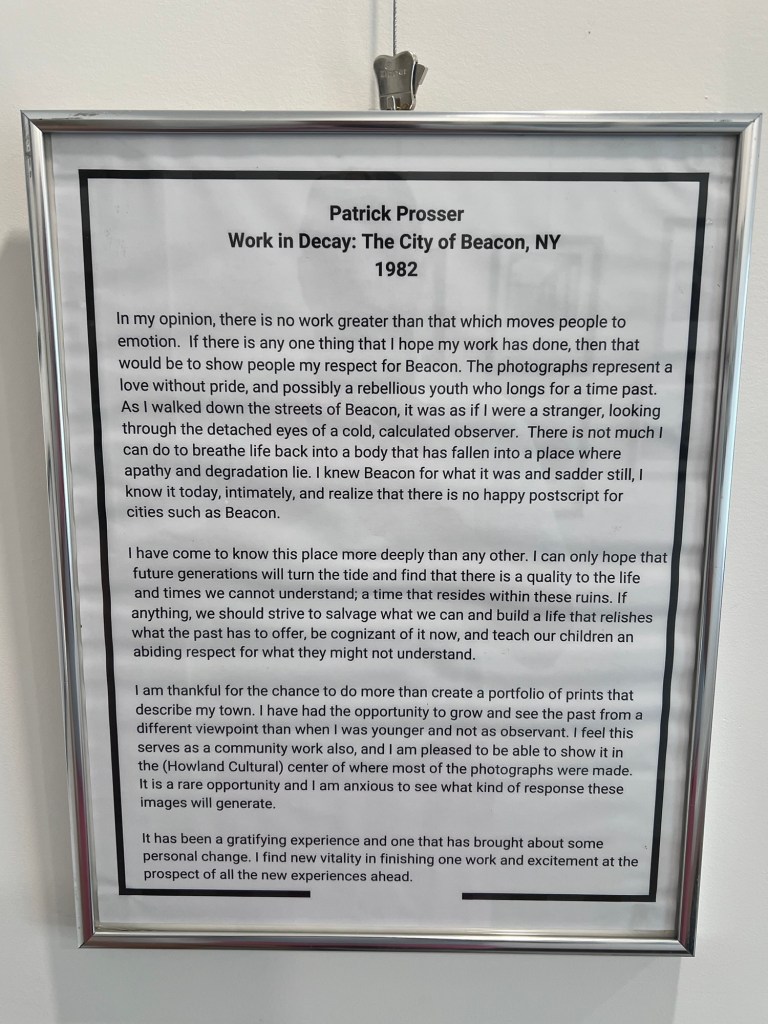
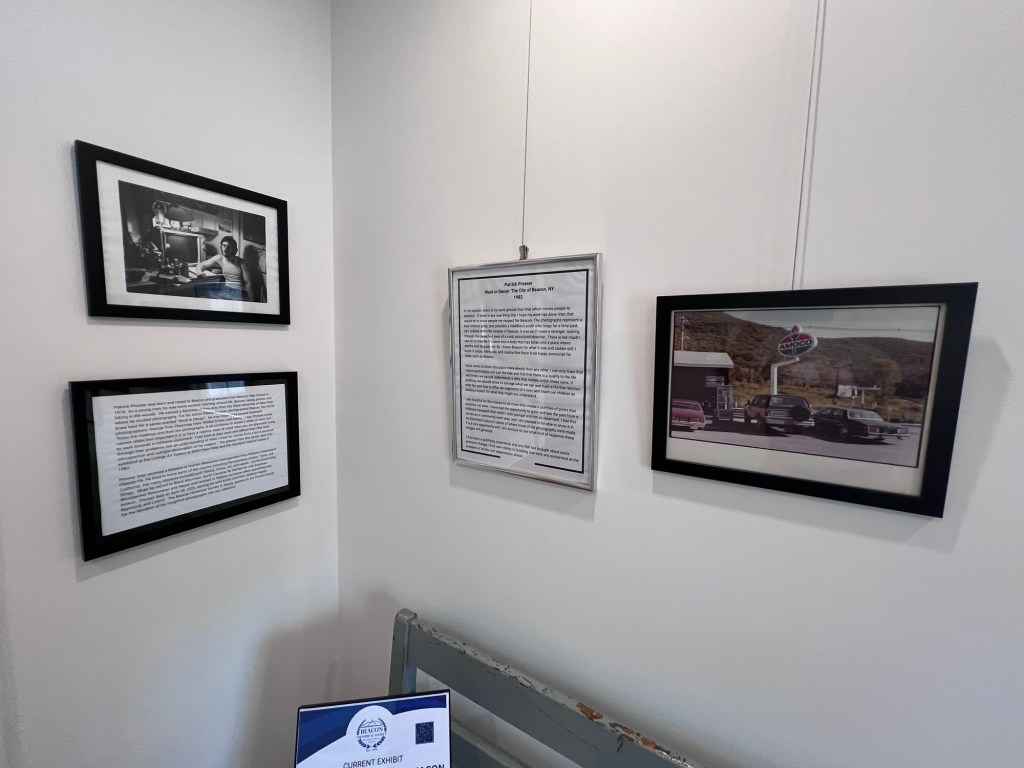
The first exhibition I looked at was the Photographer Patrick Prosser exhibition (being shared with the Howland Cultural Center) ‘Work in Decay: The City of Beacon NY’.
Photographer Patrick Prossner was born and raised in Beacon and a graduate of Beacon High School and SUNY New Paltz with BFA. His work on this project started in 1982 photographing the decay of his home town (Author’s Bio on BHS website).
The photographer moved to the area in the early 1980’s during a time when Beacon’s mills and factories were closing and the downtown was boarded up. It shows what the downtown business district looked like and the changes that were made to shape it today.
The sign for the exhibition
Pictures of the former industrial zone
The pictures showed a once vibrant industrial community and the changes once these factories closed.
The changes in the surrounding area
The exhibition really shows the transformation of these towns from the once industrial hubs to the artsy communities filled with galleries and bars that many of them have become.
Downtown Beacon today filled with art galleries, shops and small restaurants
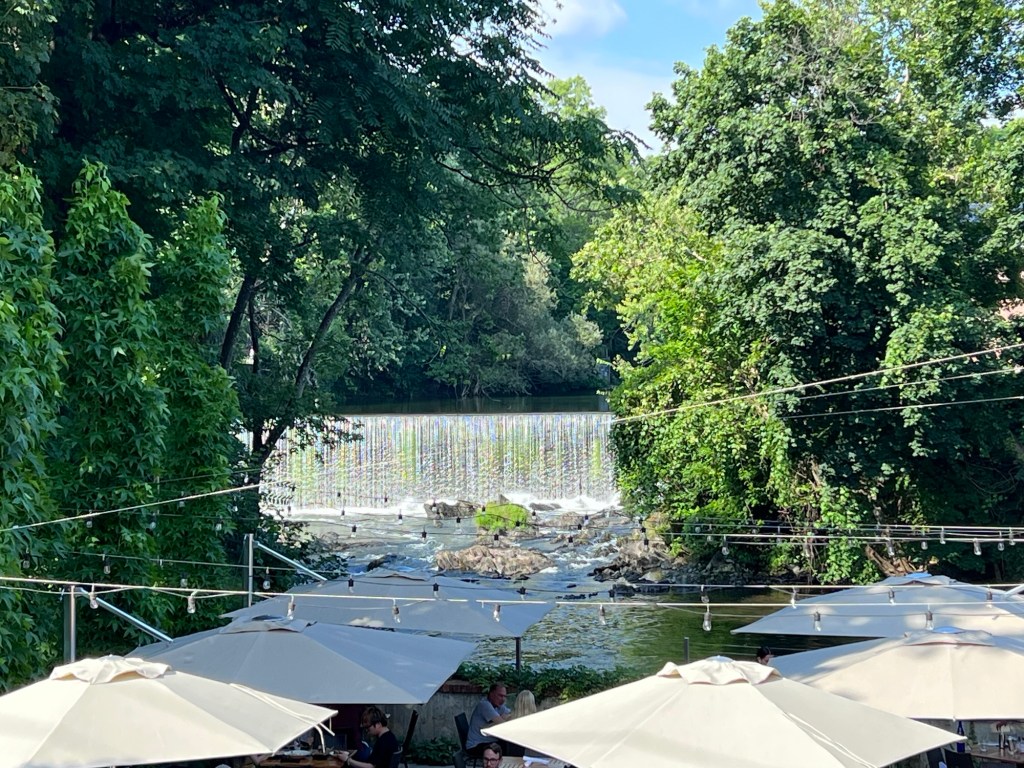
The former mill is now a luxury hotel and restaurant overlooking the same waterfall that used to power the mill
These small communities factories have now become hotels, lofts and in some cases new cottage industries have moved in. Time transforms areas and what is old becomes new again.
The first floor gallery
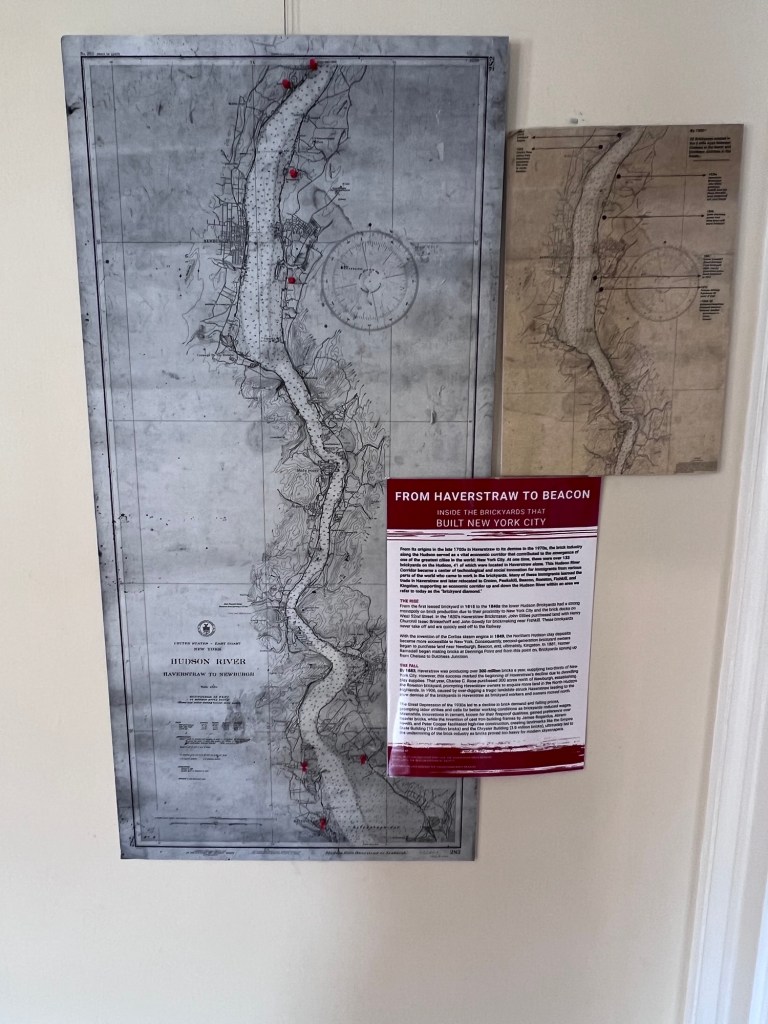
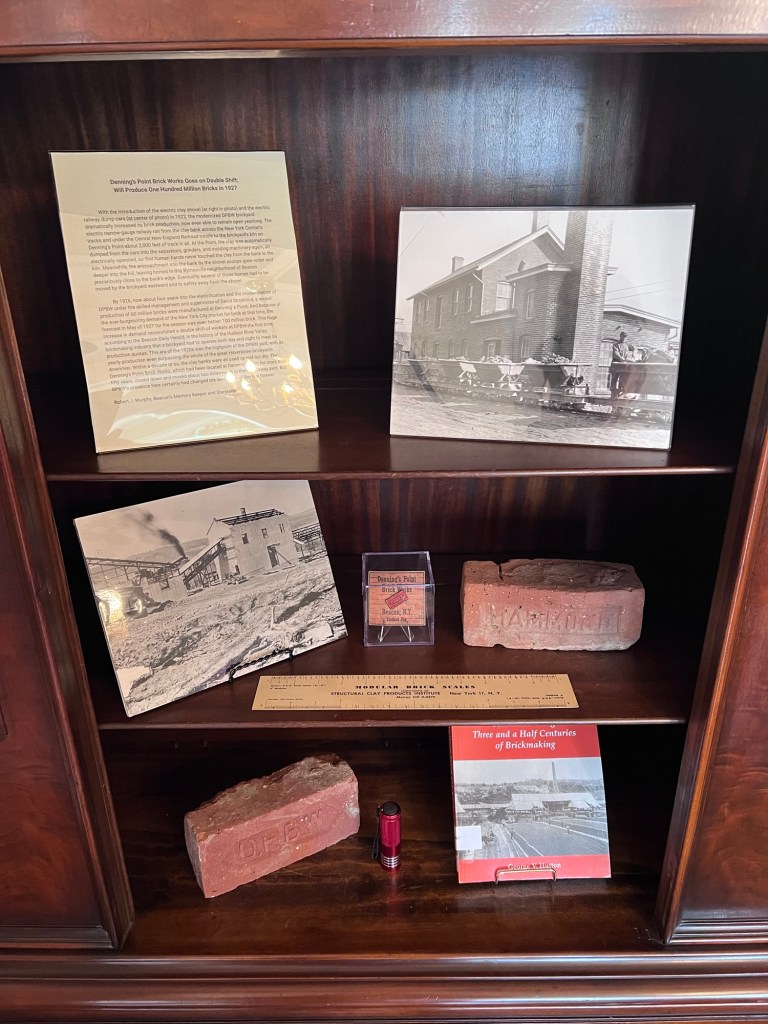
The second exhibition that I walked through was the ‘From Haverstraw to Beacon: Inside the Brickyards the built New York City’, an extensive look at the brickyards and the clay deposits that once lined the Hudson River that build most buildings in the City in the end of the Eighteenth, Nineteenth and early Twentieth centuries.
The exhibition sign
The map of the location of the brickyards along the Hudson River. This depended on the location of the clay deposits.
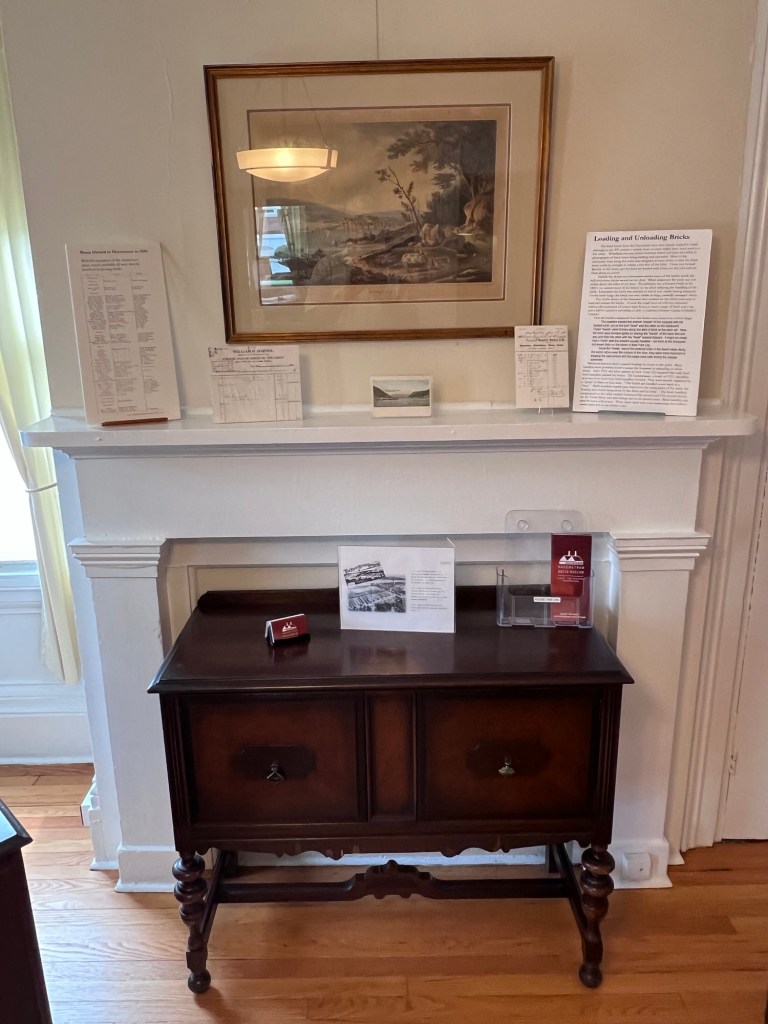
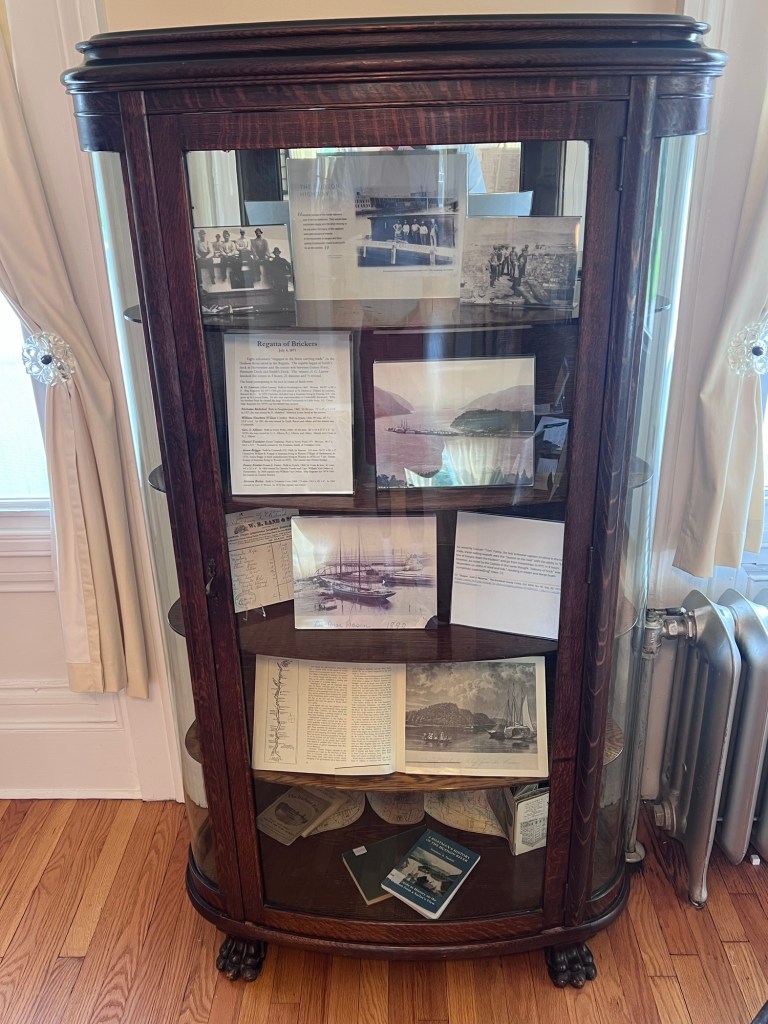
Transportation of freight and people for both recreation and business was described in this display of different boats down the Hudson River.
The display of understanding the brick business
Display of the different companies and processes of making bricks
The display of people that make up the industry
The process of mining, making, drying and creating the bricks that would end up in New York City
Some of the bricks and the companies from the New York market that were created in the region
Another display on the companies
More of the companies and processes to making bricks
The exhibition was a very interesting look at what was once a dominant industry in the area but like any industry as the clay ran out and building materials changed, the industry diminished in the area and that way of life changed. With it as well was the transformation of the area.
The former brick factories
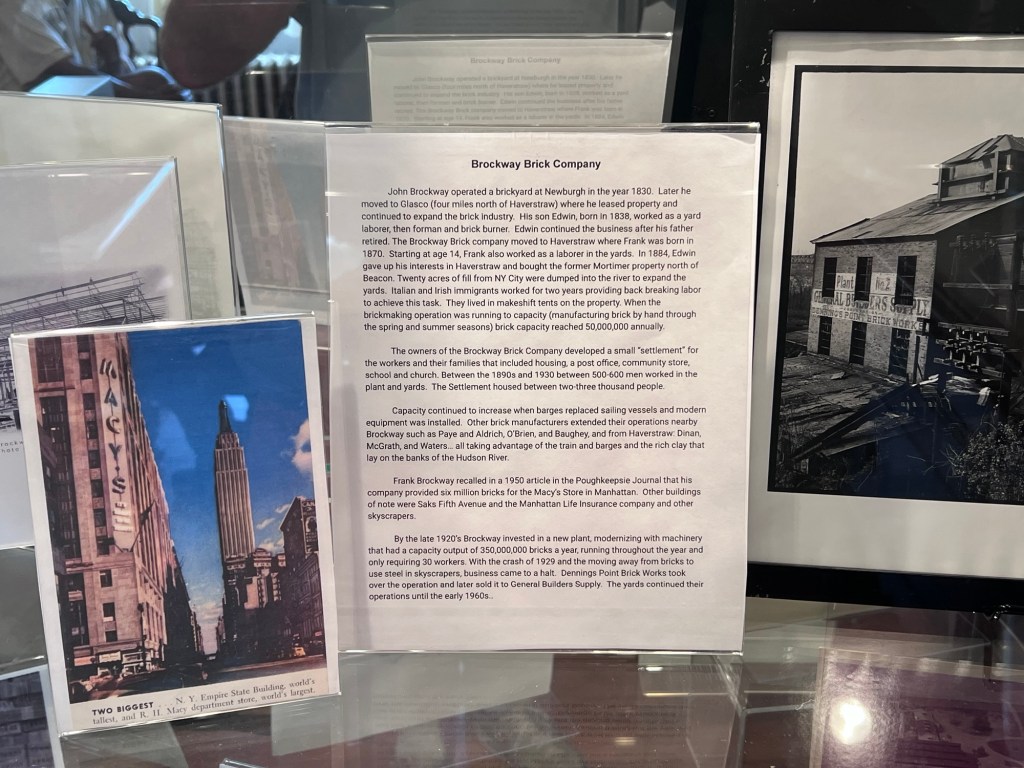
The Brockway Brick Company that built Macy’s original building in Manhattan
There were smaller exhibitions as well all over the two floors of displays. First there was a handmade dollhouse on the first floor that is a favorite of the elementary school students.
The handmade dollhouse on the first floor
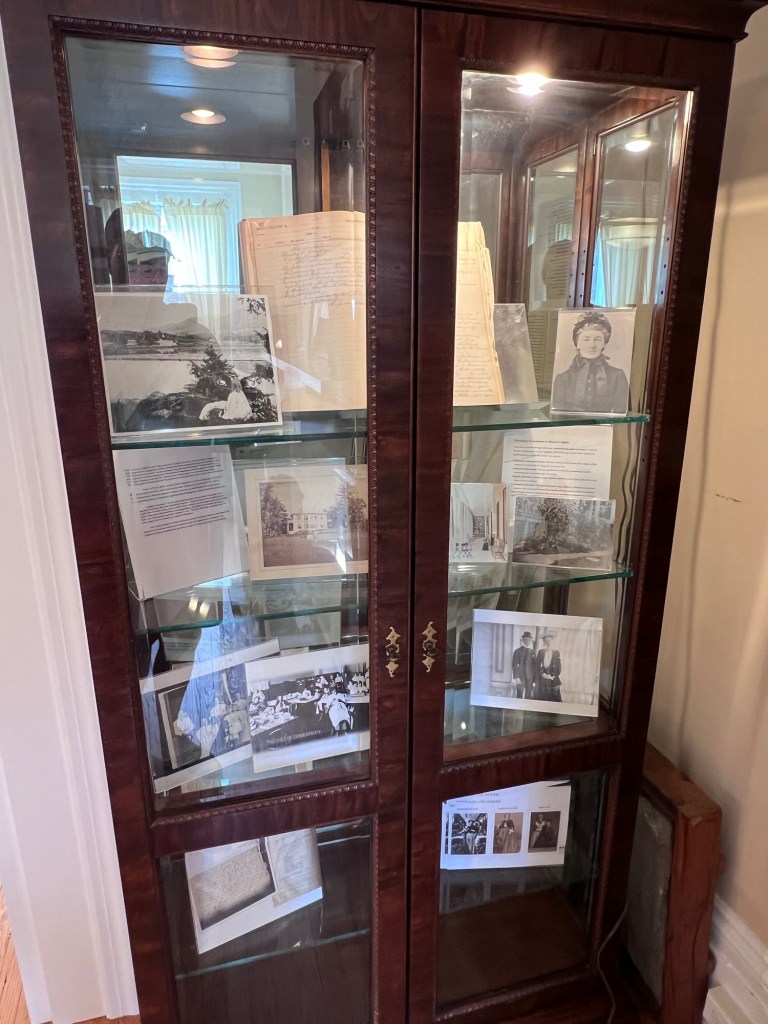
On the seconded floor is a display is the socially prominent Van Nydeck family. The family donated their family tree and many family heirlooms and portraits.
Part of the Schenck Van Nydeck family tree
The Van Nydeck family heirlooms
There was also artwork and artifacts from the surrounding community on display all over the museum.
The painting is by a local artist and the pottery is locally made
The window is a Tiffany window from a local church that the Historical Society saved for the museum
The first floor gallery
The docent told me after I toured the exhibition that there are more exhibitions being planned for the future.
Touring Downtown Beacon, NY:
After the trip through the Historical Society, I ventured and walked Downtown Beacon. The neighborhood has certainly changed since the early eighties.
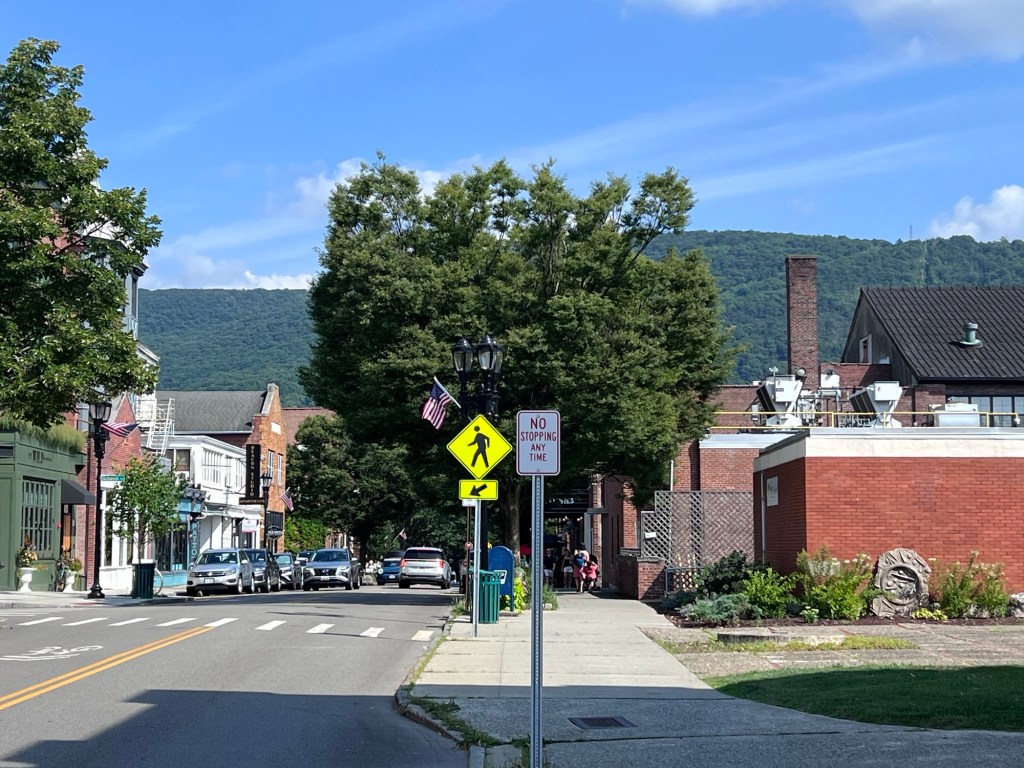
Downtown Beacon today
Downtown Beacon today with Mount Beacon in the distance
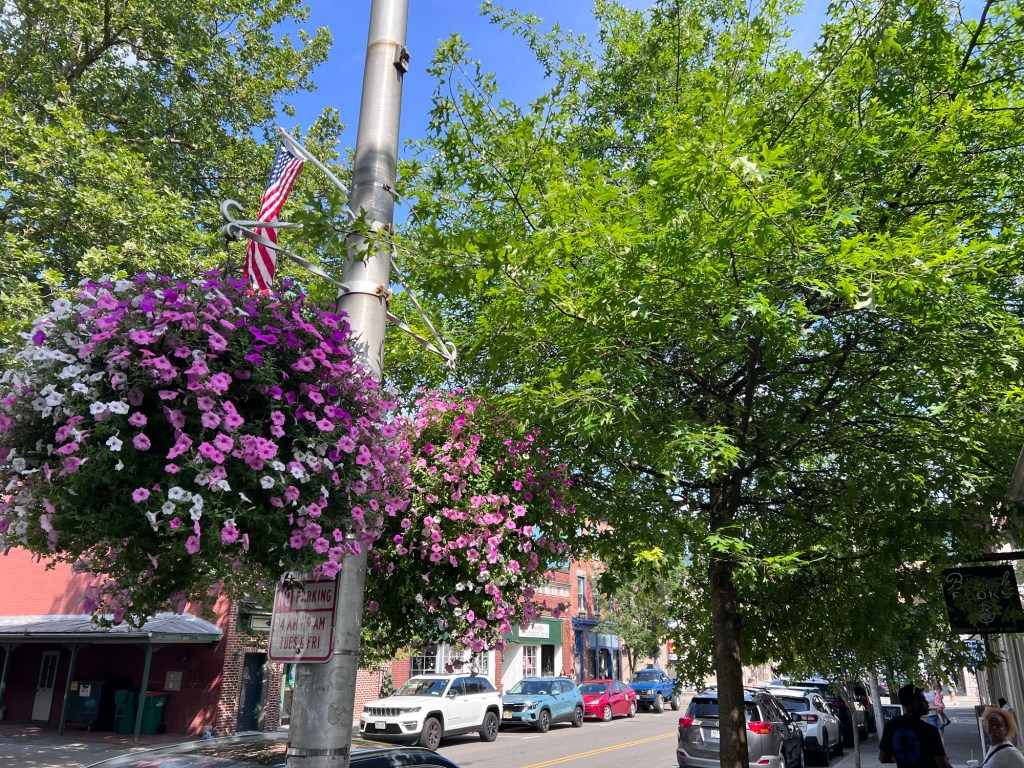
The beautiful floral arrangements in the downtown today
One of the nicest things about being a member of museums in New York City is when they have the ‘Private Members Nights’, where the museums are open after hours for the membership only. The funny thing about these nights are that the museums seem busier on these nights than they would when the museums are open during the day to the general public.
What also is difficult is when two major museums have their Members Night on the same night. I had to do a lot of coordinating to go to both museums. What made it work is that both museums closed at different times with The Met closing at 10:00pm. I timed it perfectly.
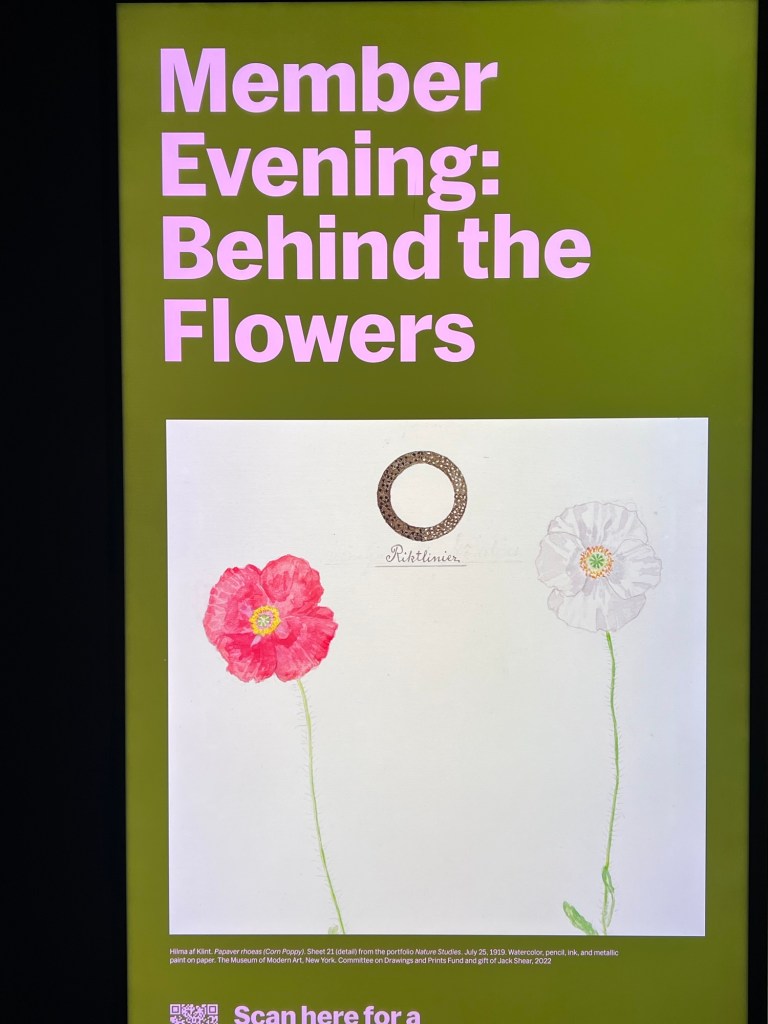
Members Night at the MoMA ‘Behind the Flowers’ for the Hilma af Klint exhibition
The theme that evening was based on the Hilma af Klint exhibition
Going this evening took a lot of planning as I had to teach in the morning and cut the lawn on the afternoon. I was already exhausted by the time I left for the City at 4:00pm. Even on this gloomy afternoon, the weather held and it was a nice evening.
The area around the museum was in full bloom that early evening
The event opened early at the MoMA with their event from 6:00pm-9:00pm and the Met went from 7:00pm-10:00pm so I was able to enjoy both with a lot of walking in between. It was worth it as I was able to see several exhibitions on my bucket list before they closed. With work and finals, it had been tough to visit both of them.
People were enjoying conversation and cocktails when I arrived at the MoMA that evening.
I decided to start my evening at the Sculpture Garden on the first floor. The weather was cloudy but still it was a warm evening. People were conversing near the fountains and listening to music. The lines for the cash bar never let up and they were about thirty deep the whole time.
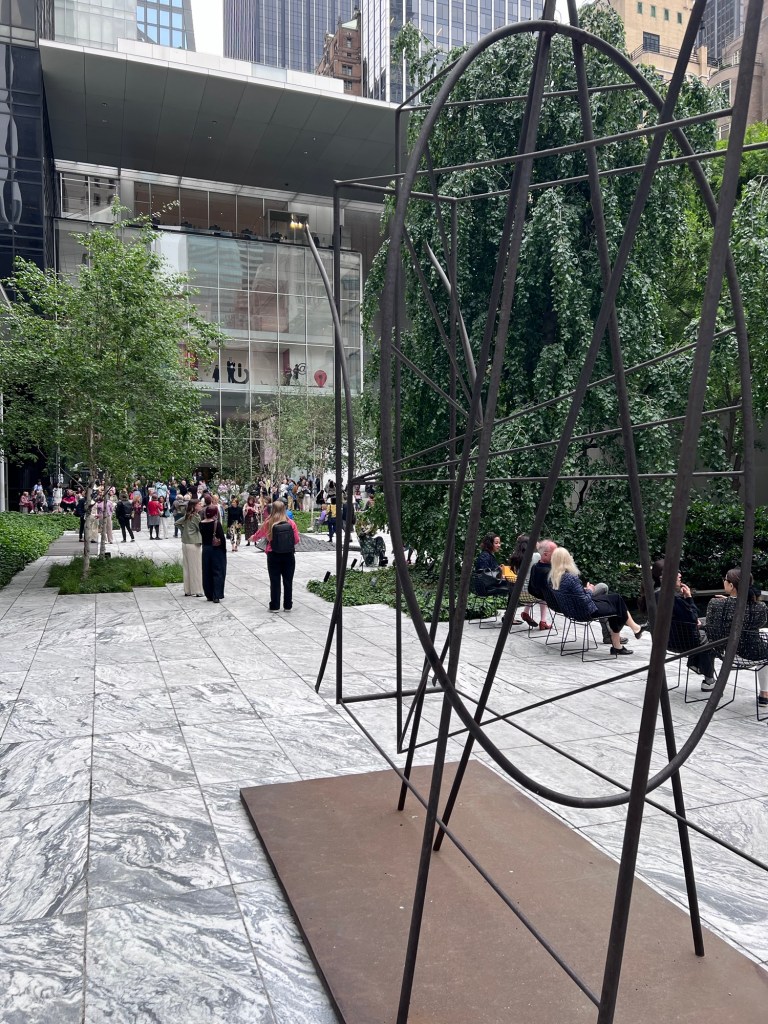
The Sculpture Garden at the MoMA
While I walked around the gardens and fountains I noticed a lot of the art that they were featuring was really unique, some of which I had not seen before.
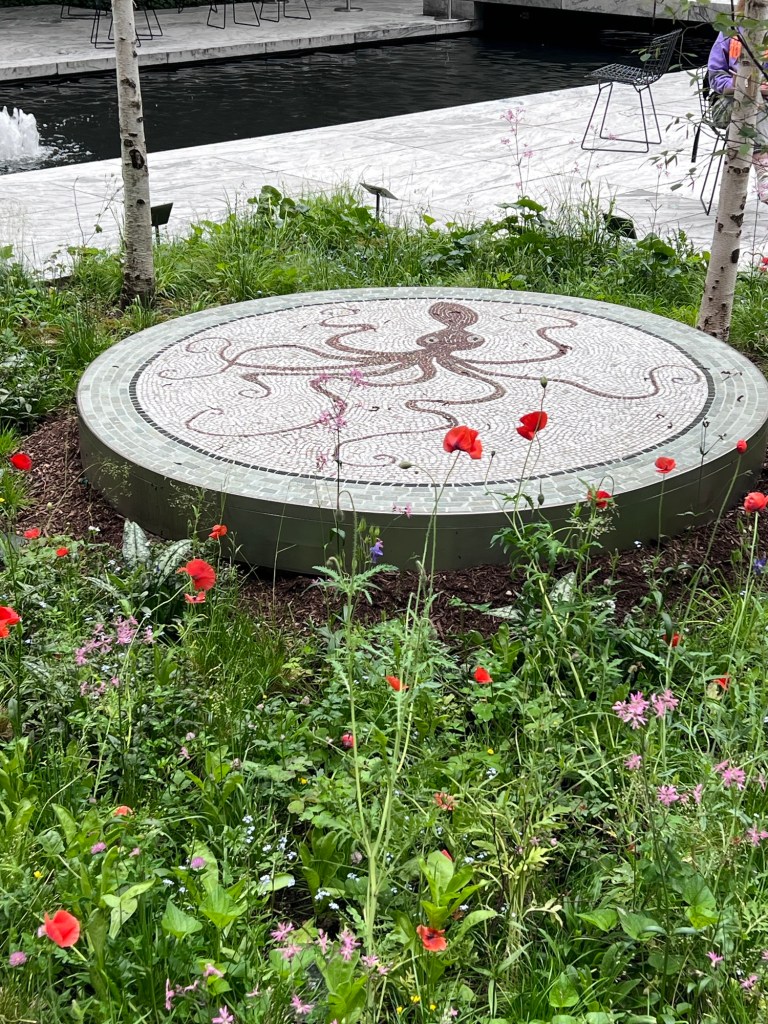
The gardens with the poppies in bloom
This beautiful mosaic of a octopus did not have a name
This metal artwork was towards the back of the sculpture garden
The artwork makes quite a statement in the sculpture garden
I watched this interactive art that I had seen at the last Members Night
I love this interactive art in this video
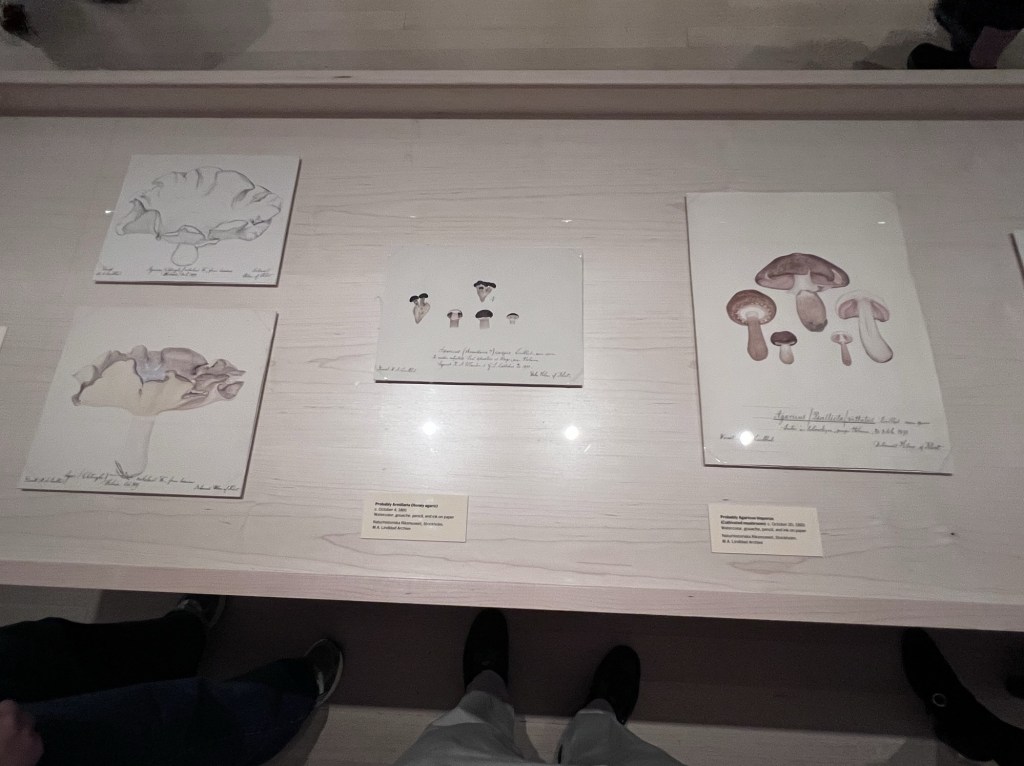
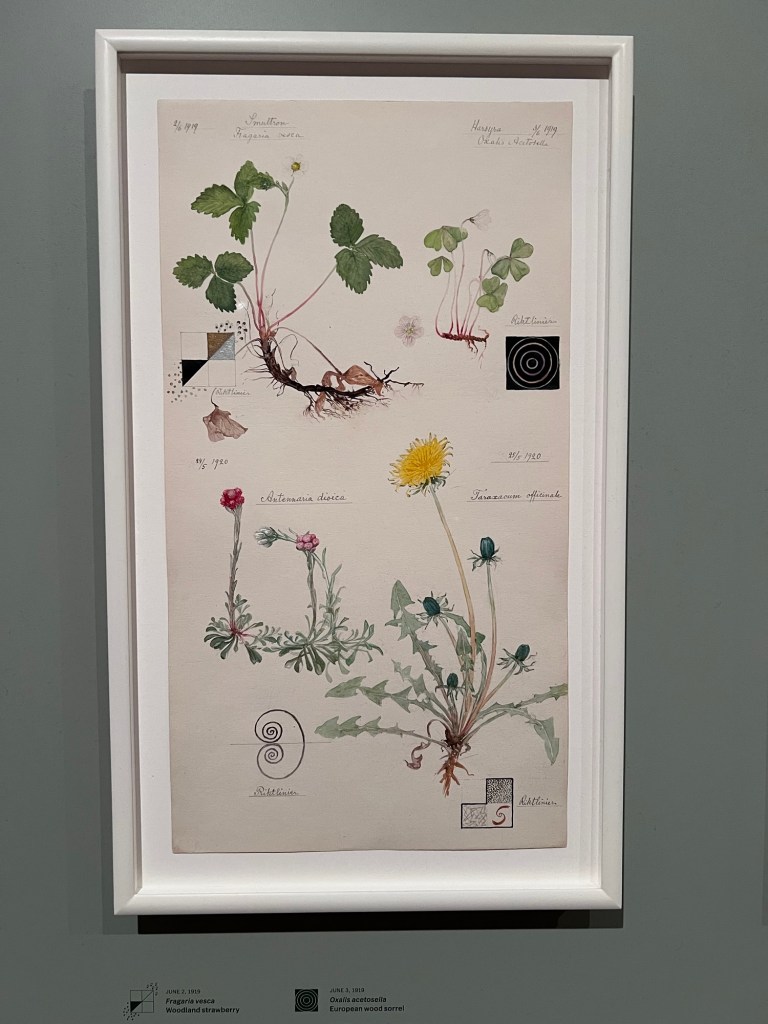
I love watching this video sculpture moving around. I had seen it on my last visit and thought it was very interesting. I then moved upstairs to see the Hilma af Klint exhibition that would be closing that weekend. The galleries were jammed with members who wanted to see the artist’s work. She had some interesting pieces that looked more like a naturalist works.
You could barely move in the galleries it was so crowded. I was not able to get as close to the works as I wanted but I wanted to share from the exhibition the pieces I liked most.
Flowers and an Apple
These interesting drawings on mushrooms
I thought this set of drawings on dandelion’s and strawberries was interesting
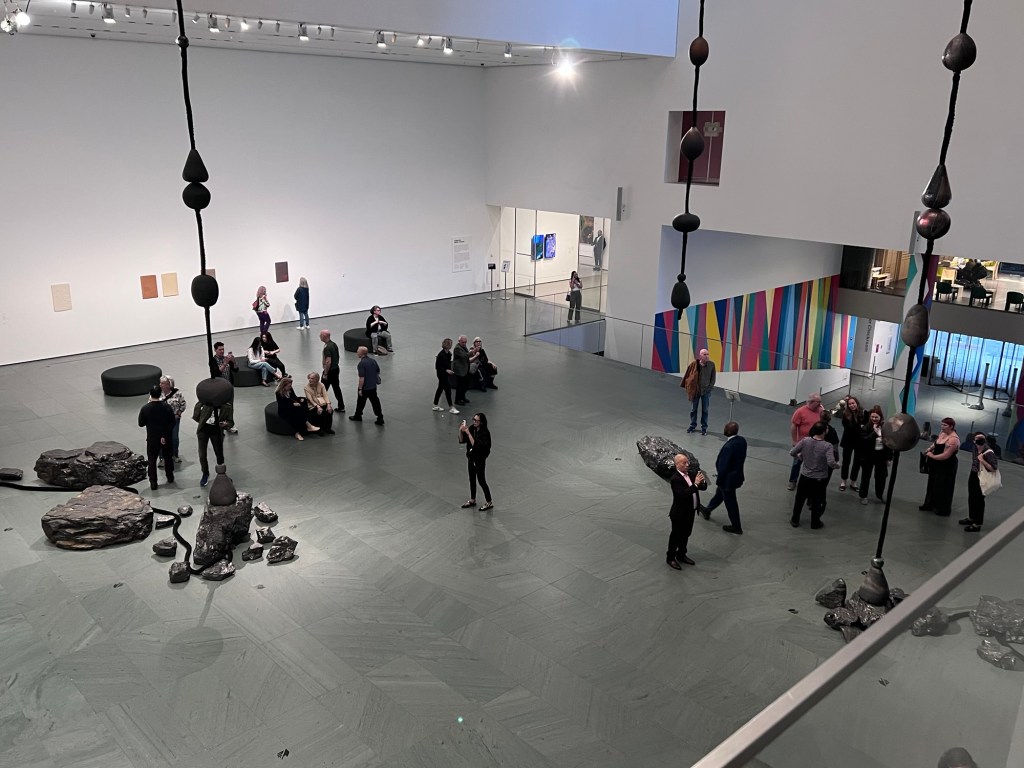
As I finished the exhibition, I watched from above other members milling around the second floor
I then moved to the next exhibition ‘Pirouette: Turning Points in Design’, the use of design and concept in everyday life. I thought this exhibition was interesting because it described how we look at functionality and the reasons why things are designed for a specific purpose and then can take on new meaning.
Of the many fascinating and famous items in the exhibition that I saw two well known works stood out to me. The first was the “I ❤️ New York” logo and its development in the 1970’s to be one of the most famous tourism campaigns in history
The Milton Glazer campaign for the “I ❤️ New York” campaign which saved New York tourism and is still used today. What was sad was the creator died during COVID in 2020.
The sign on the development of the design
The other stood out for its simplicity and fame was the development of M & M’s. This simple candy was a result of Forrest Mars seeing the rations of candy abroad of chocolate coated in a shell so it would not melt on the battlefield. With some experimentation, he created the modern M& M.
M & M display by Forrest Mars
I thought the whole museum would be open that night but it was just the two floors plus the gift shop and gardens. Since I saw everything at the MoMA already and it was around 7:45pm, off I ran out the back door to the Metropolitan Museum of Art Private Members Night.
Walking up Fifth Avenue at dusk
Walking up Fifth Avenue at dusk
The walk up Fifth Avenue to The Metropolitan Museum
The Met at night is quite dazzling
The entrance to The Met in the evening
Looking down Fifth Avenue at night
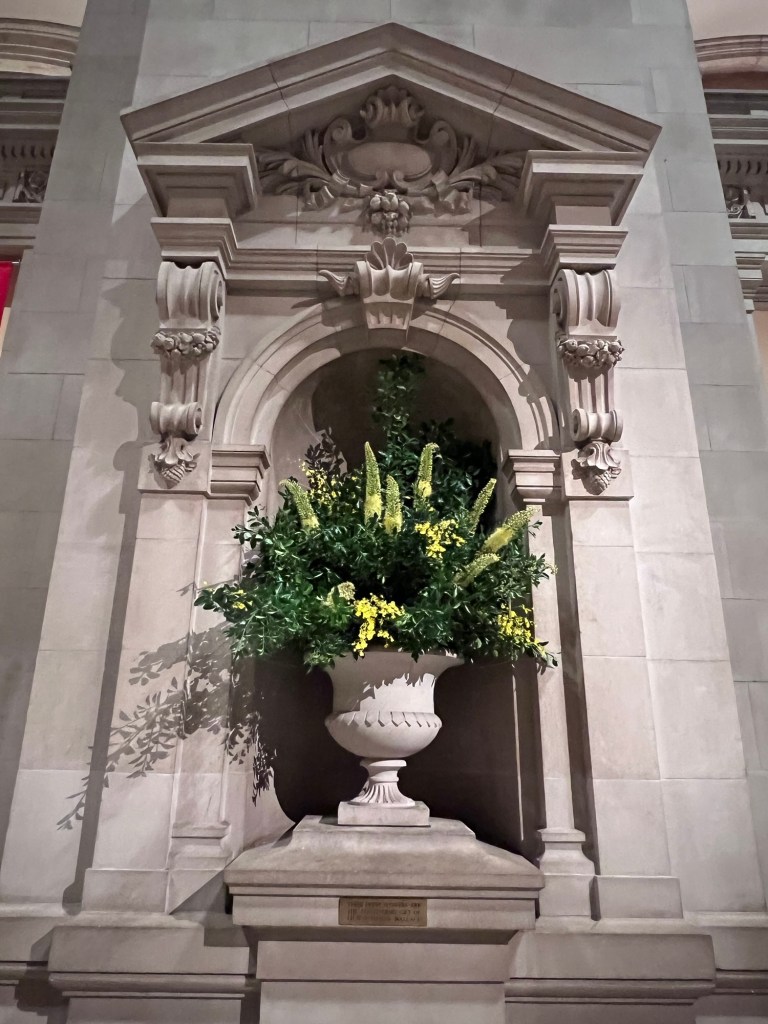
The entrance in the Rotunda was filled with fresh flowers and members chatting away. I even saw some of the members I had seen at the MoMA earlier.
The floral arrangements were spectacular
The beauty of the Rotunda in the evening
Maybe because these Members Nights were on a Tuesday evening, they both did not seem as crowded as they had been in the past. The museum was crowded but not as crowded as the past two Member’s Nights. I think that I arrived at 8:00pm most people were starting to leave. What was nice was that the MoMA night went until 9:00pm and The Met Night went until 10:00pm so it gave me the time to run through both museums.
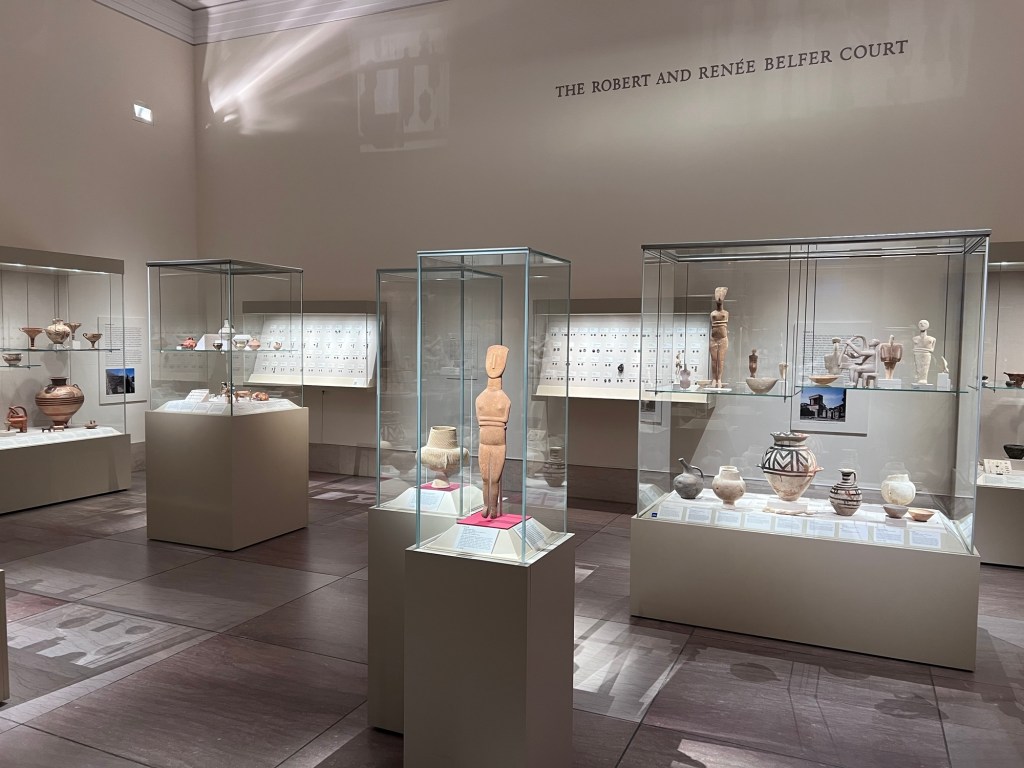
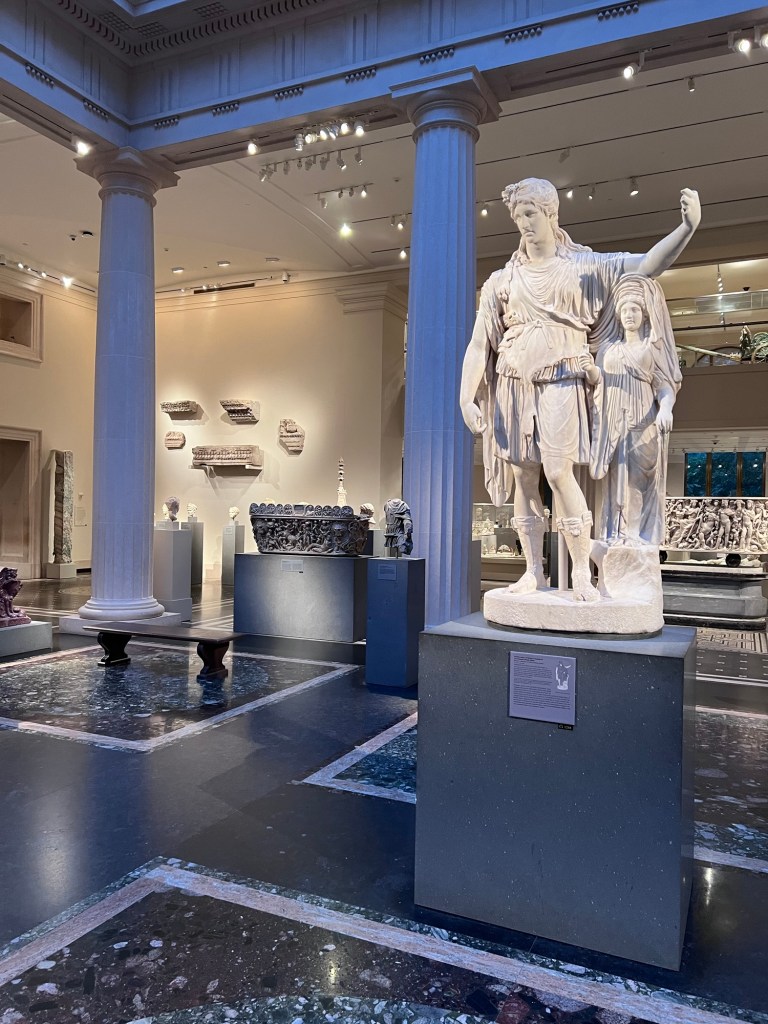
I started my tour of The Met in the Greek Galleries looking at the Cycladic Art. I always loved the looks of these works.
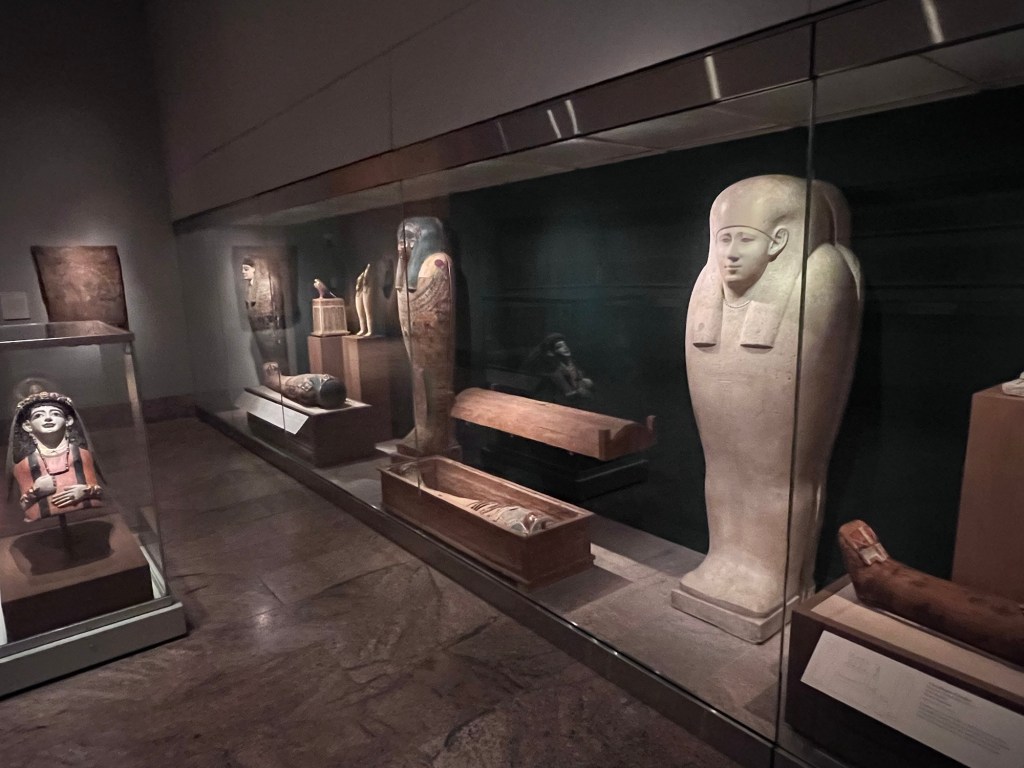
I love the Egyptian Galleries. I have been coming here since 1973 and have loved them ever since.
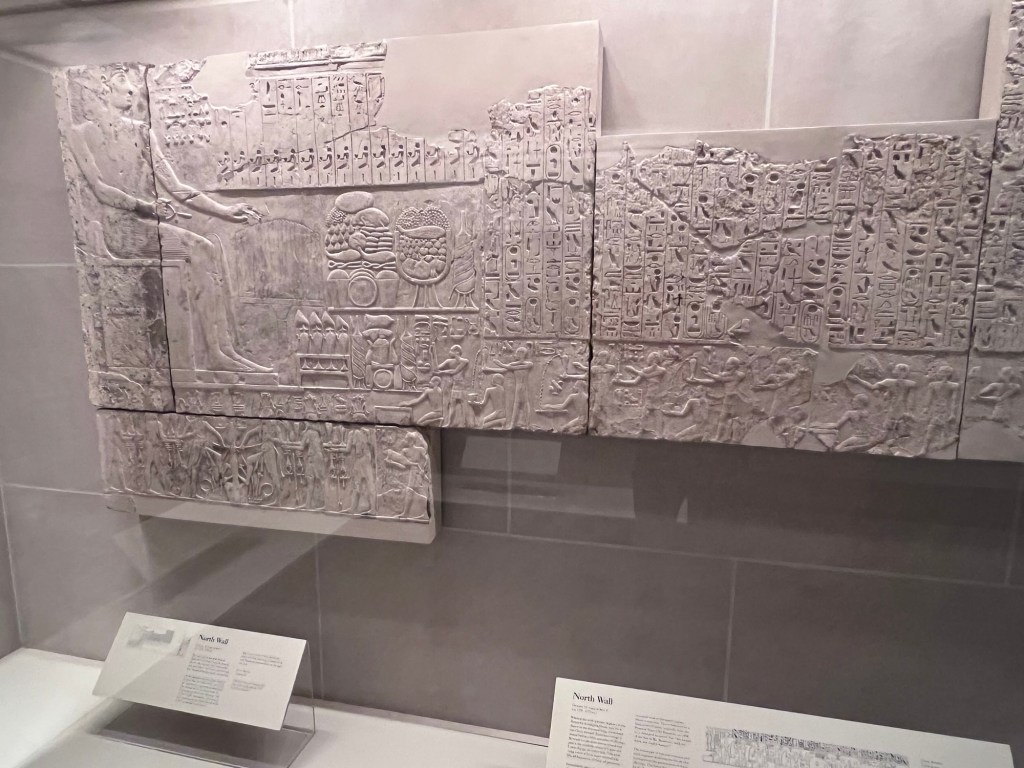
I love the ancient hieroglyphics
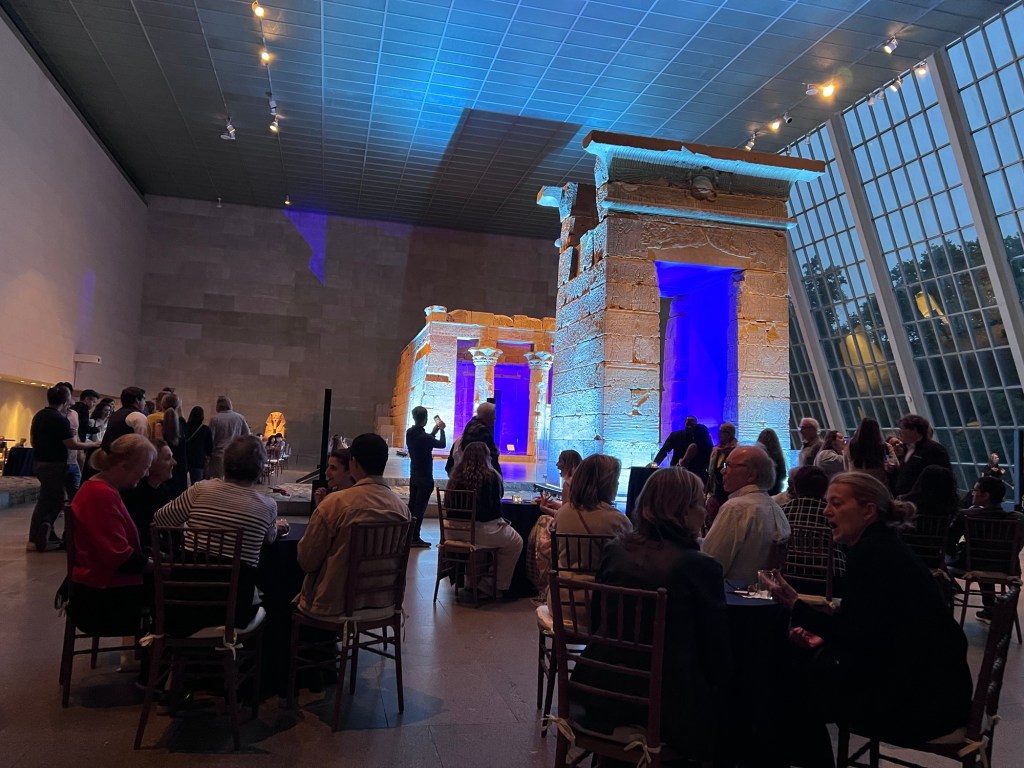
For the last two Members Nights, the Members Bar was in the Temple of Dendur. It is always so well lit and the music was wonderful. It is a nice way to end the evening.
The Temple of Dendur lit for the evening
The Temple of Dendur was the perfect place to relax and have a cocktail
The crowds were rather large at the bar that evening
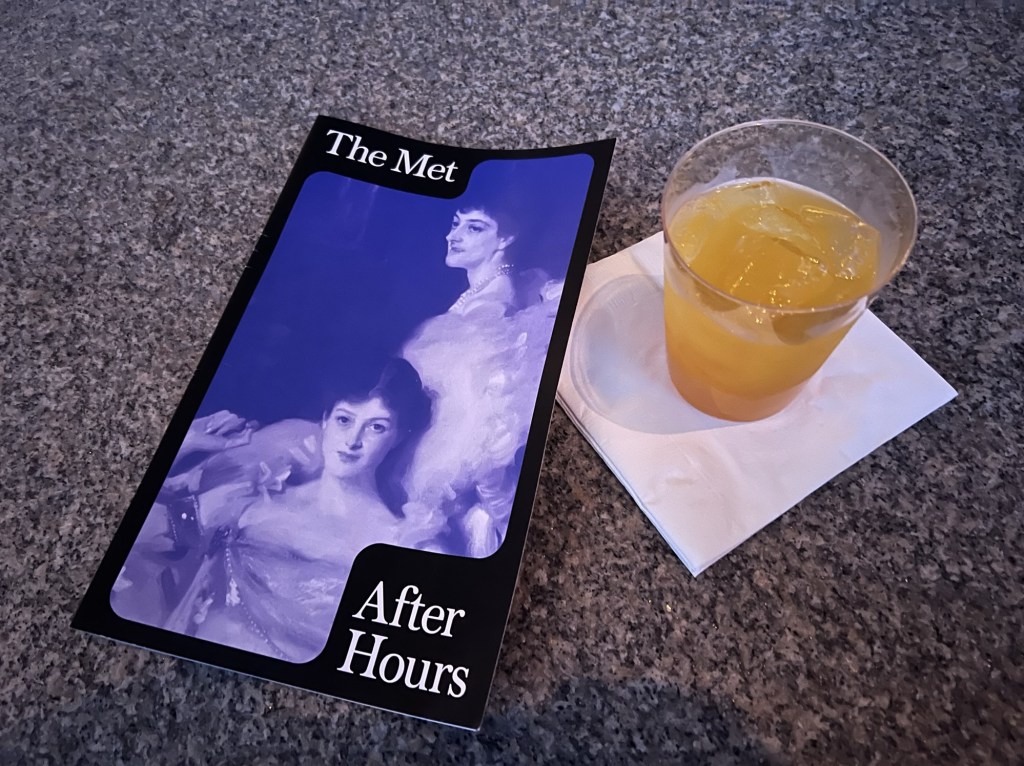
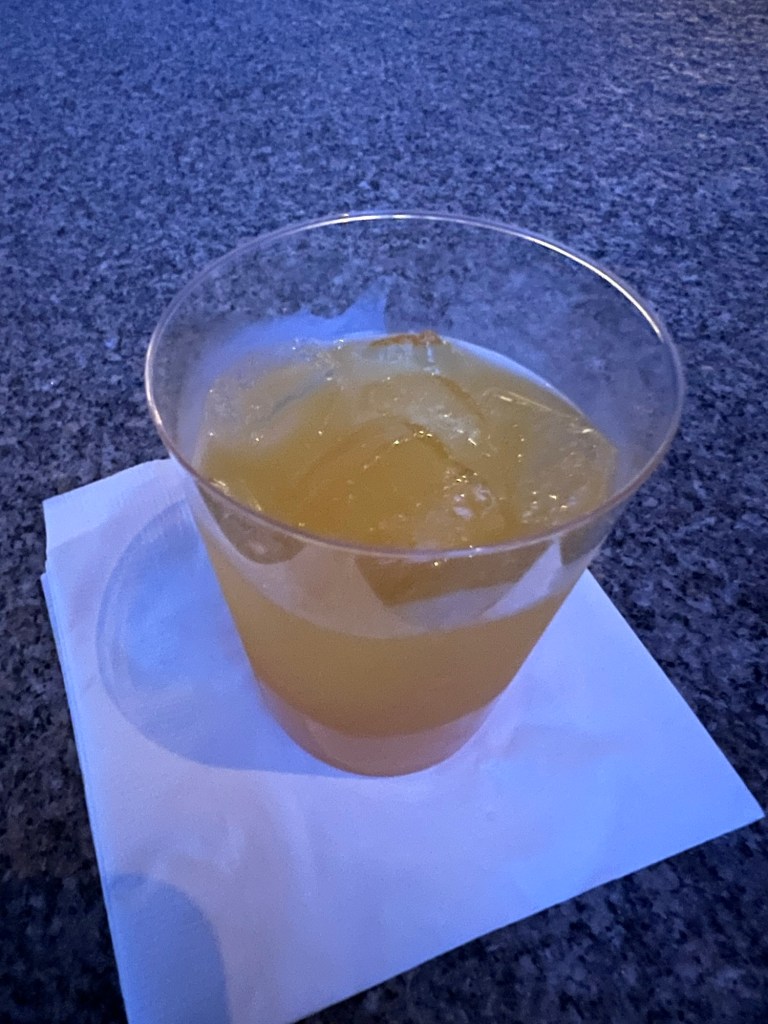
The Passion fruit cocktail was the specialty drink of the evening
The Passion fruit cocktail was well worth the money
It was nice to just sit back with the other members and relax and listen to the music. After a long week at work, the sounds of jazz with a nice drink and good conversation is a way to enjoy the evening.
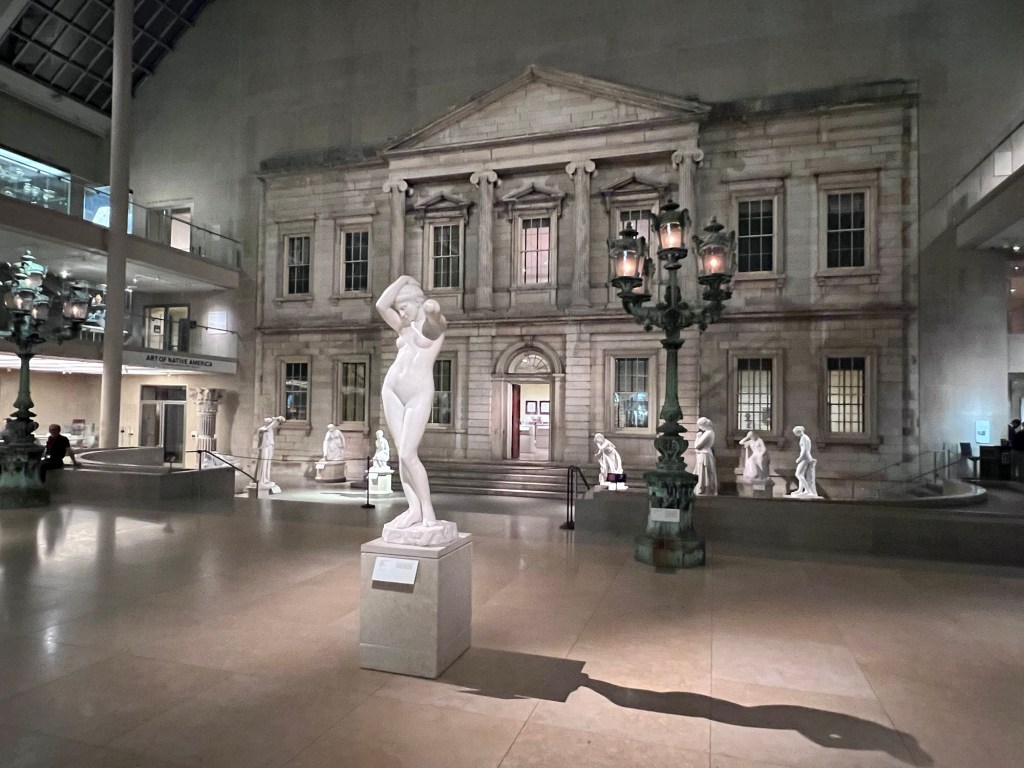
I had a renewed energy after being in the Egyptian Galleries for an hour and I headed into the American Wing to tour some of the exhibits around the main court.
Only the outside of the American Wing was open
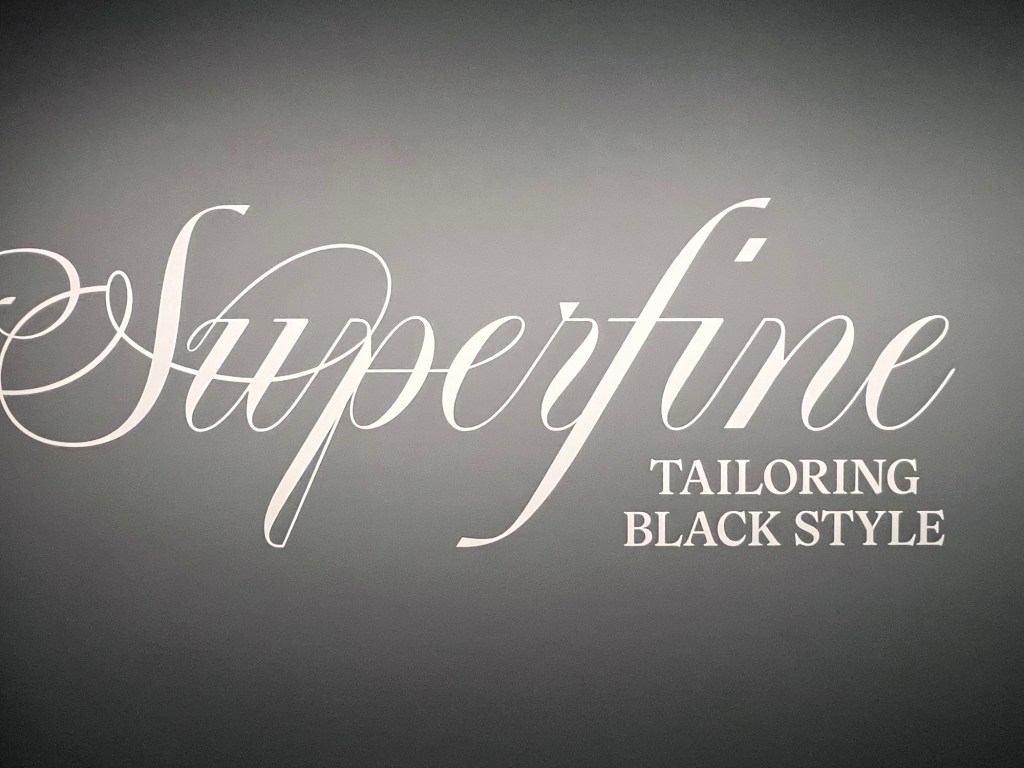
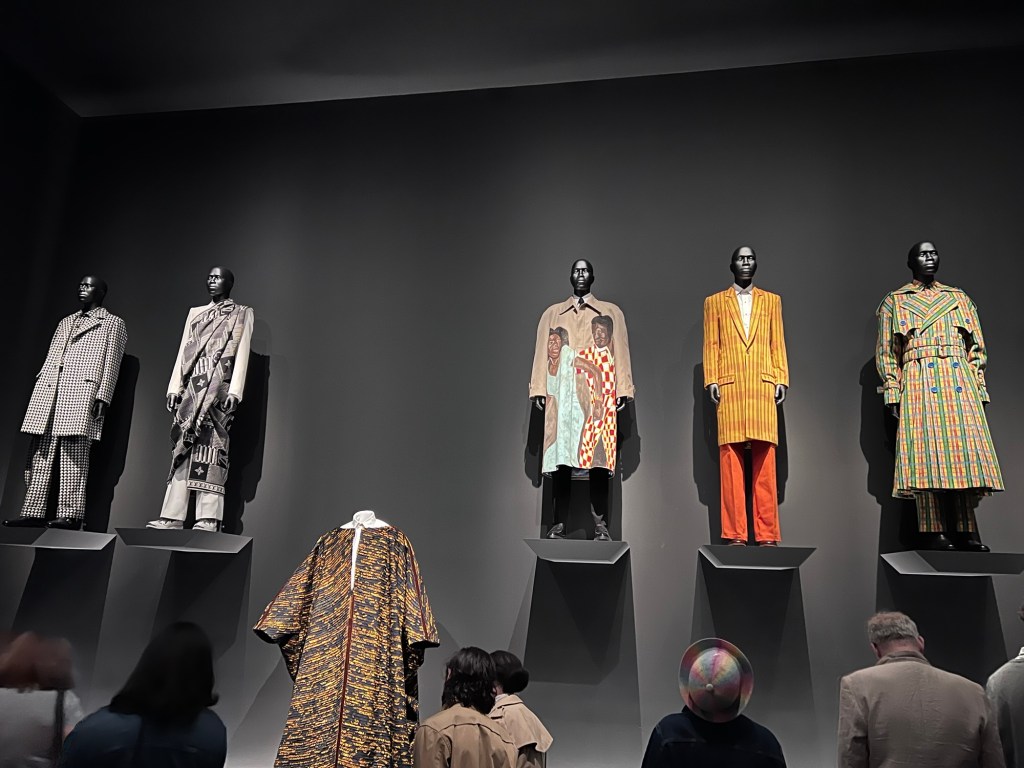
I decided to see the new Costume exhibition “Superfine”, an exhibition of Black Men’s clothing through the ages from pre-slavery to current times. The exhibition was a discussion on attitudes, tastes, tailoring and how the Black style influences fashion.
Clothing and accessories I admired in the exhibition
Clothing styles I thought were interesting in the exhibition
The evening drew to a close and I was exhausted running from work to come into the City to walk from one museum to another and then walk back to the bus station. Still I got to see a lot in both museums.
The Rotunda at the end of the evening
The fountain dancing as I left
It was such a beautiful that I decided to take the long walk back to Port Authority via Second Avenue. I wanted to see if my favorite Chinese restaurant was still open. I was getting hungry but at almost 10:00pm not much was open. The Chinese restaurant had just closed for the evening. Since COVID, the ‘City that never sleeps’ is going to bed early.
As I was walking down Second Avenue, I came across a very reasonable pizzeria named Centro Pizzeria & Restaurant at 1469 Second Avenue. All I had to do is look at the pizza cases and I could not decide on what I wanted to order.
Centro Pizzeria and Restaurant at 1469 Second Avenue
My review on Diningona ShoeStringinNYC@Wordpress.con:
The selection of pizzas in the pizza case
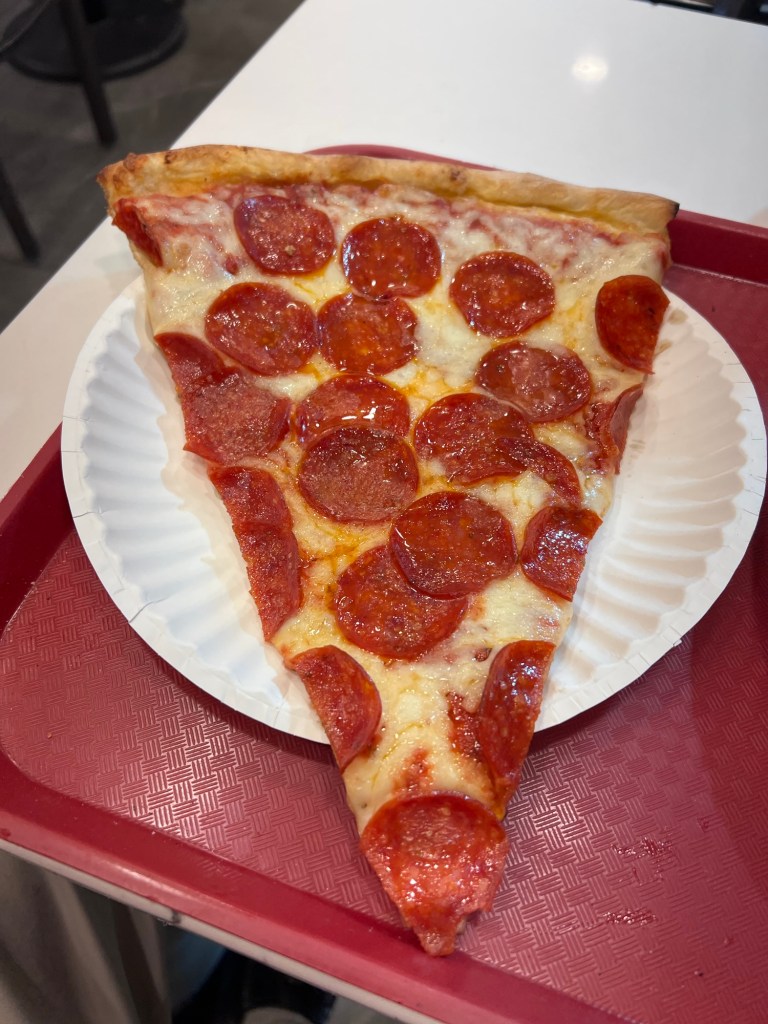
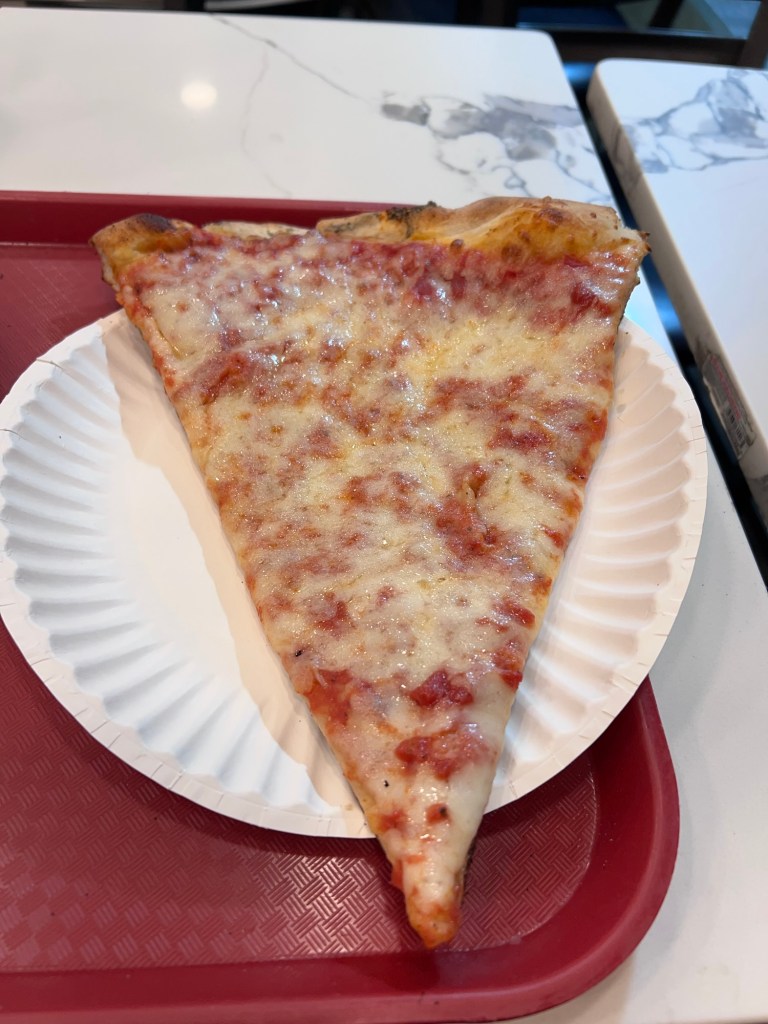
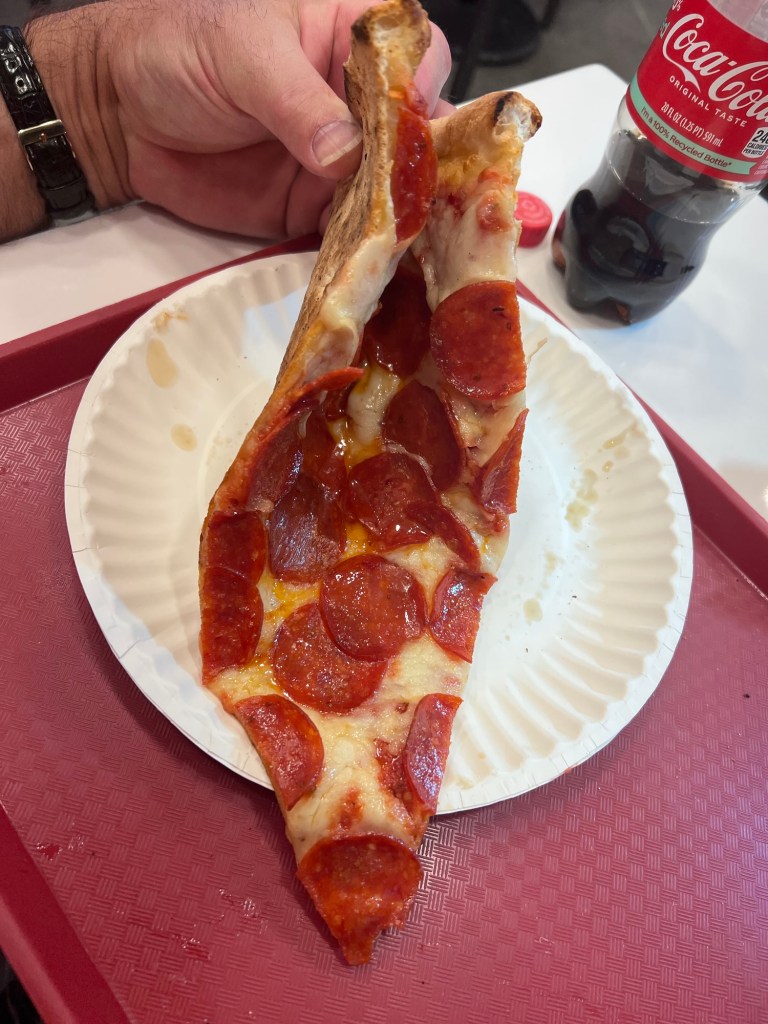
The Cheese and Pepperoni pizzas had just come out of the oven and were the freshest of the pies. I noticed the Pepperoni pizza was loaded with pepperoni and I decided I had to try it. The pizza here is excellent.
My dinner that night
The Pepperoni slice was loaded with slices of pepperoni and cheese
The red sauce which is the base of the pizza gave the Cheese slice lots of flavor
Yum!
It really was a nice walk through Midtown with all the lights on and a nice crowd of people walking their dogs in the various neighborhoods. Walking down the streets of the Upper East Side is really a nice walk and the classic New York experience. These Members Nights are a wonderful way to spend the evening.
Admission: Adults $30.00/Seniors & Disabled People $22.00/Students $17.00/Members and Caregivers with disabled person Free/NYC residents and NY, NJ and CT students: Pay as you Wish
Admission: Admission: Adults $30.00/Seniors & Disabled People $22.00/Students $17.00/Members and Caregivers with disabled person Free/Children Under 16 are free/Members Free/Guests of Members are $5.00.
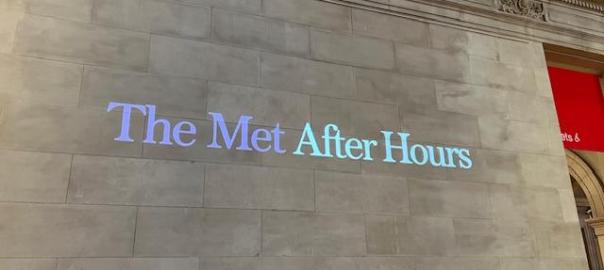
Right after the Metropolitan Museum of Art had their private members night, ‘Met After Hours’, the Museum of Modern Art countered with their event. Neither museum has the whole museum open but at least at The Met there is more than one bar open and they keep two of the restaurants open for patrons so you can have dinner at the museum.
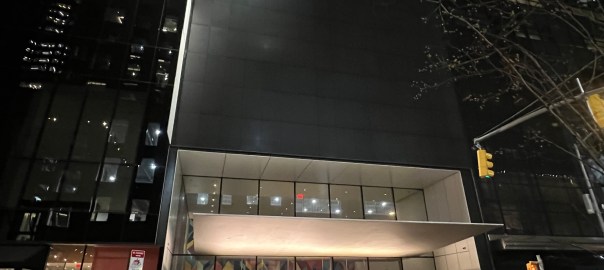
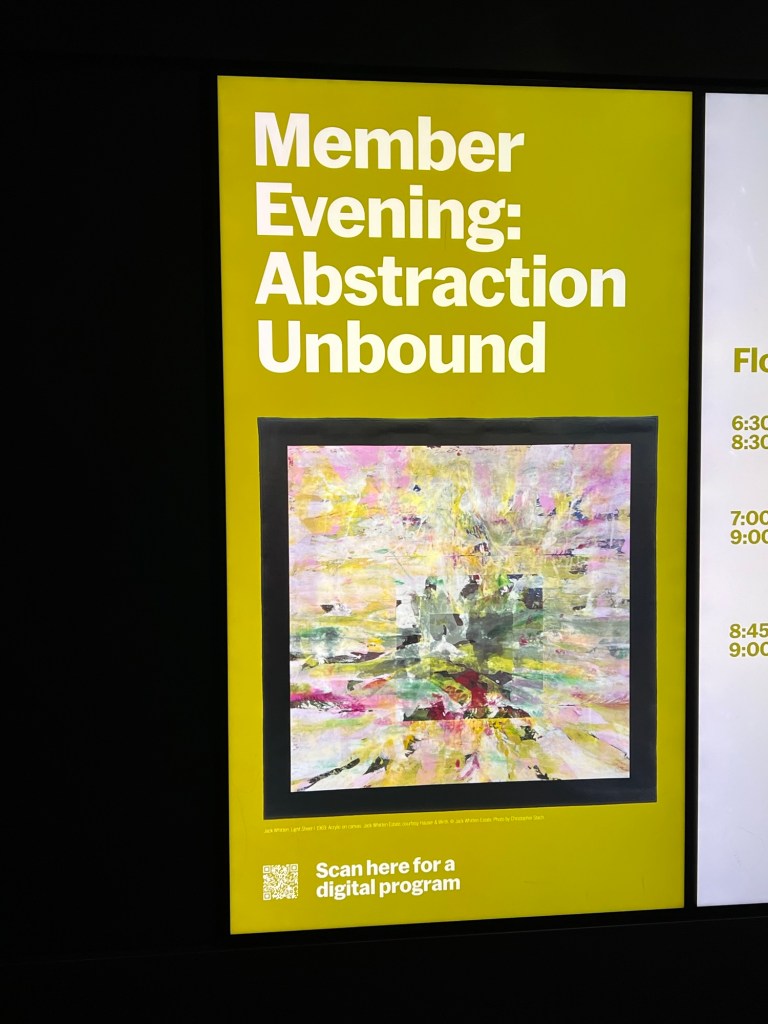
The Museum of Modern Art (MoMA) kept only two floors open and had one very crowded bar open that evening. Still it was nice to visit the museum after hours and walk through the halls.
The front of the Museum of Modern Art at 11 West 53rd Street
Looking down on the bar crowd as I walked to the second floor
Listening to the music play with the artwork
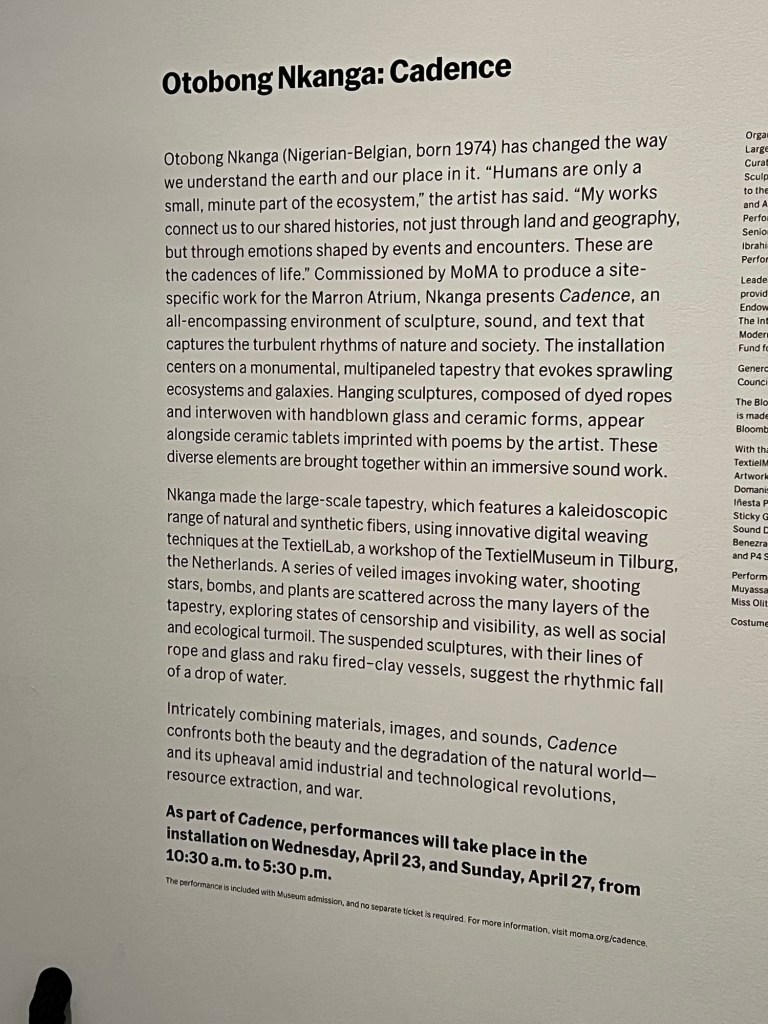
The first piece of art I saw was ‘Cadence’ by artist Otobong Nkanga. This colorful and impressive piece took up the entire second floor atrium and the interesting part of the work was that it was interactive and you could walk through the display. It looked like a volcano had exploded and the rocks that spewed out you could walk around.
The work ‘Cadence’ by artist Otobong Nkanga
The write up on the this interesting work
The work took up the second floor atrium
The rest of the second floor of the museum was closed that evening so I made my way to the fourth and fifth floor to visit the galleries.
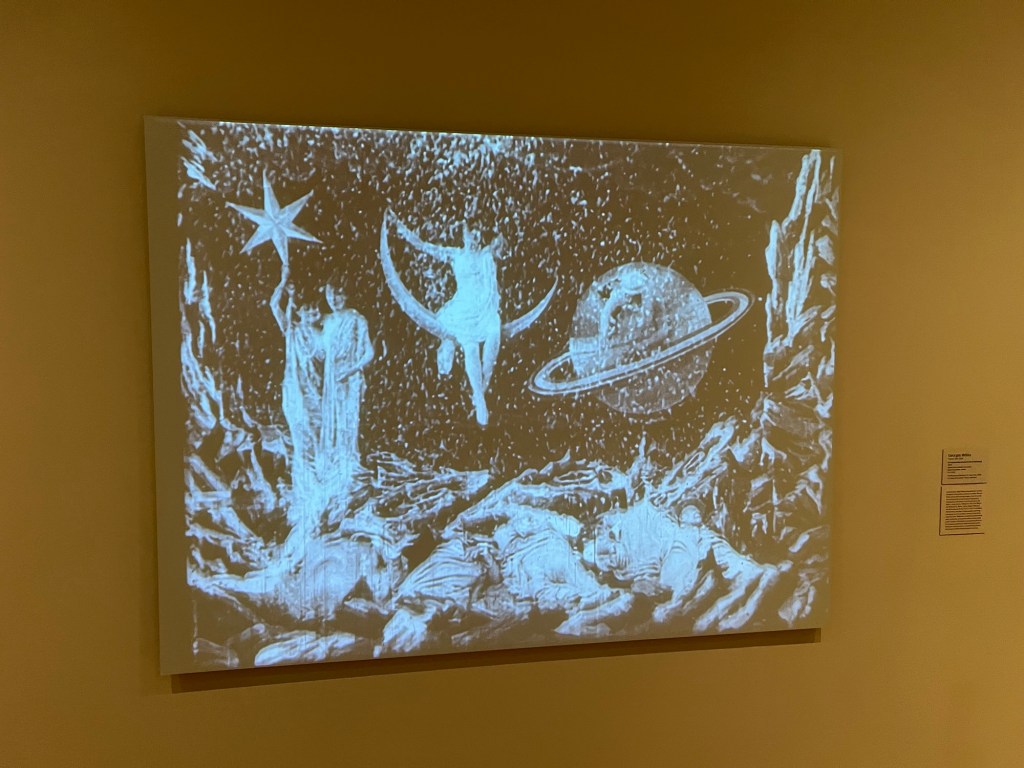
There was no special exhibition on the fourth floor so I stopped room by room to admire the art. Sprinkled amongst the paintings and sculptures, the museum had placed clips of movies, a few of them silent films. One of my favorites was showing, George Meles’s ‘Trip to the Moon’.
George Meles’s silent film ‘Trip to the Moon
The write up of the piece
The YouTube video on the movie “A Trip to the Moon”
I had first seen this film in high school and had fallen in love with the elaborate sets and the campy storyline. I never got how they thought they were going to get home. Still the movie is fun to watch and you think to seventy years later to movies like ‘2001 Space Odyssey’ and ‘Apollo 13’ and even the footage of really landing on the moon and think how far we have come.
Roaming around the Picasso gallery
Then I walked around the Contemporary Galleries and admired all the works by Picasso and Brancusi. Everyone else was still down at the bar on the first floor so I had these galleries to myself for the first forty-five minutes. I quietly walked and admired all the works.
The contemporary gallery
The works ‘Fish’ and ‘Bird in Space’
Brancusi’s works especially ‘Bird in Space’ I had studied in my Art History class at Michigan State University and zI had admired them for a long time. I had forgotten that versions of them were at the MoMA.
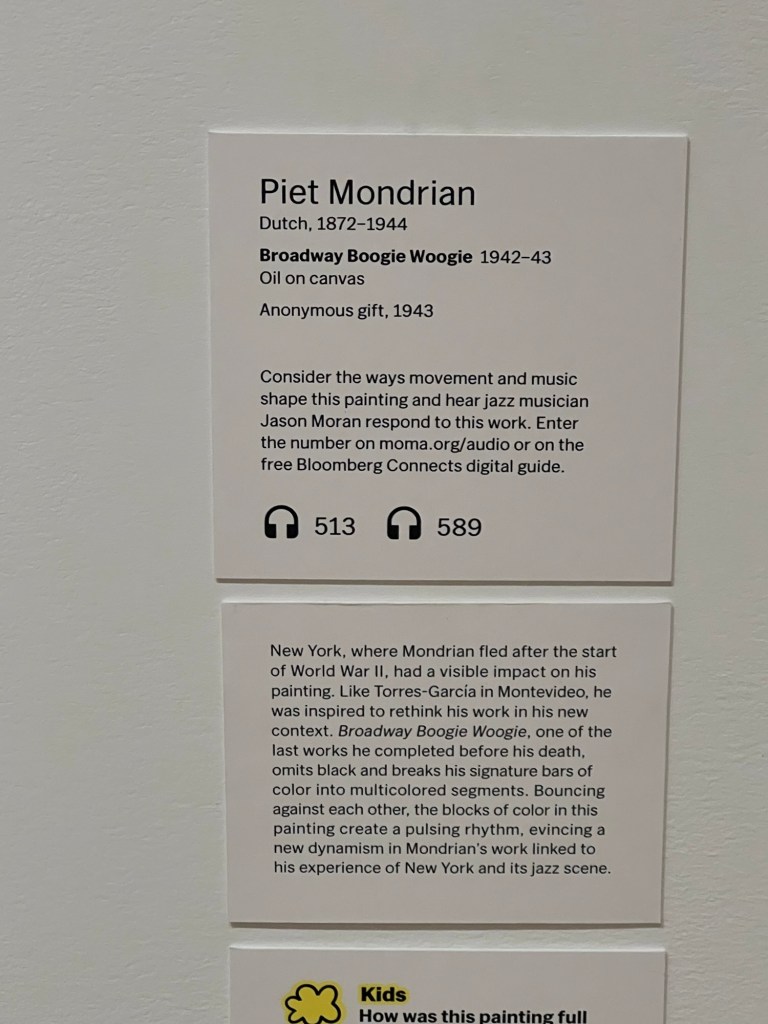
‘Broadway Boogie Woogie’ by Piet Mondrian
The signage
Then I passed ‘Broadway Boogie Woogie’, another work I had studied in college. It is amazing how many great works were at this museum. I just liked the colors and whimsy of this painting. Then I walked through the Claude Monet gallery where the famous ‘Water Lillie’s’ paintings were located.
The gallery dedicated to Claude Monet’s ‘Water Lilies’
The signage
Claude Monet’s ‘Water Lillies’
I love these immense murals either their beautiful colors and calmness to the painting.
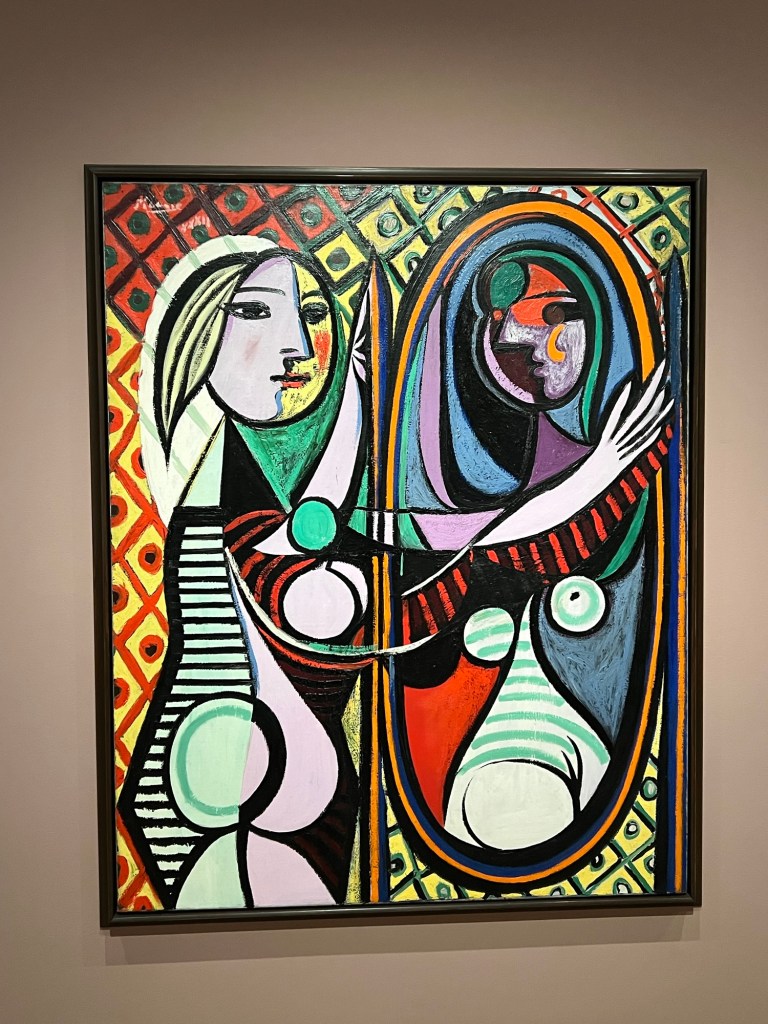
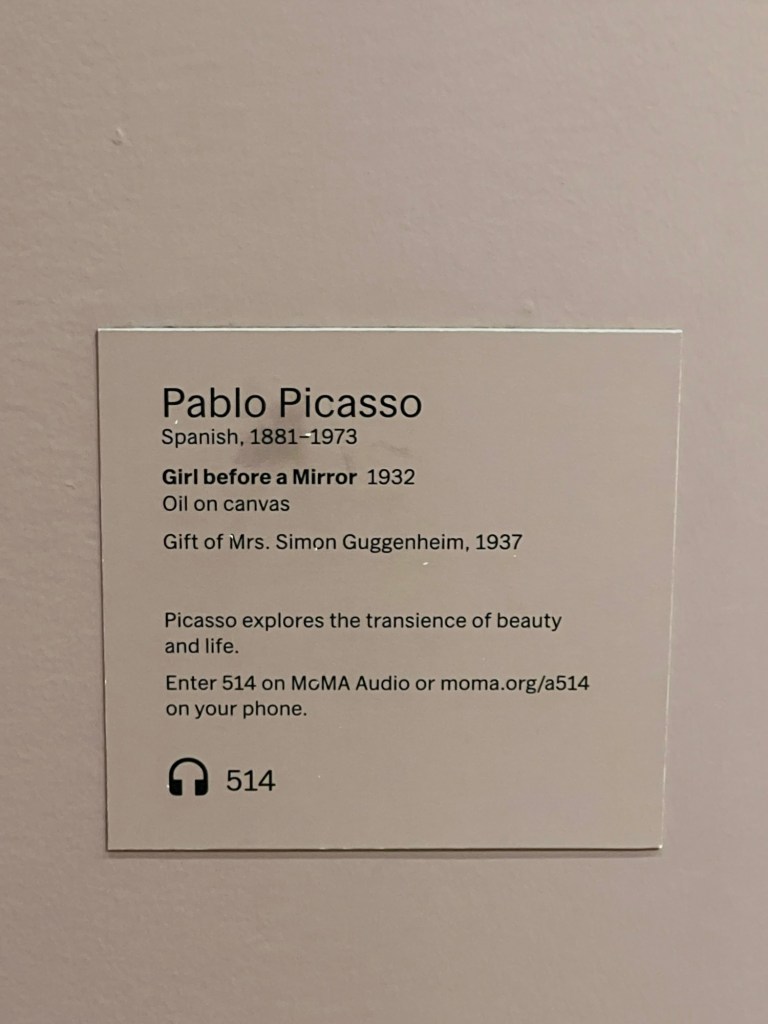
I then turned the corner and came across Picasso’s ‘Girl before the Mirror’
I had forgotten that this painting was here and I stopped for a while and just admired it. I loved the simplicity of the idea but enjoyed its bold colors and crazy cubism to it. I have been attracted to this painting since I was a kid when my mother took me to the Picasso Retrospect here when I was a freshman in high school.
The signage for the painting
As the night wore on I visited the floors that were open and it was only two floors, four and five and the second atrium that were open so I visited the bar area when I finished with the other floors.
The prices here were just as expensive as the earlier Member’s Night at The Met and the selection was not as nice, so I bypassed it. I just watched everyone from a distance.
I just enjoy watching everyone having a good
time. I makes the evening even more special.
Watching the crowd while admiring the beautiful interactive art. This work kept moving around to the music in the background
The painting would move in different directions to the music
It had been a short but relaxing evening and got my mind off everything between work and home and I guess I needed a change of pace to shake me out of it.
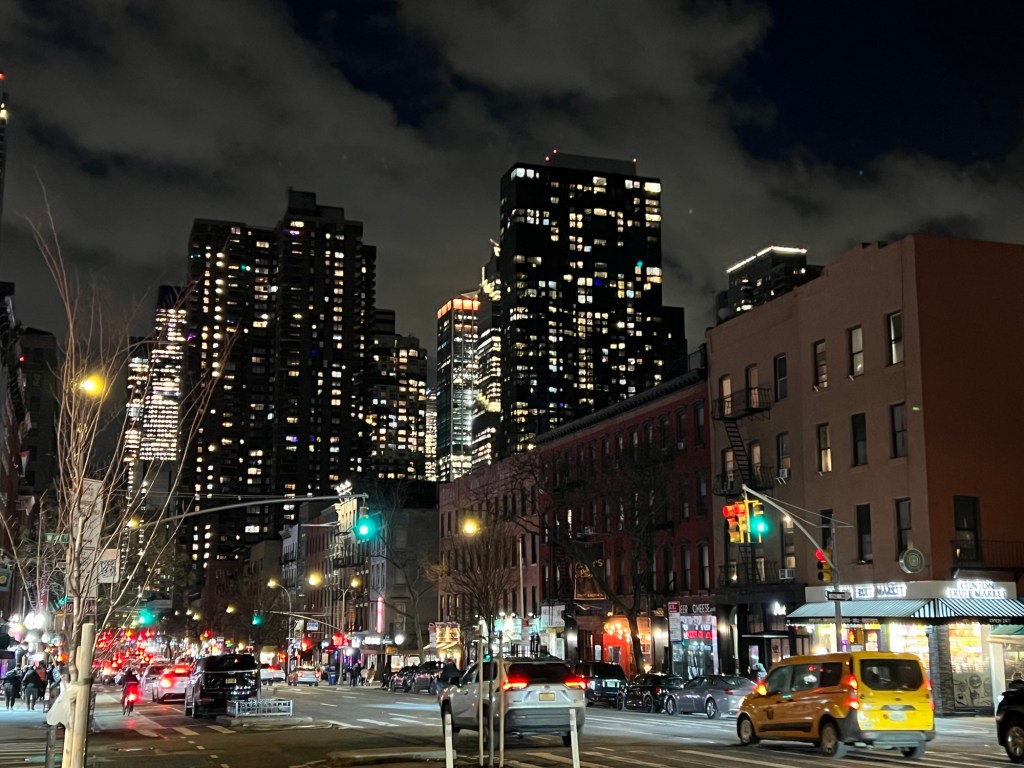
After a short visit to the gift shop, I left the museum and headed home. As I turned the corner past the museum, I stopped to admire the lights of Seventh Avenue. I sometimes forget how breathtaking Manhattan can be at night.
Seventh Avenue at night around the corner from the MoMA
I took a short walk around the neighborhood, thinking about where I could stop for a snack. None of the restaurants at the museum were open the evening and they had nothing at the bar.
I remembered a wonderful hamburger/ hot dog place near Eighth Avenue, Lucky’s Famous Burgers at 370 West 52nd Street.
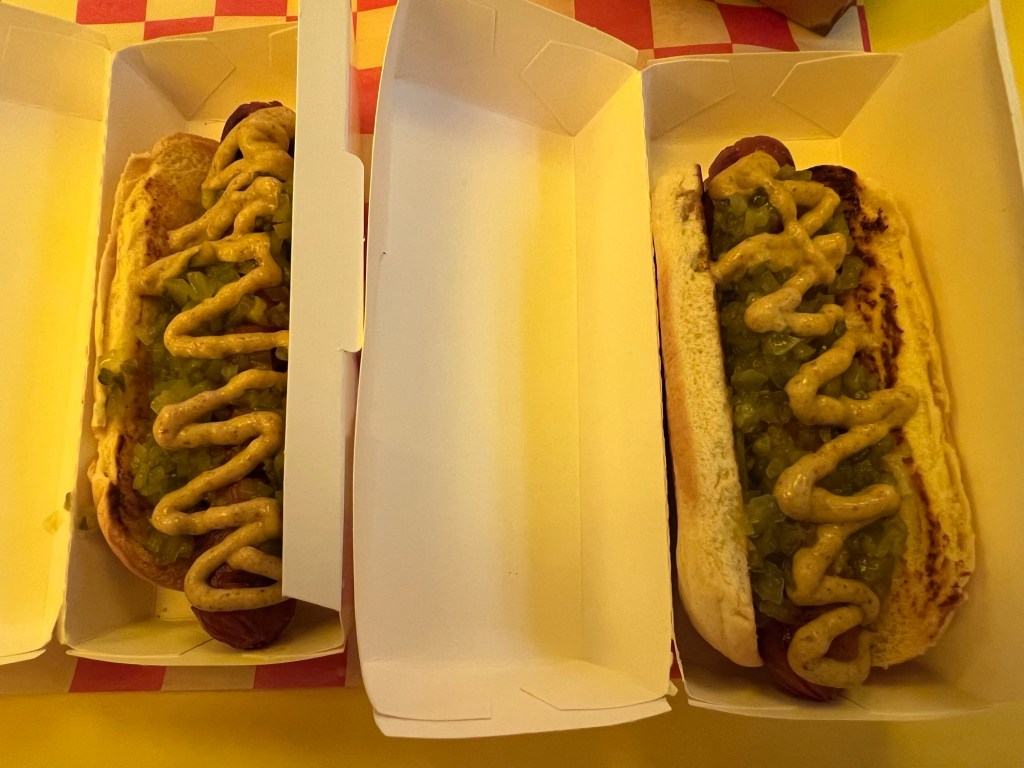
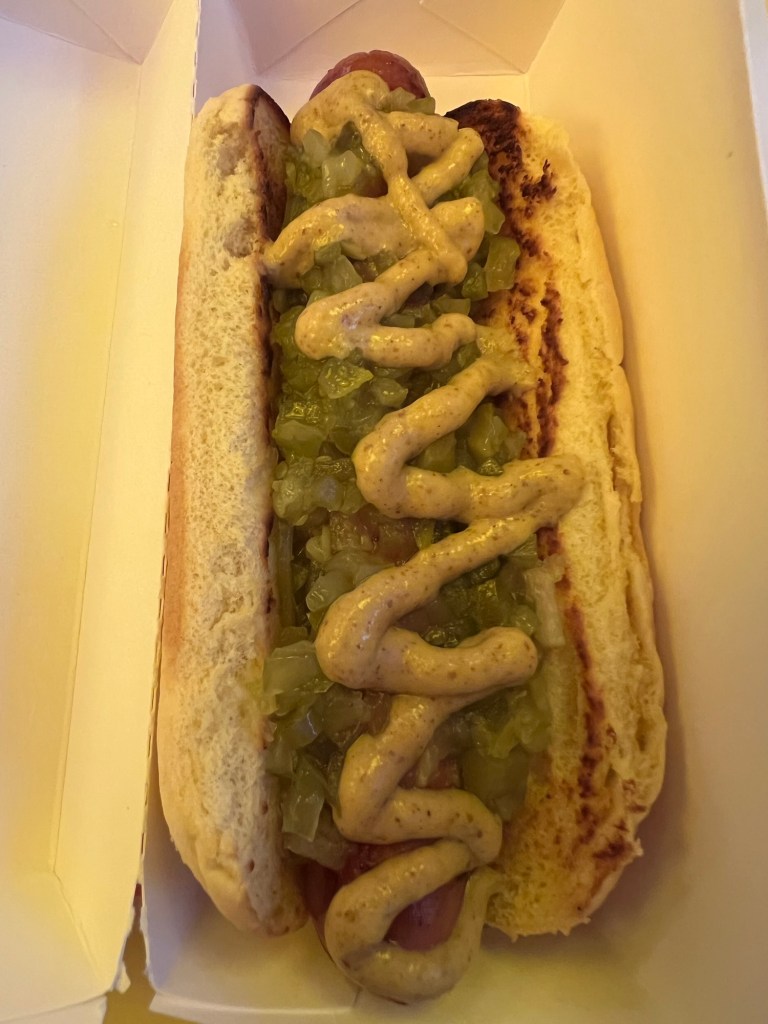
I settled on the ‘Double Dog’ special meal with two dressed hot dogs and a large size of French Fries with a large Coke. It was enough food for two people. The hot dogs here are fantastic and the French Fries are cooked to order. The meal just hit the spot and really cheered me up as had the visit to the MoMA. It was the perfect meal to cap off the evening.
The Doubledogs with French Fries meal
The delicious twin hot dogs
They were nicely decorated
What a way to end the evening
It was quick and relaxing evening and shook away the blues of the past days of gloomy weather and some of the long nights of grading papers at work. A pleasant night at the MoMA can really cheer you up!
In my live classes, I open my consulting company, “Bergecco-Parc Consulting Inc.”, for business and the whole class bands together and we have one big project. In the era of post-COVID and online learning, I was lucky that I was able to teach one of the live classes on the Bergen Community College, Paramus Campus. It was such a pleasure welcoming students back to campus with live lectures and conversing with them.
The Bergecco-Parc Consulting Inc. corporate logo of the six trees
In the past, I have created these projects under the Bergecco-Parc Consulting Inc. banner, the main consulting company, the Orion Malls banner, a Mall design company and the Buscomonzefi.com banner, my Tech Division. Each business does its best to be creative, forward thinking and have a thought producing presentations. I also challenge the students to top on another in their presentations and build on what they have seen others do in the past.
Professor Justin Watrel, CEO & Co-Founder of Bergecco-Parc Consulting Inc.
As part of the semesters project, I wanted to choose a location that was close to the college that we could promote and staying within the Lyndhurst area. I felt that Lyndhurst’s downtown was a bit fractured with gaps in the downtown making it tougher to market than other downtowns. Then I remembered the Red Schoolhouse Museum that I had visited over the summer to update my blog and thought that would be the perfect choice.
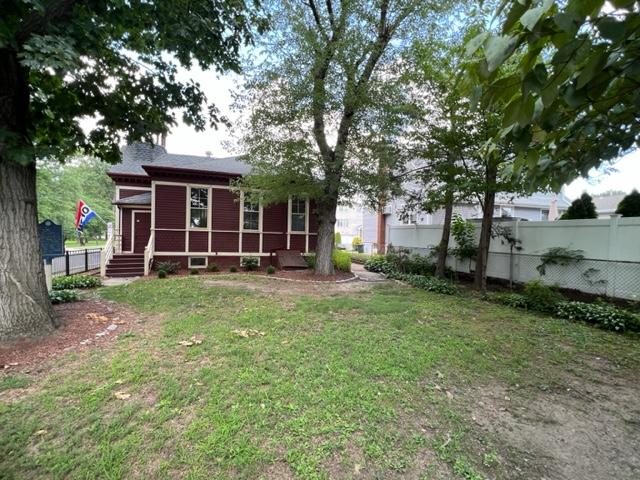
The Lyndhurst Red Schoolhouse Museum at 400 Riverside Avenue in Lyndhurst, NJ during the summer months
The museum is close to campus, was a historical site and really needed some new publicity. So I approached their volunteer Board and we developed a partnership on this project:
It was going to be a tight project as we only had five weeks to pull it off and we had Thanksgiving Weekend break in the middle of the project. I created one less Team and gave them a fair amount of work to develop and then we started the project.
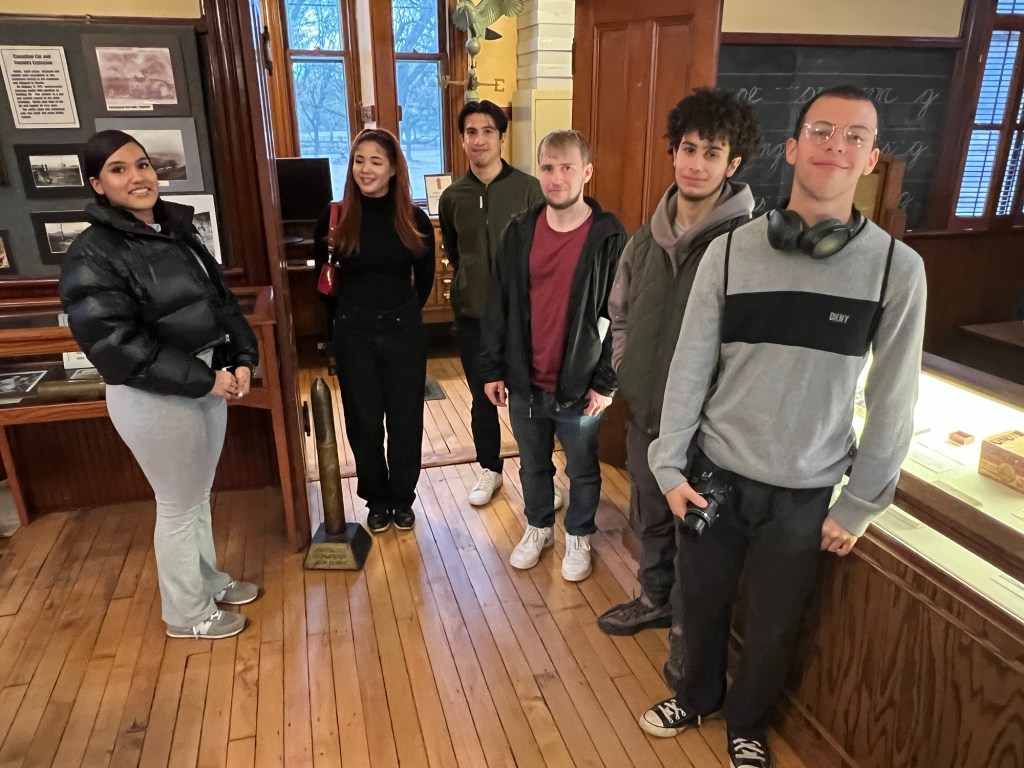
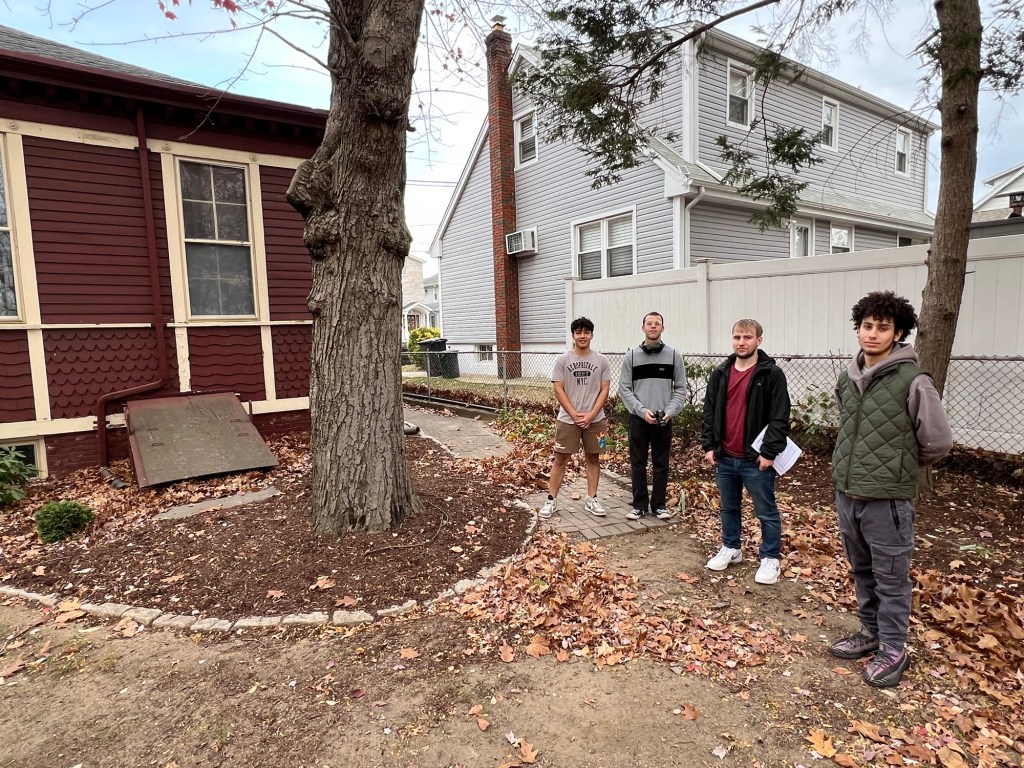
I had an extra credit Team Field trip to the museum that Sunday and about a third of the students showed up. The museum is a one room schoolhouse so it is easy to tour.
Team members touring the museum on the extra credit trip
Touring and planning ideas in the museum’s backyard and gardens
The next week during class time, I took the students on a more formal tour and lecture on the museum where they met with the Museum Board, their volunteers and it was time to ask questions and view the museum from the vantage point of how to we promote this museum and how can we bring people in from outside the Bergen County area.
First we met with the staff at the museum on class night
We started with a discussion of the museum, its history and its direction in the community. We also got to meet the Volunteer Board of the museum.
Then we toured the museum
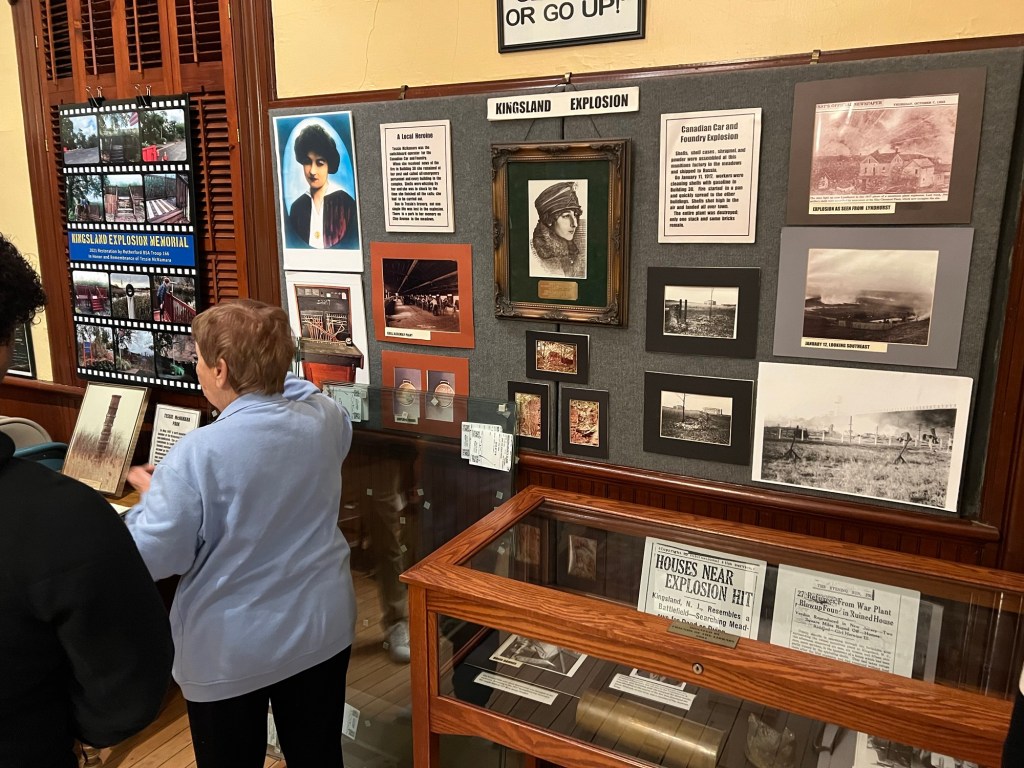
The Kingsland Explosion Fire display
Going over the project steps with the Museum Board
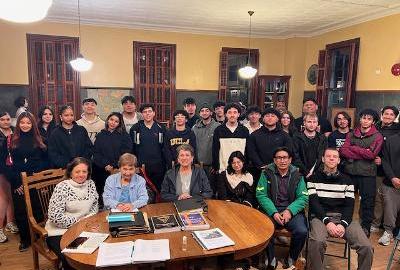
Our Team picture with the Museum Board of the Lyndhurst Red Schoolhouse Museum
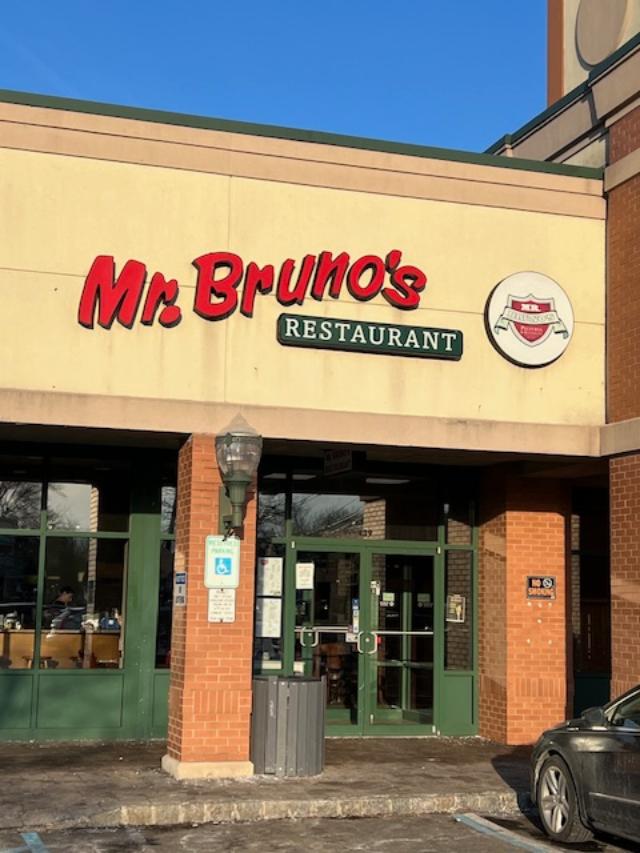
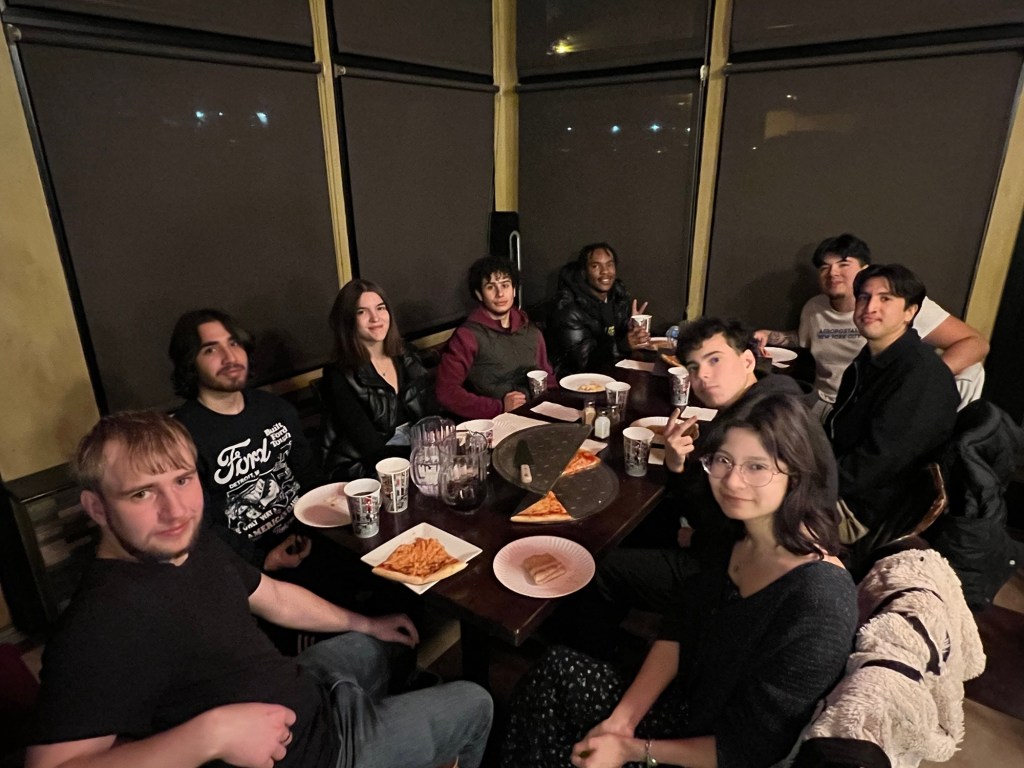
After our visit to the museum, I took the Teams to Mr. Bruno’s Pizzeria in Lyndhurst for a Team Building dinner that I host with all my classes. It is hugely popular with the students and gives them a chance to get to know one another. Nothing is better than Team Building over pizza.
Mr. Bruno’s Pizzeria in Lyndhurst, NJ has a complete dining room
Team Two setting up their game plan while dining at Mr. Bruno’s that evening
Team Two doing together and putting together their game plan
Team Three enjoying dinner together
The restaurant staff at Mr. Bruno’s could not have been nicer to us and everyone enjoyed dinner. It was a really productive evening for everyone. It was a nice Team Building event and the students that dined that night really got to know one another and start setting up their presentations. From this point on, it was up to the Student Consultants to put their projects together and make trips out to the museum on their own time.
The Lyndhurst Team will have three Teams compete with one another in a series of projects that are part of program in “Promoting the Small Museums of Bergen County”. The goal is to create a new Digital Marketing Campaign for the museum, a series of special events that includes events at the holidays, a Children’s Walking Tour and a fundraiser for the museum.
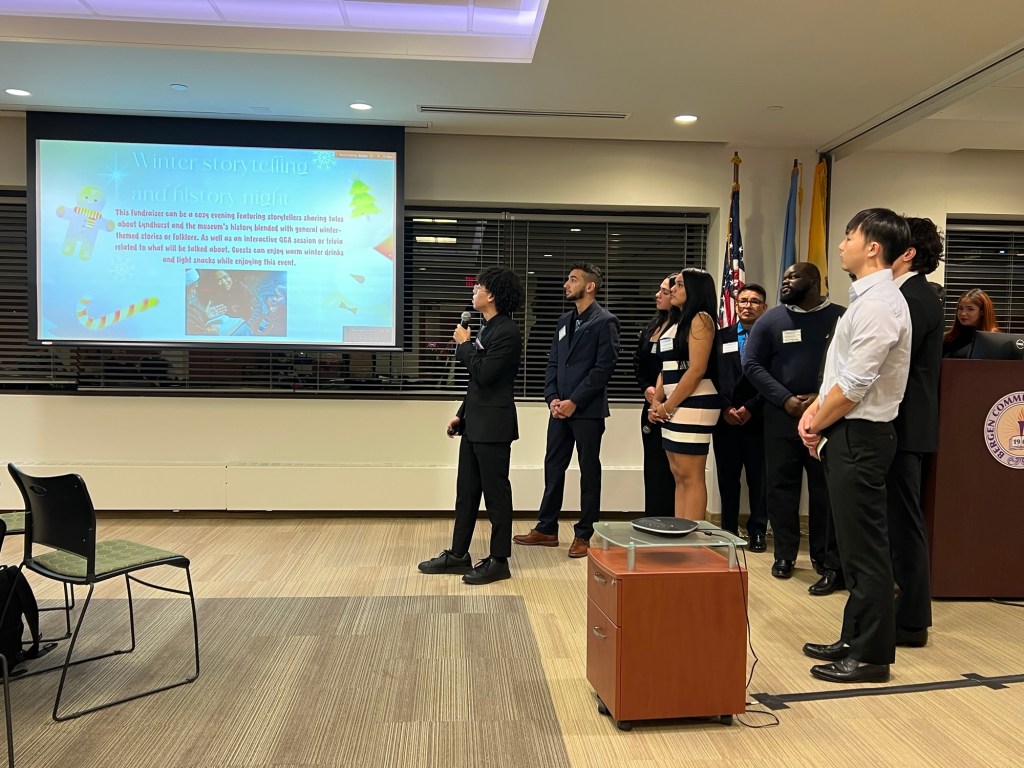
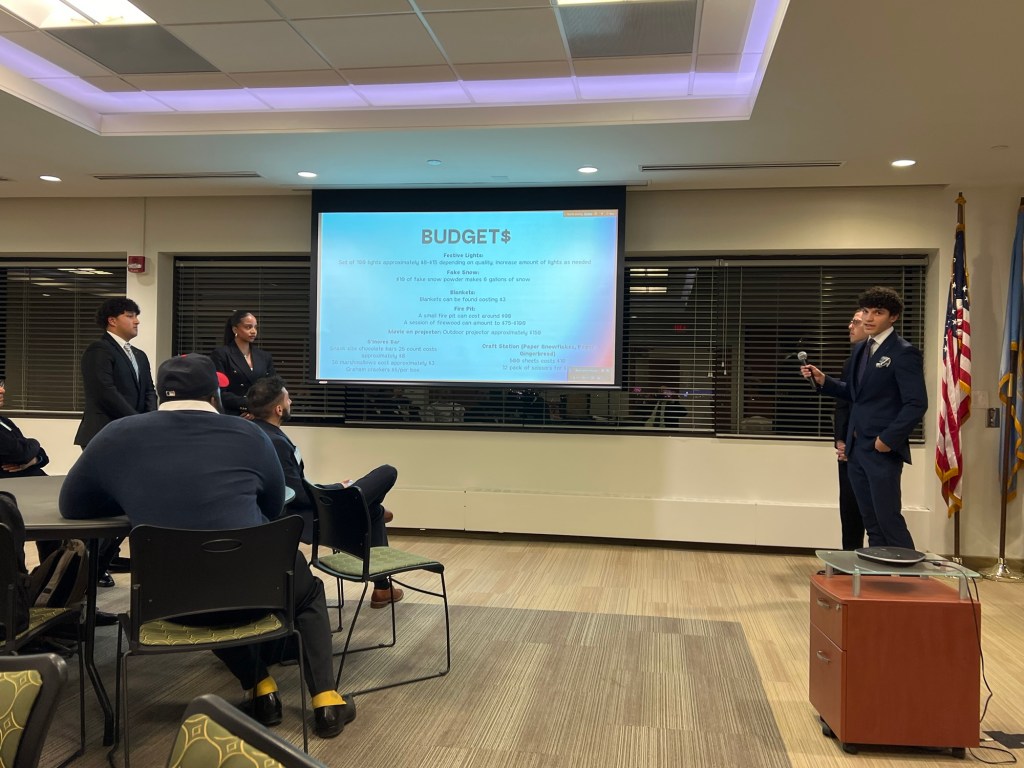
The Teams are to create two holiday events that include a ‘Holiday Village’, a secular December family holiday event where people can enjoy walking around the museum in a festive environment with delicious food and activities. This is the same with the “Spring Event”, another festive event where the museum is decorated for the day with engaging activities and delicious food all in a way to showcase the museum.
Some of the ideas that the museum asked of us was to create a Children’s Walking Tour for school age children who visit with their parents and with their local schools. This is a way for the docents to engage with the children and create a fun environment that speaks to them. The other request from the museum was to create a fundraiser or a series of fundraisers that will raise $10,000 for the museum to help with expenses in running the museum and mounting new exhibitions. It will be interesting to see what the students create to promote the museum.
This Team had it the toughest of my four Teams as they had four weeks to put their project together with one of the classes being the formal tour. They did a wonderful job putting it all together in a short period of time.
The week before the student Teams made their presentation, I gave all four of my Teams the ‘Holiday Project’ Quiz Four, in which each Team was asked by the Corporate office to create a holiday menu proposal for the company dinner, create an invitation and then film a holiday greeting in English and Spanish. That produced interesting presentations.
Video on the Holiday presentation:
PowerPoint Holiday Presentation:
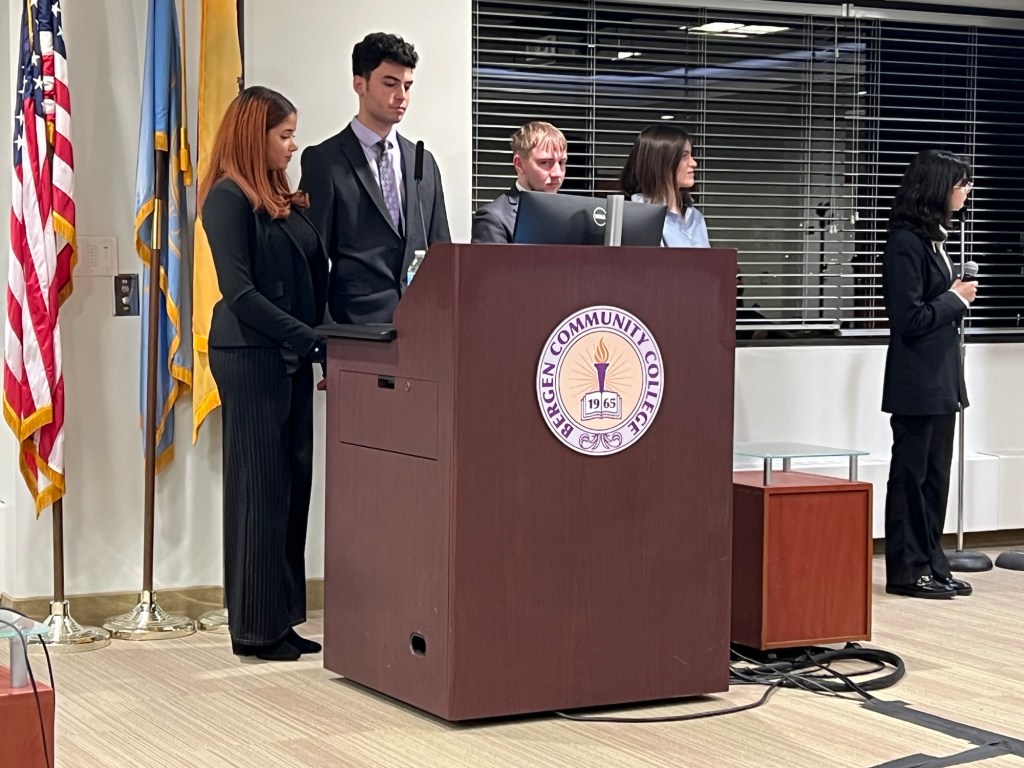
The next week on December 12th, 2024, the students presented the project to myself, the Board and members of the Lyndhurst Schoolhouse Museum and to parents and other invited guests. For a four week project, the students did a good job.
The Bergecco-Parc Corporate Website for the Lyndhurst Schoolhouse Museum Team:
Team Two presenting their Holiday events to the Board
Team Two presenting their Holiday events budgets
Team Three making their presentation
The Lyndhurst Schoolhouse Museum Team at the end of the presentation
At the end of the Presentation, we had a Q &A with the Board of the Museum, who really loved the ideas that the students came up with and how creative they were with such a small museum. The President even admitted to me that she, like all the other museums I worked with this semester, would miss having the students visiting and touring the museum. That made me feel good, that in some small way we made a difference.
I don’t know if the museum will ever use any of these ideas or if all the things will be successful in the end but I could see these events a nice addition in making the museum more successful and create better visitation.


































































 mywalkinmanhattan