The front of George’s Pizzeria at 726 West 181st Street
There are pizzerias all over Manhattan, some good and some bad and some indifferent. Some just stand out for the excellent food, service and price and George’s Pizzeria is one of them. I came across this wonderful little hole in the wall when I was walking the Washington Heights neighborhood for my blog, MywalkinManhattan.com. What stood out were the reasonable prices and the excellent food. The staff here also has a good repour with their customers and I think that is very important.
The inside of George’s Pizzeria
I just had a simple piece of Cheese pizza on my first two trips to George’s and the pizza is amazing. The sauce they use has so much flavor and I think this is the body of the pizza. The slice was perfectly cooked and even when it is warmed up, the pizza is consistently excellent.
George’s delicious Cheese Pizza
The Cheese Pizza here is excellent
When I came back another time during my Broadway walk, I tried the Cheese and Sausage Calzone and what a gooey delight. This overstuffed Calzone had three cheeses and lots of sliced sausage inside of it. It was served with a side of their homemade red sauce.
The Sausage and Cheese Calzone with an icy Coke
The Calzone was really nice sized and perfect for lunch
It was the perfect size for lunch and just right for the 13 mile walk down Broadway. It was a delicious meal.
It was a beautiful afternoon in the Hudson River Valley with the leaves changing and a clear sunny sky. I was exhausted from all the running around with classes and needed a break from everything. With Midterms next week, I figured that I needed a change of pace and decided to head to the Sheep and Wool Festival at the Duchess County Fairgrounds.
Looking at the beautiful foliage on Route 87
I finally was able to sleep in after many early mornings and relax and enjoy breakfast. I got on the road after 10:00am and it seemed like everyone was headed in the same direction. The highway was packed until we got to Route 84 and then things calmed down.
Route 87 going up to New York
I had to stop several times just to take pictures of the foliage on the New Jersey side of the border. Unfortunately the best angles I could not get due to the fact there was no shoulder to step at on the highway. Still the colorful mountain was a site to see.
The foliage on the way up
With a rain storm coming up the coast, I wanted to be sure I got pictures of all the foliage with this brilliance.
The mountains were so beautiful I had to stop the car and photo them
Going through Hyde Park first, I stopped at the Hyde Park Farmers Market. I have been coming to this Farmers Market for years and it is always so nice.
It must have been just as the Market was closing because it was so quiet. All the vendors had time to say hello to me.
Walking by all the tents of produce and freshly made products
There were all sorts of produce, baked goods and craft products. The one thing I did notice was how expensive things have gotten. Egg Custards for $3.50 and breads for $10.00.
The colorful display of Fall produce
The Fino Farms who always has such great product
I took a quick walk through the market and then headed to the fairgrounds. That was just as packed as well.
The entrance of the festival on a beautiful sunny afternoon
The Sheep and Wool Festival is not as big as the Dutchess County Fair but had a lot of the same food and merchant vendors. On a smaller scale, it is much more manageable but with the number of people who attend this every year, they could use more food vendors for the event.
The sign and directions in the fairgrounds
The foliage was so beautiful that afternoon
The Festival takes place the second week of October just when the Duchess County foliage is coming to its peak. The fairgrounds were covered in golds and reds.
Entering the Midway at the Sheep and Wool Festival where the food vendors were located. The foliage was at peak color.
The Midway was not as packed with vendors as the fair but is had a nice selection of food vendors
Entering the middle of the festival was getting busy
The foliage was amazing both inside and outside the fairgrounds
I got up to the fair late this time, not arriving until 2:00pm ( I thought the festival ended at 6:00pm but it ended at 5:00pm) and needed to get done lunch. Amongst all of my choices, I still always head to Janek’s, the barbecue/hamburger truck that has been my favorite for years.
Janek’s food truck is always at the same location
For years I have been getting the Piggy Back burger with Cheddar cheese and pulled pork on top(which I highly recommend) but I decided to do something different and have the Burger with freshly made Pastrami and Swiss Cheese. A very nice substitute.
The Pastrami and Swiss burger
The burger was perfectly cooked with slices of smoked pastrami on top
Yum!
The dining areas of the festival were busy from the time that I got there until the festival closed that evening. Even up to closing time and just after, people were ordering food.
The crowds kept getting bigger at the Midway at lunch and dinner time
After a good lunch and getting my energy back, I headed over to the animal pens and the craft stalls to see all the handmade products. My first stop was the Sheep pens, where sheering was going on and they were many contests to showcase the livestock. The Sheep were being shown, sheered and were talking amongst themselves as we walked around the pens admiring them.
I found that the sheep looked really relaxed and seemed to have more fun staring at us
This little guy kept smiling at me watching him
While the livestock contest was going on to a huge crowd, I toured the Crafts stalls. In the Summer for the fair, this was full of cows and goats, it now had all sorts of wool vendors, knit items, handcrafts and cosmetic items.
The colorful wool items on display
These wool dragon sculptures I thought were really interesting
Bonny’s Beasts were back with more creative gifts
Bonny’s creative beasts
More creative beasts
I also revisited my favorite wood carvers to see their Santa wares. This was the first year that my mother did not want something!
The Santa Carvings
The Santa Carvings
After touring the stalls and the open museums on the fairgrounds, I decided just to take a walk around and see what things were open since the fair.
The 4H Building was closed and there were no milkshakes now. Just coffee and hot beverages. I thought I saw someone walking around with a milkshake.
The foliage around the fairgrounds was just dazzling
By 4:30pm, they kept making announcements that the show would closing by 5:00pm, so I just wondered around and observed everyone having a good time on this warm and sunny afternoon. I had been watching the football games on my phone to watch Michigan State lose again to number three Indiana. Cornell won the Bucknell game so I figured Bucknell must have been pretty bad.
The last of the patrons at the end of the afternoon with the beautiful foliage in the background by the food vendors
As I left at 5:00pm at the end of the show, I observed the old signs from previous shows. Time has flown since my first show a decade ago. I still can’t believe it will be 2026 soon.
The shoe sign from 2021, post COVID
The last show I went to pre-COVID in 2019
After the show was over, I decided to tour around Rhinebeck. I was going to attend the Cemetery walk at St. James Church again in Hyde Park at 7:30pm so I had plenty of time. I had taken this tour back in 2021 just as everything had opened up and it was a lot of fun.
St. James Church before twilight at 6:15pm
The staff was just setting up the lights at the cemetery (technically a graveyard)
The inside of St. James Church in Hyde Park, NY, parish of the Roosevelt family
I got to the church an hour before my tour and just relaxed and admired the beauty of the church. I never saw an hour fly by before my tour started. Then darkness came and my tour started.
Darkness came by 7:30pm and the cemetery looked much different
We started the lantern tour with a talk of the spirits who were buried in the grave yard. Each of the actors was waiting for us at each stop. I still could not believe these actors were waiting alone in the dark in a graveyard for people to walk by the them.
Each of the actors told their tales of when they were living and stood beside the place that they were buried. It was very intriguing.
The first person we met was Mrs. Emma Victoria Pitkin Marshal
Mrs. Marshall was once known as the ‘Poet Laureate’ of Dutchess County. She was well known in the world of publishing.
The second spirit I met was Mrs. Harper, Mrs. Mill’s housekeeper up at the Staatsburgh mansion. She told us the story of her life working for the Mills and Livingston families.
Mrs. Catherine Kennedy Harper
Mrs. Harper told us about her life working for the Livingston family and her relationship with Ruth, who she was her nanny and then housekeeper.
Our conversation with Mrs. Harper
Our next spirit we visiting was the ghost of Gertrude ‘Gerdie’ Livingston who talked about her time in the Hudson River Valley and in New York City.
Gertrude ‘Gertie’ Livingston
Mrs. Livingston telling her tales of the Hudson River Valley
In between our conversations with the spirits of the past, we walked through the graveyard as twilight gave way to darkness. The graveyard was illuminated with lanterns and lights to follow the paths. It is easy to trip over a tombstone while you are walking around the paths. They did give us lanterns to light the way but there were not enough to go around.
The vaults are illuminated at night to follow the ghostly trail
Our next with the spirits was the ghost of Reverend John McVickar, who was the Rector at St. James Church starting in 1811. He married Eliza Bard, the daughter of Dr. Samuel Bard of Bard College and raised their nine children together.
The spirit of Reverend John McVickar telling his tales of his life in the church
Walking past the church at night
The last apparition we met that night was the spirit of Mr. Augustus C. Colman, the son of a sailing captain who invested heavily in Manhattan real estate on the advice of his boss. John Jacob Astor.
The spirit of Mr. Colman telling his tales of the City
Both himself and the Reverend went at it in the graveyard
The stained glass windows at the church
The church at the end of the tour
After the tour was over, I drove to downtown Kingston , NY to talk pictures of the Dutch Reformed Church at night.
There was no cemetery walk this year here and I just wanted to visit this graveyard looked like at night with the full moon. It was more intriguing than scary.
The Kingston Old Dutch Reformed Church at 272 Wall Street
Even without a graveyard tour the ground can be a little spooky
After my tour of the Old Dutch Church and the graveyard, I walked around Downtown Kingston. I have never seen a town like this that rolls up its sleeves so early in the evening. It seems like a majority of the restaurants close at 8:00pm. I can understand the stores but the restaurants?
I stopped at my favorite go to restaurant in The ‘Stockade District’ Wing Shui at 53 North Front Street. The food is consistently wonderful and extremely reasonable and you can sit down inside the restaurant.
I was surprisingly hungry even after the big burger at lunch. It got cooler that evening so I ordered the Wonton Soup, the Steamed Dumplings and one of their wonderful eggrolls. It was such a great meal and really warmed me up. For such a small hole in the wall restaurant/take out place, the food is excellent.
My dinner that evening at Wing Shui
The Wonton Soup had for large wontons that you could barely fit in your mouth in the rich chicken broth. That warmed up after a graveyard walk in the dark.
The Wonton Soup with the oversized Wontons and rich chicken broth
The steamed dumplings were plump and moist and filled with spiced pork mixture.
The dumplings here are delicious
Their egg rolls are always a treat and are the first thing that I ever tried here years ago.
The egg rolls here are excellent
Yum!
I was nice to sit in the restaurant and just warm up. The temperature really dropped that evening and it was a rather cool October in comparison to other years.
After dinner, I walked around Downtown Kingston some more and admired some of the decorations and store windows decorated for the holidays. It seems like Halloween is now the lead into Christmas rather than Thanksgiving (some places have already decorated for Christmas).
The ‘Jack Pumpkin’ decoration that looked like it out of “The Nightmare before Christmas” in Downtown Kingston, NY
A lot of windows were decorated for the Halloween holidays. The merchants in Downtown Kingston are so creative and here are some of my favorites.
This was displayed in the window on a North Front Street store.
The faceless entities in the windows
They face this witches hat
The skulls and pumpkins in the window. The merchants get quite creative at the holidays in the downtown area.
I walked back to my car and contemplated the upcoming Halloween holiday and all the interesting events I planned to see. It is no longer just Trick or Treating anymore.
The front of the Old Dutch Church at night
While waiting for a friendly ghost to come and greet me.
I was out exploring the Route 46 corridor several years ago from Budd Lake to the Delaware Water Gap and I visited a series of small farm stands along the way. RH Farm at 590 US 46 was one of the standouts that I visited .
It was not just the selection of fresh produce I saw on each of my visits in both in the Spring and Fall, but it was the selection of the variety of goods there was to purchase and the way they were displayed.
There was also a nice selection of freshly baked goods, arts and crafts items and plants and flowers all beautifully displayed like a boutique.
The inside of the farm
The selection of pumpkins in the Fall
I love the way they decorate the farm for each holiday. They decorated not just the selling space but other parts of the farm as well like the grounds and the barn area.
The display of holiday crafts and pumpkins
The holiday display of pumpkins and flowers
The Halloween decorations
They have a wonderful selection of pumpkins and gourds for the Halloween and Thanksgiving season.
The pumpkin display
Even their barn which looks like it is falling down looks picturesque. The property has such a unique feel to it.
The outside grounds
Both in the Spring and the Fall, the trip to both Budd Lake and the Delaware Water Gap are a real treat. What beautiful views.
The beautiful foliage in the Fall of 2025 by Budd Lake
.
The sun blazing in the Fall of 2025
The sun simmering on the lake at Budd Lake
The foliage by the lake
The views of the surrounding community in the Fall of 2025
Visiting the farm in the Spring:
Before I left Budd Lake I stopped at RH Farm stand, a small farmstand at 500 Route 46 West. I would spend most of my day exploring various farmstands along to way to see the selection and prices of the items. For the most part, everyone was charging New York City farmers market prices for produce. Some stand were charging $6.99 a pound for peaches and $12.00 for a small pie. I guess many of these people were hoping people from Manhattan were coming out for the day. I did find some decent prices but for the most part most of the stands were pretty expensive.
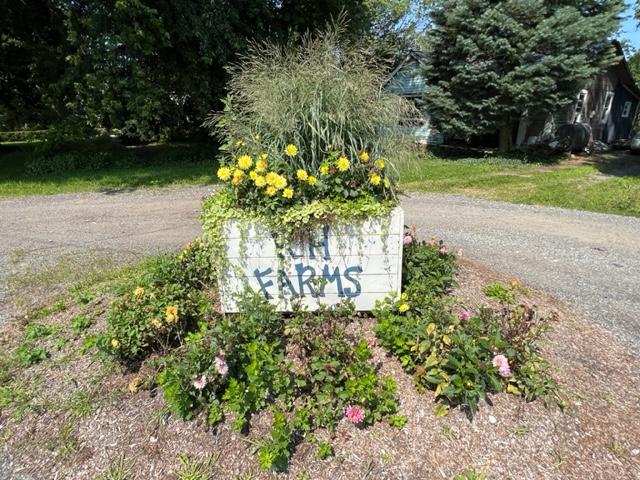
The entrance of RH Farms
RH Farm Farm Stand at 500 Route 46 West
This picturesque little farm stand has been in business since 2012 (I would have thought much longer) and offers an array of produce, gourmet products and flowers. I just thought it looked really nice. The prices are a little high though. Still quality does have a price tag to it.
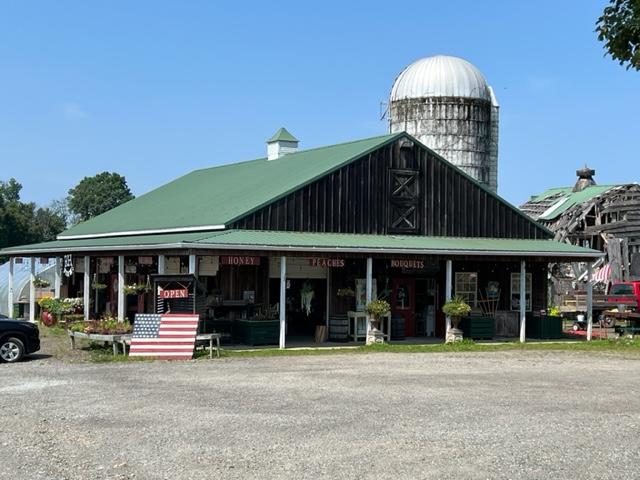
The entrance of RH Farm Stand
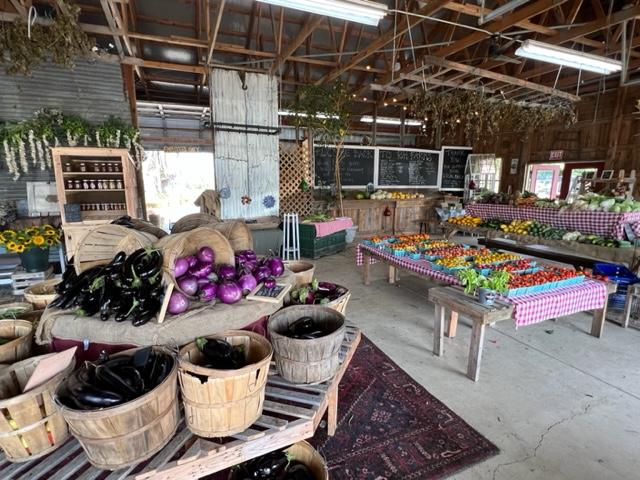
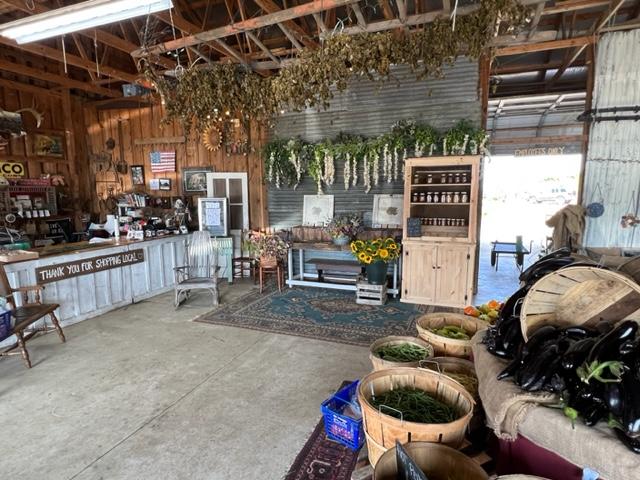
The inside of RH Farms Farm Stand
The inside of RH Farms
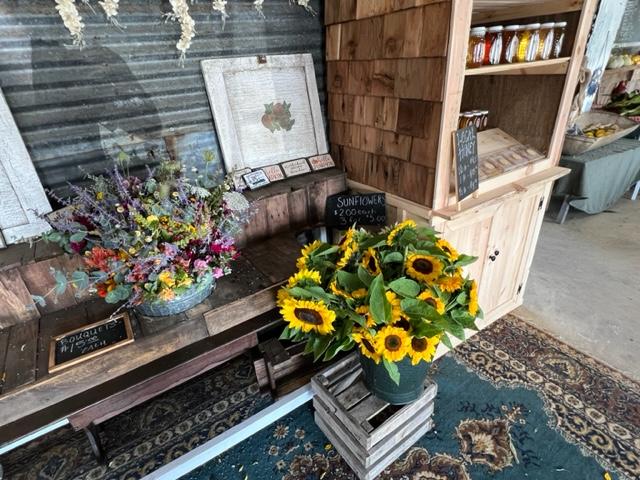
The beautiful flower arrangement at RH Farms
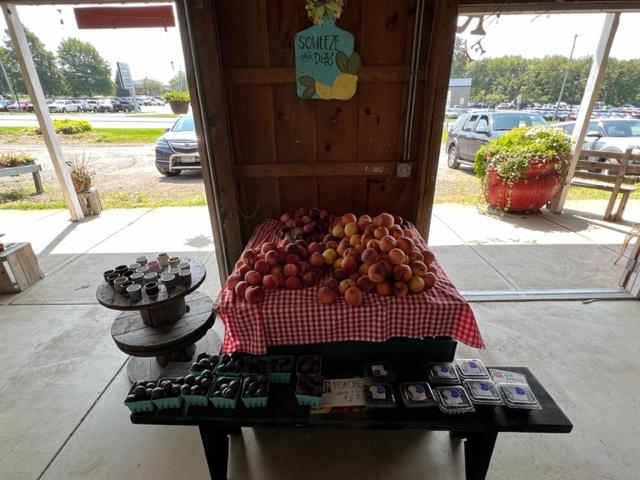
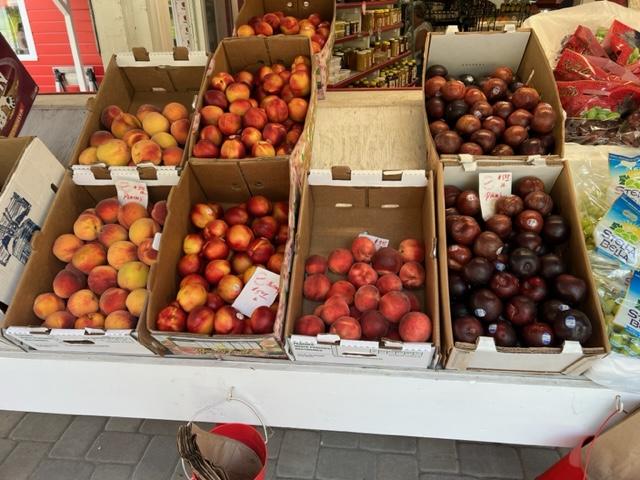
The peaches and produce at RH Farms
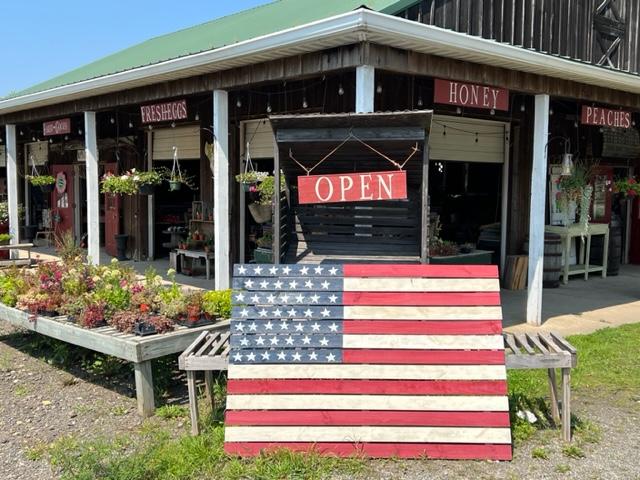
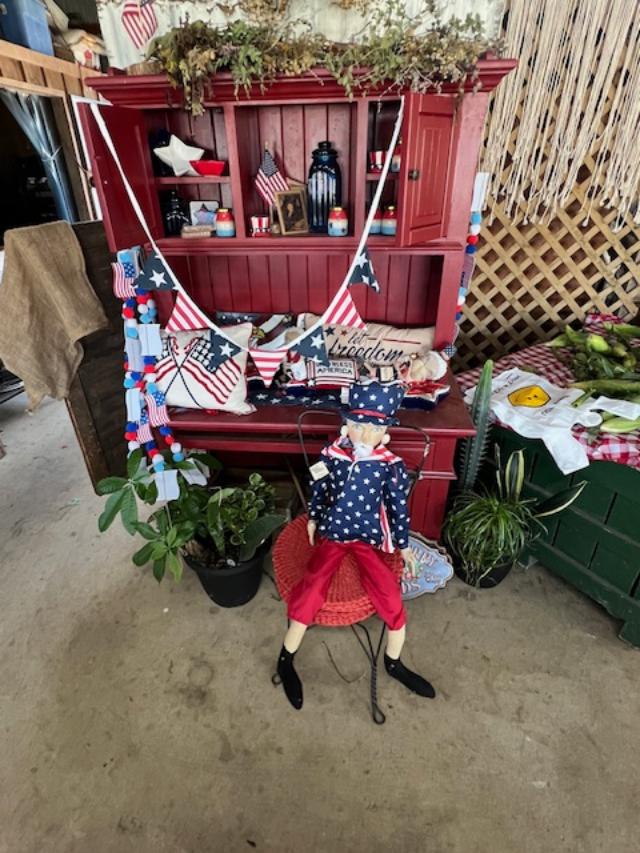
4th of July display in Summer of 2024
4th of July display in the Summer of 2024. Uncle Sam looks on
Christmas display in the Summer of 2024
The plant display in the Summer of 2024
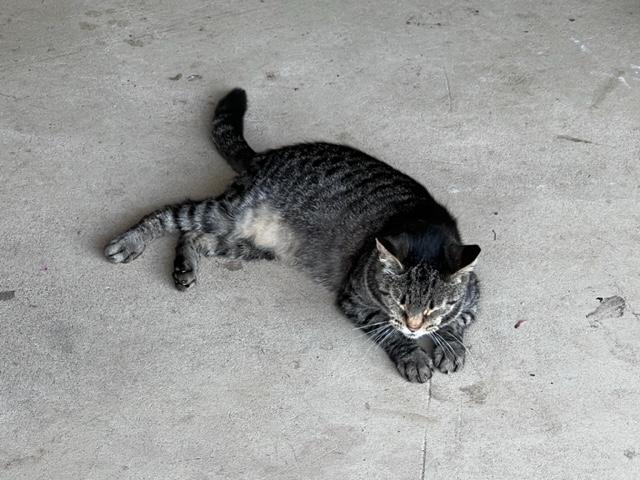
Their little cat welcome me with a couple of charming rubs to my legs.
History of the Farm:
(from the farm website)
RH Farms LLC is a local family-run Farm that has been producing delicious fresh products since 2012. We strive to make the most of everything the great outdoors has to offer. Our products are fresh from the field, so you can be sure you are buying the best quality produce. Come visit us with your family for a day of fun at RH Farms LLC.
We’re dedicated to providing a traditional farm experience to everyone in The Northern New Jersey area. Our crops, flowers and home furnishings bring visitors closer to nature while providing a memorable experience. We pride ourselves on our advanced farming methods so we can protect the environment while providing the community with only the freshest food. Contact us to learn more about our goals and missions.
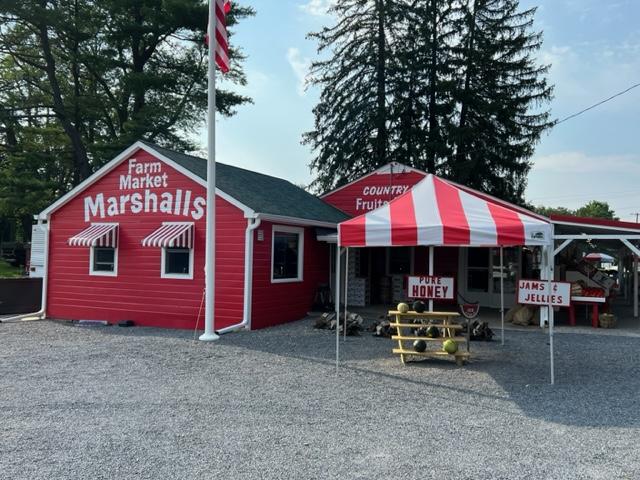
The front of the Marshall Farm Market at 114 US 46
Sometimes you will pass a farm stand and you see the standard pumpkins, peaches and apples outside. When you pass Marshall’s Farm Stand in Delaware, NJ, you see a whole farm experience with orchards of fruit, corn fields and a property that is decorated for the upcoming Halloween holidays.
The side of the farm stand
The other side of the farm stand stocked high with pumpkins
The festive pumpkin sat on the roof of the building
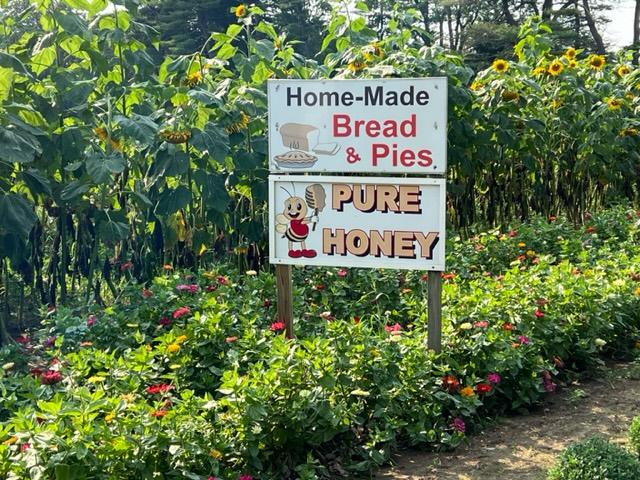
The whole front of the farm was stocked with all sorts of early Fall produce, honey, jams and jellies and delicious baked goods including pies, cakes and rolls and their specialty, their mini Apple Cider doughnuts.
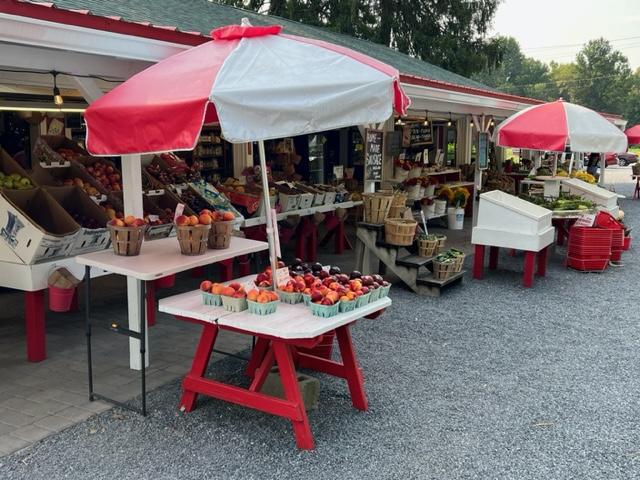
The fresh Jersey produce
The cream rolls and homemade pies, including apple, berry and Shoo Fly pies
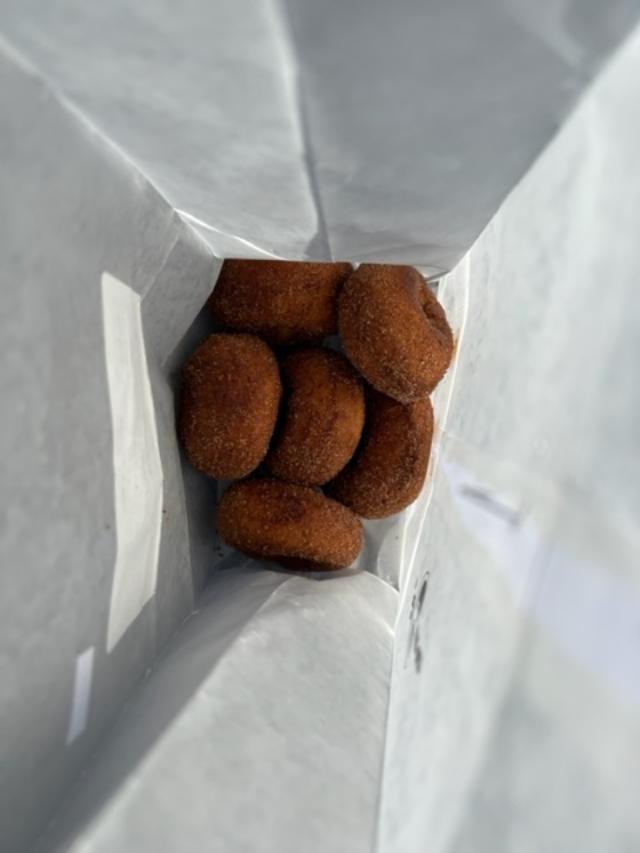
The best is their mini Apple Cider doughnut. One bag of these and you are content for the afternoon. I can barely get out of the parking lot with indulging in one or two of them before my drive down Route 46 to the Delaware Water Gap.
The farm stands addictive Apple Cider doughnuts
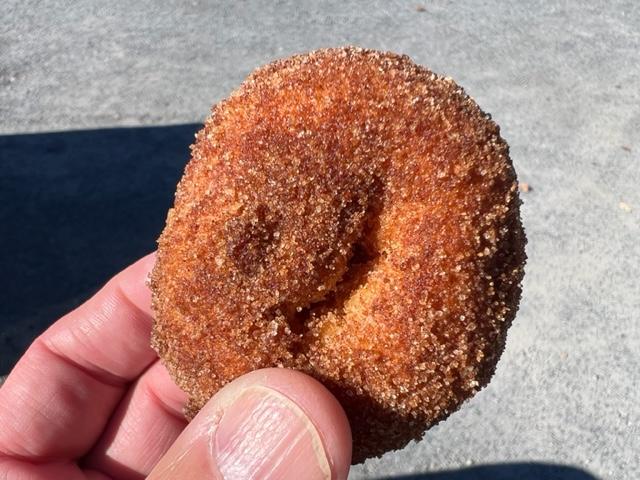
These sugary delights are so good!
What I also enjoy is their delicious apple cider. I found out though that they do not make it in house but a farm close by makes it both for their farm and Marshall’s. It is sweet and very refreshing and only comes in gallon containers.
I love walking through the stand, walking past the pumpkin, produce and the crafts display.
The pumpkin display in the parking lot
After I put my purchases in the car, I walked around the farm, looking at all the decorations they had for the upcoming Halloween holidays. The farm has pumpkin picking, corn mazes and a hayride where the $5.00 cost includes along with the hayride a cup of apple cider and a doughnut. I could handle that.
The sign for the weekend hayrides
The witch sign in the parking lot near the Corn Maze
The witch painting at the start of the corn mazes
Ghosts decorating the field
The Corn Maze was still tall and green and I am sure led all around the property. Each part of the front part of the farm was decorated for Halloween festivities which would happen the next weekend.
The cemetery in the back of the farm stand
A horrible ghoul
All the Halloween decorations at the start of the hayride
The Halloween decorations in the back of the building
The Halloween poems on the decorations
The Halloween decorations
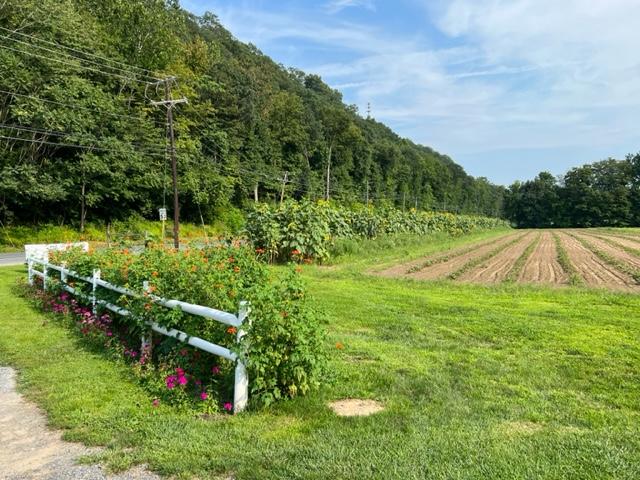
What I love about the farm in the farm in the Fall are all the beautiful colors and hues of the surrounding area.
Looking down Route 46 West/East
The sign on the other side of the fields
The decorations in the front part of the parking lot
Poems and riddles were on all the panels
There is a very warm welcome for Halloween
Don’t forget to visit the Delaware Water Gap just down the highway. The colors are amazing in the early Fall.
The sign for the park
The Delaware Water Gap in the Fall
The beautiful hues of the park
Visiting Marshall’s Farm Stand in the Spring:
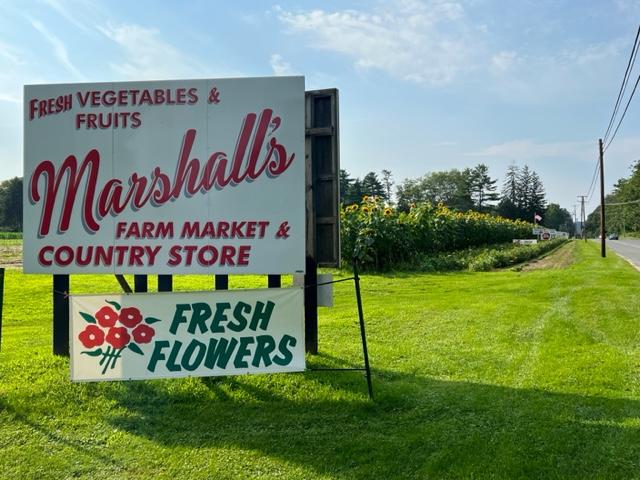
Marshall’s Farm Stand 114 Route 46 West in the Spring months
Marshall’s Farm Stand in the summer of 2023
Talk about a step back in time. It reminded me of places I used to go to as a kid that have since disappeared with suburban sprawl. I toured around the stands with shelves of fresh jellies and honey, sauces and salsa and arts and crafts. I found a nearly empty shelf of pies and doughnuts and not a sweet roll in site. The girl working the register told me that everything sells out so quickly and they had baked a second batch of everything.
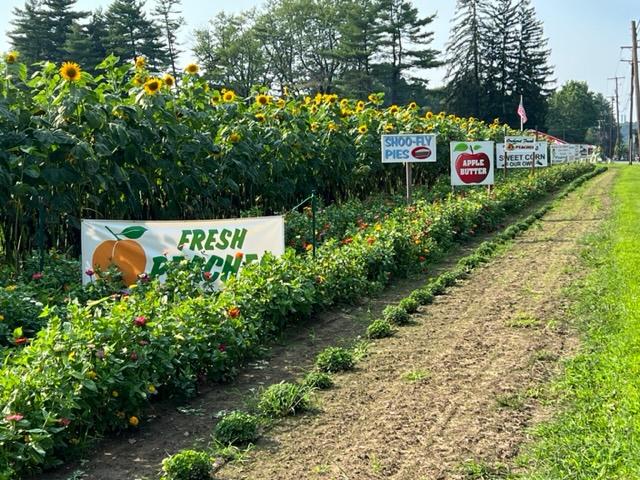
The signs leading to Marshall’s Farm Stand in the summer of 2023
There were three pies left and that was it of the baked good when I got there.
I did grab one of the last bags of cider doughnuts for the trip home and freshly made cider that you rarely see any more. Most of it is processed in big facilities now not at farms. Their doughnuts were outstanding ($4.75 for six). All but two got home with me as I munched on them on the trip through the Delaware Water Gap.
The Apple Cider doughnuts at Marshall’s Farm Market
The Apple Cider doughnuts are amazing here!
In 2021, I bought the same items again but after a big breakfast and then lunch, I only ate two of the doughnuts this time.
Marshall’s Farm Stand in the summer of 2023
The Fresh peaches and plums at Marshall’s Farm Stand.
I had a lively conversation about the upcoming election and trust me, this woman said a mouthful as most people were right before the election. In 2021, people were talking about the recent Governor’s election and Murphy seems in the doghouse with most of these residents. I said my good byes as quickly as possible. Politics is not something to talk about when buying food products.
Marshall’s Farm on a warm sunny afternoon.
At any time of the year, visiting Marshall’s Farm Stand is a treat!
The History of the Farm:
(from the Marshall Farm Market website)
Founded in 1920, by George Amer Marshall, Marshall’s Farm Market sells quality fruit, vegetables, and specialty foods. George W. Marshall ran the farm for many years and now the third generation of Marshall’s continues the tradition. Marianne Marshall Saponaro & her husband Nick Saponaro are on site daily to make sure customers have the finest products available.
A visit to Marshall’s Farm Market is like stepping back in time. Old time values of hard work, friendliness, service, and the finest quality are what you can expect. Many people return each year to purchase produce, gifts, specialty foods, outdoor furniture, meats, cheeses, pumpkins, and more.
Families visit Marshall’s Farm Market each Fall for the hay rides and the Halloween Hollow display. There is nothing better than a cup of apple cider on a cool Autumn day. All of the seasons are special on the farm. Stop in year round to see what new items have been added to the store.
The front of the Montville Township Museum at 6 Taylortown Road
The front sign
I stopped at the Morris Township Museum on a busy Sunday afternoon. The museum, housed in a building that once served the community as a school, post office and a government center.
Each of the cases holds all sorts of artifacts that reflects the towns developments and growth. The first case line is filled with fossils found in the area and small artifacts from the Lenape Indians.
The next case was filled with accessories from Victorian objects from jewelry to household items. Lining the walls are objects from the high school, personal family records for people to search on their loved one’s genealogy. The docents are hand from the Historical Society to answer any questions about the museum.
The History of the Building:
(from the museum website)
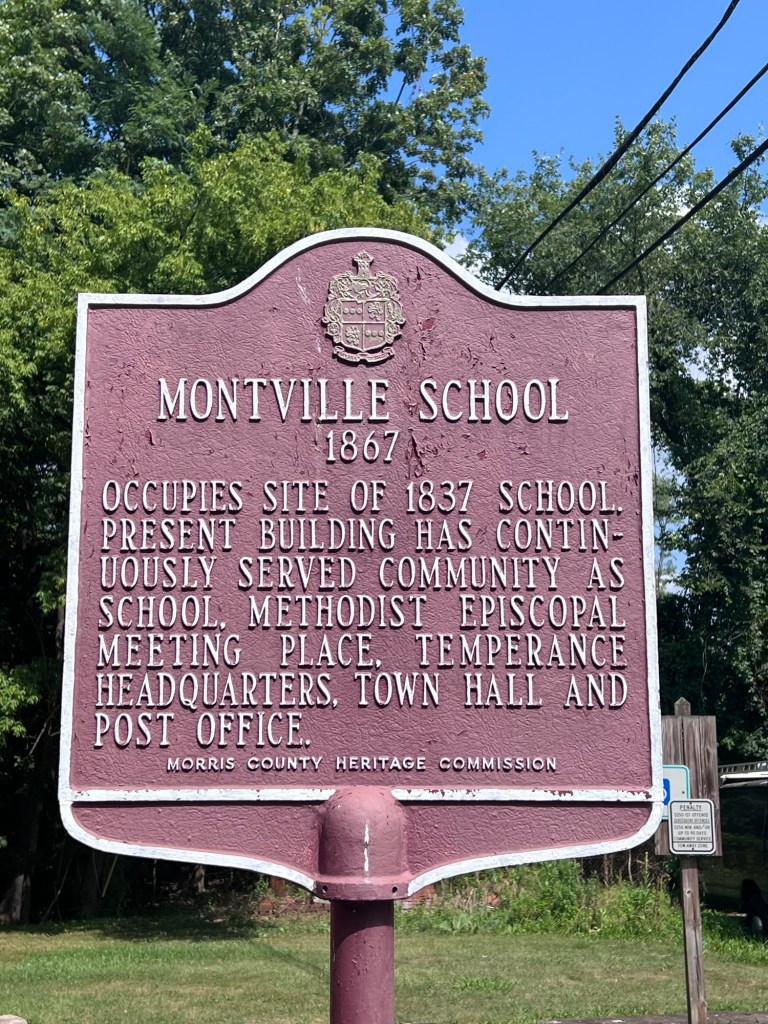
The building was originally “Old Schoolhouse #10”. It was built in 1867 and occupies the site of a former 1837 school. One of the early superintendents of Morris Canal, Mr. William Hickson , was its builder.
Located at 6 Taylortown Road just down the street from Route 202 is a red brick building with a sign out front proclaiming it the “Montville Township Historical Museum”. Within its walls are articles, pictures, tapes, and memories that will carry you back through the years to times long past.
The front of the museum
About the Building: The building was constructed following the Civil War, in the year 1867. It was one of the first one-room schools in the area. The land was donated by the eastern district superintendent of the then-thriving Morris Canal, one of the many waterways then in existence to help promote trade and travel in America. William Hixson gave the land to the town for public purposes, with the stipulation that it could be reclaimed if used for a purpose with which his family disagreed.
The historic sign of the school
Reconstruction: The building began serving Montville as a one-room school heated by a potbellied stove. It also served as an auxiliary to the local Methodist Church. It became the gathering place for the local temperance league in the 1890s, and was the scene of many temperance meetings in the town.
The gardens of the front the museum
The historical collection of the museum
The history of the property:
(from the Museum website)
Entrance: Today, as you enter the museum, you walk into an entrance foyer. Probably once used to hold the boots and coats of school children, it is now an entrance hallway. The door to the main room is straight ahead, and upon entering, you step into history.
Building Uses: Forty-four years after being erected, it changed from a school to the center of political activities as the town hall. It was the town hall until 1939, when it became the town’s post office. It served as such until 1961, when a post office was constructed close by (Taylortown Road and Route 202).
Making it a Museum: After the postmen moved out of the building, the township considered selling the property to a business concern but the original Hixson agreement was recalled, and the building remained unused – until the celebration of New Jersey’s 300th Anniversary.
At that time, a Tercentenary committee was founded in the Township to help celebrate the anniversary and the Committee decided to make the establishment of a museum its main project. Armed with donations from local residents, committee members renovated the building and reopened it in 1963 as a museum.
The inside of the museum
The part of the canal that exists around the museum
Around the corner from the museum is the corner from where the Morris Canal lock was located which was on display at the museum.$
The area around where the Morris Canal was located
I traveled further down the road to see what is left as the canal that has since grown over. Before railroads and cars, the canal system is where goods and services from the interior of the state to the cities such as New York City and Newark.
The sign marking the site of the canal and the lock system
The lock location
The grown over canal system
It is an interesting museum whose artifacts represent the three communities in Montville township.
The membership arrived at the NJ State Firemen’s Home to find the home decorated for the upcoming Halloween and Thanksgiving holidays. It seemed like yesterday we were up here for the Summer Barbecues.
The outside grounds of the NJ State Firemen’s Home
We had a lot to talk about at our October meeting with the Annual Convention behind us. There had been discussions on the Home and its expansion, renovations going on and the upcoming holiday season. I thought it was one of the best meetings we had in a long time.
The outside of the home decorated for the upcoming holiday season
Our fundraising has been coming along really well and we have exceeded our drive from last year. I think the word getting out about what we do and the Social media has been a huge help. We not only want to show our fellow fire companies where their money is being spent but how it is being spent.
We discussed also our upcoming reorganization breakfast at the Wyckoff Fire Department in November and the Annual Christmas party in December. Our Secretary, Tom Simpson discussed the gift this year and a planned lunch for both the staff and the membership. Everything is underway and planned for a great holiday season.
After the meeting was over, we joined the residents in the main meeting room where refreshments were being served and the entertainment had started.
Gigi entertained the residents on a stage decorated for the upcoming Halloween season
Gigi performed a series of Classic rock and Country music
Gigi performing the Patsy Kline hit “Crazy for you”
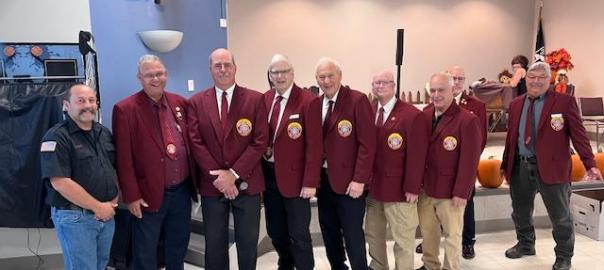
After ending her performance with ‘God Bless America’, we got up and introduced ourselves to the residents. We let everyone know about our upcoming Christmas party, which is always a huge hit with the residents and staff alike. We also we wished them well and for their years of service to the fire service, which they seemed touched by. Then we took our group picture.
The members of the Bergen County Firemen’s Home Association
We ended the program with one of the employees of the home, Eleanor, singing with Gigi a heartfelt song., “I Believe”.
What I thought was interesting was one of the guys told me she had once been a backup singer to Michael Jackson. I thought that was really gift that this woman shared her voice and love for these guys.
It really was a wonderful afternoon and I want to thank everyone who made it possible. This is our gift to our fellow firefighters.
The Doo Wop Preservation League Museum at 4500 Ocean Avenue.
I visited the Doo Wop Preservation League Museum when I was visiting Wildwood, NJ for the Firemen’s Convention. They were sponsoring the DJ on the stage behind the museum. It was easy to miss the museum with all the fire equipment around it and hundreds of firemen milling around.
The neon signs in front of the Doo Wop Museum.
The old neon hotel signs outside the museum
Once inside, this small museum is a treasure trove of history of the resort motels that once lined the beaches of Wildwood, Wildwood Crest and North Wildwood. As time rolls on, many of these old motels, hotels and restaurants are giving way to condos, newer homes and new chain hotels changing the landscape of Wildwood. It is bringing it into modern times with newer looks.
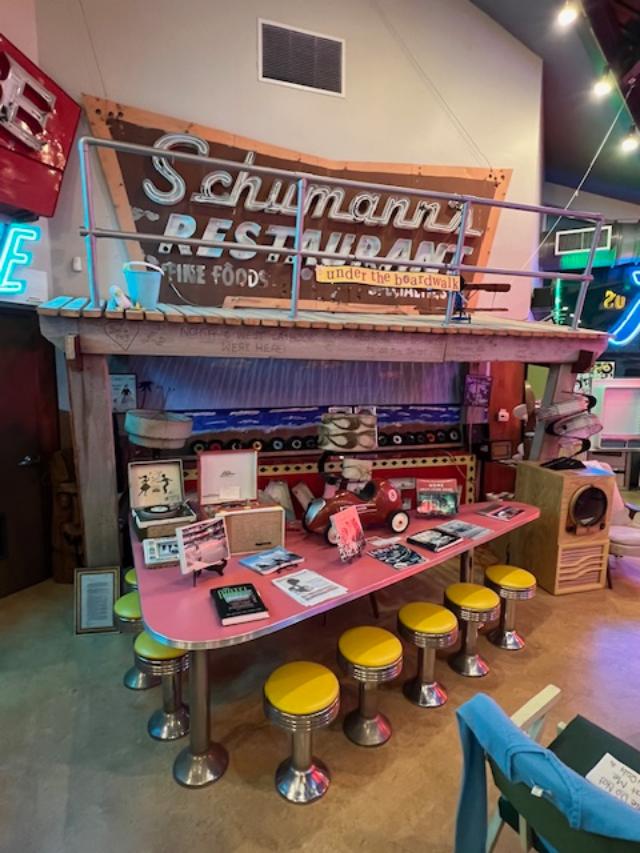
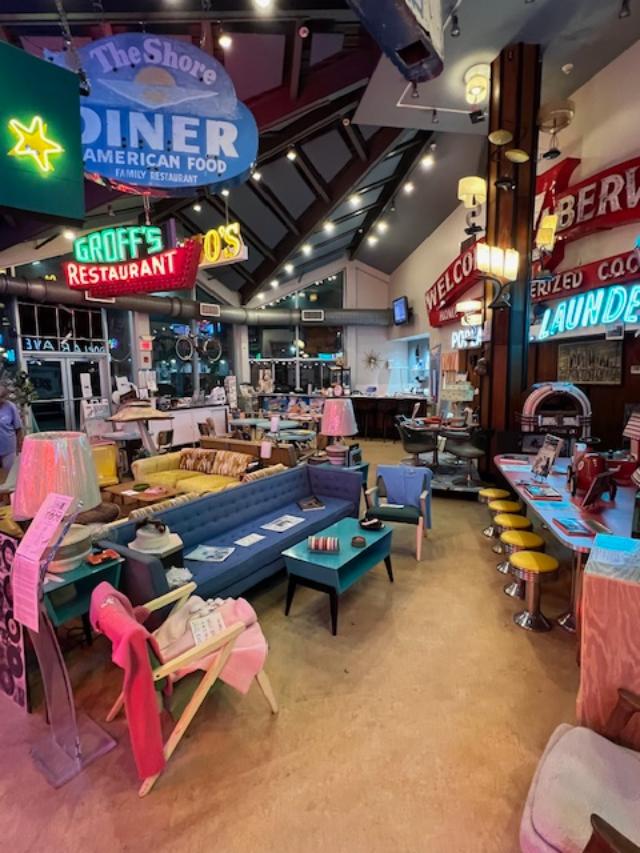
The restaurant section of the Doo Wop Museum
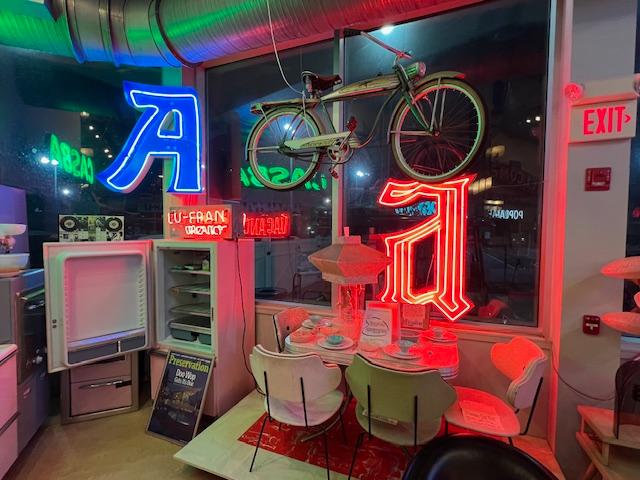
When many of these motels are torn down, the establishments donate old furnishes, decorative objects and signs from the outside to the museum. The outside of the museum is decorated with signs of businesses that are now closed, there neon lights still shining but for a different purpose. These somewhat gaudy and over-grandised signs and looks were of a time of great optimism and travel. Since the middle and working class families did not have the money to travel to these exotic places, something similar was created for them in the Wildwoods bringing that look to the Jersey shore.
The restaurant section of the Doo Wop Museum
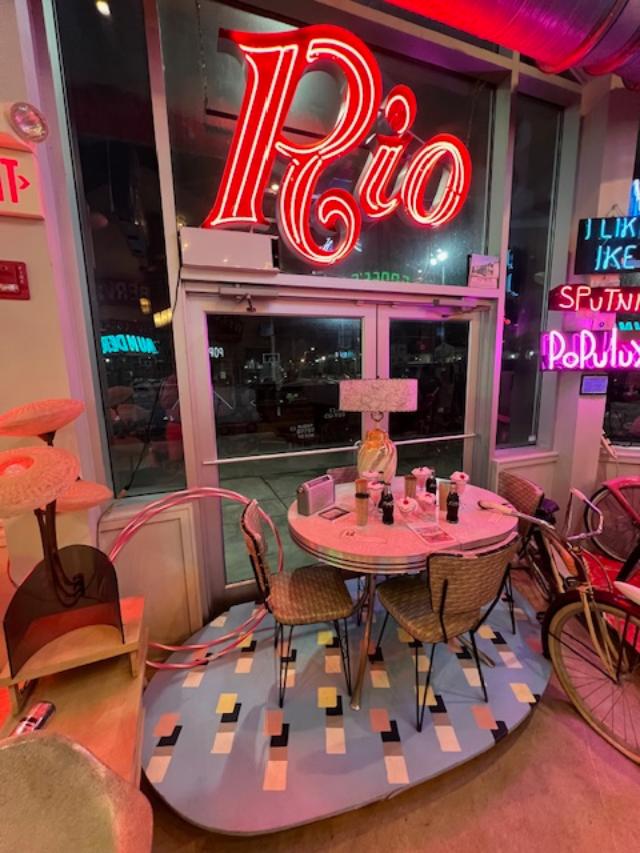
The neon room of the 1950’s
When talking to the curators , a couple that ran the museum said that the museum represents the change in décor used after WWII when they used the neon lights and steel from the war into the signs and lighting of the new resorts. It was a unique style of the late 1950’s and 60’s, when these materials were plentiful and motel owners were getting creative to bring in the rising middle class tourists that could not afford the trips to Hawaii and Miami Beach. These owners brought these themes to Wildwood with a creative twist. Check out the signing and furniture that lines the walls and dining set ups of the museum.
The old neon signs of the hotels in Wildwood, NJ.
The museum is small and takes only about an hour to walk through. Each of the vignettes are designed as its own room with furnishings from old hotels and motels like tables, chairs, lamps and ashtrays in one corner, in another are stools, a jukebox and menus from a 50’s or 60’s style restaurant or items used at the time like bicycles or scooters.
The interesting preservation by the museum shows all over
The History of the Doo Wop Museum:
The Doo Wop Preservation League was founded in 1997 as a 501C3 to preserve the 1950’s and 60’s architectural styles of the Wildwood’s. Doo Wop style is a combination of Space Age dreams of the late 60’s and the exotic seaside tropics of recently opened South Seas Islands like Hawaii which became out 50th State in 1959. The Polynesian look was very ‘in’ at this time as most people could not afford to go but wanted to replicated for them.
The signs of the museum beacon visitors.
The museum is housed in the 1960’s ‘Space Age’ restaurant “The Surfside” that was saved from the wrecking ball and moved to this spot right across the Convention Center and the Boardwalk. On Tuesdays and Thursdays when in season (i.e. Warmer Months), there are bus tours offered by the museum. The museum’s goal is catalogue the remaining businesses in town that still keep their look of the era (Museum website and The Wildwooder Newspaper).
Don’t miss the museum tours:
The best part is that the museum is free (donation suggested) and you can take your time for a self-guided tour of the museum.
While I was searching for the Cape May Maritime Museum, I made a detour into a parking lot and came across the Garrett Family Preserve
The sign that welcomes you to the park
Visiting the Preserve:
(from the Cape May Visitor website)
The Nature Conservancy protects the 180-acre Garrett Family Preserve situated between Seashore Road and Cape Island Creek, offering a tranquil setting for walking, picnics, painting, biking, and observing nature.
The preserve offers six trails ranging from 0.2-0.5 miles in length, and a two-mile perimeter loop along the forested edge–four miles in total. Explore year-round on foot or by bicycle. Sights vary by season, with bird migration peaking in the spring and fall, and the wildflower field blooming from May through July. Beginning in late August into the fall, Monarch butterflies stop here to feed before their journey south.
Preserve amenities include a mobile bird blind, welcome kiosk, shaded pavilion with picnic tables, benches and picnic tables along the trails, and three adjustable art easels. From November 1st to March 1st, leashed dogs are welcome. Because this is a preserve, the Nature Conservancy does not provide trash receptacles. Be sure to take anything you’ve brought with you.
The size of the preserve
The history of the Garrett Family
History of the Preserve:
(From the Nature Conservatory website)
Originally slated for development, TNC acquired the property in 2000, as the preserve offered an unusual opportunity to manage a significant piece of land for migratory songbirds, whose stopover habitat, especially at the southern tip of the peninsula, has been all but wiped out.
In 2013, the generosity of the Garrett family enabled TNC to further protect Cape Island Creek for future generations by acquiring crucial land, improving and stewarding habitat, performing coastal research and installing enhanced visitor amenities.
After reading some of the history of the preserve, I decided to take a walk down the paths. I ended up walking down several paths that took me through woods and many natural gardens. I could see by how dry everything was how the lack of rain was affecting the preserve.
The pathways leading to different parts of the preserve
Following the pathways through the preserve
My first stop was the picnic area and rest stop
The Insect Hotel
The Insect Hotel
The description of the insect hotel
I thought this was an interesting concept of creating a place for insects to have a breather. It is a place of reproduction and in helping pollinate the preserve.
The fields of plants and wildflowers that make up the preserve
The flowering plants and wildflowers in the fields
Each of the paths took me through different parts of the preserve that were wooded or with meadows or an array of wildflowers that attracted birds, butterflies and bees.
The batches of wildflowers in the meadow
The Salt Marsh part of the Preserve was filled with more wildflowers that had bees and butterflies swarming them.
The Salt Marsh Habitat
The sign for the Salt Marsh Habitat
The the pathways though the meadows
The fields of flowers and plants in the marsh area
Th e next section of the preserve I visited was the Wildflower Meadows
The Wildflower Meadows in the late summer
The Wildflower Meadows paths
As I left this part of the preserve, I took many paths around the park lands. There are all sorts of fields of flowers and woods to shade the way during touring the preserve.
Going on the different trails throughout the preserve
I walked down the paths to the Bird Habitat area
The golden rod flowers attract all sorts of bees and butterflies
Flowering Honey Suckle
Beautiful flowering plants in the woods area
The colorful paths of flowers that lined the Bird Sanctuary
This all led to the end of the trails and a wrap up of how the pollinators work. How the plants, insects and birds play a role in nature.
The last thing I saw at the preserve was this butterfly sculpture by the parking lot
The history of the Garrett family
The park changes its complexity with each season. What I noticed at the end of the summer with no rain is how dry the fields were and the trees were changing colors early because the lack of moisture.
It will be interesting to see the preserve in the Spring and early Summer in the future. It was a nice walk through the preserve.
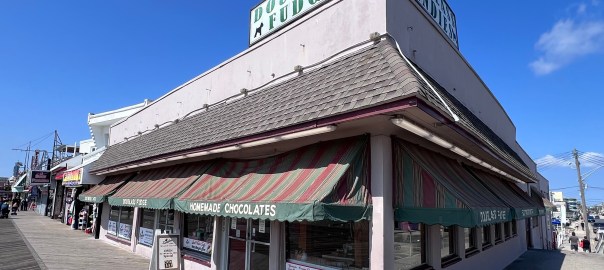
I visit Douglass Candies on the Boardwalk in Wildwood, NJ every time I am visiting for the NJ State Firemen’s Convention. The selection of homemade candies is like talking a walk through Mr. Wonka’s factory.
The inside of this delicious fudge shop
When you walk through the front do , you can see the workers making and cutting fudge. You can see how fresh their candy is and how it is packaged right in front of you.
The one product I really like at the store is their candy bars especially their milk chocolate. They are a bit pricy but a once in a while treat is a good thing. You can always taste the richness in freshly made chocolate and their chocolate bars are the best. Their taffy was delicious too when they were sampling it.
The delicious taffy and assorted candies
The decorated Candy Apples
Each counter has a different type of candy and even in early September, the store was being decorated for Halloween. This smiling witch greeted customers at the door.
The store decorated for Halloween
The store on a sunny day on the Boardwalk
This institution on the Boardwalk is a summer tradition for me and for generations of beach goers. The beauty and old fashioned feel of the store harks back to a time when quality and care still meant something and excellent customer service meant a warm welcome and a smile. Douglass Candies has both.
The History of the Company:
(from the company website)
Douglass Candies, Inc. is a fourth generation candy company founded in 1919. We are the oldest family owned business in Wildwood! Since our origin, we have been making the highest quality cream fudge, gourmet chocolates, and REAL salt water taffy giving us our slogan “We Make The Candy We Sell”. You might recognize us by our signature plaid box and trademark scotty dog. The plaid represents our Scottish/Irish heritage while the scotty dog was simply used because our founder, Charles Douglass, adored his scotty dogs. We pride ourselves on customer service, quality control, family, and tradition.
Our founder, Charles Douglass, was an exemplary citizen of the Wildwoods. He was a prominent boardwalk business man, hotel operator, chairman of the Wildwood outing committee, board member of the chamber of commerce, executive committee member of the New Jersey State Hotel Association, and president of the Wildwood Golf Club. Charles founded Douglass Candies in 1919 and opened up his first location at Wildwood Ave and the Boardwalk where we continue to do business nearly 100 years later!
Charles’ candy career began in Philadelphia where he owned a store in Rittenhouse Square. In 1905, Charles and wife Flora moved to Wildwood. They opened the Douglass Hotel in 1913 on Atlantic and Pine Avenues, followed by a small candy concession stand on Cedar Ave in 1917. After some success with the candy store, Charles moved his operation to the boardwalk at Wildwood Ave. The building was constructed by recycling an army barracks from Cape May, NJ. During his reign as President of Douglass Candies from 1919-1941, the business gained major popularity and success. It was doing so well, in 1922 Charles built a pavilion across from his business for customers to get out of the sun/rain and enjoy a nice place to relax. Recipes and techniques created over the course of these years are the basis of our recipes that we still use today.
Charles passed away peacefully in his home at the age of 77. Following his death, Charles’ brother Joseph took over the business. Joseph Douglass also began his business career in Philadelphia. He lived in the famous Lemon Hill Mansion in Fairmont Park where he ran a candy/ice cream shop. After seeing the success of his brother, he moved his family to Wildwood in 1919. Upon arriving, he opened a boarding house and restaurant on Cedar Ave. He later opened the Douglass Cafeteria on Oak and Atlantic Ave. The cafeteria specialized in homemade ice cream. Joseph also owned the Bellevue Hotel and Restaurant in Cape May Court House. Joseph took over Douglass Candies in 1941 and owned it for less than a year before passing in 1942.
Upon Joseph’s death, his beloved wife Minerva took over the business along with their three children; Charles, Harvey, and June. Minerva and June handled administration and the store front while Harvey and Charles took care of the production side of the company. Minerva and her children aided in the continued success to Douglass Candies. They even brought in a famous German chocolatier, Frank Steiner, to help perfect our techniques and recipes. Minerva died in 1969, followed by Charles in 1972. June then bought out Harvey, leaving her the sole owner of Douglass Candies. Harvey passed in 1983. His children, Joe and Charlie, went on to pursue careers in candy on the west coast.
In the late 1970’s, as the President of Douglass Candies, June took over all administration work and oversaw all production. Her only child, Barbara aka “Babs”, handled the storefront and helped Douglass expand during her time with the business. June worked into her late 70’s and passed away in her home in Wildwood Crest is 2003. Barbara ran the entire business herself from 2000-2013, at which time she passed it on to her boys, James and Jason. Barbara passed away in 2014.
James and Jason have continued the family tradition as fourth generation owners and have given the business new life. They are responsible for the addition of new product lines as well as expansion into Stone Harbor. They were incredibly proud to celebrate Douglass’ 100th year in business in 2019 and look forward to continuing the Douglass tradition for years to come!
The front of Centro Pizzeria & Restaurant at 1469 Second Avenue
The pizza selection
Sometimes you come across a restaurant that you must have walked by a million times but never stopped in, the was Centro Pizza. Until one night when I was starved and it was the only place open. I saw the selection of pizzas in the window and had to stop. I am glad I did. The food here is excellent and very reasonable.
The pizza selection
My dinner that evening, a large cheese and pepperoni pizza with the Coke.
My dinner my first evening at Centro Pizzeria
The pizza here is amazing. The sauce has so much flavor and they load the pepperoni on the slices. You got a real good mouthful on these oversized slices.
The Cheese pizza
The Pepperoni pizza is loaded with pepperoni
What a great dinner
The next time are here, I was in the mood for one of their rolls and ordered the Pepperoni Roll. These are also oversized and they pack the filling inside.
My dinner that night
I have to tell you that for $8.00, it was like a mini pizza. The Pepperoni Roll was loaded with spicy pepperoni and mozzarella and baked to perfection.
The Pepperoni Roll with their homemade red sauce
The red sauce they serve on the side is perfectly spiced and has a rich flavor.
The roll was loaded with thin slices of pepperoni
It was delicious and I enjoyed my late dinner
The inside of the restaurant with its nice selection of sodas and drinks


















 mywalkinmanhattan