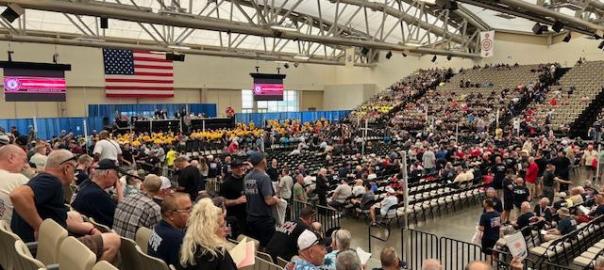
When the second week is September comes and the Labor Day weekend is behind us, it is time for the NJ State Firemen’s Convention.
This was going to be a particularly long weekend for me as I was going to be extending my trip to include a series of visits to historical sites in Southern New Jersey to complete a blog on historical New Jersey. Most of these little sites are NEVER open.
My street was being ripped up with replacing the morning I left and with an 8:00am class, I decided to leave early for class and then leave for my mother’s right after my 11:00am class was over.
I had never planned a trip like D-Day before. The laundry had to be done, the house cleaned, the bills paid, the dishwasher run and I had a series of repair work being done around the house. Plus knowing I had to be out of the house early meant that I had to wake up at 4:00am to get out of the house then to work then to drive the four hour trip to my mother’s.
I was in the middle of perfecting my students resumes, which is always the toughest project in my class. It is a challenge every semester but worth it if it will help them get a job. So I had been extremely busy at work.
After my last class was over, I decided to get on the road and head down to Rehoboth Beach. As I passed my house on my way to the New Jersey Turnpike, I saw the workers completely ripping apart my street and thank God, I had left early.
It was a really nice day as I traveled to Delaware. I had planned on visiting a new museums in Bethany Beach before my ferry ride to Cape May the next day, so the trip would be more of a working business trip and vacation.
Because of my schedule with work and the holidays, I take my mother to dinner for her birthday on Convention weekend. It’s less rushed and we have a good time.
I got down the Rehoboth Beach about an hour before dinner and was able to relax a bit. My mother chose the restaurant, Harvest Tide in Lewes, DE for dinner, which I had been before and enjoyed.
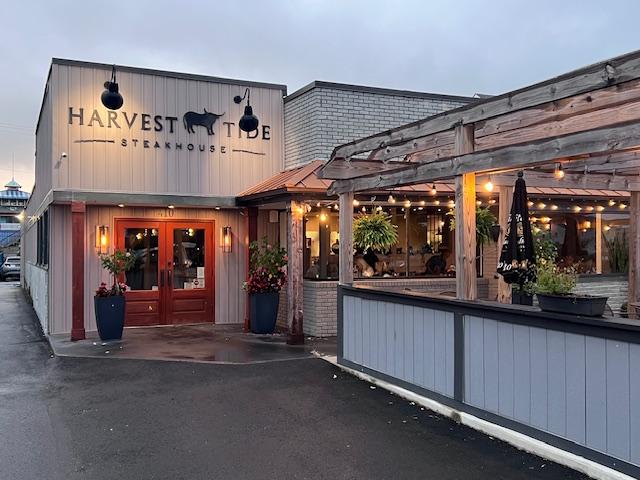
The Harvest Tide at 410 East Savannah Road in Lewes, DE
https://harvesttidebethany.com/
My review on TripAdvisor:

The Dining room at the Harvest
The food was excellent and we all enjoyed our dinner. I started with a delicious Caesar Salad with fresh greens and a homemade dressing.
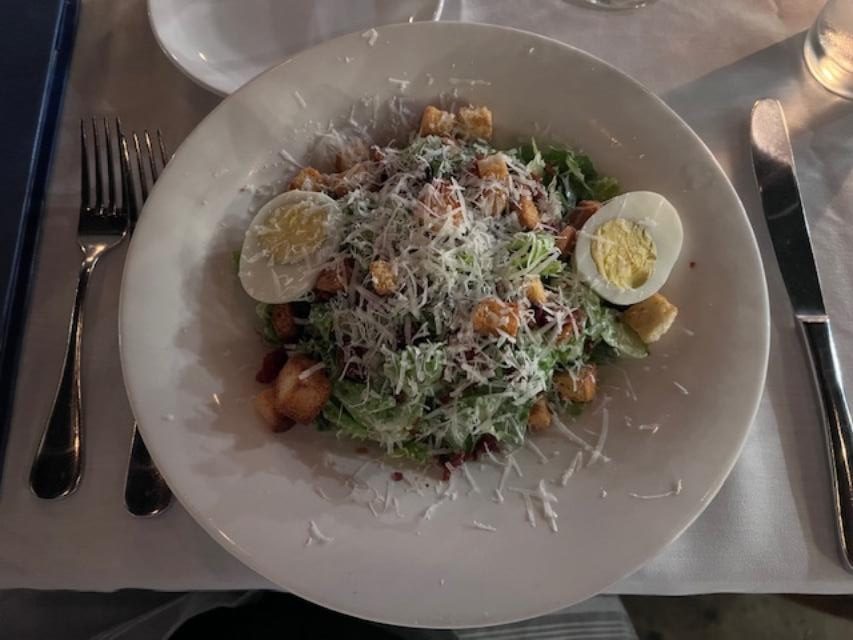
The Caesar Salad at the Harvest Tide
For my main meal, I had the Lobster Pasta, which was excellent. The pasta was perfectly cooked and was loaded with pieces of sweet lobster in a light cream sauce.

The Lobster Pasta
For dessert, I treated myself to a giant piece of their Ten Layer Cake. I forgot how big these slices were and I just about finished it.

The Ten Layer Cake at the Harvest Tide is a treat
I was a very laid back evening and we had a nice time catching up. It was going to be a quick trip this time and I had to be in Bethany Beach at 11:00am the next morning so I had to be out the door early. I slept like the dead that night.
The next day over breakfast, my mother and I spent the morning catching up and laughing at past holidays. It was a really nice overnight stay and it was fun to have that time together.
I left after breakfast and headed to my appointment at the Dinker-Irvin House Museum in Bethany Beach. Who knew the whole morning would be spent visiting cultural sites in Bethany Beach.

The Dinker-Irvin House Museum in Bethany Beach

The front of the Dinker-Irvin House at 318 Garfield Parkway
https://www.townofbethanybeach.com/110/Town-Museum
https://en.wikipedia.org/wiki/Dinker-Irvin_House
My review on TripAdvisor:
My review on VisitingaMuseum.com:
https://visitingamuseum.com/tag/dinker-irvin-house-museum/
I toured the house and the grounds with members of the Board and they gave me the full history of the house and its place in Bethany Beach. It really is an excellent little museum representing town history.

The history of the shore

The shore kitchen with some of the original items

The front gallery of antiques
The museum was really unique and the Historical Society does a nice job displaying and interpreting all them.
After my tour was over, I had plenty of time before taking the ferry over to Cape May, so I visited both Bethany Beach History Museum and the Bethany Beach Nature Center. I did not know that either of them even existed.

The Bethany Beach History Museum
https://www.townofbethanybeach.com/110/Town-Museum
My review on TripAdvisor:
My review on VisitingaMuseum.com:
The museum is located in the main floor of Bethany Beach City Hall. It has some interesting displays on the towns’s history. There are also displays on artifacts from different aspects of the town’s past.

The displays of the museum and shelves of artifacts

The displays of town artifacts on display

The main exhibition was the history of their Life Guard Squad
After I finished up in the two museum’s, I walked a bit of their downtown and saw the statue of Little Owl at the entrance to downtown.

The statue of Little Owl at the beginning of the Bethany Beach downtown
After that tour, I visited the Bethany Beach Nature Center. The center consisted of the main building which was a historical home and then the gardens and grounds.

The Bethany Beach Nature Center
https://www.townofbethanybeach.com/397/Nature-Center
https://visitsoutherndelaware.com/listing/bethany-beach-nature-center
My review on TripAdvisor:
My review on VisitingaMuseum.com:

The inside of the Nature Center

The turtle displays inside the main room
The inside of the Nature Center there were all sorts of displays on turtles and fish and tables for students for games and drawings. The real draw are the gardens and nature trails in the back of the building.

The entrance to the Baldwin Trails

The entrance to the gardens

The gardens in full bloom
The back trails led to the marshes and to the wooded areas. The views were breathtaking.

The back pathways to the marshes

Looking over the watering hole
To end my tour of the Nature Center, I toured the front gardens of the building which had a Butterfly Rain Garden.

Part of the Rain Gardens
I was touring the garden when a Monarch Butterfly flew in and landed on a flower. It would not open up and I wanted to take a picture of it so I yelled at him to open his wings so I could take a picture. He did!

The butterfly landing in the garden. I yelled at him to open his wings for a picture.

The butterfly must have heard me and opened up his beautiful wings
After I took the picture, I showed it to him and he flew away. Everyone is a critic! Still, it was a beautiful butterfly.
I really had a nice time not just visiting the Nature Center, but the other two museum’s as well. I could not believe all these hidden gems in such a small town of Bethany Beach. They really have a nice selection of museums and cultural sites for such a small town.
Before I headed to the ferry to Cape May, I stopped in Ocean View to visit their Historical Village. This tiny historical street of had many historical buildings but the complex was closed so I just took some pictures around the neighborhood, stopped at an antique store across the street and then headed to the ferry.

The sign for Historic Village in Ocean View at 40 West Avenue in Oceanview, NJ
https://www.oceanviewde.gov/news/post/2469/
My review on TripAdvisor:

The historic Village of Ocean View

The historic buildings on the edge of the property

Ocean View Park in the summer of 2025
What I love about the Cape May-Lewis Ferry on a nice day is the ferry complex on the Lewis side has some nice restaurants that are partially outdoors and on a calm day, the views are amazing. Because the waters were so calm, we got over to Cape May fifteen minutes early and that meant I could check into my room by 5:00pm and relax.

Checking out the snack bar on the ferry on the trip to Cape May
I got to the Chalfonte Hotel in Cape May in a half hour and checked in. The hotel was preparing for that night’s entertainment which was ‘The Ramble’, a local group who performs there every Thursday night during the warmer months

The Chalfonte Hotel at 301 Howard Street
My review on TripAdvisor:
My room for the next four nights was a tiny room on the second floor with a shared bathroom, perfect for someone who is never in his room.

Parts of the Chalfonte Hotel look like the ‘Overlook Hotel’ in ‘The Shining’

My home away from home for the next four days
I rolled into bed and had a long nap before ‘The Ramble’ started. When I woke up later, the crowds had swelled all over the front lawn and street and they closed the side streets off as well. I never saw crowds like this before for the concert.

Joining the rest of the crowd for the weekly ‘Ramble’ on the Chalfonte Hotel porch
Part of ‘The Ramble’ concert that evening

The Ramble on the porch of the Chalfonte Hotel
The concert on the porch
After the Ramble was over, I walked into downtown Cape May for dinner. This particular weekend was all about the pictures. I had to go back in time and retake pictures of all the meals and places I had been to on previous trips to update older blogs. So on top on my duties for the fire service, I would be working to update all my older blogs.
So all my meals and museum visits my this a ‘working vacation’ on top of visiting new places to add to the treasure trove of great hidden spots to visit.
I would be having several meals at the Ugly Mug and Uncle Bill’s in Cape May and the Ravioli House in Wildwood. I even stayed an extra day in Cape May to complete my pictures with breakfast at the Magnolia Room dining on the porch.
My return meal at the Ugly Mug at 426 Washington Street in the Washington Mall was a favorite of mine and a specialty of their’s, the Cheesesteak.

The Ugly Mug at 426 Washington Street
https://www.instagram.com/uglymugcm/?hl=en
https://www.facebook.com/uglymugcm/
My review on TripAdvisor:
I sat at the bar watching the Mets and Philly fans duke it out watching the playoff game. Even though we are all from New Jersey, you see the difference once you pass Long Beach Island. South Jersey is all about Philly not New York.

The inside of the Ugly Mug’s bar area
I just ordered my Cheesesteak and sat back and relaxed and enjoyed my meal and my time off. It was fun watching the exchange from people from North and South Jersey and see how the alliances change at the border of Hunterdon County.

Now this is a Cheesesteak!

You can not get this in North Jersey
It was a nice evening talking with the bartender and watching a game I couldn’t care less about. After dinner was over, I worked off dinner by walking around the Washington Mall and walking by the beach. The weather the whole weekend was amazing and we had sunny days everyday.

The beaches of Cape May are amazing at night
After a good night’s rest, it was off to the Convention meetings. Our meetings don’t start until 10:00am, so there is enough time for a good breakfast. That meant two mornings at Uncle Bill’s.

Uncle Bill’s Pancake House in Cape May at 261 Beach Avenue
https://www.unclebillspancakehouse.com/cape-may
https://www.facebook.com/unclebillspancakehousecm/
My review on TripAdvisor:
My review on DiningonaShoeStringinNYC@Wordpress.com:
I love coming to Uncle Bill’s. The service is always so friendly and the food wonderful. This weekend was about the picture and I was eating the meals of the past that I needed photos of for past blogs so that meant ordering the French Toast special (I so hate my job as a travel blogger).

The French Toast special at Uncle Bill’s

The French Toast and Sausage here should not be missed
After a good breakfast and walk back to the hotel, I headed to Wildwood for the first day of meetings. It was a spectacular sunny day and since I got there so early, it gave me the opportunity to walk on the boardwalk and get some ocean air before our first meeting.

Walking on the Wildwood Boardwalk before the morning meetings
My review on TripAdvisor:

The Wildwood Boardwalk would not look like this for long
The first day of meetings for the NJ Jersey Firemen’s Convention is full of pump and circumstance, but with 9/11 being the first day of the Convention, we respected our Brothers who gave their lives that terrible day. There was a lot of emotion in the Convention Hall as a lot of these members are of the age where a lot of them volunteered in New York to assist and still have lingering health issues.
While it is a somber time for firefighters when we remember the 24th Anniversary of 9/11 we still have to carry on the traditions of the fire service. Time has a way of marching on and while we remember our fellow brothers with dignity and respect, we can only honor them by continuing our craft and building on the things that made them successful at their jobs. So delegates from all over the State of New Jersey met from September 11th to the 13th for the annual NJ State Firefighters.

Getting to the Wildwood Convention Hall early
I am starting to see some of the same faces over and over again as I have been attending these meetings. What I am beginning to notice is that the crowd is getting older and thinning out. The younger firefighters don’t seem to be taking over from their predecessors. The average age of the people in that room had to be at least 45 years old.
Still we carry on with our mission of making the first service the best it can be. This means a lot is going on the State organization. We started the morning out with the Bergen County Pipe & Drum performing with the Wildwood Fire Department’s Color Guard.

We stand for the performance
The performance as they entered the Convention Center
Then the welcome from the Executive Team to the Convention started. If you ever want to see a prouder group of Americans it is fire fighters. When do the Pledge of Alliance, you never saw a whole convention center do it in unison. That is where I am very proud of being a firefighter. Is the dedication these men and women give to their communities that mantle people do not appreciate.
After the initial introductions and welcome, the Pipe & Drum and the Color Guard left. It’s pomp and circumstance when they leave as well.
The closing ballad before they left the Convention Center
It was an afternoon of business talking on current issues of the fire service and items that we were dealing with the state. There were many bills on the Governor’s desk to be signed and line items we were fighting for our membership. There would be a lot of State and local issues to vote on the next day.
After the first day of meetings were over withI had to travel around Cape May County to visit various cultural sites and revisit farms for my picture taking mission. The first place I visited was the Sam Azeez Museum in Woodbine, NJ.

Touring the fire equipment displays at the Convention after the first meeting
During my four day stay in Cape May, I had appointments to see many historical sites that are normally never open or open at specific times where I can never visit. So I either made appointments to meet people or set my schedule to meet with the precious hours these places were open. I planned this trip like D-Day. You had to hit each spot at a specific time or else the window closed.

The Sam Azeez Museum of Woodbine Heritage at 360 Washington Avenue in Woodbine, NJ
My review on TripAdvisor:
My review on VisitingaMuseum.com:
https://visitingamuseum.com/tag/exploring-woodbine-nj/

The inside galleries
The Sam Azeez Museum is a look at the Jewish community that was established well heeled Jewish businessman that established for new immigrants. They built a successful community assimilated the population to become Americans.

The history of the Jewish community in Woodbine, NJ
The museum was an interesting look at the successes and failures of the community but the museum shows a community that keeps changing. I thought this was fascinating that a community like this once existed.

There is a synagogue on the second floor

The Americanization of children through baseball
I thought this was a fascinating museum because the museum itself does not tell this story in its website. It is such an interesting look at a community and it asks the question ‘how do you become an American?’ It is a rich history that most of New Jersey does not know.

A self sustaining community

The new Americans playing America’s past time
After I returned from my tour of the museum from Woodbine, I relaxed and walked along the beach near the hotel. We really lucked out with the weather that weekend and it was sunny and clear. It was starting to cool down a bit but it was still nice to be outside at night.
Meals on this weekend trip were all about the pictures so I headed to The Ravioli House at 102 East Bennett Avenue in Downtown Wildwood, NJ for dinner. This is my favorite place during the Convention to eat and is one of my popular sites on my blog, LittleShoponMainStreet@Wordpress.com.
I was here so many times without a cellphone to take pictures of all the wonderful dishes that I had eaten and this weekend I was going to have them again. This is when my job gets tough!
I always enjoy seeing the owners daughter when I walk in. She is always in the same spot greeting people. I get one of the booths in the back and stretch out. I got there a little late so it was just starting to wind down. The service is always excellent so I got my food pretty quickly.

The Ravioli House at 102 East Bennett Avenue
https://www.raviolihousewildwood.com/
https://www.facebook.com/raviolihousewildwood/
My review on TripAdvisor:
My review on LittleShoponMainStreet@Wordpress.com:
Tonight I had the dinner I had five years ago, the Manicotti with homemade meatballs with a fresh salad. It was just as delicious as I remembered.

The start of the meal is a fresh green salad with their homemade Creamy Italian dressing and the freshly baked bread

The fresh salad is always a treat

The freshly baked bread makes it is easy to devour a few baskets
The entree was excellent and all the pastas, sauces and meatballs are made in house. You can taste the quality.

The Manicotti with meatballs was excellent and I love their red sauce

The homemade meatballs should not be missed
The meal was incredible and I topped it off with a St. Joseph pastry with vanilla cream. It was from their pastry shop and was wonderful (see my review on TripAdvisor and LittleShoponMainStreet@Wordpress.com).

My dessert, the St. Joseph pastry

All the desserts are baked in house
After the amazing dinner, the restaurant was closing for the evening and I needed to work off dinner so I parked closer to the Wildwood Boardwalk and walked the length of it back and forth. I was so surprised that on the first night of the Convention it was so quiet. Many businesses were still open that evening to very little crowds. I think the merchants were surprised by this as well. When I got back to the hotel, I slept like the dead.
We did not have to be at the Convention Center to vote until 9:00am, so I could sleep in a bit. I planned breakfast on the Boardwalk so I was fine either way time. It was a beautiful sunny morning and I got up to blue skies and warm weather.

The Chalfonte Hotel in the morning

The Magnolia Room set up on the porch in the mornings. I would find here my last morning at the hotel.
I got on my way to Wildwood for voting and then breakfast. When I got to the bridge to get to Wildwood, I had to stop as a boat was passing by and I got the best pictures taken.

Getting to the bridge

The marshes

The boat was coming

The boat passed by so gracefully
The boat passed by so gracefully like in the movies
It only took a few minutes but I thought it was one of the most enjoyable things to watch in the morning. In this age of rushing around, something so simple as this could be so much fun to watch.
I got to the Convention Center, voted, signed in and talked with some other delegates. Then we were done with our meetings for the day and I left for breakfast to my favorite spot on the Boardwalk, Franconi’s Pizzeria at 3318 Boardwalk. All meals are excellent at Franconi’s.

Franconi’s Pizzeria at 3318 Boardwalk
My review on TripAdvisor:
My review on DiningonaShoeStringinNYC@Wordpress.com:

My breakfast was amazing! Biscuits with Sausage Gravy, Hashbrowns and a homemade Cinnamon Twist (they did not get the Cinnamon rolls that morning). This feast was my breakfast and lunch for the day.

Don’t miss these decadent Biscuits with Sausage Gravy

The Cinnamon twist is not on the menu but the owners daughter made it special for me because there were no cinnamon rolls. What a delicious treat and I highly recommend ordering it!
After a meal like that and Voting over, I had to walk the Boardwalk again just to work some of it off.

The Boardwalk got busy after Voting was over

The weather was fantastic that morning and the amusement piers would be opening later that evening
There were many museums and cultural sites I would be visiting in the area and I did not want to spend my entire morning on the Boardwalk, so off I went again visiting museums. My first stop was just off the Boardwalk at the Doo Wop Preservation League Museum at 4500 Ocean Avenue.

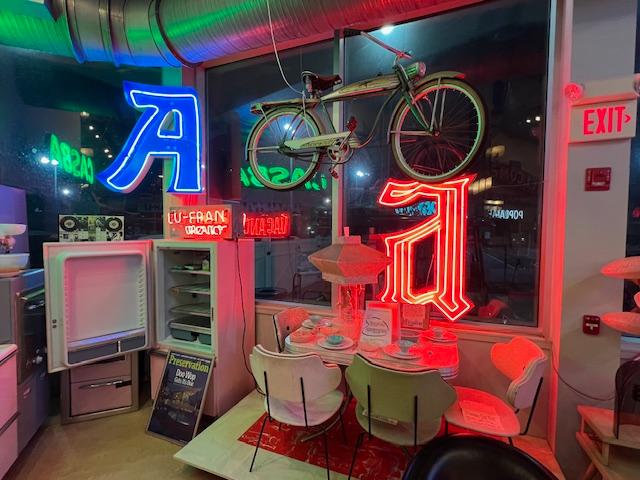
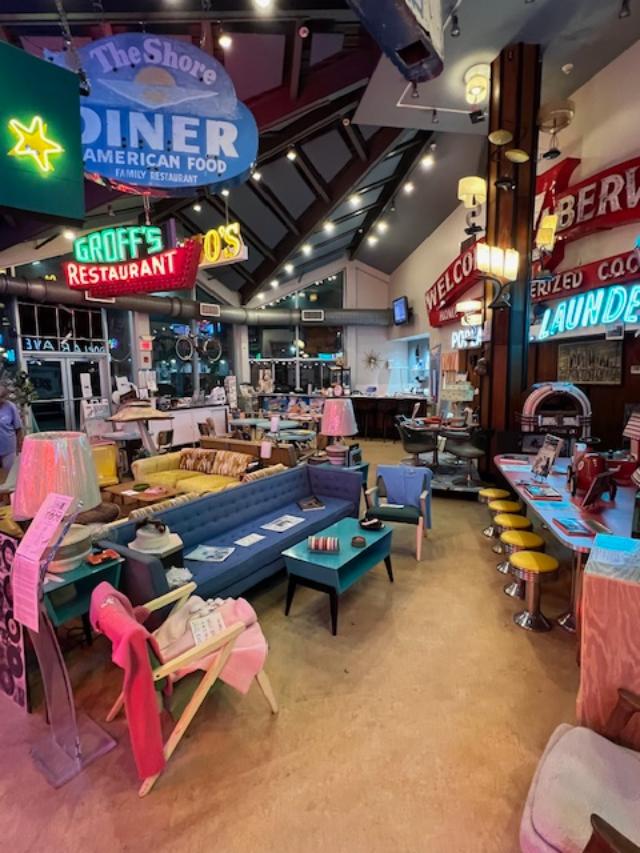
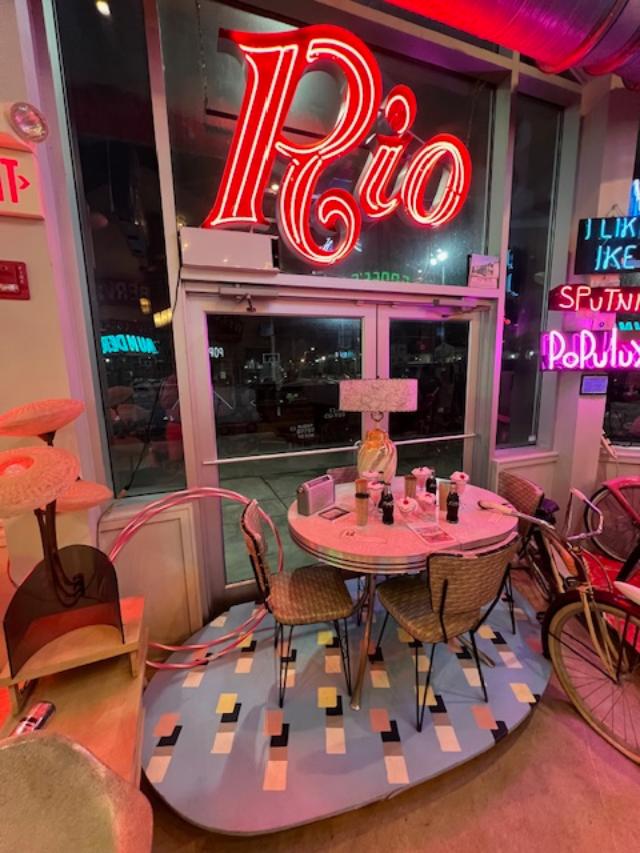
The Doo Wop Preservation League Museum at 4500 Boardwalk
https://www.doowopusa.org/the-museum
My review on TripAdvisor:
My review on VisitingaMuseum.com:
This unique little museum unfortunately gets drowned out by the fire department displays and beer garden and people really don’t appreciate it for what it is, a glimpse of Wildwood’s Motel past that is quickly disappearing in the wake of the real estate boom and gentrification. I don’t give the remaining motels more than five years before they all sell out.

The museum is bright and shiny
The museum shows the progress made after WWII and the optimism of the electric age after the war with foreign travel part of a dialogue that most people could not afford yet but wished to attain. So these motels brought that to them. As the era passed, these relics show the progress we had made and then what we left behind. I think it is one of the most clever small museums I have visited down the shore.
While searching for the Cape May Maritime Museum (which does not exist except in some of the members wanting for a physical space), I came across the Garrett Family Preserve, which was a large wetland preserve just outside Cape May proper.

The Garrett Family Preserve at 801 Wilson Street in Cape May Creek
https://www.facebook.com/groups/CapeMayLive/posts/1869422840328521
My review on TripAdvisor:
My review on VisitingaMuseum.com:
https://visitingamuseum.com/tag/gardening/

The Preserve is acres of wetlands that is refuge for birds, butterflies and wetland creatures.

The Butterfly sculpture at the end of the paths
When you enter the Preserve, you have the option to follow several paths that take you through the woods, the wetlands or down paths of wildflowers. It was unfortunate that it had not rained in a month and the preserve was very dry.
The sign had said in the Spring that the preserve was alive with colors of flowers. Still it offers a glimpse into the mating areas and refuge for these insects and birds on the path to warmer climates.
Searching for the Maritime Museum, which will have a physical building in the future the President of the organization assured me when he called me later that afternoon, I headed back to Cape May to walk along the beach after a long day of meetings and cultural visits.

The beaches were busy on this warm late summer evening

It was a beautiful afternoon just walking the shoreline trying to get my mind off everything
Please join me for my walk at the shore

The views of walking that Cspe May shoreline

I am never sure where these tubes come from
The shore works its own magic

The view on the Boardwalk at Cape May Beach
It was still early in the evening so I decided to head to Sunset Beach in West Cape May and watch the sunset before going to dinner. That is always a treat to watch!

Sunset Beach in West Cape May arc502 Sunset Boulevard
https://www.facebook.com/SunsetbeachNJ/
My review on TripAdvisor:
My review on VisitingaMuseum.com:

I thought this shot was so picturesque

Then we watch the sun take its final bow
There is nothing more beautiful on a clear night than seeing the sunset before set on this beach. The crowds were huge. Being Convention weekend, people were packed all over the place. I had to park about a mile up so that I could drive back out.
The restaurant that had once been a simple snack shop and was now a higher end restaurant with views of the bay and that did not help the parking situation. The crowds a families set up blankets and chairs all over the beach and then we stood back and let the magic take place.

Going

Going
Going

Going

Going

Gone
Gone

Then all the beautiful colors of the sun
The beauty of the sun set
I set on the beach with the locals while everyone else fought to get out of the parking lot and headed back to Cape May for dinner. It was such a spectacular night.
The Washington Street Mall was packed with people that night. With the Convention meeting now over, many fire companies were having their get togethers that night. A lot of the older firefighter couples though I could see opted for a quieter night strolling the Mall.

The Washington Mall that night
https://www.washingtonstreetmall.com/shopping
On the third night of my dining picture taking it was back to the Ugly Mug for dinner and for the elusive Bacon Barbecue Cheese Burger (dinner four years ago).

My dinner at the Ugly Mug, the Barbecue Bacon Cheeseburger (and yes, it is as delicious as it looks)
My review on TripAdvisor:
After the wonderful dinner, I took a long walk along the Mall, the Boardwalk and beaches to work the dinner off. What spectacular views of the town.

The Washington Mall later that evening
I went back to the room and slept soundly as I had a long day of work ahead of me. After the Convention was over, I had arranged an extensive day of touring with members of the Board of the Upper Cape May Township Historical Society to tour all three of their historic sites, the Gandy Farmstead, the Friendship School and the Tuckahoe Train Station, plus an additional tour of the Endicott-Reardon Family Museum. It would be a long day.

Waking up to the sun the next morning
When I woke up the next morning and checked my schedule for the morning and afternoon, and then checked the weather report, I decided to extend my stay in Cape May one more night.
I arranged for the additional night and walked down to Uncle Bill’s Pancake House for the second day of picture dining. It was another sunny afternoon and I was going to need a lot of energy. I ordered an Omelet with a side of sausages, potatoes and rye toast (breakfast from Christmas time 2021). The breakfast was excellent.

The omelet with potatoes and sausage

The breakfasts here are amazing!

You can create two breakfasts from the meal
On the way back to the hotel, I had to walk along the shore just to work some of breakfast off before my roadtrip. They give you so much.

It was a beautiful morning and a perfect shore day

God creates these beautiful days for us to enjoy
After my walk, it was time to meet the Board Members of the Upper Township of Cape May Historical Society at the Gandy Farmstead, my first historical stop.

The Gandy Farmstead at 26 Tyler Road in Oceanview, NJ
http://www.uppertwphistory.org/whats_new.htm
Click to access gandy-house-history_copy_%2015June2008.pdf
My review on TripAdvisor:
My review on VisitingaMuseum.com
I was met by two of the Board member who had just arrived and we did an extensive tour of the house, the outer building and the grounds.

The first floor kitchen, storage and wash area of the house

The kitchen and heating area of the house

The second door bedroom

The attic loft area
We then took a tour of the grounds that included the well, the smokehouse, the outhouse and extensive tour of the barns. The organization did a nice job preserving the integrity of the home and life at that time period.

The back part of the grounds with the various buildings
We did an extensive tour and discussion of each building (you can see the full tour on my blog VisitingaMuseum.com). The barn was the most interesting.

The barn on the Gandy Farmstead

The inside of the barn

The inside of the barn
The tour was really nice and what an interesting home. The displays were so well organized and laid out. Each of the buildings told their own story.

The grape arbor behind the house
We discussed the Gandy family whose ancestors live across the street and who had donated the home a grounds to the committee. We also discussed to upcoming “Apple Festival coming up in two weeks.
Please read my blog on the Gandy Farmstead Apple Festival:
After the full tour of the house and grounds, we headed to the Friendship School down the road and up the highway from the homestead. Another fascinating look at the areas past.

The Friendship School at Route 9 in Palermo, NJ
http://uppertwphistory.org/Friendship-School.htm
My review on VisitingaMuseum.com:
https://visitingamuseum.com/tag/friendship-school-house-museum/
The school just showed me how things have not changed in over a hundred years.

The front of the Friendship School
The school has the most interesting look both inside and out. You see the way students lived and learned at the turn of the last century.

The old water pump outside the school for classroom use
The classroom reflects education of the various levels of students between the ages of Kindergarten and High School.

The classroom set up is still similar to today

Instead of computers and laptops they used slates, chalk and books
The Friendship School showed how much we have progressed in education but it also has stayed the same. The ladies explained to me that the school is open at certain times of the year to show children how the classroom still reflects its main purpose, to learn and to educate.

The Outhouse
On my way to the last historic site on the Historical Society’s list, the ladies took me to the Frog Hollow Bakery for the most mindblowingly delicious doughnuts.

The Frog Hollow Bakery at 140 NJ 50 in Ocean View, NJ

The front of the Frog Hollow Bakery
https://www.facebook.com/FrogHollowBakery/
https://www.instagram.com/froghollowbakery/?hl=en
My review on TripAdvisor:
My review on LittleShoponMainStreet@Wordpress.com:
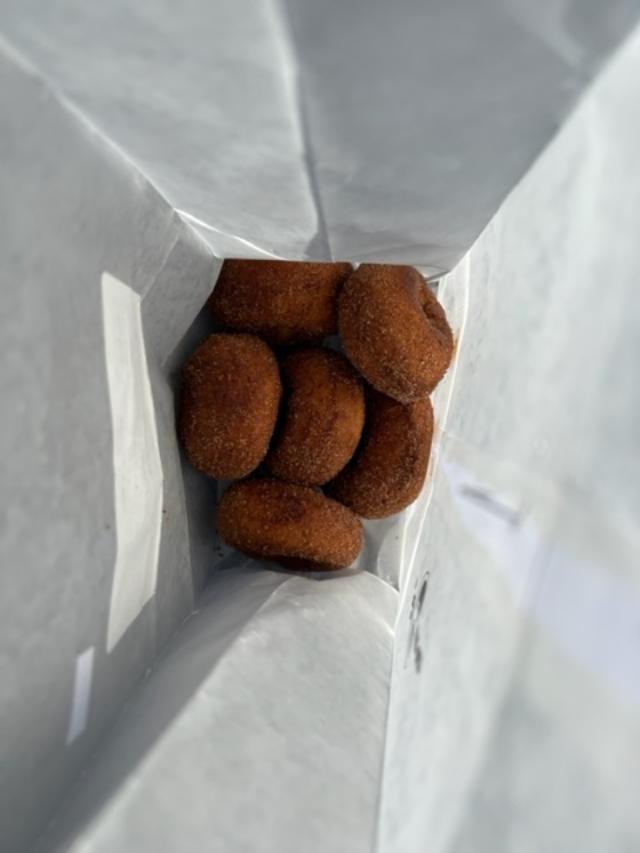
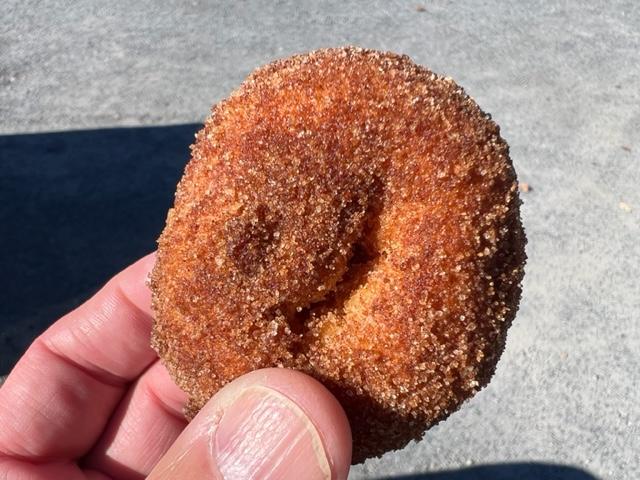
We just stopped in for a doughnut and I tasted on of the best fried sugar doughnuts I had had in a long time. Everything on the counter was made from scratch and looked so good.

The delicious looking buttery breads and cakes inside of the bakery

Do not leave this bakery until you have tried one of their fried sugary doughnuts
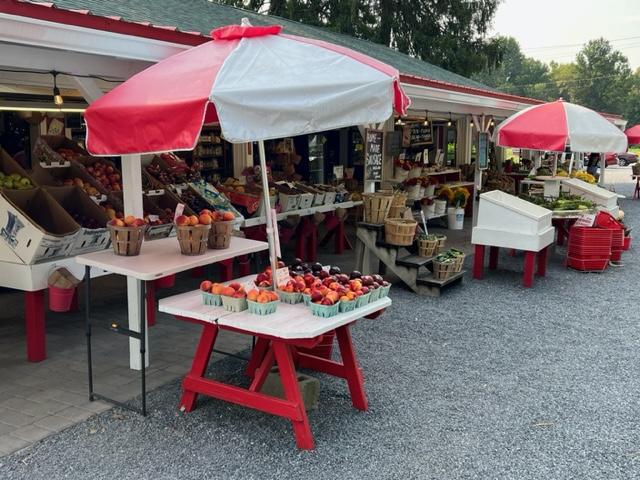
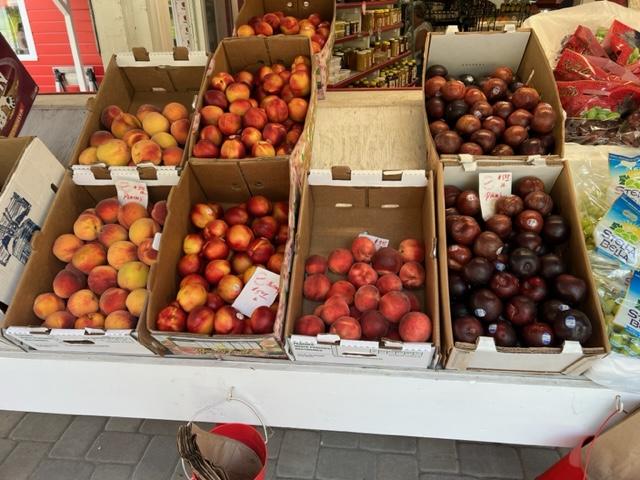
This is such a unique and wonderful little bakery. It has a nice selection of not just baked goods but a gift items and produce.
The next historical site I visited was the Tuckahoe Train Station in Tuckahoe, NJ. This Victorian structure was once the hub of shore transportation. Now it houses all its treasures of the past.

The Tuckahoe Train Station at Railroad and Market Street in Tuckahoe, NJ
https://en.wikipedia.org/wiki/Tuckahoe_station_(New_Jersey)
http://www.uppertwphistory.org/mission.htm
My review on TripAdvisor:
My review on VisitingaMuseum.com:
The Board member who met me at the museum was an expert on the station and gave a very in-depth tour of both the inside and outside of the station.

The old Waiting Room and Gift shop
Most railroad museums I have visited in the past have been dark and dusty but the Tuckahoe Station, which is brightly lit, beautifully organized and has engaging displays.

Each display case showed a different aspect of life on the rail system from arrival to departure
We toured both floors of the station which showed not just the life of passengers coming to and from the shore but the life of the station manager. It was a very demanding job where you have to wear many hats.

The room of the station manager on the second floor

The station manager’s office

We then toured the Baggage Room and Receiving Room
Each room built on the other showed the day of the passengers as they arrived at the station with their luggage and then had to be transported to their destination at the shore.

Then we toured the outside rail yard where many of the old train cars are being or have been restored. We discussed train travel with some lines being very luxurious for the time and others just regular transportation.

The outside rail yard on the old tracks

The Blue Comet railcar was once the ultimate in luxury travel to the shore
The last place we toured in the complex was the Repair and Transport building next to the rails. This is where everything was maintained at the depot.

The Repair Shop

The station stop at the end of the tour
I was really impressed by the Tuckahoe Station with such an interesting and thorough tour. I could not believe almost two hours went by. I said my thank you and sang my praise of how organized and fascinating the museum was to tour.
My last museum tour of the day was the Endicott-Reardon Family museum at 3036 Shore Road in Ocean View,NJ. This brand new museum houses the artifacts of both sides of Endicott and Reardon families.

The front of the Endicott-Reardon Family Museum at 3039 Shore Road
https://www.facebook.com/EndicottReardonMuseum/
http://mobile.ermuseum.comcastbiz.net/
My review on TripAdvisor:
My review on VisitingaMuseum.com:
The beauty of the museum is that the last direct family descendant never threw anything out and carefully organized things for years anticipating that she wanted to open a museum. It is a fascinating look at the life of an Upper Middle class family from the turn of the last century to today.
The beauty of the museum is that the last direct family descendant never threw anything out and carefully organized things for years anticipating that she wanted to open a museum. It is a fascinating look at the life of an Upper Middle class family from the turn of the last century to today.

The inside of the museum and its extensive collection of family artifacts
The curator of the museum met me in the late afternoon for the tour. Instead of a musty house, this recently built museum is bright and airy and the well lit displays showcase the collections. Each section of the museum is broken down by collection and life style.

The family artifacts at the entrance of the museum

The Living Room set up

The bedroom set up

The Dining Room set up

The Founder’s Doll Collection
The founder of the collection even had a collection of dolls and toys she loved and the display was replicated in the museum with all the original toys.

The founder as a little girl in her bedroom

The exact replica of the picture with all the original toys

Family items from father and uncles
What amazed me about the museum was how meticulous the owner kept all the family items including everyday items like irons and dishes. The woman never threw anything out.
Everything from her childhood into adulthood had been carefully documented and preserved much to the benefit of us the visitors. We get a glimpse into the life of an Upper Middle class family at the turn of the last century. I thought this was fascinating and for people interested in history, it is a nice museum to visit.
After my tour I talked with the curator and thanked her for all her time and promised a wonderful write up (please read my blog on all these museums). Then I headed back to Cape May
On my way back I stopped at an ice cream stand that had become part of my tradition on my trips, the Icd Cream Station at 809 US 9 in Cape May Courthouse. The ice creams are all made in house and are delicious.

The Ice Cream Station at 809 US 9
https://www.icecreamstationhomemade.com/
https://www.facebook.com/IceCreamStationCMCH/
My review on TripAdvisor:
The ice cream here is amazing. It is so dense, rich and creamy. It is a lot of fun to just sit in the courtyard and just relax.

The courtyard of the Ice Cream

The Cookies and Cream and Moose Trakes ice cream

The delicious selection of ice creams

The props of the property that you can eat at and climb
I love coming here for a snack. The name has changed twice over the years but quality of the ice cream has stayed the same. Consistently delicious.
I headed back to the hotel to relax for a while before dinner. I had never crammed so much into one weekend when attending the Convention while answering emails for work each night for my students. I went from morning to night.
I returned to the Ravioli House that night for dinner again for another night of picture taking. This time dining on a dinner that I ate four years earlier. I love doing this type of research.
The meal started off with an order of homemade Fried Mozzarella, which was served with their delicious red sauce. They looked like fancy fried mozzarella sticks. They were excellent. Gooey and stringy at the same time.

The Fried Mozzarella
Then a crisp salad, which I always enjoy with their homemade dressing.

The house salad with Creamy Italian dressing
For dinner I ordered a dish the I have enjoyed here twice before, the homemade Linguini with Bolognese sauce. Talk about a wonderful dinner. The rich combination of freshly chopped meats and tomatoes is excellent. I never have a bad meal here!

The pasta is delicious

The dinner was excellent
For dessert I indulged the Pastry shop next door and enjoyed a Delishioso cookie. This is a short bread cookie filled with hazelnut filling.

The Pastry shop at the Ravioli House

The assorted cakes and pastries to choose from in the case

The inside of the pastry shop

My dessert, the Delishioso cookie

This sweet indulgence is two buttery shortbread cookies with hazelnut filling and rolled in chopped hazelnuts

What a sweet treat!
After a day of running around for both jobs, I decided to extend my stay by one night. I was so tired from all the driving and touring and trying to cram everything into one trip, I went back to my room and had the best nights sleep in a long time.
The next morning I had a relaxing breakfast at the Magnolia Room, the Chalfonte Hotel’s restaurant. It was such a nice warm sunny morning, that I ate out on the porch. It was nice to sit back and relax and do nothing.

The Chalfonte Hotel my last morning

The inside of the Magnolia Room set up for breakfast
https://www.chalfonte.com/the-magnolia-room.html
My review on TripAdvisor:
Dining on the porch is what you want to do when the weather is warm. The views are wonderful and it is so relaxing.

The views from the porch at breakfast

Admiring the views at breakfast

My breakfast, the Chalfonte Breakfast with scrambled eggs, bacon, hash browns and toast

The breakfast at the Magnolia Room are excellent
Went back up to my room to relax for a bit before check out. I had a long trip home and decided this time to take it easy and not rush back. I decided to follow the shore towns up and make stops at places I wanted to visit again. Getting myself motivated after a relaxing night and morning was tough.

Checking out of my room late the next morning
I left Cape May later that morning and heading up the shore highway with a stop in Stone Harbor first. I took my time and took various stops along the highway to take pictures.

The marshes along the highway to Stone Harbor, NJ

The lone fisherman in the early morning

The views of the coastline

The view of the marshes

The marshes in Stone Harbor
When I got into Stone Harbor, I tried to see if the historic Life Guard station was open but it was closed for the season. That is when I came across the Stone Harbor Bird Sanctuary. I must have passed this dozens of times over the years and did not know what it was.

The entrance to the Stone Harbor Bird Sanctuary at 11400 Third Avenue in Stone Harbor, NJ
My review on TripAdvisor:
My review on VisitingaMuseum.com:
I toured the main path through the park and got lost in walking through the woods which drowned out traffic and all you could hear was the birds chirping. It was a quiet and peaceful walk admiring the woods and the sounds of nature around me.

The entrance to the Stone Harbor Bird Sanctuary

Walking through the woods hearing nature

The woods were beautiful in the late Summer

The outside of the park on a early Sunday morning
I continued up the coastal highway to my last stop on my way home. I decided to stop in Margaret, NJ to visit Lucy, the Elephant. I had not visited this famous structure in years and I wanted to update my pictures.

Lucy the Elephant at 9200 Atlantic Avenue in Margate, NJ
https://www.facebook.com/lucytheelephant/
My review on TripAdvisor:
My review on VisitingaMuseum.com:

Starting the tour at the leg
The weather was so nice that we were able to tour the whole elephant and the nice part about the tour was that it was just myself and the tour guide. Items great to visit here on Mondays when it is quiet.

Heading up the stairs

The belly of Lucy

The inside of Lucy was once real estate offices
The tour guide explained to me that the elephant was used to attract real estate buyers of shore land back at the turn of the last century. The structure had through many owners before it fell into disrepair after WWII. The effort to ‘Save Lucy‘ became the battle cry of the community much to the benefit of all future visitors. The elephant needs constant maintenance and visitors are how it benefits the community.

The view from the top of the Huto

The view from the Huto of the ocean

The view of the City of Margate, NJ

Lucy the Elephant from the parking lot
After the tour was over, I had a wonderful conversation with my tour guide about her going to high school in Atlantic City. Those battle scars were interesting to talk about.After I left , I went to explore downtown Margate and see if the Margate Historical Society was open. It was closed for the afternoon.

The Margate Historical Society at 1 South Washington Avenue
https://www.margatelibrary.org/margate-historical-society-museum
https://www.facebook.com/photo/?fbid=722119167550362
My review on TripAdvisor:
My review on VisitingaMuseum.com:
The museum has limited hours and was not open that day. So I had lunch and headed home.
Between my work for the fire department and my work on my travel and dining blogs, it was an extremely productive weekend. There will be more of this area to explore in the future.
I could not believe how much of the shore I covered for my travel blog and was still contributing to the future of the fire service. We have to do what we need to do to promote the great State of New Jersey.


















 mywalkinmanhattan