The Bergen County Firemen’s Home Association at the August Barbecue
The picnic grounds
The grounds of the NJ State Firemen’s Home were in full bloom and the lawns were perfectly groomed for the afternoon. The skies were blue and the temperature at 80 degrees. Perfect for an outdoor event.
The barbecue grill
We had a wonderful menu planned for the residents and their guests. We were serving Hamburgers and Cheeseburgers, Hot Dogs and Bruck Wurst, Barbecue Ribs and Chicken, Baked beans, Mac and Cheese, Fresh Watermelon for dessert along with home baked desserts made by a member’s wife. A wonderful menu that residents and their families enjoyed.
The front gardens in the morning
The memorial fountain
The grounds in front of the home
Setting up the grill for lunch
Chef Prince working his magic at the grill that afternoon
Our Grill Master today was Chef Prince from the NJ State Firemen’s Home, who created this feast for all of us down to the homemade mac & cheese and the baked beans with honey and cinnamon. Everything was delicious!
The food was amazing that day
After we finished eating, the men of the Bergen County Firemen’s Home Association took our annual group picture. I wanted to thank this very dedicated group of men for making this event possible.
The members of the Bergen County Firemen’s Home Association after a job well done
A big ‘Thank You’ goes to our dedicated Executive Board who works so hard to make this organization what it is today. Hats off to Tom Simpson, John Kinner and Roy De Young Jr. for everything they do to make this organization the success it is today.
The Executive Board of the Bergen County Firemen’s Home after the picnic was over Tom Simpson, Justin Watrel, John Kinner and Roy De Young Jr.
Jolly Nick’s is a small local restaurant in Downtown Dumont, NJ with a menu of deep fried hot dogs, hamburgers, chicken sandwiches and cheesesteaks. They have other deep fried treats like French Fries, Onion Rings and Mozzarella sticks.
The front of Jolly Nick’s at 31 East Madison Avenue
The inside is like a step back in the 1970’s and 80’s with classic chairs and tables and menu prices to match. The menu is so reasonable at a time when everything is getting so expensive. The owner keeps the prices with reach of his customers.
The inside of the restaurant
The menu is varied and very reasonable
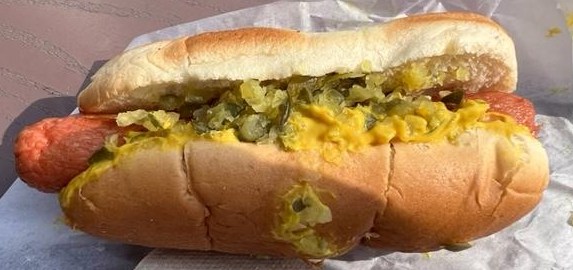
What I love about the hot dogs here is that he deep fries them so they come out crackled and crisp. Then he puts them in a soft bun and you can choose from a variety of toppings
The hot dog and French Fries lunch special with a drink
I chose to keep it traditional and chose mustard and relish. It was loaded on top and I liked the combination of spicy and sweet in the taste.
The special meal
The deep fried hot dogs
The French Fries
Lunch was so good!
It was nice to sit back and talk to the owner while I was eating. He really loves what he is doing and the food he makes brings back a lot of memories of high school and summers.
On my last day of class at the college, I stopped in for lunch to try more of their delicious and very reasonable menu.
I was in the mood for a Cheeseburger with a side of Onion Rings and a Dr. Brown Black Cherry soda. It was the perfect meal at the end of the semester.
The Cheeseburger and Onion Rings
The burger was perfectly cooked and had a nice caramelized flavor to it. It was topped with lettuce, tomato and a pickle.
My burger and Onion Rings
The Onion Rings were perfectly fried and crisp and had nice slices of onion in every bite.
The Onion Rings
I really enjoyed my lunch out!
What I like about lunches here is they are reasonable, filling and well cooked. You can a nice meal for a fair price.
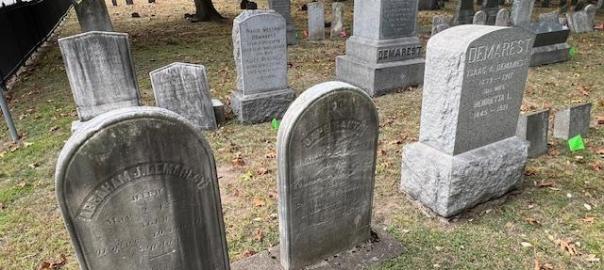
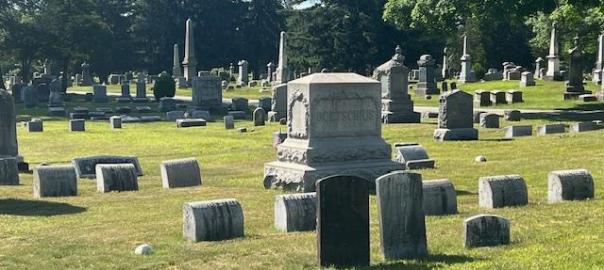
The historic Woodside Cemetery in Dumont, NJ. It is the home of many ‘founding families’ of Bergen County, NJ., such as the Demarest’s, Hopper’s, Van Buskirk’s, Haring’s (Hering’s), Van Saun’s, DeBaun’s, Westervelt’s and Zabriskie’s. These are the families that dominated the farming industry in Bergen County before and after the Revolutionary War. It is one of the many historical cemeteries and graveyards in Bergen County, NJ.
My mapping of historical cemeteries and graveyards in Bergen County, NJ:
The inside of the cemetery in the historical section of the cemetery
The historical Woodside cemetery is the resting place of many of the founding families of Bergen County and the surrounding communities of New York State.
Lining the historical Main Street of Downtown Dumont, the older part of the cemetery holds the family plots of some of the original settlers who shaped this country from its beginning.
The Voorhis family plot
The Zabriskie family plot
The Brinkerhoff family plot
The Waite Van Bushkirk family plot
The Van Bushkirk family family plot
The large Demarest family plot
The Hasbrouck family plot (The Family who Hasbrouck Heights is named after)
The Blauvelt family plot
The DeBaum-Westervelt family plot
The Van Saun-Demarest family plot
The Demarest-Haring-Van Vliet-Vorhees family plot
The Demarest-Van Bushkirk family plot
The Brinkerhoff-Doremus-Demarest family plot
The Van Bushkirk-Hopper family plot
The grave of James Blauvelt DeMott
The cemetery is the resting place of many War of 1812, Civil War, the World Wars, Korean and Vietnam and the modern wars.
The cemetery is a place of respect and quiet contemplation. To see the contributions of these members of the community is to reflect on the history of Bergen County. These families and many people buried here have helped shape Bergen County and the State of New Jersey to what it is today.
I took a ride to Upstate New York in July to visit museums and historical sites in Orange County, NY that had been on my bucket list but most were closed on the sunny Sunday. I made a U turn on the local highway and stopped to visit the Hill-Hold Museum in Campbell Hill, NY.
The Hill-Hold Museum at 128 NY 416 in Campbell Hill, NY
After the tour of the house was over, I decided to stop at the Orange County Fair for the evening and get something to eat.
Being a frequent visitor of the Dutchess County Fair, I expect all the fairs to be of the size and scope of that fair. This one was much smaller but still had a lot to offer.
The entrance to the Orange County Fairgrounds in Middletown, NY
When I arrived in the late afternoon, the fair was rather quiet as it was the late afternoon and most of the demonstrations and entertainment would be later that evening.
Walking through the entrance of the fairgrounds past the rides and the concessions
Still there was a sizable crowd already at the fair riding the rides, playing games of chance and eating at the somewhat over-priced concession stands.
There were a nice variety of rides and things to do while I walked around surveying the grounds to what there was to do and experience.
Looking over the rides which were filled with families
The first tent I visited was the Livestock Tent and the petting zoo. While the fair did not have the livestock displays that the other fairs did or the 4H presence, the tent had friendly selection of animals to see and feed. They looked so happy to see humans with food.
Walking through the petting zoo
Walking through the petting zoo
The sheep and llamas were waiting by the edge of the pens for treat from a human hand. I found them inquisitive of us especially as we fed them.
Watching the llamas decor an ice cream cone filled with treats
The next tent I visited was the 4H tent with all the craft and food items on display. The judging had taken place and all the ribbons were on display.
Walking through the crafts tents
The Scarecrow Contest in the Crafts Tent
We even got to vote on a scarecrow. I thought that was interesting.
Nightmare Manor, the haunted funhouse
The preview of the movie “The Funhouse”
I next walked along the Midway past a whole series of rides and attractions. The first ones were the funhouse and the glory, the Nightmare Manor haunted ride. The lines were short so most people were getting in quickly.
The next thing I did was visit the grandstands where they were having a demonstration on Monster Trucks. This I had to see.
The Monster Trick Rally competition
They were offering rides to patrons before the show (which was a separate fee), so I got to see people driving around the field having a great time.
I did not want to stay for the show as those lines were getting long and I wanted to head home before it got dark. I left the ever growing line to head to the concession to get something to eat.
Stopping for dessert at Tootsie’s Fried Dough Concession
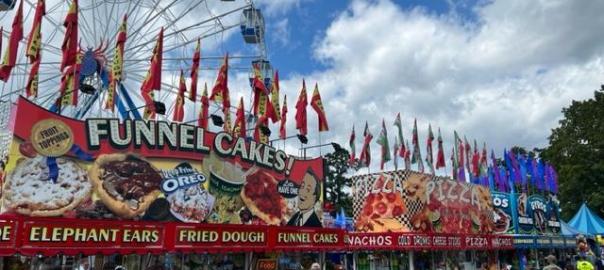
Someone had just walked by me with a steaming funnel cake and then I had to have one. The one thing I have to say about Tootsie’s Fried Dough is that everything is made fresh to order and the quality of the funnel cake was better than any one that I had at the Dutchess County Fair, which are always premade and soggy by the time you get them.
The Funnel Cake was made to order and out of this world
Yum! These were the best!
The last thing that I attended was the circus, which had just started at 6:00pm as I was leaving the fairgrounds. I decided to stay for the most of the show. I enjoyed the high wire acts and the acrobatic displays.
The high wire acts
These brothers from South America were extremely talented and do the most amazing tricks on the high wire.
The bicycle ride over the high wire
Skipping rope on the high wire acts
I really had a nice time at the fair. While it was not as big as either the Dutchess or Ulster County fairs that I attended in the past, there was a lot to see and do at the Orange County Fair.
The Bridgewater, NJ 4H Fair:
Going to the 4H Fair in Bridgewater, NJ was like a step back in time. I used to come here with friends after swim team practice as kids and we all used to garbage up eating our way through the Food Tent. After that, we would enjoy the fair.
The entrance to the Somerset County 4H Fair in Bridgewater, NJ
Walking into the 4H Fairgrounds was like stepping back over forty years as I had not been here since 1981. I even searched all the tents to find someone I knew (I did not know anyone).
The various displays of crafts, hobby cars, crafts and gardening tips
I first visited the Craft and Hobby tents with the displays of model trains, planes, automobiles and artwork. It was mostly families talking amongst themselves. The I next visited the Cow pens.
The cow pens
The cow pens
The cows were getting their afternoon feeding
I next visited the Sheep tent and they were in the middle of having their lunch as well not paying too much attention to us humans.
The sheep were enjoying their lunch when I got there and stopped for a second to see what I was doing
They all went back to feeding
There was a llama tent as well and they seemed very welcoming to human interaction
While walking around the fair, I could see the dark clouds coming in the distance. I had thought the storms were not coming until that evening, so I hustled through the rest of the tents.
Walking down the Midway of the fair with dark clouds in the distance
Entering the Poultry Tent
There were all sorts of varieties of chickens, ducks and geese to visit at the fair.
The prize chickens in their pens
The chickens were eating their lunch and pecking away
The highlight of the 4H Fair to me as a child was the Food tent with all the hot dogs, hamburgers, fried dough and funnel cakes and the popcorn and cotton candy for dessert.
The Food Concession tent
The Food tent
Just as I was deciding what to eat for dinner, there was a panicked announcement over the loudspeaker that they were closing the fair due to incoming storm clouds and lightening.
Everyone made a mad dash for their cars and I actually felt for all the concessions, who had all this food to sell and now how to shut down quickly. Some of the patrons had a ‘screw it’ attitude and kept eating probably until they kicked them out of the tent.
It started to rain while I was in the parking lot and I just checked messages on my phone and worked on blogs until most of the traffic got out of the parking lot. Then I drove into Bridgewater and had dinner at Joe’s Pizzeria at 1938 Washington Valley Road in Martinsville.
Joe’s Pizzeria at 1938 Washington Valley Road in Bridgewater, NJ
I had been coming to Joe’s since I was five and the pizza has not changed on bit since then. The next and the current owner both use the original Joe’s recipe for tomato sauce for the pies and calzones. Dinner here is another step back in time to my teen years. The inside of the pizzeria has not changed much in 35 years.
I was in the mood for a sandwich but I did not see any on the menu. They no longer make them so I ordered the Sausage and Pepperoni Roll. When it came out, it looked like a small pizza folded over. They made it fresh for me.
The Sausage and Pepperoni Roll with a side of red sauce
The roll was stuffed with a half pound of sweet fried sausage and spicy pepperoni, tucked in a pizza dough shell and baked to perfection.
It was the perfect meal for me covering both lunch and dinner. This could have been shared by two people.
The food here has been excellent since I started to come here in the 1970’s and has not changed since.
The dining area has not changed much since I was a kid
There’s more fairs to see and many more experiences to be had at them.
*The blogger wants to note that the prices have gone up a few dollars but the quality and portion sizes are well worth it.
This iconic pizzeria has been open since 1970 and has been serving the Bridgewater, NJ community and beyond since then. I have been coming here since I was kid and have rediscovered again when travelling in the area. On only its third owner since its opening, the pizza and their amazing tomato sauce has not changed since then.
Their iconic sign
The original Joe sold the business to Joe II in 1984 and this year after 35 years of ownership, Joe II retired and his family did not want to take over the business and sold it to Sal, who I met recently who said he is keeping all the original recipes.
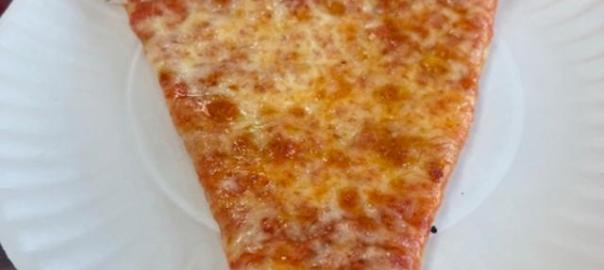
The longevity of this restaurant is the food and their prices. The mozzarella is always stringy on every bite, especially when a fresh pie comes out for slicing at lunch. The tomato sauce has a wonderful spicy tomato-y flavor to it that really brings out the sweet flavor of the fruit.
The pizza sauce recipe has been passed down through three owners!
The bottom of the pizza has a crisp consistency to it and you can taste the caramelization in every bite. The best thing to do is order a large and really enjoy it.
The pizza is really good!
Joe’s sandwiches are always consistent and delicious (See review on TripAdvisor). The half meatball hoagie comes with four rather large, freshly made meatballs. Joe’s meatballs are made fresh every day and are loaded with garlic. On a crusty fresh roll and lots of their tomato sauce each bite is special.
The meatball sandwiches here are amazing! (They no longer serve sandwiches)
Their half Italian hoagie is loaded with freshly sliced Italian cold cuts including ham, salami, provolone cheese with shredded lettuce and tomatoes with a vinegar and oil dressing. The combination of flavors of meats and vegetables really works.
Add a half dozen mozzarella sticks with fresh sauce on the side or garlic knots to a slice and it will give you the perfect afternoon lunch or dinner. In the almost fifty years I have been coming to Joe’s, I have never had a bad meal through the three owners.
The calzone was excellent
On a recent trip after a Michigan State versus Rutgers football game I decided to stop for dinner. I had the most delicious Sausage and Cheese Calzone that was made by the current owner. The calzone was huge. It was about the size of a small pizza that had been folded over.
Where the pizza magic happens
The calzone was filled with a combination of ricotta, mozzarella and parmesan cheeses with a big handful of fried sausage tucked into a soft pizza dough that was baked golden brown. It was accompanied by a bowl of their delicious tomato sauce that is based on the original Joe’s special recipe. Each bite was wonderful.
I went to Bridgewater again in 2026 to go to the 4H Fair and when a storm brewed during the fair, the organizers kicked everyone out before I could eat, so I decided to stop by Joe’s for a sandwich. They no longer make them so I ordered the Sausage and Pepperoni Roll. When it came out, it looked like a small pizza folded over. They made it fresh for me.
The Sausage and Pepperoni Roll with a side of red sauce
The roll was stuffed with a half pound of sweet fried sausage and spicy pepperoni, tucked in a pizza dough shell and baked to perfection.
It was the perfect meal for me covering both lunch and dinner. This could have been shared by two people.
The food here has been excellent since I started to come here in the 1970’s and has not changed since.
The dining area has not changed much since I was a kid
It’s nice to know that somethings never change. The restaurant has always been consistent and it’s nice to know that some things don’t change.
Northwest Bergen History Coalition History Day/Summer Open House 2026:
I visited the Hopper-Goetschius House Museum during the 8th Annual Northwest Bergen History Coalition History Day. I had never been here before and it is a real treat. There are many buildings on the property to visit on top of the house and the fact that this was someone’s house into the 1980’s is pretty interesting.
The historic marker in front of the house
The Hopper property in July 2026 for the Weekend Open House
The Gris Mill wheel
The historical tree stump
The historical plaque
The property in the Summer of 2026
Christmas Open House December 2019:
The house still holds many secrets. The best part of the tour of the house is the secret stairs in the kitchen that lead to the old second floor. This can only accessed behind a panel that leads to a narrow set of steps. You can see it from the new second floor from the top floor.
I attended Holiday Celebration on December 8th, 2019 and it was a beautiful sunny day for an outside event. It was a really nice afternoon. They had a visit with Santa at the Dutch barn which was decorated with trees surrounding him and presents and a decorated Dutch sleigh. In the schoolhouse, there were all sorts of games and talks to enjoy.
Santa in the Dutch Barn at the Hopper museum
In the outside kitchen, there were chestnuts and fresh popcorn being made that you could munch on while walking around enjoying the festivities and the smells of the cooking food were mouthwatering. The gentleman doing the cooking was doing a demonstration on how the food was cooked and the amount of time it took to make things.
The outside buildings still had a bit of snow left
The inside of the house was decorated for the Victorian holidays with a nicely decorated tree in the Living Room and garland all over the place. There was a Victorian music box playing songs and a reading of “The Night Before Christmas” being read on the hour.
In the kitchen of the oldest part of the house, they served hot cider and homemade Christmas cookies of all kinds. They were also selling fresh homemade jam that one of the members made. The kitchen was decorated for the holidays as well. There was an open tour of the house and it was fun to see the upstairs decorated with all sorts of Victorian toys and dolls. The fee was a $5.00 donation and it happens every first week of December at the site.
The Hopper House kitchen
The house is a treasure trove of period furniture and family items and on the property there is a schoolhouse, a barn, a blacksmith shop and an outhouse. During the Summer months, the house is open for special tours on the weekends and in the Fall, they have a Harvest Festival and Christmas holiday events. The house is run and operated by the Upper Saddle River Historical Society.
The antique toys in the upstairs bedroom
In April of 2023, I returned to the Hopper-Goetschius House for the Northwest Bergen History Coalition Day for the event. It was a gloomy day with mist and rain but that did not put a damper on the event. There were lots of activities going on in each of the buildings.
My first stop was at the barn where the ladies were doing a demonstration on spinning thread and we had a conversation of where the expression “Pop goes the weasel” came from (from the spun threat reaching its max and then the machine made a ‘pop’ sound). The ladies were demonstrating the way women spun yarn and made clothes and the work that it entailed.
The yarn spinning demonstration at the Hopper Barn
The ladies explaining how the spinning works
‘Pop goes the weasel’, the weasel at the Van Riper-Tice Barn
When I left the barn, I went over to the school house building to see what was going on. A very bored volunteer took up all my time and would not leave me alone. She had to read from a script and take me all over the house. I just wanted to get out of there. Thank God another person walked in so that I could escape and see the rest of the property.
The Ramsey House was moved to the property to save it from destruction and the society has done a good job transform it to a turn of the century classroom. This is a surprising display in many historical societies as I am sure that people have donated so much of their childhood mementos.
The Ramsey House schoolroom
The schoolroom
The teacher’s seat at the school room. Nothing has really changed.
The farm artifacts at the Ramsey House schoolhouse
After the tour of the Ramsey House, I took the tour of the main house again and its secrets. The Hopper House is a very interesting home as the owner did not want plumbing in the house. Up until 1963, she still used the well. She was forced by her nephew to get a modern bathroom. I thought this was strange that the woman did not want a bathroom. She still used the outhouse into the 1960’s.
The Hopper House kitchen
The home is decorated with all sorts of beautiful antique furnishes and decorations. The house is so well organized and the volunteers do such a nice job telling its story especially at the holidays. I visited all the rooms where the volunteers explained its purpose.
The bedroom upstairs
Bedroom Two
Bedroom Three in the upstairs loft of the house
My last part of the tour was visiting the Smokehouse right behind the house.
The Smokehouse during the Summer Open House
Inside the kitchen during the Open Kitchen
The inside of the Smokehouse
The volunteers were cooking corn bread, homemade potato soup and biscuits in the fireplace. It was interesting to see how food was cooked on the farm in the days before modern kitchens.
The two volunteers working there were so happy to see someone. They told me that no one wanted any soup. On a cold rainy and misty day, I was taking them up on it and it was really good! Talk about warming you up.
The Smoke House on the Hopper estate was cooking away that afternoon
The volunteers were making breads, biscuits and soup that afternoon that warmed me up
The delicious Potato Kale Soup warmed me up on this rainy day
The delicious Corn Bread was cooked with bacon fat and tasted so good! I munched on most of this.
I finished eating and talking with the volunteers about all cooking they were doing. They told me that they were following the recipes that were from the late 1700’s that would have been cooked at the farmhouse at that time. It was a really interesting conversation we had on cooking. It was nice to eat something as well. I was starved at this point.
After the meal, I left to go to the next site. I felt for these volunteers. The Hopper House is off the beaten tract and they must have not gotten the visitors that the other homes had seen. Still it was a wonderful visit with members who care so much about the house and its grounds.
The Hopper estate with the barn, school house and ice house in the distance during the Northwest Bergen Historical Coalition Day
The Hopper House entrance hall
The Hopper-Goetschius house on the corner of Lake Street and East Saddle River Road dates back to 1739. Built by the Hopper family, it is the oldest remaining house in Upper Saddle River. We know it existed in 1739 because it was recorded in surveyor Charles Clinton’s journal and possible it is older.
The picture of Steven Goetschius and his wife,
The other family pictures on the table in the parlor
Rosalie Fellows Bailey in her book on pre-Revolutionary Dutch houses, says it was marked as the home of Gerrit Hoppa on a rough sheepskin map made about 1713.
The Goetschius family, the second owners of the house
The house underwent several changes in the mid 1800’s. The large central chimney with back to back fireplaces was removed. Probably, with more modern forms of heating available such as wood stoves, the fireplace seemed a bit old-fashioned and the owners took it out. Besides, they wanted to use the entrance hall as a room, so the stairway along the east wall was removed and a central staircase added where the fireplaces had once been. The dormers were added in the Victorian era.
The Hopper house in 2023
The Hoppers farmed the land and had a lot of it by today’s standards. The property extended from the Saddle River (Lion’s Park) up the hill almost to Montvale and up the East Road to where Creative Gardens was located.
The antique dolls at the Hopper House bedrooms
(From the Society website)
In 1814, the house became the home of the Reverend Stephen Goetschius of the Old Stone Church. It remained in the Goetschius family for a century and a half, always a place of central importance in town as Stephen Goetschius, the great-great grandson of the Reverend Stephen, served as the borough clerk for over 40 years and conducted his town business from the east room of the house (SRHS.com).
The Hopper House Living Room
The house was without running water until Stephen’s death in 1962. Until improvements were made at that time, Steve’s wife, Lizzie, as those before her, carried water from the well for washing, cooking and shoveled coal for heat (SRHS.com).
The Hopper House Kitchen
The kitchen in the new section of the house
In 1985, the Hopper-Goetschius house was presented to the Borough of Upper Saddle River by Clinton and Grace Carlough. Lizzie Goetschius, the last resident of the house was Clint Carlough’s aunt. The house today serves as a museum, run by the Upper Saddle River Historical Society and offers the public historically related events throughout the year (SRHS.com).
The Hopper House Living Room
The back bedroom Dutch wardrobe
The Patriotic Display for the ‘Bergen 250’
(Upper Saddle River Historical Society)
The Hopper House property also contains:
*The Privy or Outhouse that was in use at the Hopper-Goetschius House until 1962 when plumbing was installed in the house.
The Outhouse
Hopper House estate with all the important buildings in the Summer of 2026
*The Ramsey Sayer House was moved to the grounds in 1999 to become part of the museum complex. This is the oldest existing from house in Upper Saddle River, a good example of a tenant house common on farms in this area. The Ramsey Sayer house belonged to William Ramsey, the grandfather of Kate Fisher Goetschius, mother of Steve Goetschius, who lived in the Hopper Goetschius house for many years.
The Ramsey-Sayre House now serves as the makeshift schoolhouse
The schoolhouse at the turn of the last century
The Native American artifact collection at the Schoolhouse
*The Van Riper-Tice Barn was erected about 1800 by the Van Riper Family on their farm on West Saddle River Road (near the Cultural Center). It was later owned for many years by Harmon Tice.
The Dutch American barn in the Summer of 2026
Sleighs and buggies and outdoor equipment
In 1989, it was scheduled to be demolished to make way for a development, the Historical Society dismantled it, moved it to the Museum ground and had it restored and rebuilt on its present location.
The inside of the Van Riper-Tice Barn at the Hopper House estate
Winter transportation at the barn
Transportation and farming equipment
The farming equipment display
More farming equipment
The displays of wool at the Van Riper-Tice Barn
The display of waffle irons
The Apple Cider Press that the Tice and Van Ripper families were so well known for making especially at Thanksgiving
*Snake Fence: a zig-zag fence of split rails once common in this area was added in the property north of the Van Riper Tice barn. The project was completed in 2001 with the help of Will Mazzuto and the vision of John Kroner and Joanne Lombardo.
The Hopper House estate
The Blacksmith Shop
The blacksmith doing a demonstration
The Upper Saddle River Historical Society:
The Upper Saddle River Historical Society was organized in 1977 to collect, preserve and distribute the history of the Upper Saddle River area. The Society is also responsible for the management and restoration of the Hopper-Goetschius House Museum located at 245 Lake Street, Upper Saddle River, NJ.
The Historical Society has over 500 members and is host to nearly 2000 museum visitors each year. The Society holds program meetings throughout the year along with special events such as a Spring Concert, a wonderful Harvest Fair in the fall and an Old Time Holiday Open House in December, featuring mulled cider with chestnuts roasting on an open fire.
The Museum is open for tours every Sunday during July & August from 2:00pm-4:00pm or by appointment. For group or individual tours contact: Althea Gardner @ (201) 327-7807 or Kay Yeoman @(201) 327-2236.
Hopper-Goetschius House Museum Restoration Fund Drive
Disclaimer: This information was taken directly from the Upper Saddle River Historical Society website. Please check the site for the hours and days it is open.
Westwood Cemetery was established in 1861 as the Old Hook Cemetery. The earliest burial was in 1791. Westwood Cemetery is a non-sectarian cemetery and continues to offer final resting places that suit individual needs. Whether you are planning for the future or purchasing for an immediate need, we have a variety of options available within the 35 acre park.
The newest part of the Westwood Cemetery where the family burials start around 1840 to Present sits on the Kinderkamack Road side of the cemetery
The back of the cemetery sits on a buff overlooking the pond that is parallel to Old Hook Road
The original family members were buried in this section of the cemetery while their grandchildren and great grandchildren are interned in the front section.
The oldest section of the cemetery which sits next to Old Hook Road is the Hopper Family plot which dates back to before the Revolutionary War
The Blauvelt Family plot sits next to the Hopper Family plot
The oldest section of the cemetery by Old Post Road home to family members of the Post, Blauvelt, Voorhis and Hopper members
The Demarest family plot overlooking the pond from the buff
The Blauvelt and Bogart family plot
The DeBaun family plot by Old Hook Road
One of the original Demarest family plots
The Haring family plot overlooking the pond
The Ackerman family plot
The Eckerson family plot with members of the Hopper and Demarest families
This section of the cemetery contains the oldest tombstones in the cemetery so many have broken or crumbled away. The lawn in this section of the cemetery is also not as well maintained so there are overgrown bushes and trees hiding the tombstones so you really have to look.
Then I worked my way back to the front of the cemetery finding the graves of these people’s children and grandchildren by following the names and dates of these people’s family members.
One branch of the Demarest family is front and center in the front of the cemetery
Next to them are the DeBaun and Vanderbeck families
Another branch of the Demarest family is a few rows behind
The Kipp family have a rather large family plot
The Hopper & Banta families share this large twin family plot
The Bogart family has this large family plot
The Westervelt family is near them with many of their members of the family
The Demarest family had two large family plots in the middle of the cemetery
The family plot of the Demarests and the Harings
The Demarest and Van Bushkirk family plot
The large Blauvelt family plot
The DeWolfe family plot
The Voorhis family plot
The Terhune Bogart family plot
What I found fascinating about this cemetery was to see the progression of each of these families from parent to child to grandchild just by walking through it. The families branch out in all sections intermarrying with similar families and the buried next to them. From back to front here they rest.
Maple Grove Park Cemetery in Hackensack, New Jersey, is a historic burial ground originally established around 1850 by the Dutch Reformed Churches of New York City. Formerly known as the New York Cemetery, it is a significant local repository for both 19th-century history and rescued historical remains.
Originally founded to serve members of the True Reformed Dutch Church, the cemetery was previously referred to as the New York Cemetery on Plank Road. As older churches and their surrounding burial grounds in northern New Jersey were decommissioned, their headstones and remains were frequently relocated to Maple Grove
The historic front section of the cemetery in the front of the cemetery
I visited the Maple Grove Park Cemetery one afternoon in search of a Revolutionary War Veteran, Albert Voorhis. I did not find his particular tombstone but I did find his family plot and many of the ‘first families’ of Bergen County. These include families such as the Demarest’s, Haring’s, Voorhis, Ackerman’s, Christie’s, Hopper’s, Van Saun’s and Blauvelt’s.
The Demarest family plot
The front part of the cemetery is nicely landscaped with interesting family plots dotted all over the this part of the cemetery. These were the families that shaped this history of the County and other branches of their extended family are either buried in historic Reformed Church graveyards or are in small cemeteries that were part of the family farm that now sit in subdivisions of McMansions, neglected and forgotten.
The Demarest family plot
I found it interesting to note how big many of these families were and how all of these ‘first families’ married into one another, probably because of family stature or maybe to extend the length of the family farm. These interconnections shaped and developed how Bergen County developed over a three hundred year period.
The Demarest/Hopper family plot
The Westervelt Family plot
The extended Voorhis family plot
The Zabriskie family plot
The extended Terhune family plot
The DeBaun family
The Brinkerhoff family plot
The Van Winkle family plot
The Ackerman family plot
The Blawvelt (Blauvelt) family plot
The Van Saun family plot
Another Terhune family plot
The Vreeland family plot
The Quackenbush family plot
The Hopper family plot
The Hopper-DeWolfe family plot
The extended Christie family plot
The extended Lydecker family plot
The Van Valen family
Another branch of the extended Demarest family
This cemetery is an interesting look at the early history of not just Bergen County or New Jersey but of the United States. These extended families contributed so much not just in military activity but in business, religion and education that helped build this country.
This unique cemetery is more than just a place of rest but a place of history and of respect. These were the extended families who contributed so much to the progress of our country and how it was directed into the future.
I visited the Alpine Cemetery, which is a historical active cemetery just off Closter Dock Road. This is the resting place of Revolutionary War Veteran, William Wilson and many other veterans from the Civil, Spanish American, World War I and II as well as from Vietnam, Korea and Desert Storm. All the graves were marked with American flags as we just finished Memorial Day weekend.
The family plots that separate the site
There are many family plots of “First Family’s” of Bergen County like the Westervelt’s, the Haring’s and the Campell’s. The family plots are separated by small fences and some are marked by the family names.
The cemetery on the hill in Alpine, NJ
The separate family burial plots
The Campbell Family burial plot
The Campbell family plots
The Van Sciver family plots
The Anthony Family plots
The Anthony family plot
The Haring Family plot
The Haring family obelisk
The Westervelt family plot
The Jordan/Wilson family plot
I looked at the Wilson family plot for the Revolutionary War veteran but the burial spot is probably has been lost to time. William Wilson may be lost to history but I know he was buried here.
The front part of the cemetery
The Veteran’s Memorial Rock with the names of World War I and II, Vietnam and Korea veterans
The Van Valen family plots
The Pearsall family plots
The Older family plots
The burial grounds from the front
There is a quiet elegance to these historic cemeteries. Who were these people? What did they do? Do people remember them? They are very interesting places to visit.
The history of the cemetery:
(From the historic sign)
The cemetery was founded in 1822 by resident William Gecox along Closter Dock Road when he bought 23 and a half acres as a burial ground for neighbors and for laborers who worked in the area. Mr. Gecox sold these plots on what had already been a burial ground.
The people buried in the cemetery were farmers, laborers, and tradesmen and their family. By 1870, the village “in the Closter Mountain” had take the name “Alpine” in the 1890’s. When William and his wife, Susan Helms pass in the 1890’s, their children sold the remaining plots. The cemetery has continued to be used into the twenty-first century.
The front of the English Neighborhood Reformed Church
The sign in front of this historic church
The front of the church
The front of the church from Church Road
The historic marker in front of the church
Since my project studying the historic graveyards and cemeteries of the Revolutionary War with my International Marketing students, I have taken my time to walk these sites and try to understand the history and importance of these sites as part of the memories of who these people were, the contributions that made to not just our county but the country and trying to keep their memories alive while many have been forgotten by their families.
The newer back part of the cemetery
Visiting during a recent post Memorial Day visit, I got to see how many veterans of all the wars from the American Revolution to Desert Storm were buried here. Even though we studied just the veterans of the Revolutionary War, I was fascinated by the number of Civil War and World War I and II veterans here as well.
The older section of the graveyard
The history of our County and Country are shown among the rows of tombstones that represent the contribution of our County residents to the many causes. It was very humbling to see them being honored at this time.
What I found interesting was many of the branches of ‘Founding First Families’ of Bergen County were interned here, representing Bergen County’s contributions to the foundation of the United States.
The Engle family plot where Revolutionary War veteran John Engle was a member
The Vreeland family plot closest to the church is the resting place of Revolutionary War veteran Michael Vreeland (again this site was once their family’s farm)
A closer look at the Vreeland family plot
I believe this is the tombstone of Michael Vreeland, Revolutionary War veteran
Another branch of the Vreeland family
Another branch of the Vreeland family
The Herring (Haring) family crypt
The Outwater family crypt. General Outwater’s side of the family is buried in a family plot in Carlstadt, NJ
The Banta family plot
The DeGraw family plot
The grave of Benjamin Westervelt
The grave of a soldier I could not read
It was so interesting to walk amongst the rows of tombstones and trying to understand each person’s story and their personal contributions to the way our community was founded and developed. So many of these family names are woven into the history of Bergen County.
There is a quiet elegance to these graveyards and on a warm sunny afternoon they are less scary and more of a place of understanding and respecting our past. It was an interesting history lesson.
Looking at the oldest section of the graveyard where many Colonial family plots are located
History of the Church:
(From the Church website)
The English Neighborhood Reformed Church is the oldest building in Ridgefield, NJ, erected on its current site way back in 1793, long before Bergen County became the bustling metropolitan area it is today.
But even before this, way back in 1675, Ridgefield was known as “The English Neighborhood” and covered roughly 10 miles of land between the Hackensack and Hudson Rivers. This is where our church gets its historic name. The first construction of the church (in Leonia) dates back to 1768, but was moved to its present site in Ridgefield, in 1793.
This area played a role in the Revolutionary war, when General Washington retreated with the Continental Army in 1776 from NY City and passed through the English Neighborhood. Those who fled the area for their cause, included the English Neighborhood Church’s first minister, Garrit Leydekker, an Englishman and a Tory, who fled for the safety of New York City, taking the church’s first records with him.
The historic graveyard next to the church
The church’s steeple was the tallest structure to rise above the flat meadowlands and would become a surveyors landmark. It is approx. 80 ft. in height and made from hand-strewn timbers and wood dowels, rather than nails.
The historic church on a sunny afternoon
In 1804, Edgewater Avenue was a bustling artery for commerce and was part of the toll road known as the Bergen Turnpike. For 100 years, covered wagons transported their goods from the farms of NJ, to the ferries that would carry them to market in NY City, right past the church. The church was once located in the heart of the bustle of life as it was, before the industrial revolution.
The historic doors of the church
In 1854, the railroad was brought to Ridgefield, which introduced industry and growth to the town. Throughout the Civil War, members of the congregation were active in the “underground railroad.” Runaway slaves were hidden under the bridge by Overpeck Creek. They were given food, clothes and other necessities to help move them to the next safe haven, during the night.
In 1912, the Sunday school building was added, across the way from the church. Additions to the building were completed in 1954 and 1962.
A bridge was built over the Railroad tracks in 1932, which led to the closing of Edgewater Avenue and the “Old Highway” that once brought passersby with regularity, became a dead-end street. These gradual changes have meant that the historic legacy of the English Neighborhood and its church, goes largely unnoticed.
However, these changes also, today provide the quiet hamlet that the church finds itself surrounded by – a little piece of heaven on earth – right here in a busy, and often congested, Ridgefield. It is this history and this unique location that makes the English Neighborhood Church a one-of-a-kind place to worship.
We hope you will join us some Sunday to see for yourself. God has blessed this congregation for nearly 233 years (2026). Jesus is doing some amazing things with this church and its people. You are welcome to be one of them, as we move into the next thing God is calling us to do and be, as Jesus’s disciples.