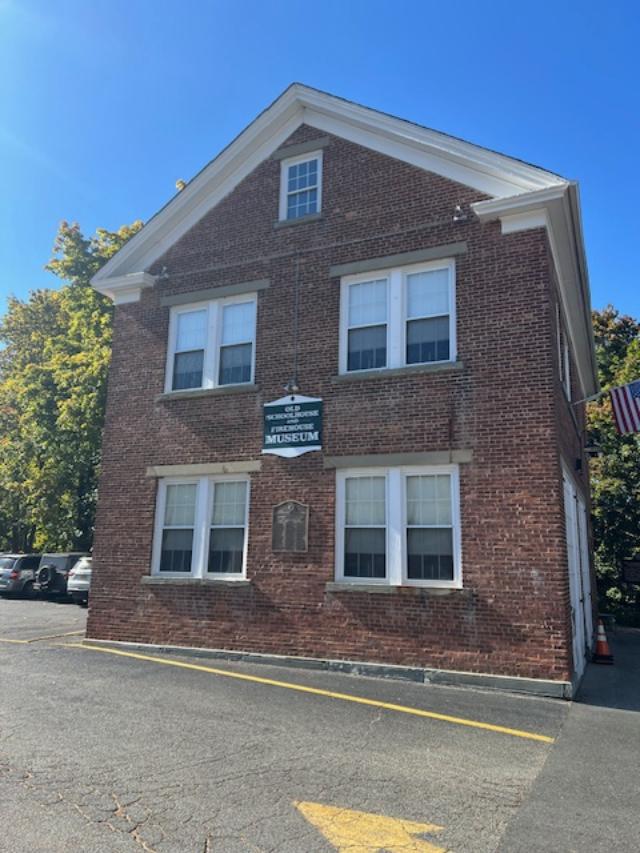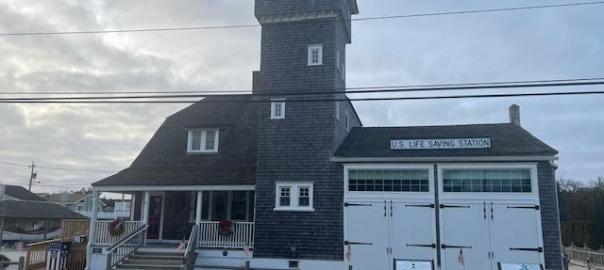
The Margate Historical Society at 1 South Washington Avenue
The Margate Historical Society is a small history museum that tells the story of Margate, NJ and nearby Atlantic City, NJ. The two towns are intertwined by history and business. This small museum is run by the Margate Library, part of the town’s municipal system.
The museum sign when open
The entrance to the museum
The inside of the museum and their fire and rescue displays
This interesting museum covers the history of the Fire, Rescue and Police Departments with lots of artifacts from all three departments including pictures and equipment.
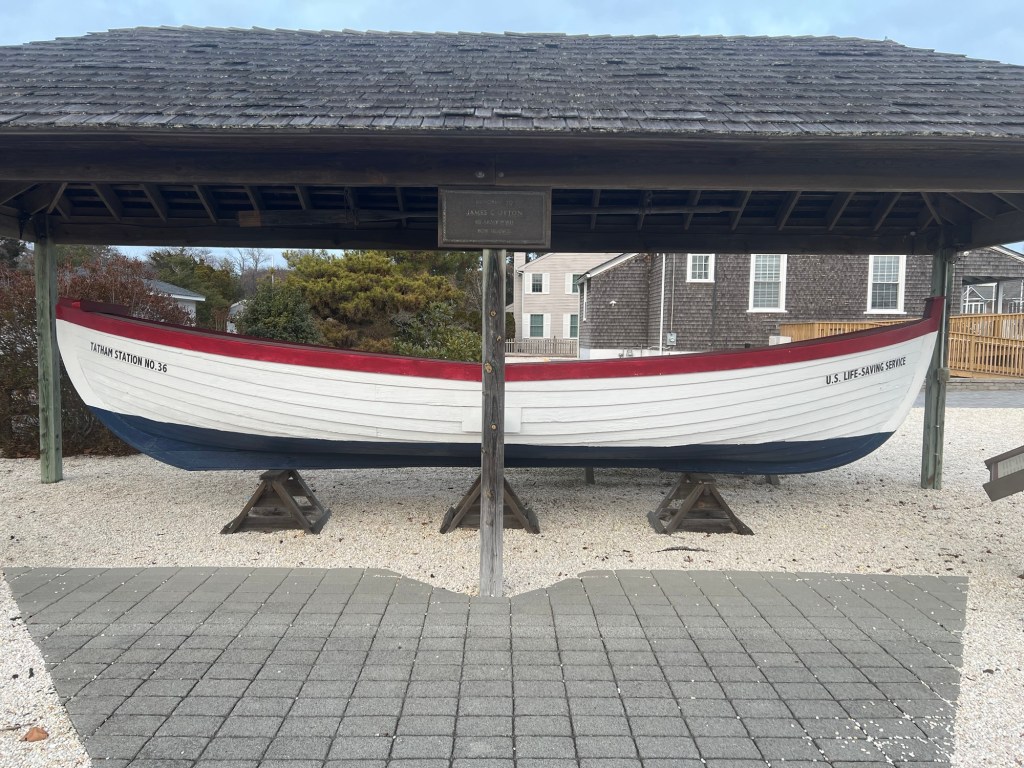
The rescue and life guard display
The display explains both the lifeguard stations and members and the rescue units run by both this department and the fire department.
The museum has a lot of interesting artifacts from the Margate Fire Department that covers both the working and social aspects of the department. Many cover the last 100 years of the department.
Margate Fire Company #1 Banner
The history of the Margate Fire Department
The Margate Police Department also had an interesting display of artifacts including a jail cell. The department also donated uniforms and items to arrest people.
The museum features the history of the town from community events and organizations to artifacts on buildings and businesses.
Transit display
The history of the community of Margate, NJ
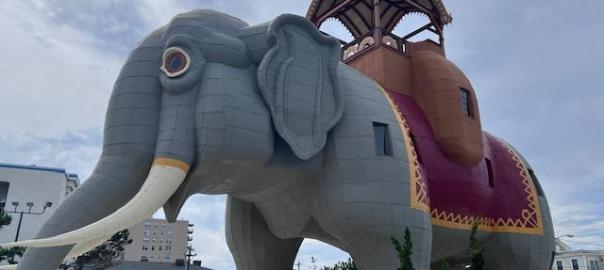
The town has many historical sites especially the “Lucy the Elephant” building down the road from the museum, which is one of the most well known structures at the Jersey shore.
The history of the Margate trolley system that used to exist on the shore line
Artifacts from the old trolleys
The history of the early community
Artifacts from residents of the town that continue to be collected by the museum
Artifacts from the community
The corner stones from the local schools
The museum has an interesting display of the 1964 Democratic Convention that was held in a fading Atlantic City. One of the biggest complaints was that the hotels were past their prime. This was before gambling would be introduced five year later.
The Democratic Convention in Atlantic City that was held in 1964
The museum touches on all parts of the Town of Margate,NJ and its role in the formation of beach communities along the Jersey shore. The museum shows the spirit of this New Jersey community.
The inside of the museum and the extensive displays of this small but interesting local museum.
The museum takes about an hour to visit and is packed with interesting information. The museum has very limited hours but you can work with the library in the off times to arrange a private tour.
The Bergen County Firemen’s Home Association at the August Barbecue
The picnic grounds
The grounds of the NJ State Firemen’s Home were in full bloom and the lawns were perfectly groomed for the afternoon. The skies were blue and the temperature at 80 degrees. Perfect for an outdoor event.
The barbecue grill
We had a wonderful menu planned for the residents and their guests. We were serving Hamburgers and Cheeseburgers, Hot Dogs and Bruck Wurst, Barbecue Ribs and Chicken, Baked beans, Mac and Cheese, Fresh Watermelon for dessert along with home baked desserts made by a member’s wife. A wonderful menu that residents and their families enjoyed.
The front gardens in the morning
The memorial fountain
The grounds in front of the home
Setting up the grill for lunch
Chef Prince working his magic at the grill that afternoon
Our Grill Master today was Chef Prince from the NJ State Firemen’s Home, who created this feast for all of us down to the homemade mac & cheese and the baked beans with honey and cinnamon. Everything was delicious!
The food was amazing that day
After we finished eating, the men of the Bergen County Firemen’s Home Association took our annual group picture. I wanted to thank this very dedicated group of men for making this event possible.
The members of the Bergen County Firemen’s Home Association after a job well done
A big ‘Thank You’ goes to our dedicated Executive Board who works so hard to make this organization what it is today. Hats off to Tom Simpson, John Kinner and Roy De Young Jr. for everything they do to make this organization the success it is today.
The Executive Board of the Bergen County Firemen’s Home after the picnic was over Tom Simpson, Justin Watrel, John Kinner and Roy De Young Jr.
Jolly Nick’s is a small local restaurant in Downtown Dumont, NJ with a menu of deep fried hot dogs, hamburgers, chicken sandwiches and cheesesteaks. They have other deep fried treats like French Fries, Onion Rings and Mozzarella sticks.
The front of Jolly Nick’s at 31 East Madison Avenue
The inside is like a step back in the 1970’s and 80’s with classic chairs and tables and menu prices to match. The menu is so reasonable at a time when everything is getting so expensive. The owner keeps the prices with reach of his customers.
The inside of the restaurant
The menu is varied and very reasonable
What I love about the hot dogs here is that he deep fries them so they come out crackled and crisp. Then he puts them in a soft bun and you can choose from a variety of toppings
The hot dog and French Fries lunch special with a drink
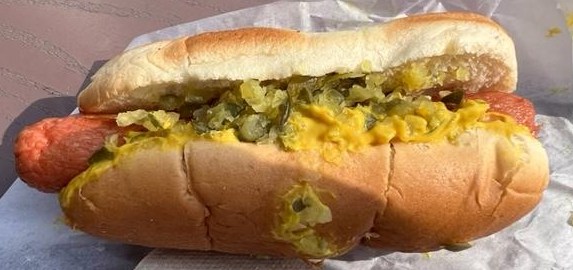
I chose to keep it traditional and chose mustard and relish. It was loaded on top and I liked the combination of spicy and sweet in the taste.
The special meal
The deep fried hot dogs
The French Fries
Lunch was so good!
It was nice to sit back and talk to the owner while I was eating. He really loves what he is doing and the food he makes brings back a lot of memories of high school and summers.
On my last day of class at the college, I stopped in for lunch to try more of their delicious and very reasonable menu.
I was in the mood for a Cheeseburger with a side of Onion Rings and a Dr. Brown Black Cherry soda. It was the perfect meal at the end of the semester.
The Cheeseburger and Onion Rings
The burger was perfectly cooked and had a nice caramelized flavor to it. It was topped with lettuce, tomato and a pickle.
My burger and Onion Rings
The Onion Rings were perfectly fried and crisp and had nice slices of onion in every bite.
The Onion Rings
I really enjoyed my lunch out!
What I like about lunches here is they are reasonable, filling and well cooked. You can a nice meal for a fair price.
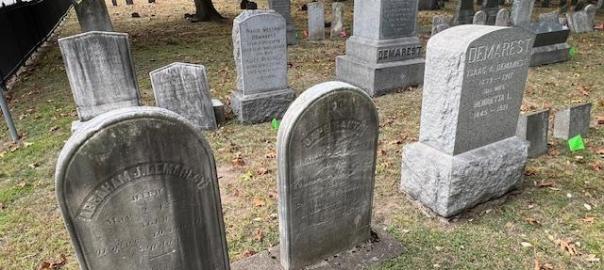
The historic Woodside Cemetery in Dumont, NJ. It is the home of many ‘founding families’ of Bergen County, NJ., such as the Demarest’s, Hopper’s, Van Buskirk’s, Haring’s (Hering’s), Van Saun’s, DeBaun’s, Westervelt’s and Zabriskie’s. These are the families that dominated the farming industry in Bergen County before and after the Revolutionary War. It is one of the many historical cemeteries and graveyards in Bergen County, NJ.
My mapping of historical cemeteries and graveyards in Bergen County, NJ:
The inside of the cemetery in the historical section of the cemetery
The historical Woodside cemetery is the resting place of many of the founding families of Bergen County and the surrounding communities of New York State.
Lining the historical Main Street of Downtown Dumont, the older part of the cemetery holds the family plots of some of the original settlers who shaped this country from its beginning.
The Voorhis family plot
The Zabriskie family plot
The Brinkerhoff family plot
The Waite Van Bushkirk family plot
The Van Bushkirk family family plot
The large Demarest family plot
The Hasbrouck family plot (The Family who Hasbrouck Heights is named after)
The Blauvelt family plot
The DeBaum-Westervelt family plot
The Van Saun-Demarest family plot
The Demarest-Haring-Van Vliet-Vorhees family plot
The Demarest-Van Bushkirk family plot
The Brinkerhoff-Doremus-Demarest family plot
The Van Bushkirk-Hopper family plot
The grave of James Blauvelt DeMott
The cemetery is the resting place of many War of 1812, Civil War, the World Wars, Korean and Vietnam and the modern wars.
The cemetery is a place of respect and quiet contemplation. To see the contributions of these members of the community is to reflect on the history of Bergen County. These families and many people buried here have helped shape Bergen County and the State of New Jersey to what it is today.
I took a ride to Upstate New York in July to visit museums and historical sites in Orange County, NY that had been on my bucket list but most were closed on the sunny Sunday. I made a U turn on the local highway and stopped to visit the Hill-Hold Museum in Campbell Hill, NY.
The Hill-Hold Museum at 128 NY 416 in Campbell Hill, NY
After the tour of the house was over, I decided to stop at the Orange County Fair for the evening and get something to eat.
Being a frequent visitor of the Dutchess County Fair, I expect all the fairs to be of the size and scope of that fair. This one was much smaller but still had a lot to offer.
The entrance to the Orange County Fairgrounds in Middletown, NY
When I arrived in the late afternoon, the fair was rather quiet as it was the late afternoon and most of the demonstrations and entertainment would be later that evening.
Walking through the entrance of the fairgrounds past the rides and the concessions
Still there was a sizable crowd already at the fair riding the rides, playing games of chance and eating at the somewhat over-priced concession stands.
There were a nice variety of rides and things to do while I walked around surveying the grounds to what there was to do and experience.
Looking over the rides which were filled with families
The first tent I visited was the Livestock Tent and the petting zoo. While the fair did not have the livestock displays that the other fairs did or the 4H presence, the tent had friendly selection of animals to see and feed. They looked so happy to see humans with food.
Walking through the petting zoo
The sheep and llamas were waiting by the edge of the pens for treat from a human hand. I found them inquisitive of us especially as we fed them.
Watching the llamas decor an ice cream cone filled with treats
The next tent I visited was the 4H tent with all the craft and food items on display. The judging had taken place and all the ribbons were on display.
Walking through the crafts tents
The Scarecrow Contest in the Crafts Tent
We even got to vote on a scarecrow. I thought that was interesting.
Nightmare Manor, the haunted funhouse
The preview of the movie “The Funhouse”
I next walked along the Midway past a whole series of rides and attractions. The first ones were the funhouse and the glory, the Nightmare Manor haunted ride. The lines were short so most people were getting in quickly.
The next thing I did was visit the grandstands where they were having a demonstration on Monster Trucks. This I had to see.
The Monster Trick Rally competition
They were offering rides to patrons before the show (which was a separate fee), so I got to see people driving around the field having a great time.
I did not want to stay for the show as those lines were getting long and I wanted to head home before it got dark. I left the ever growing line to head to the concession to get something to eat.
Stopping for dessert at Tootsie’s Fried Dough Concession
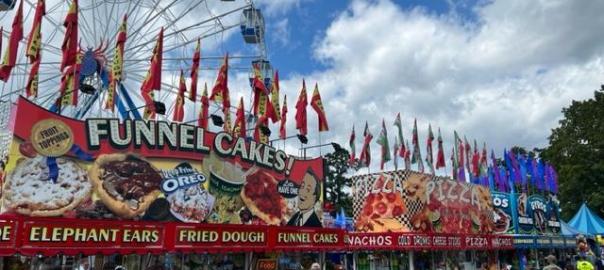
Someone had just walked by me with a steaming funnel cake and then I had to have one. The one thing I have to say about Tootsie’s Fried Dough is that everything is made fresh to order and the quality of the funnel cake was better than any one that I had at the Dutchess County Fair, which are always premade and soggy by the time you get them.
The Funnel Cake was made to order and out of this world
Yum! These were the best!
The last thing that I attended was the circus, which had just started at 6:00pm as I was leaving the fairgrounds. I decided to stay for the most of the show. I enjoyed the high wire acts and the acrobatic displays.
The high wire acts
These brothers from South America were extremely talented and do the most amazing tricks on the high wire.
The bicycle ride over the high wire
Skipping rope on the high wire acts
I really had a nice time at the fair. While it was not as big as either the Dutchess or Ulster County fairs that I attended in the past, there was a lot to see and do at the Orange County Fair.
The Bridgewater, NJ 4H Fair:
Going to the 4H Fair in Bridgewater, NJ was like a step back in time. I used to come here with friends after swim team practice as kids and we all used to garbage up eating our way through the Food Tent. After that, we would enjoy the fair.
The entrance to the Somerset County 4H Fair in Bridgewater, NJ
Walking into the 4H Fairgrounds was like stepping back over forty years as I had not been here since 1981. I even searched all the tents to find someone I knew (I did not know anyone).
The various displays of crafts, hobby cars, crafts and gardening tips
I first visited the Craft and Hobby tents with the displays of model trains, planes, automobiles and artwork. It was mostly families talking amongst themselves. The I next visited the Cow pens.
The cow pens
The cow pens
The cows were getting their afternoon feeding
I next visited the Sheep tent and they were in the middle of having their lunch as well not paying too much attention to us humans.
The sheep were enjoying their lunch when I got there and stopped for a second to see what I was doing
They all went back to feeding
There was a llama tent as well and they seemed very welcoming to human interaction
While walking around the fair, I could see the dark clouds coming in the distance. I had thought the storms were not coming until that evening, so I hustled through the rest of the tents.
Walking down the Midway of the fair with dark clouds in the distance
Entering the Poultry Tent
There were all sorts of varieties of chickens, ducks and geese to visit at the fair.
The prize chickens in their pens
The chickens were eating their lunch and pecking away
The highlight of the 4H Fair to me as a child was the Food tent with all the hot dogs, hamburgers, fried dough and funnel cakes and the popcorn and cotton candy for dessert.
The Food Concession tent
The Food tent
Just as I was deciding what to eat for dinner, there was a panicked announcement over the loudspeaker that they were closing the fair due to incoming storm clouds and lightening.
Everyone made a mad dash for their cars and I actually felt for all the concessions, who had all this food to sell and now how to shut down quickly. Some of the patrons had a ‘screw it’ attitude and kept eating probably until they kicked them out of the tent.
It started to rain while I was in the parking lot and I just checked messages on my phone and worked on blogs until most of the traffic got out of the parking lot. Then I drove into Bridgewater and had dinner at Joe’s Pizzeria at 1938 Washington Valley Road in Martinsville.
Joe’s Pizzeria at 1938 Washington Valley Road in Bridgewater, NJ
I had been coming to Joe’s since I was five and the pizza has not changed on bit since then. The next and the current owner both use the original Joe’s recipe for tomato sauce for the pies and calzones. Dinner here is another step back in time to my teen years. The inside of the pizzeria has not changed much in 35 years.
I was in the mood for a sandwich but I did not see any on the menu. They no longer make them so I ordered the Sausage and Pepperoni Roll. When it came out, it looked like a small pizza folded over. They made it fresh for me.
The Sausage and Pepperoni Roll with a side of red sauce
The roll was stuffed with a half pound of sweet fried sausage and spicy pepperoni, tucked in a pizza dough shell and baked to perfection.
It was the perfect meal for me covering both lunch and dinner. This could have been shared by two people.
The food here has been excellent since I started to come here in the 1970’s and has not changed since.
The dining area has not changed much since I was a kid
There’s more fairs to see and many more experiences to be had at them.
I had never heard of the Hill-Hold Museum and I happened to come across it when I saw a sign on the local highway that the museum was open that day. I thought it was a very interesting home and grounds with historical homes and buildings. Some came from other parts of Orange County, NY.
There are group tours on the hour with the last tour at 3:00pm. I took the last tour by myself with the tour guide and got a one on one tour of the house and grounds. The tour takes you into a step back in time to an agricultural society that no longer exists and times were slower and more structured.
The Hill-Hold Museum
The estate in the background
The Hill-Hold Museum:
A Farm for Two Centuries. This stone farmhouse was built in 1769. This museum reflects the life of the Bull-Jackson family spanning over 200 years. Hill-Hold Museum has circa 1830 Furnishings, a one room School House, a historic 1870 barn, Goosetown Gift Shop, picnic benches, and parking (Museum website).
The house on the estate grounds
The Mission Statement:
(From the museum website)
The Friends of Hill-Hold and Brick House Museums serve to preserve and enhance the preservation of history in Orange County, by maintaining, furnishing and operating programs at both these exemplary 18th century houses. These museums include portraits, memorabilia, photographs, and furnishings pertinent to them, the county and the past ages that touched each house (Museum website).
The front of the Hill-Hold Museum at the start of the tour
History of the Hill-Hold house museum:
(From the museum website)
Visit Hill-Hold museum and see what life was like on a Hudson Valley farm in the 1830s. This was still the era of candlelight, fireplace heat, homegrown food, and homespun clothing. The stone farmhouse was built in 1769 with wide plank floors, handsome paneling, and huge fireplaces (Museum website).
It was the home of a prosperous farmer, Thomas Bull, and his family. Original furnishings range from a prized old mahogany sideboard to made-on-the-farm pieces. Most of the rural family’s needs – food, clothing, fuel came directly from the farm. The property was gifted to the County in 1968 by Eleanor Jackson and the house went through an extensive restoration in the 1970’s to return it to how it appeared when it was originally built in the 18th century. (Museum website).
The Hill-Hold farm served the Bull-Jackson family for more than two hundred years. Now visitors are welcome to tour the farm. As we wander through Orange County, reveling in its rolling farmland scenery, we can go back to when the early Americans brought the gracious living and energetic husbandry to this unique part of the Hudson Valley (Museum website).
The Parlor-sitting room on the first floor was once a bedroom
We started the tour in the formal parlor, which the tour guide told me was once a bedroom along with the Living Room before the house was expanded. The house is filled with Bull family heirlooms that were donated back to the house by distance family members.
The family portrait’s in the Parlor-sitting room with the family piano that was used in the evening for entertainment
The portrait below is of the last member of the Bull family to live in the house before it was donated to the State of New York.
A portrait of the last family member to live in the house
The room was used by the family for entertainment, relaxation and for every evening activities. The room was used for pursuits such a sewing, needlepoint, conversation and with a piano in the room, evening activities with the family. With so much going on the farm, people retired in the evening early as the morning brought a lot of work on this working farm.
The spinning wheel by the fireplace
The Dining Room again was a former bedroom that was expanded for a formal eating as the both the house was expanded as well as the family. Breakfast and a late lunch/supper were served in this room. The Dining Room table, chairs, sideboards and china were pieces that part of the house donated back by the family.
The family dining room
The family China in the sideboard cub-bard in the Dining Room
The complete formal china set was displayed in the china closet as if ready to be used for a formal dinner party.
The sitting area in the Dining Room
The upstairs bedroom
We toured the master bedroom on the second floor of the home. Each of the rooms had fireplaces to keep them warm in the long winter nights with a canopy bed to keep the warmth inside. I could not believe how small people were at this time. This would have barely held one person today.
The canopy bed in the upstairs bedroom
The other bedroom would have been used by the children of the family. Now it contains sewing and weaving machines as well as spinning wheel to create the family clothing.
The second bedroom
The Sewing Room on the second floor with the oven/heater and family spinning wheels
Fabric and clothing was created in the home. Whether flax and wool, material was spun on the farm and the family wardrobe was created here.
The family spinning wheels
The sitting area on the second floor
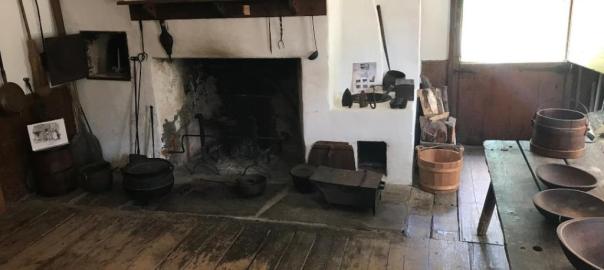
The last part of the house tour was of the family kitchen in the main house. The Summer kitchen was on the other side of the garden outside. The main kitchen inside the house had the fireplace, cooking materials, the family pewter and everything you would need to cook a complete meal.
The family kitchen
The family table set for cooking
Items for bread and dessert baking, butter making, roasting and stewing and all the items needed to cook three meals a day. The bounty of the Spring, Summer and Fall had to supply the long winters when there was no grocery shopping available.
The equipment for washing clothes and other household chores
Wash Day was a whole day reserved for sorting, boiling, scrubbing and hanging clothing to dry. Until the more modern machines were invented in the 1920’s after WWII, this was the weekly ritual for the farm housewife or the staff.
The open hearth and cooking equipment
The cooking equipment
The family pewter set
After we finished the house tour, we explored the outer buildings which included a Summer Kitchen, a smoke house, the vegetable and flower gardens. These buildings were spread around the main house.
The Summer Kitchen
The inside of the Summer kitchen
This Summer Kitchen came from a different property but the use is still the same. As the warmer months of the Summer were upon them, cooking was done in a separate building to keep the house cooler.
Some of the cooking and baking equipment
The flower beds on the side of the house
The flower and vegetable beds on the side of the property and the smoke house
Outside the main house were the vegetable, fruit and flower gardens. Items used in the household for meals, decorations and entertaining.
The barn, the outhouse and the smoke house in the distance
The inside of the smoke house where meats once hung used for family meals
All the family meats were placed in here for cooking and smoking for the family meals. The process took much longer than it does today.
The well in the middle of the property
They also moved an old school house to the property and it was furnished as a complete turn of the last century school house. It was used until 1936.
The schoolhouse on the property
The inside of the school room
The classrooms of the 1700’s and 1800’s to today have not changed much. With the exception of modern heating and air conditioning, the class room set up has not changed much. There is still a board in the front of the room, chairs facing the teacher, who is in charge and books lining the walls.
The teachers desk and the furnace that kept the room warm in the cold months
Games and amusements that were used in recess
Wheels and bikes were part of the games children played at the turn of the last century
Before modern electronics took over starting in the 1970’s, bicycles, hoops and games such as tag and hopscotch were part of playground activities. Playing outside has not changed much throughout the centuries.
Looking over the grounds at the end of the tour
Before I left for the afternoon, I was able to tour the gift shop before the museum closed for the day.
The Goosetown gift shop at the museum entrance at the end of the tour
The Goosetown Gift Shop at Hill-Hold features books, gifts, toys, craft items, and souvenirs. The shop is operated by the Friends of Hill-Hold, Inc., a not-for-profit organization, which aids in the operation of Hill-Hold and Brick House museums (The Museum website).
It really is an interesting tour and a step back in time for a glimpse into the life of a Upper Middle Class farming family.
*The blogger wants to note that the prices have gone up a few dollars but the quality and portion sizes are well worth it.
This iconic pizzeria has been open since 1970 and has been serving the Bridgewater, NJ community and beyond since then. I have been coming here since I was kid and have rediscovered again when travelling in the area. On only its third owner since its opening, the pizza and their amazing tomato sauce has not changed since then.
Their iconic sign
The original Joe sold the business to Joe II in 1984 and this year after 35 years of ownership, Joe II retired and his family did not want to take over the business and sold it to Sal, who I met recently who said he is keeping all the original recipes.
The longevity of this restaurant is the food and their prices. The mozzarella is always stringy on every bite, especially when a fresh pie comes out for slicing at lunch. The tomato sauce has a wonderful spicy tomato-y flavor to it that really brings out the sweet flavor of the fruit.
The pizza sauce recipe has been passed down through three owners!
The bottom of the pizza has a crisp consistency to it and you can taste the caramelization in every bite. The best thing to do is order a large and really enjoy it.
The pizza is really good!
Joe’s sandwiches are always consistent and delicious (See review on TripAdvisor). The half meatball hoagie comes with four rather large, freshly made meatballs. Joe’s meatballs are made fresh every day and are loaded with garlic. On a crusty fresh roll and lots of their tomato sauce each bite is special.
The meatball sandwiches here are amazing! (They no longer serve sandwiches)
Their half Italian hoagie is loaded with freshly sliced Italian cold cuts including ham, salami, provolone cheese with shredded lettuce and tomatoes with a vinegar and oil dressing. The combination of flavors of meats and vegetables really works.
Add a half dozen mozzarella sticks with fresh sauce on the side or garlic knots to a slice and it will give you the perfect afternoon lunch or dinner. In the almost fifty years I have been coming to Joe’s, I have never had a bad meal through the three owners.
The calzone was excellent
On a recent trip after a Michigan State versus Rutgers football game I decided to stop for dinner. I had the most delicious Sausage and Cheese Calzone that was made by the current owner. The calzone was huge. It was about the size of a small pizza that had been folded over.
Where the pizza magic happens
The calzone was filled with a combination of ricotta, mozzarella and parmesan cheeses with a big handful of fried sausage tucked into a soft pizza dough that was baked golden brown. It was accompanied by a bowl of their delicious tomato sauce that is based on the original Joe’s special recipe. Each bite was wonderful.
I went to Bridgewater again in 2026 to go to the 4H Fair and when a storm brewed during the fair, the organizers kicked everyone out before I could eat, so I decided to stop by Joe’s for a sandwich. They no longer make them so I ordered the Sausage and Pepperoni Roll. When it came out, it looked like a small pizza folded over. They made it fresh for me.
The Sausage and Pepperoni Roll with a side of red sauce
The roll was stuffed with a half pound of sweet fried sausage and spicy pepperoni, tucked in a pizza dough shell and baked to perfection.
It was the perfect meal for me covering both lunch and dinner. This could have been shared by two people.
The food here has been excellent since I started to come here in the 1970’s and has not changed since.
The dining area has not changed much since I was a kid
It’s nice to know that somethings never change. The restaurant has always been consistent and it’s nice to know that some things don’t change.
(*Blogger wants to note that the prices have gone up over the years.)
West Place Chinese Restaurant at 1288 Amsterdam Avenue
I came across West Place Chinese Restaurant when I was walking the neighborhood in Morningside Heights (MywalkinManhattan: Day Sixty-Nine Visiting SoHA, Morningside Heights last March). It was packed with Columbia students during the lunch hour and when I returned, people from the housing the complexes that surround it replaced them.
The inside of West Place Chinese Restaurant.
One afternoon towards my walk of the neighborhood, I went in for lunch and they have the nicest selection of lunch specials that are each priced at $10.00 (prices have changed over the years). This runs from 11:00am-3:00pm and the entree is served with Pork Fried Rice and a choice of either Wonton, Egg Drop, Chicken Noodle or Rice Soups. There is a dish from all over their menu and the few times I have eaten there, they have been excellent (see reviews on TripAdvisor).
The Wonton Soup is excellent
On the first trip there, I tried the General Tso’s Chicken, a combination of fried chicken pieces served in a tangy sweet/sour sauce served with a large portion of fried rice. The serving size was large enough for two people to easily share. The sauce coated a sizable portion of chicken that was perfectly cut and fried. There is a lot of flavor to their sauce and has a nice tartness to it. The fried rice is pretty standard but still tastes good. Not much as way of ingredients except bean sprouts.
The General Tso’s Chicken with Fried Rice is excellent
It was on this trip I noticed that at lunch they also have a small lunch buffet that is priced at $6.95. That is a combination of popular dishes and rice and noodle dishes as well. It seems to very popular with the locals and students alike. You might want to call the restaurant to ask what the hours of this buffet and if it is offered on the weekends.
The Roast Pork Lo Mein here is excellent!
The second time I ate here, I came for dinner on a rather cold night and the meal warmed me right up. At night, the restaurant offers a Special Combination Platter, a choice of sixteen popular dishes served with Pork Fried Rice or White Rice with an egg roll.
I tried the Chicken with String Beans with fried rice and an egg roll. The portion size of chicken with string beans was very large and even myself who has a large appetite could just about finish it. The string beans were fresh with a crisp snap and cooked perfectly with just the right amount of chicken where one did not dominate the other. It was served in a spicy garlic sauce that mixed well with the rice.
The Chicken and String Beans is really good
Their egg rolls are filled with roast pork and vegetables and were perfectly fried out. With a little sweet sauce, made a nice accompaniment to the dish.
The service here is very friendly and helpful and they get the food out quickly.
On a recent trip uptown, I stopped in for dinner and this time I tried the Boneless Spareribs with Fried Rice and an Egg Roll combination platter and the meal was excellent as usual. I had not eaten here in months and the food is consistently excellent. The portion size was larger than I remember from the last time. They really piled the food into the container.
The Boneless Spareribs with Fried Rice and an Egg Roll.
The Boneless Ribs were overflowing on the platter.
These sweet and juicy bites are full of flavor and piled into this small dish. There was enough food for two people.
The Egg Rolls are amazing.
When I revisited Harlem again to explore changes in the neighborhood, I stopped in for a late night dinner and had the Beef and Broccoli with Pork Fried Rice and an Egg Roll.
The Beef and Broccoli Combination meal
I had forgotten how good the food was here. The meal was excellent. The beef was so tender and the brown sauce had such a rich flavor to it. The Pork Fried Rice has lots of ingredients including nice sized pieces of roast pork.
The Beef and Broccoli was delicious
Their egg rolls are some of the best in the City with slices of cabbage and roast pork and fried to perfection.
The egg rolls were cooked to perfection
The dinner was delicious and hit the spot. If you are on the Columbia campus and have a yearning for good Chinese-American cooking, this is the perfect place for you.
Please call the above number for delivery. It is free in the area with the minimum of $8.00.
Northwest Bergen History Coalition History Day/Summer Open House 2026:
I visited the Hopper-Goetschius House Museum during the 8th Annual Northwest Bergen History Coalition History Day. I had never been here before and it is a real treat. There are many buildings on the property to visit on top of the house and the fact that this was someone’s house into the 1980’s is pretty interesting.
The historic marker in front of the house
The Hopper property in July 2026 for the Weekend Open House
The Gris Mill wheel
The historical tree stump
The historical plaque
The property in the Summer of 2026
Christmas Open House December 2019:
The house still holds many secrets. The best part of the tour of the house is the secret stairs in the kitchen that lead to the old second floor. This can only accessed behind a panel that leads to a narrow set of steps. You can see it from the new second floor from the top floor.
I attended Holiday Celebration on December 8th, 2019 and it was a beautiful sunny day for an outside event. It was a really nice afternoon. They had a visit with Santa at the Dutch barn which was decorated with trees surrounding him and presents and a decorated Dutch sleigh. In the schoolhouse, there were all sorts of games and talks to enjoy.
Santa in the Dutch Barn at the Hopper museum
In the outside kitchen, there were chestnuts and fresh popcorn being made that you could munch on while walking around enjoying the festivities and the smells of the cooking food were mouthwatering. The gentleman doing the cooking was doing a demonstration on how the food was cooked and the amount of time it took to make things.
The outside buildings still had a bit of snow left
The inside of the house was decorated for the Victorian holidays with a nicely decorated tree in the Living Room and garland all over the place. There was a Victorian music box playing songs and a reading of “The Night Before Christmas” being read on the hour.
In the kitchen of the oldest part of the house, they served hot cider and homemade Christmas cookies of all kinds. They were also selling fresh homemade jam that one of the members made. The kitchen was decorated for the holidays as well. There was an open tour of the house and it was fun to see the upstairs decorated with all sorts of Victorian toys and dolls. The fee was a $5.00 donation and it happens every first week of December at the site.
The Hopper House kitchen
The house is a treasure trove of period furniture and family items and on the property there is a schoolhouse, a barn, a blacksmith shop and an outhouse. During the Summer months, the house is open for special tours on the weekends and in the Fall, they have a Harvest Festival and Christmas holiday events. The house is run and operated by the Upper Saddle River Historical Society.
The antique toys in the upstairs bedroom
In April of 2023, I returned to the Hopper-Goetschius House for the Northwest Bergen History Coalition Day for the event. It was a gloomy day with mist and rain but that did not put a damper on the event. There were lots of activities going on in each of the buildings.
My first stop was at the barn where the ladies were doing a demonstration on spinning thread and we had a conversation of where the expression “Pop goes the weasel” came from (from the spun threat reaching its max and then the machine made a ‘pop’ sound). The ladies were demonstrating the way women spun yarn and made clothes and the work that it entailed.
The yarn spinning demonstration at the Hopper Barn
The ladies explaining how the spinning works
‘Pop goes the weasel’, the weasel at the Van Riper-Tice Barn
When I left the barn, I went over to the school house building to see what was going on. A very bored volunteer took up all my time and would not leave me alone. She had to read from a script and take me all over the house. I just wanted to get out of there. Thank God another person walked in so that I could escape and see the rest of the property.
The Ramsey House was moved to the property to save it from destruction and the society has done a good job transform it to a turn of the century classroom. This is a surprising display in many historical societies as I am sure that people have donated so much of their childhood mementos.
The Ramsey House schoolroom
The schoolroom
The teacher’s seat at the school room. Nothing has really changed.
The farm artifacts at the Ramsey House schoolhouse
After the tour of the Ramsey House, I took the tour of the main house again and its secrets. The Hopper House is a very interesting home as the owner did not want plumbing in the house. Up until 1963, she still used the well. She was forced by her nephew to get a modern bathroom. I thought this was strange that the woman did not want a bathroom. She still used the outhouse into the 1960’s.
The Hopper House kitchen
The home is decorated with all sorts of beautiful antique furnishes and decorations. The house is so well organized and the volunteers do such a nice job telling its story especially at the holidays. I visited all the rooms where the volunteers explained its purpose.
The bedroom upstairs
Bedroom Two
Bedroom Three in the upstairs loft of the house
My last part of the tour was visiting the Smokehouse right behind the house.
The Smokehouse during the Summer Open House
Inside the kitchen during the Open Kitchen
The inside of the Smokehouse
The volunteers were cooking corn bread, homemade potato soup and biscuits in the fireplace. It was interesting to see how food was cooked on the farm in the days before modern kitchens.
The two volunteers working there were so happy to see someone. They told me that no one wanted any soup. On a cold rainy and misty day, I was taking them up on it and it was really good! Talk about warming you up.
The Smoke House on the Hopper estate was cooking away that afternoon
The volunteers were making breads, biscuits and soup that afternoon that warmed me up
The delicious Potato Kale Soup warmed me up on this rainy day
The delicious Corn Bread was cooked with bacon fat and tasted so good! I munched on most of this.
I finished eating and talking with the volunteers about all cooking they were doing. They told me that they were following the recipes that were from the late 1700’s that would have been cooked at the farmhouse at that time. It was a really interesting conversation we had on cooking. It was nice to eat something as well. I was starved at this point.
After the meal, I left to go to the next site. I felt for these volunteers. The Hopper House is off the beaten tract and they must have not gotten the visitors that the other homes had seen. Still it was a wonderful visit with members who care so much about the house and its grounds.
The Hopper estate with the barn, school house and ice house in the distance during the Northwest Bergen Historical Coalition Day
The Hopper House entrance hall
The Hopper-Goetschius house on the corner of Lake Street and East Saddle River Road dates back to 1739. Built by the Hopper family, it is the oldest remaining house in Upper Saddle River. We know it existed in 1739 because it was recorded in surveyor Charles Clinton’s journal and possible it is older.
The picture of Steven Goetschius and his wife,
The other family pictures on the table in the parlor
Rosalie Fellows Bailey in her book on pre-Revolutionary Dutch houses, says it was marked as the home of Gerrit Hoppa on a rough sheepskin map made about 1713.
The Goetschius family, the second owners of the house
The house underwent several changes in the mid 1800’s. The large central chimney with back to back fireplaces was removed. Probably, with more modern forms of heating available such as wood stoves, the fireplace seemed a bit old-fashioned and the owners took it out. Besides, they wanted to use the entrance hall as a room, so the stairway along the east wall was removed and a central staircase added where the fireplaces had once been. The dormers were added in the Victorian era.
The Hopper house in 2023
The Hoppers farmed the land and had a lot of it by today’s standards. The property extended from the Saddle River (Lion’s Park) up the hill almost to Montvale and up the East Road to where Creative Gardens was located.
The antique dolls at the Hopper House bedrooms
(From the Society website)
In 1814, the house became the home of the Reverend Stephen Goetschius of the Old Stone Church. It remained in the Goetschius family for a century and a half, always a place of central importance in town as Stephen Goetschius, the great-great grandson of the Reverend Stephen, served as the borough clerk for over 40 years and conducted his town business from the east room of the house (SRHS.com).
The Hopper House Living Room
The house was without running water until Stephen’s death in 1962. Until improvements were made at that time, Steve’s wife, Lizzie, as those before her, carried water from the well for washing, cooking and shoveled coal for heat (SRHS.com).
The Hopper House Kitchen
The kitchen in the new section of the house
In 1985, the Hopper-Goetschius house was presented to the Borough of Upper Saddle River by Clinton and Grace Carlough. Lizzie Goetschius, the last resident of the house was Clint Carlough’s aunt. The house today serves as a museum, run by the Upper Saddle River Historical Society and offers the public historically related events throughout the year (SRHS.com).
The Hopper House Living Room
The back bedroom Dutch wardrobe
The Patriotic Display for the ‘Bergen 250’
(Upper Saddle River Historical Society)
The Hopper House property also contains:
*The Privy or Outhouse that was in use at the Hopper-Goetschius House until 1962 when plumbing was installed in the house.
The Outhouse
Hopper House estate with all the important buildings in the Summer of 2026
*The Ramsey Sayer House was moved to the grounds in 1999 to become part of the museum complex. This is the oldest existing from house in Upper Saddle River, a good example of a tenant house common on farms in this area. The Ramsey Sayer house belonged to William Ramsey, the grandfather of Kate Fisher Goetschius, mother of Steve Goetschius, who lived in the Hopper Goetschius house for many years.
The Ramsey-Sayre House now serves as the makeshift schoolhouse
The schoolhouse at the turn of the last century
The Native American artifact collection at the Schoolhouse
*The Van Riper-Tice Barn was erected about 1800 by the Van Riper Family on their farm on West Saddle River Road (near the Cultural Center). It was later owned for many years by Harmon Tice.
The Dutch American barn in the Summer of 2026
Sleighs and buggies and outdoor equipment
In 1989, it was scheduled to be demolished to make way for a development, the Historical Society dismantled it, moved it to the Museum ground and had it restored and rebuilt on its present location.
The inside of the Van Riper-Tice Barn at the Hopper House estate
Winter transportation at the barn
Transportation and farming equipment
The farming equipment display
More farming equipment
The displays of wool at the Van Riper-Tice Barn
The display of waffle irons
The Apple Cider Press that the Tice and Van Ripper families were so well known for making especially at Thanksgiving
*Snake Fence: a zig-zag fence of split rails once common in this area was added in the property north of the Van Riper Tice barn. The project was completed in 2001 with the help of Will Mazzuto and the vision of John Kroner and Joanne Lombardo.
The Hopper House estate
The Blacksmith Shop
The blacksmith doing a demonstration
The Upper Saddle River Historical Society:
The Upper Saddle River Historical Society was organized in 1977 to collect, preserve and distribute the history of the Upper Saddle River area. The Society is also responsible for the management and restoration of the Hopper-Goetschius House Museum located at 245 Lake Street, Upper Saddle River, NJ.
The Historical Society has over 500 members and is host to nearly 2000 museum visitors each year. The Society holds program meetings throughout the year along with special events such as a Spring Concert, a wonderful Harvest Fair in the fall and an Old Time Holiday Open House in December, featuring mulled cider with chestnuts roasting on an open fire.
The Museum is open for tours every Sunday during July & August from 2:00pm-4:00pm or by appointment. For group or individual tours contact: Althea Gardner @ (201) 327-7807 or Kay Yeoman @(201) 327-2236.
Hopper-Goetschius House Museum Restoration Fund Drive
Disclaimer: This information was taken directly from the Upper Saddle River Historical Society website. Please check the site for the hours and days it is open.
I recently visited the American Folk Art Museum in New York City for the “Made in New York City” exhibition and it is a very interesting and engaging museum. The artwork for the museum was a combination of painting, sculpture, pottery and metal work created at different periods of the City’s history. It really showed the extent of manufacturing in New York City and the craftsmanship that was once here.
The entrance to the museum
I recently visited the American Folk Art Museum in New York City for the “Nation”exhibition and it is a very interesting and engaging museum.
The main gallery of the museum with early American art
The main gallery with one of the revolving shows
The artwork for the museum was a combination of painting, sculpture, pottery and metal work created at different periods of the City’s and the Country’s history.
Some of the permanent works were made in the Tri-state area. It really showed the extent of manufacturing in New York City and the craftsmanship that was once here.
The ‘Folk Nation’: Crafting Patriotism in the United States’ exhibition
Patriotism in the United States draws from the American Folk Art Museum’s rich collections to explore links between vernacular art and the construction of an American sense of self. Introducing visitors to the concept of “folk” as a category developed in conjunction with the art and antiques markets, this exhibition positions works as multilayered in their meanings, imbued with cultural significance by not only their creators, but also their collectors and subsequent owners. Americans have long preserved objects as a way of telling stories about themselves. Beginning after the Revolutionary War and gathering momentum in the late nineteenth and early twentieth centuries, people turned to early American things to construct a national history and sense of collective identity—an impulse often driven by lingering insecurity about the young nation’s perceived cultural provinciality compared to Europe (Folk Art Museum.com).
One of the painting’s that stood out to me was more contemporary approach to the Statue of Liberty, entitled ‘Miss Liberty reaches out to the persecuted’. A different approach to folk art.
The painting ‘Miss Liberty reaches out to the persecuted’ by Reverend Benjamin Franklin Perkins
The description of the painting
Some of the interesting things you will see are the paintings by artists in both Colonial New York and from the Hudson River School of prominent New Yorkers through its first 200 years of history. You will see how the styles of art have changed over the years.
Also there is a lot of metal work in the ways of signs and rods for the front of doors and for the roofs. The woodwork carvings that once graced the front doors of merchants all over the City is now a lost art. Here you could see the works of German and Russian carvers and the craftsmanship that was put into every piece. It was interesting too to see the racial themes and stereotypes that were used in the art.
Several revolving shows were being featured on a recent trip to the museum such as ‘Nation’ and ‘Self Made’, themed shows for the 250th Anniversary of the Country.
The show ‘Self Made’ A century of inventing artists’
Self-Made: A Century of Inventing Artists takes a critical look at the historical definition of the “self-taught artist” in the United States from the early twentieth century to today. The exhibition examines how artists without academic training have depicted, conceptualized, and identified themselves on their own terms. In doing so, it aims at challenging reductive, long-standing narratives that have cast these artmakers as amateurs or isolated geniuses working out of time, without lineage, influence, or artistic networks (Folk Art Museum.com).
The sixty artists featured here largely worked outside conventional art-school, gallery, museum, and peer-exchange systems. Their practices are rooted in diverse sites of learning, from professional expertise to community-based traditions. Drawn primarily from the American Folk Art Museum’s collection, this selection of artworks brings together outstanding examples of paintings, sculptures, photographs, videos, and artists’ notebooks by key national and international figures—many of them recent or rarely seen acquisitions (Folk Art Museum.com).
The exhibition is organized around three methods of artistic “self-making” and self-fashioning: self-portraits, alter egos, and autobiographies. Each gallery unfolds chronologically, providing grounding for the artists’ intentions. The works function as primary documents: firsthand accounts of the self, authored by the self. Akin to diaries or other personal statements, they call for close attention, asking viewers to “look at me, in this way, that I have chosen.” By centering the makers’ perspectives and aesthetic choices, Self-Made shifts the focus away from the viewer’s role in completing the creative act and places it squarely on the artist’s agency (Folk Art Museum.com).
Some of the paintings that stood out seemed to be self-portraits.
The painting ‘Untitled’
The museum takes different approaches to the way art is portrayed.
Another program that the museum does well is they have afternoon Jazz Wednesdays and Free Concerts on Friday nights.
There are family programs, walking tours, curator talks and lectures as part of the museum programming so there is something for everyone.
The American Folk Art Mission:
(From the Museum website)
Since 1961, the American Folk Art Museum has been shaping the understanding of art by the self-taught through its exhibitions, publications and educational programs. As a center of scholarship and by showcasing the creativity of individuals whose singular talents have been refined through experience rather than formal artistic training, the museum considers the historical, social and artistic context of American culture. Its collection includes more than seven thousand artworks dating from the eighteenth century to the present, from compelling portraits and dazzling quilts to powerful works by living self-taught artists in a variety of mediums (Museum bio).
Self-Taught art, past and present, tells empowering stories of everyday life. The field of American folk art was first defined at the turn of the twentieth century by collectors, professional artists, critics, dealers and curators whose search for an authentic American Art seemed to be finally answered in works that presented a nuanced of national identity, faith, progress, ingenuity, community and individuality. Under the umbrella of “folk art” expanded to also include artists working in the present. For the last twenty years, the term self-taught has more regularly come to address these artists, whose inspiration emerges from unsuspected paths and unconventional places, giving voice to individuals who may be situated outside the social mainstream. Those individuals have been active participants in the shaping of American visual culture, influencing generations of artists and establishing lively artistic traditions (Museum History).
American Folk Art Museum History:
(From the Museum website)
The museum of Early American Folk Arts as it was known initially held its first exhibition in a rented space on 49 West 53rd Street in 1961. The museum’s collection was launched in 1962 with the gift of a gate in the form of an American flag, celebrating the nation’s centennial. The gift reflected the museum’s early focus on eighteenth and nineteenth century vernacular arts from the northeast America.
In 1966, after receiving a permanent charter, the museum expanded its name and mission. As the Museum of American Folk Arts, it looked beyond the traditional definitions of American folk art. Its exhibitions and collection began to reflect “every aspect of the folk arts in America-north, south, east and west.” Founding curator Herbert W. Hemphill Jr. “expanded the notion of folk art beyond traditional, utilitarian and communal expressions.” Under his direction, the museum began to champion idiosyncratic and individualistic artwork from the fields of traditional and contemporary folk art. In doing so, the museum ushered in a new era in the field of twentieth-century folk art (Museum History).
The 1990’s brought new focus to the diversity and multiculturalism of American Folk Art. Offering a more inclusive vision. the museum began to present African American and Latino artworks in their exhibitions and permanent collections. Director Gerard C. Wertikin announced American folk art’s common heritage as “promoting an appreciation of diversity in a way that does not foster ethnic chauvinism or racial division.” (Museum History).
The museum further established its broadened outlook with the 1998 formation of the Contemporary Center, a division of the museum devoted to the work of 20th and 21st century self-taught artists as well as non-American artworks in the tradition of European art brut. In 2001, the museum opened the Henry Darger Center to house 24 self-taught artist’s works as well as a collection of his books, tracings, drawing and source materials (Museum History).
The gift shop
In 2001, the museum chose its current name, American Folk Art Museum. Recognizing that American Fold Art could be fully understood in an international context, the word American functions as an indication of the museum’s location, emphasis and principal patronage rather than as a limitation on the kind of art it collects, interprets or presents. The museum’s current programming reflects this shift in focus. Past exhibits have included folk arts of Latin America, England, Norway, among other countries and continents (Museum history).
Don’t miss this amazing little museum on the Upper West Side of Manhattan.