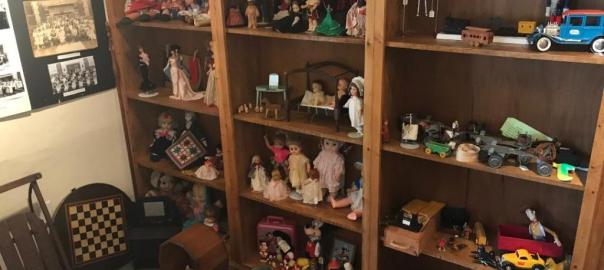
The Shandaken Historical Museum began as the second school house of Pine Hill, District #10. There were two school rooms on the second floor. Where the office of the museum is now located was the library. The rooms were divided by a cloak room used by both rooms. The room to the right was used by the upper grades.
When they started to send high school children to Fleischmanns High School their room was closed. The large room on the left them housed grades 1-8. Downstairs was the gym. On the west end was a stage that folded up against the wall. The stage was used for recitals and at Christmas time, a play was put on for the whole town. For most of the year it was the gym, the favorite sport was basketball (TSHS website).
The old school could tell some pretty good tales. It has housed a coat factory, a furniture stripping business, a community center, as a village building it held Boy Scout meetings, Red Cross gatherings as well as free vaccination clinics and is now the Town of Shandaken Historical Museum (TSHS website).
The museum sign that greets you outside
The Museum’s Mission:
The museum displays a fascinating collection of 19th and 20th Century tools, machinery, clothing, letters and artifacts relating to the Town of Pine Hill and the surrounding hamlets of Allaben, Big Indian, Bushnellsville, Chichester, Highmount, Mt. Pleasant, Mt. Tremper, Oliverea, Phoenicia, Pine Hill, Shandaken and Woodland.
The inside of the main gallery showcases the best of the surrounding hamlets. Each small town surrounding Pine Hill history is displayed town by town with artifacts from each community.
Pine Hill’s history is prominently displayed in the front starting with a display of an old classroom. It is amazing how things stay the same over the years.
Each of the displays have interesting details in all the artifacts that being showcased in each section. There are all sorts of photos, historical objects, artworks and personal affects of local citizens.
The classrooms of the past are similar to today
Local artifacts from the town
Each of the small hamlets surrounding Pine Hill had their own displays of artifacts ranging from local history, schools, fire and police departments, local events and residents and their day to day lives. Many of the residents from these communities have donated their or their family’s personal affects to the museum to build this collection.
When you visit some of these communities and look at the pictures on the wall, you can see in some cases not much has changed in these Upstate towns.
The museum celebrated the 250th Anniversary of the United States with an interesting display of the history of the Country and New York’s contributions.
The New York State display of the 250th Anniversary of the Country
The lower level of the museum is a reflection of life on the farm and an agrarian society from the turn of the last century. The funny part is that only being two hours out of New York City, many small towns in New York State still have that feel.
The lower level Farm Living Galleries
The first set of artifacts are dedicated to the home, family and faith. Everyday living to most families in the small farming communities of Upstate New York. These artifacts reflect homelife from the late 1880’s to the 1930’s.
Home and Living on the farm
The kitchen tools and equipment to run a household
The tools of the trade for the life in these rural communities was based on what they could grow and trade with other farmers. Before WWII, you can see the life of the rural housewife was tedious with growing, preserving, pickling, baking and canning for the winter months long before modern supermarkets and refrigeration. It was a lot more work to get meals on the table and took a lot of grit and a budget of both money and time.
The Baking and Jarring on the farm to prepare for the Winter Season
The workings of the farm kitchen
Children’s playthings and cribs
Children’s play was based around the household and work in the future.
The family and faith
The items in a household that make it function
The workings of the home and farm
Life and functions of the Upstate Farm
The communities of Upstate New York still have agriculture as a base and even though electronic gadgets still help, many of these ‘tools of trade’ are still being used. These are the tools that built the farming industry Upstate through the 1970’s.
Tools of the Trade
The farm tools
Farm and field equipment
The equipment of the Farm
Small businesses were part of the community and the druggist was very important
The museum touches on life in small and large Upstate New York towns and the challenges they still face in a economy where farming and tourism are dependent on the economy. Though many of these communities are only two hours outside New York City, they might as well be a world away.
The displays are an interesting look of how communities develop and how they sustain themselves over time and we can see how COVID and the transplants from New York City and beyond are still shaping these communities.
The front of the Little Apple Toy Shoppe at 2484 Broadway
When I was walking my Broadway Walk, which is the 13 mile walk down Broadway from 242nd Street to the Bowling Green, I took my time and walked through many stores I found interesting. Some had colorful displays and some just had playful merchandise in the windows. Then I passed The Apple Toy Store at 2484 Broadway and saw the cheerful sign at the door and had to walk in. What a delightful, whimsical store.
The sign that greets you on Broadway
The displays inside and out of the store really showcase the merchandise and the store has that colorful, playful appeal that attracts both children and adults.
The inside of the store with interesting costumes and wooden products
What I loved about the store was there was not a plastic toy in sight but more smaller vendor wooden toys, more toys that spark imagination and creative play. In some toy stores in the City, they are just stacked with the same toys that you see in other stores. Piles of Legos, Playmobile and construction toys that while popular and interesting and fun to play with don’t offer that unique shopping experience of seeing some of the smaller toy vendors that are not available in every toy store. This is what makes Little Apple Toy Shoppe stand out.
The unique display of costumes
The store also has an array of costumes just in time for the holidays. Halloween and Christmas are just around the corner and it will soon be dress up time. Everything is so nicely displayed and not crammed in to fit every piece in the store. There is a nice selection of sizes and varieties to both boys and girls of different ages.
The dolls on display smile and wink at you almost asking you to take them home.
What was really nice was talking with the owner that afternoon as she just opened this shop. She had told me that West Side Kids, which was located on West 84th Street had closed their doors after Christmas of 2025 and there was no toy store in this part of the City. She wanted to fill that gap and create a store that would be part of the community. A place where families could gather and shop together. I think she is on the right path with the business with all the engaging toys and whimsical displays.
The selection of books, crafts, wooden toys and clothes
These are the type of toys I loved to receive when I was small. These are the type of playthings that enhance creativity and play and a child’s imagination.
The soft opening that day gave the owner a chance to meet people in the neighborhood and tell them about her business (she did not even have the sign over the door done yet. Just the sandwich board outside the front door). The store reminded me of the mythical store ‘Shop Around the Corner’ in the movie the movie, “You got Mail!”, creating an environment where families can meet and chat with both the owner and their neighbors.
I wish this establishment the best of luck because New York City needs more creative small businesses.
The scene in “Shop Around the Corner”
The spirit of small businesses all America and what happens when we don’t support them.
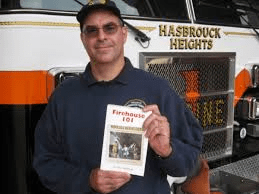
Author and Fire Fighter Justin Watrel with his novel, “Firehouse 101” on sale at IUniverse.com.
Exert from my Novel “Firehouse 101” Chapter “A Trip to the Firehouse”:
In 2005, just as I was interviewing to become a Hasbrouck Heights Fire fighter, I published my novel, the second in a New York City Trilogy (that I am still working on), titled “Firehouse 101”. I had been writing the book since January 2002, inspired by my best friend who had survived the Towers that tragic day.
This was the story of Alex Livingston, a Honolulu Hotel executive, who moves from Waikiki to Brooklyn, NY when the Marriott hotel he works at transfers him when business declined at his hotel in Hawaii a year after the attacks.
While living in Brooklyn, Alex befriends Ryan Callahan, a member of the FDNY and a third generation firefighter. Ryan’s survival the day of the attacks still haunt him over a year later and Alex sees a community still reeling from the attacks.
Firehouse 101: available for sale on the following platforms:
From the Chapter “Visiting the Firehouse” storyline:
In the novel, Alex goes to Firehouse 101 located just off Boerum Hill, Brooklyn to assist Ryan in cooking a monthly family breakfast that has occurred every month since the attacks to bring families together with the current firefighters families so they do not feel forgotten. This is when Alex, a Hotelier and Culinarian with the Marriott Metrotech, realizes that Ryan can’t cook.
I have posted darker excerpts of the book online but this is one of the funnier parts of my novel. To read the rest of the story to see what happens next, you can buy the book through IUniverse.com, my publisher, Amazon, Walmart, Barnes & Nobel or any other online book company. “Firehouse 101” is a print on demand book and an eBook.
“A Visit to the Firehouse”:
Saturday night Alex went to bed early. He could not believe he had to get up this early to cook with Ryan. Who even heard of a guy that couldn’t cook? An Italian guy at that? This was the twenty first century and people have progressed on. Leslie had told Alex that Ryan’s life was similar to a 50’s sitcom. Was that why Leslie and Ryan broke up? She did not see herself in the 50’s? Or was it the other way around and Ryan could not leave his secure world for the unknown? Some people have a tough time letting go of what they’ve lived their whole life.
After 9/11, the outside world had finally seen inside the fire fighters world. It had opened people’s eyes. They found it fascinating, like a new stage play. But as Leslie pointed out, fame is fleeting. It was Andy Warhol’s term “15 minutes of fame”. Leslie said the media makes something a hot topic and it stays that way until the next hot topic comes around. Alex turned and went to sleep. That night, he had that dream again about running down the stairs as fast as he could, this time hearing crashing noises above.
Alex got up at five the next morning and decided to get to the firehouse early. He was groggy, but knew that after working many a breakfast at both Marriott’s and Hiltons, it pays to be early and set up. It was still dark outside as Alex walked down the quiet streets of Boerum Hill. He relished the silence. Alex paused and looked at the tree lined side streets. It really was a beautiful neighborhood, full of character. It was a special neighborhood; he could see why the association worked so hard to protect it.
The door to the firehouse was open, Alex was glad as he wasn’t sure of how else to get in. One of the guys was downstairs manning the radio. Alex looked out of place with his chef’s whites and checked pants. When business got slow in Hawaii, just like in New York, Alex worked in the kitchen, honing the skills that he had learned at UNLV. The Marriott gave him the uniform to keep just in case.
“Hi,” Alex said softly to the guy at the radio. “I’m a friend (was he?) of Ryan’s. I’m helping him out this morning with breakfast. Where can I find him?” “Yous helping Ryan?” the guy yawned. He had the thickest Brooklyn accent Alex had ever heard. “He’s upstairs in the kitchen, top of the stairs and turn left,” he said and went back to work. Another firefighter walked down the stairs as Alex went up. He stared at Alex and said, “Are yous catering or somethin’?” “I’m here to help Ryan out with breakfast,” Alex said. “Thank God, his food tastes like shit,” the guy grumbled as he passed Alex. I love the way New Yorkers phrase things. There is no holding back, Alex said to himself as he finally found the kitchen.
It was not very impressive. The equipment seemed old but functional. There were two ovens, a stove, and a griddle with enough room to work with on the side. It wasn’t a huge kitchen but it would do. Alex wondered if it fit all the guys in the house at one time. The building was old. Alex wondered if these walls could talk what would they say? About losses and triumphs of the past? Tales of fires big and small and stories of probies (probationary officers) past? There was a lot of history here. Alex pondered the past. He was so deep in thought that he didn’t see Ryan enter.
“What? Are you okay?” Ryan asked. “Sorry, I was thinking of something. So what are we doing this morning? What did you want to make?” Alex asked, rubbing his hands together. Ryan told him that there would be more people than expected. “How many?” Alex asked, “Fourteen, fifteen?” “Are you kidding me? Try twenty six!” Ryan said. Alex looked surprised and said, “Twenty six? Jesus Christ, we have to get to work,” Alex said collecting himself. He would kill Ryan later. “Okay, what do we have to do first?” Alex looked at the clock, it was now six. How was he going to pull this off?
With so many people, everything was going to be served buffet style. Thank God, Alex thought, for the old buffet line. “So what are we making?” Alex asked. “Bacon, eggs, toast, potatoes, French Toast, sausage, muffins, and we have some melons,” Ryan replied. “Okay, so what has been done?” Alex asked. “Nothing,” Ryan said innocently, pointing to several bags of groceries. Alex looked incredulously at the bags and yelled, “Nothing?! I can’t believe it, when does all this have to be done by?” “Between seven thirty and eight,” Ryan replied. “If I weren’t in a rush, I’d kill you now. Let’s get to work,” Alex said, emptying the bags as fast as he could. Alex suggested Ryan peel the potatoes and put them in water so they didn’t brown. He would get the muffins started. Alex asked where the muffin pans were and Ryan pointed to the bags again. Ryan was surprised as he heard Alex mutter a few swear words in Italian that he had picked up from his grandfather. So that’s when the Italian shows, Ryan said to himself.
As they unloaded the bags, Alex looked Ryan square in the eye and said, “I’ll get you for this.” Ryan peeled the potatoes and put them in the water, while Alex preheated the oven and read the directions on the muffin package. These were easy, two eggs and water and mix. The muffins would only take twenty five minutes. Alex cut the four loaves of bread for the French toast and asked, “Why are there four full loaves with so much other food?” “You’ve never been in a firehouse for breakfast before have you?” Ryan asked, taking his time to peel the potatoes. He was not doing that great a job.
Alex finished slicing the bread and put it aside. He cracked several eggs in a bowl and mixed it with milk and vanilla. “Ryan, I’ve told you about my pancake breakfasts with my mother’s cousin up in Greenwich. Now where is the cinnamon and nutmeg?” Ryan pointed at a spice rack and said, “Alex, serving people at a pancake breakfast and cooking for a group of fire fighters are two different things.” “Ryan, please,” Alex said stirring the cinnamon mixture with sugar and putting it into the refrigerator to cool and said, “How much can people possibly eat?” “Just wait,” Ryan said with a smile. Alex started to get the bacon ready on sheet pans to put under the broiler, and then realized that the muffins weren’t done yet. He looked at the time, shit it was getting late.
“Ryan, can you speed it up a bit with those potatoes, it’s getting late.” Alex dropped a pound of butter in a pot for clarified butter for the potatoes and the buzzer finally went off for the muffins. Damn these things come out perfect Alex said to himself. Why do people even bother making them from scratch? Alex threw the bacon in the broiler and set the griddle for the sausage and French toast. He looked at Ryan, who was still peeling potatoes and said to himself, he’s worthless in here. Alex was ready to kick him out of the kitchen.
Didn’t this guy know the meaning of the words “Mise en place”? (Everything in its place). Alex cut the sausage into patties and put them on the griddle. On the other side of the griddle, he started the French toast. Ryan finally finished peeling the potatoes. “The best thing to do now is cut them in sixths and we’ll make them with the onions you have over there. Then crack the eggs, we can scramble them last,” Alex said as he turned the bacon over, flipped all the sausage and finished the first batch of French toast. Alex stopped for a second and wondered who was in charge here? How come Ryan wasn’t moving faster?
Ryan finished cracking the eggs and scrambled them with milk as Alex got the bacon out of the oven and drained it in batches. There was some commotion in the other room as the men started to get up. All of sudden a little boy burst into the kitchen and caught Alex off guard. He almost dropped hot bacon on the kid.
“Uncle Ryan,” the child yelled as he grabbed Ryan’s leg and hugged him. “Alex, this is Patrick Jr.,” Ryan said with a big smile as he reached down and hugged the child. Alex looked at the time and panicked. Crunch time. “Hi Kiddo,” is all Alex could mutter. The sausages were being drained, the bacon was now done and the next batch of French toast was on the griddle. “Patrick is my friend Patrick’s son. He’s four years old,” Ryan explained. Alex stopped in his tracks. This was Patrick’s son!? Patrick had children? Alex looked at the little boy; it was so sad that he left such a charming son behind.
“Where are you’re sisters?” Ryan asked. Sisters? “They’re outside with everyone else, come with me,” Patrick Jr. said. “Do you mind?” Ryan said and he followed Patrick Jr. out the door, leaving Alex alone in the kitchen. He was lucky that no one went into the kitchen. He grabbed the four platters and ran through each dish one by one.
He lined the platters with paper for the bacon and the sausage and put them in the warmer, finished the French toast and put the platter in the warmer. He placed the muffins on a platter off to the side. He then took two sheet pans and started the toast. He thought about what Roger had said. Was Ryan using survivor guilt on him?
Two more children burst into the kitchen and yelled, “We’re hungry! Who are you?” as they gave Alex a strange look. Alex looked back, not knowing how to explain it to two little kids and said, “I’m a cook.” They looked at one another, as if Alex was a Martian. They asked together, “Can we have something to eat?” “No. You’ll ruin your breakfast,” Alex tried to say. “Whahhhhh, we’re hungry!” they screamed. “Okay, okay,” Alex said giving them some muffins and quickly turned over the toast. “Here you go, now make like bananas and split,” Alex said shooing them out of the kitchen. “He’s just like my mom,” one kid said to the other. “Yeah, bossy!” the other said as they ran out the door with their muffins. All Alex could think was that these kids had inherited their parents’ way of speaking. It was funny to hear these accents on seven year olds.
Ryan came back into the kitchen as Alex turned over the toast one more time in the broiler. “Where have you been? It’s like the attack of the little kids in here,” Alex said pulling the toast out. “I forgot to tell you the wives bring their kids,” Ryan said. “So I found out. I had to bribe two little kids to get them out of the kitchen. They told me that I acted like their mother,” Alex said out of breath.
“They’re typical kids,” Ryan said. Alex heard a lot of talking in the dining area. “Are the guys up?” Alex asked throwing the potatoes on the grill with some chopped onions and butter. “Yeah, some of the guys are greeting their wives that showed up for breakfast,” Ryan said as he started to cut up the five melons. Alex flipped the potatoes. “Do you have a brush?” Alex asked. “For what?” Ryan wanted to know. “The toast! Honestly Ryan, I don’t get you. You plan all this out and you act like you don’t know what to do. How did you ever do this in the past? Magic?” Alex said flustered. Ryan looked down at the floor and said, “I always had Patrick with me and he knew what to do.” Alex immediately went quiet.
He looked at Ryan for a second like he was ready to cry. “I’m sorry. I just want this to come out right,” Alex said. Ryan controlled himself and said, “I’m sorry for leaving you in the kitchen.” He saw the brush they used to make barbecued chicken and handed it to Alex, who at this point was suffering from a massive guilt complex.
“Thanks,” Alex said taking the melted butter and brushing it on the toast, cutting it and putting it on another platter. Ryan finished cutting all the melon cut and put it on another platter. “Oh, I forgot to make the cawfee,” Ryan said to Alex who then burst out laughing. “What’s so funny?” Ryan asked. “The way you said it “Cawfee”, I want some cawfee and cake, like a true New YAWKA,” Alex said shaking his head (no matter how Alex tried, he just liked to make fun of Ryan). Ryan was fed up with Alex’s criticism of the way he talked and walked up to him and said in a serious tone, “Alex, I would cut the crap with this accent stuff. All the guys in the house talk like this. This is Brooklyn. No one speaks your perfect lockjaw ‘Connecticut English’. Did you know you sound funny to us?” “Hey, you want me to leave?” Alex said, “I don’t seriously need this crap on my day off.” Alex was exhausted and still had a batch of potatoes and the eggs to finish and Ryan was no help with any of it!
“I’m sorry, but watch it,” Ryan said, “some of the guys won’t appreciate it.” Alex put this into perspective. The idea of twenty guys with easy access to fire axes shut him up. “I’ll keep quiet,” Alex said turning the last batch of potatoes as Ryan arranged the melon on the platter. They were in the home stretch when two guys in jeans and ‘Firehouse 101” tee shirts walked into the kitchen. “Ryan, when the hell are we going to eat? We’re starved!” they yelled. They stopped in their tracks and looked at Alex.
They looked at Ryan and said, “Who the hell is this? You had to hire a cook to help you?” Alex held back from cracking up again and just smiled. “This is Alex; he works over at the Marriott…”Ryan started to say. “How did he get here?” one of the guys said. “We live in the same building and Ryan asked me for help,” Alex said, “we’ll have everything out in five minutes. I promise,” Alex said professionally. “Okay, but this better be good,” the other guy said. As they headed through the doors, they yelled in the room, “Hey everyone, Ryan’s got a chef in here!” Alex looked at Ryan and said, “I hate you”.
The only thing left were the scrambled eggs. Alex said, “I’ll finish the eggs. Why don’t you get all the rest of the stuff out so it does not get cold and those kids don’t come back in here,” Alex said as Casey and two new probies came into the kitchen. “Who’s the cook?” a probie said as he saw Alex putting the rest of the rest of the potatoes on the platter. “What’s he doing back here?” Casey asked pointing his finger at Alex, “don’t you have a home to go to?” He and the guys laughed. Alex had enough and said, “Look why don’t you shut up and be helpful. These platters aren’t going to walk out on their own, so get them out.” He had put up enough with this shit. “Fine, you don’t have to yell at us,” one of the probies said. Alex handed each of them a towel and a platter and said that the platters were hot. They let the room grumbling. “Ryan, could you take the French Toast out. I don’t want to over cook it,” he said as he powered sugared it, “it’s too bad we have no orchids. They look great on platters.” “Huh?” Ryan questioned.
“In Hawaii, we put orchids on out platters,” Alex said, “it makes a nice effect on the presentation.” “You are truly weird,” Ryan said as he took the French toast and bacon out. Alex cleaned the griddle and started the eggs. Thank God they are quick. Alex looked at the time. It was 8:10 am. They were just a little behind schedule. Alex put the eggs on the platter, picked up the platter of potatoes and walked out the door. He was not expecting a crowd watching him.
Alex walked into the dining area. There were about thirty people sitting around laughing. They took one look at him and everyone went silent. Alex stood there with the platters in hand when one of the little kids said, “That’s the guy who gave us the muffin. See, he does exist, Mommy!” Alex said “Hi, here are the eggs, Ryan. I’ll have the toast out in a minute,” and darted back into the kitchen. God, that was embarrassing. They looked at him like he was from Mars.
As he finished the last platter, Ryan came back into the kitchen. “You made a splash,” Ryan said. “Shut up and take this platter out,” Alex said tired. “Are you coming in to eat?” Ryan asked. “I’m fine. I had a piece of French toast. I can’t eat this much this early in the morning. You go with your guests and the rest of the guys and I’ll clean up,” Alex said. “You sure?” Ryan asked. “I’m fine, unless we need more food,” Alex kidded. “We’ll be okay for right now. I’ll keep you posted,” Ryan said as he went back into the dining area. ‘I’ll keep you posted?’ Alex thought to himself as he started to clean up.
As Ryan exited, Captain Giovanni entered the kitchen. Alex looked up and thought to himself, ‘oh this just keeps getting better’. “Hi Carmen,” Alex said innocently as he was wiping the table down. “Alex, what are you doing here? Can’t get enough of the firehouse? I told you, you can get sucked in,” Carmen kidded. “Carmen, Ryan asked me to help him with the breakfast,” Alex started to explain, “I hope I’m not crossing any boundaries.” Alex was still afraid he was trespassing. “Don’t worry about it, Alex. It’s just funny to see you in our kitchen,” Carmen said looking over the mess that Alex was cleaning up. “You are staying to clean up, right?” Carmen asked. “Will all be done soon,” Alex said getting back to work.
As Alex washed the sheet pans, dried the utensils and neatly stacked everything, he couldn’t believe the looks he got from the people outside. Alex felt like he was in a fishbowl. In Greenwich, those visits were like visiting someone’s house. He never felt this uncomfortable at those pancake breakfasts but then he was a little kid whom the guys would throw over his shoulder. As he thought harder, he always wondered why Alex Senior had not done the same. Other guys talked about playing horsy and the piggy-back rides their dads gave them as kids. At his house, it was golf, swimming and tennis lessons at the club. The world changes as you get older and the things that you did as a child differ from those as an adult. Alex cleaned up the rest of the kitchen and put everything away.
Alex tied up the garbage and as he finished mopping the floor, Ryan walked in. “Thanks for leaving me here to clean up,” Alex said. “You said to go outside and join the guests,” Ryan said defending himself. “I’m sorry, I’m tired. Where does the trash go?” Alex asked. Ryan grabbed the trash and dropped it out the window. He looked out the window to see two garbage cans with the tops off. The garbage bag went directly in. That’s convenient Alex thought to himself.
Alex asked if they had enough food. Ryan laughed and told him they just made it. The last muffin had been grabbed as he walked into the kitchen. “You’re kidding me, right?” Alex said almost shocked, “Ryan that was three pounds of bacon, three pounds of sausage, ten pounds of potatoes, two loaves of bread and that was just for the toast, not to mention the French Toast, muffins and three dozen eggs.” “You forgot the melon,” Ryan smiled. “Who the hell can eat all that food so early in the morning?” Alex questioned. “Look outside the kitchen,” said Ryan. It was too much for him to eat so early. He preferred brunch where you could eat later. Having those waffles the other day with Leslie was even a stretch for him.
“Alex, these are fire fighters and their families. Trust me, these guys can eat. You need the strength for the job,” Ryan said. “To do what, lift an elephant?” Alex said. Although Ryan and a few of the other guys were in good shape, most of the guys looked like Casey, slightly over-weight with a small gut hanging over their pants. I guess they just work it off Alex thought and shrugged it off.
Hasbrouck Heights firehouse chef:
Art imitates life. Me cooking the last Engine One barbecue before I left for Grad School. Me setting up the buffet for dinner June 2022.
Author and Bloggers Note:
You can see what happens next by reading the novel “Firehouse 101”.
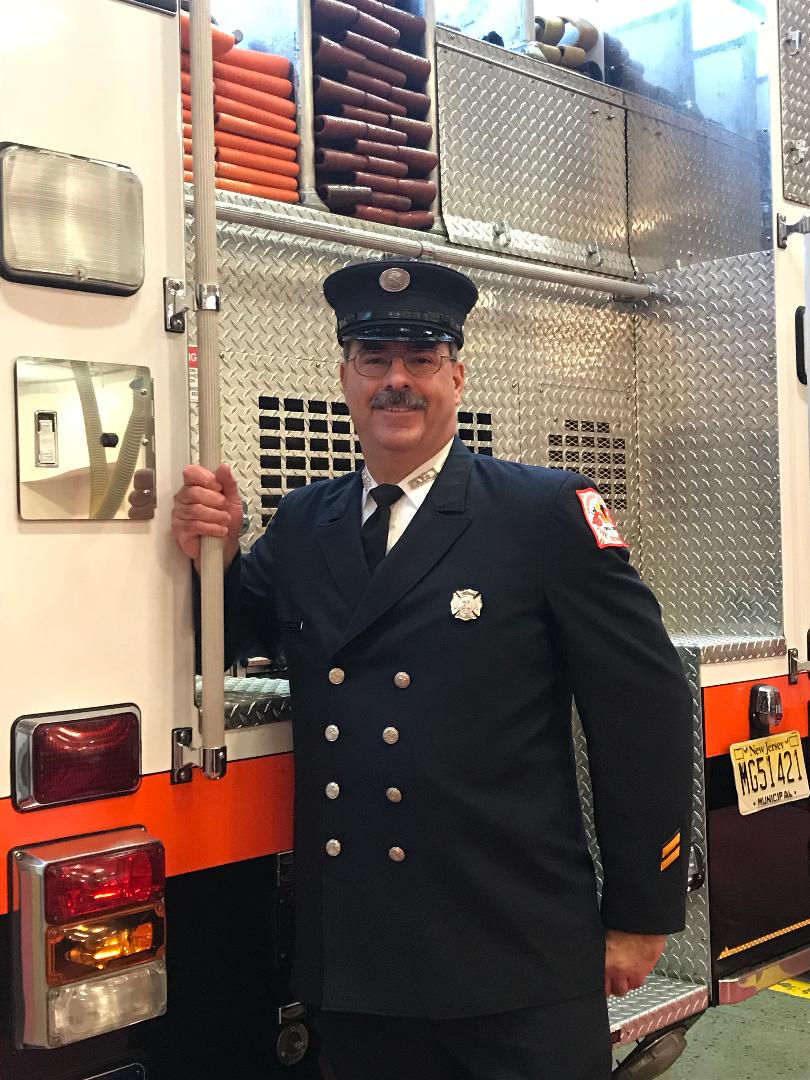
Retired Fire Fighter Justin Watrel, 19 year veteran of the Hasbrouck Heights Fire Department in Hasbrouck Heights, NJ.
I recently visited the Ogdensburg Old Schoolhouse and Firehouse Museum at 6 Passaic Avenue in Downtown Ogdensburg and discovered the community’s rich history of farming and mining in its past and its current destination as a weekend vacation spot and a up and coming bedroom community of New York City.
The County still has some farming and agriculture going on as the County continues to be built up with expats from the City, and Bergen and Morris Counties. The first floor is dedicated to the history of the Ogdensburg Fire Department with an old Engine and Ladders trucks, artifacts from the Sterling Mine just up the road and township property such as an old voting booth. You can read about the history of the Ogdensburg family as you head to the outside gallery.
The second floor has displays of various town departments including the Rescue, the Police Department and Fire Department. There are various displays of the town’s school system and various clubs in town. There are displays on the town’s mining and agricultural past with items such as farm advertising and mining equipment and minerals. Each display plays a role in the development of the community and how it progressed from farming to mining to manufacturing to the bedroom community it is today.
History of the Building:
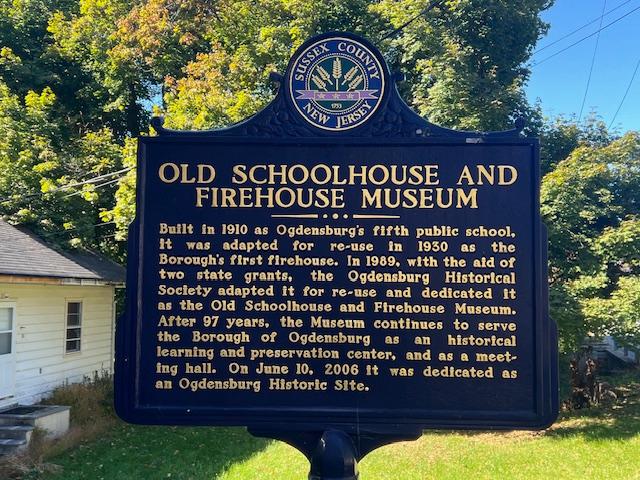
“Built in 1910 as Ogdensburg’s fifth public school, it was adapted for re-use in 1930 as the Borough’s first firehouse replacing the one built in 1872. In 1984, with the aid of two state grants, the Ogdensburg Historical Society adapted it for re-use and dedicated it as the Old Schoolhouse and Firehouse Museum in 1987.
After 97 years, the Museum continues to serve the Borough of Ogdensburg as an historical learning and preservation center, and as a meeting hall. On June 10, 2006 it was dedicated as an Ogdensburg Historic Site.”
The historic sign of the museum
The Borough of Ogdensburg is the host of this marker commemorating the rich history provided by this building. This building has been maintained with much thought and care and remains as a museum and meeting place for the residents of the town. The marker is located in front of the building on Passaic Avenue just off Main Street by the Ogdensburg Elementary School. This marker was part of the 2008 placement (Museum website).
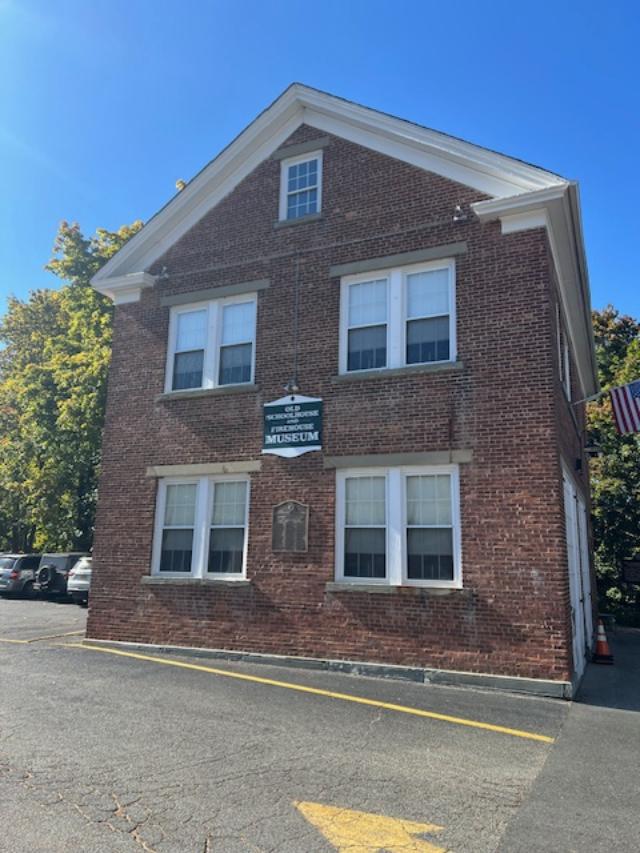
The outside of the museum which served as a school and a firehouse
The first floor of the building has the fire trucks, the history of the fire department and Ogdensburg’s 250th Anniversary of the United States on display.
The museum artifacts from the 250th celebration of the Country
The museum is on the heart of mining country of Sussex County, NJ and the museum has an interesting mineral collection along with their collection of mining artifacts.
The Mineral and Mining Collection
The museum being home to the Ogdensburg Fire Department contains the history of the local fire department along with vehicles and artifacts from the department.
One of the early pull hose beds pulled by men and then by horses
The first floor also contains the history of the Ogden family in the region.
The history of the Ogden family in the community
The town voting booth and a turn of the last century phone
The second floor gallery used to serve as offices and living space of the fire department.
The main gallery on the second floor
The gallery case lines are filled with memorabilia from different aspects of the community telling the story of the growth of the community that included Mining and Farming. It explains the growth into the modern suburbs of today.
The main gallery on the second floor of the museum
The main gallery on the second floor
The display case of Ogdensburg departments including school, fire and police departments
Blanket with historical sites and artifacts of the town of Ogdensburg, NJ
The businesses including schools and the domestic and farming industries
Each of the display cases represented different aspects of the town and has a variety of pictures and memorabilia from a variety of eras. The case lines show how the community changed over time from a mining community to the changes of a bedroom community of Newark and New York City.
The Entertainment display of recorders, phonographs, radios and early record players
The influence that Thomas Edison had on the community with new technology. Several pieces of Thomas A. Edison memorabilia are on exhibit to honor the ten years Edison spent mining iron ore at the old Edison Ore Milling Company on Sparta Mountain. Several of his phonographic inventions were created here (Ogdensburg Historical Society website).
Close up view of record players and Victrola’s
The School system display
The Ogdensburg Presbyterian Church display of artifacts from inside the church
The Sterling Mine display with minerals and equipment
The NJ Zinc Mine and Mineral display is a small s as molding of the museum down the street and the importance of the mining industry at the turn of the last century.
A closer look at the minerals display
A replica of a working mine operation. The machine shows how workers descending and brought up rock from the mines.
The Dedication to Mr. Waco Hadowantez, the town historian
The last display as you leave the museum is dedicated to the man who founded the historical society, Waco Hadowantez.
The museum tells an interesting story of the history of Ogdensburg and the surrounding area. It shows the importance of the Mining Community at the turn of the last century and how the community is pivoting towards tourism to tell its story.
Please contact the museum directly for seasonal hours and tours.
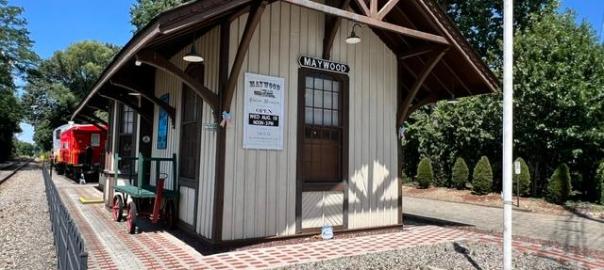
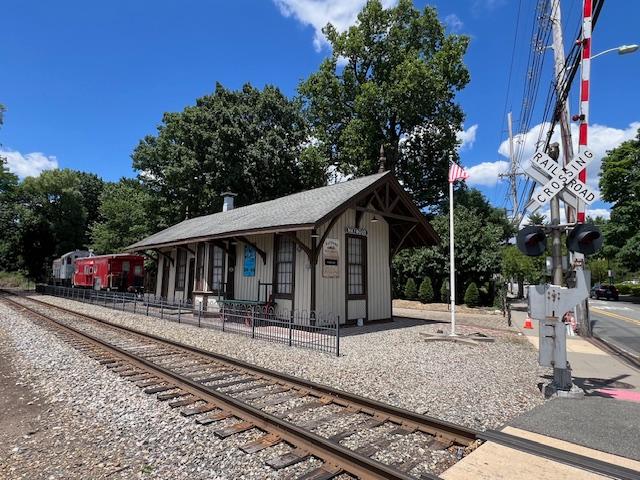
This National Registered restored 1872 New York, Susquehanna & Western railroad station, one of oldest in New Jersey, is located in the heart of Maywood, NJ. Restored by the Maywood Station Historical Committee and opened in September 25, 2004, it contains an extensive railroad museum and collection. The site also contains a restored caboose and engine.
The museum sign welcomes you
The side of the museum where materials are dropped off
I visited the Maywood Station Museum when it was open recently and found a fascinating collection of railroad memorabilia, Maywood fire department history and early maps of the town of Maywood. It is a treasure trove of articles for people who like to study railroad history especially its growth in small towns, early stages of industry in the town and in New Jersey.
The inside of the station museum
There is a lot of items that show the history of rail service not just on the train but in the station as well. There are antique desks, phones, ticket takers, mailboxes, benches and pictures all from the turn of the last two centuries.
The train ticket collection
The Maywood Station Historical Committee (MSHC) division of New York, Susquehanna & Western Technical & Historical Society operates the Maywood Station Museum and is chartered as a tax-exempt, 501(c)3 non-profit, educational and historical organization with a mission to preserve our railroad and cultural heritage through restoration and preservation, historical awareness, archiving and interpretation, museum open houses, meetings and special events (Maywood Station Museum Committee).
The train artifacts
The History of the Museum:
(From the Museum website)
The museum is operated and staffed by the volunteer membership of the Maywood Station Historical Committee. The main focus of the museum is concentrated on the history of Maywood Station and the New York, Susquehanna & Western Railroad and the roles they played in the development of the Borough of Maywood and the surrounding area. The museum collection contains hundreds of photographs, displays, documents, maps and artifacts covering the histories of Maywood Station, the NYS&W and local railroads, the Borough of Maywood and the local region, which are changed periodically and designed to entertain and educate visitors of all ages as well as offer a virtual timeline to these subjects.
The Museum and Railroad Car
Maywood Station Museum is also the official site of the New York, Susquehanna & Western Technical & Historical Society’s (www.nyswths.org) archive, which contains thousands of drawings, maps, track diagrams, photos, timetables, documents and records covering the history of the New York, Susquehanna & Western Railroad (Wiki).
Train documents and other artifacts
For those interested in historical buildings, meticulous care has been taken by the Maywood Station Historical Committee to show the museum in a historical context. The museum features the original woodwork painted and stained in the original colors and original Maywood Station furnishings have been restored and displayed such as the potbelly stove, station agent’s desk, chairs, telegraph keys and freight scale. Victorian-period original light fixtures and sconces adorn the ceilings and walls. Additional items have been painstakingly reproduced to the exact original specifications of over one hundred years ago including the station benches and bay window area (Wiki).
The Station Master’s desk
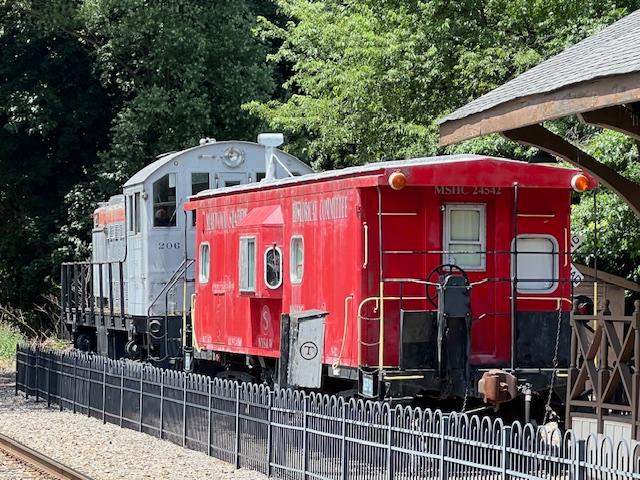
The Maywood Station Museum collection includes a former Penn Central/Conrail N-12 class caboose, which was restored by Maywood Station Historical Committee members. Visitors to the Maywood Station Museum are invited to come aboard Caboose 24542 and view additional displays and an operating model train layout. The Maywood Station Museum collection also includes original New York, Susquehanna & Western Railroad ALCO Type-S-2 Locomotive #206, which has also been restored by Maywood Station Historical Committee members (Wiki).
On September, 10, 2009, NYS&W S-2 #206 was placed on the State of New Jersey Register of Historical Places. The locomotive was placed onto the National Register of Historical Places on March 19, 2010 (Wiki).
The History of Maywood Station:
The Museum Logo
In 1871, the New Jersey Midland Railway, predecessor of today’s New York, Susquehanna & Western (NYS&W), began constructing a rail line between Newfoundland, NJ and Hackensack, NJ. The line was part of a plan to connect with the New York & Oswego Midland (later New York, Ontario & Western) in Middletown, NY and provide rail service from the Great Lakes to New York Harbor. The residents of what would later become Maywood, which at the time was part of an area called Midland Township, saw the advantages of the new railroad and requested a stop be made.
At the time, approximately 13 homes with nearly 90 residents were in the boundaries of today’s Maywood. Soon afterward, construction of Maywood Station began. On March 11, 1872, the New Jersey Midland commenced operating trains on the new line and Maywood Station formally opened in the same paint colors you see it restored to today. Six passenger trains a day in each direction initially stopped at Maywood. It should be noted that for a brief period after that station opened, the station sign said “West Hackensack” but this removed due to the requests of local residents who wanted the station named “Maywood”, as the immediate area surrounding the station had then become known (Maywood Station Museum).
A station agent was employed and it is believed that the first agent was name George Sipley. The station agent handled passenger baggage, freight shipments to and from the station, passenger ticketing and general functions in addition to performing the job of postmaster. In the 1872 to 1910 period, Maywood Station served as Maywood’s post office at various times when it wasn’t housed in a local merchant’s store. Another station agent/postmaster was Charles M. Berdan, who held this position in the late 1890’s into the early 1900’s. Mr. Berdan’s home was located directly across Maywood Avenue from the station and exists today. Maywood Station was also equipped with a telegraph so that the railroad could communicate between their stations and local residents could send messages around the world. The station also offered Wells Fargo and later, Railway Express Agency delivery services. These services lasted into the 1960’s (Maywood Station Museum).
The Railroad buckles
When Maywood Station was built, it originally located on the south side of the current tracks. In 1893, the station was moved to its present location on the north side of the tracks due to the addition of a second set of tracks being constructed and a purchase of additional land by the railroad. At the time, several additional NYS&W stations along the line were similarly moved for the same reason. When the station was moved, it was jacked up onto the rails, the rails greased, spun around and slide approximately 30 feet closer to Maywood Avenue, then jacked up again and moved to its present location. A new foundation was also added. It is interesting made at this time including the addition of a freight platform at the “new” rear of the station.
The Maywood, NJ Railroad Museum
The spot where Maywood Station was moved to originally included a passing siding where steam locomotives were stationed to be added, when necessary to help heavy freight trains on the several grades encountered heading west on the line. When the station was moved, the passing siding was cut back and one of the two switches was removed. The remaining trackage was then used to store freight cars, which were unloaded at the station. The siding started to the west of the station and ran 440 feet to near the rear freight platform of the station. The siding was last used in the early 1970’s and remnants of it can be seen today (Museum Station Museum).
The train sections on displays in the back of the museum
In 1894, the approximate 1.1. square mile area that included Maywood Station, formerly part of Midland Township was incorporated as the Borough of Maywood. Also that year, the NYS&W expanded into western New Jersey and through its Wilkes-Barre & Eastern Railroad subsidiary, into the coal fields in the Pocono region of northeastern Pennsylvania. The rail line could now take a passenger from a ferry at New York City to a connection at Jersey City, NJ to almost Scranton, PA on its own rails. The added ease of transportation began to attract manufacturing to Maywood as well as a demand for new homes. In 1894, the total residents living in Maywood numbered approximately 300 but this was about to change (Maywood Station Museum).
The rails next to the museum
New manufacturing and homes sprang up in the area surrounding the station and included such industry as Schaefer Alkaloids Company, Maywood Chemical Company and Maywood Art Tile Company. As these companies expanded so did Maywood’s population and by 1920 it numbered nearly 3000 (today Maywood has approximately 9,500 residents). The 1920’s also marked the height of passenger service provided by the NYS&W at Maywood Station. Thirteen passenger trains in each direction stopped at Maywood Station on a daily basis. Freight shipments continued to be delivered to the station and most of the local industry had their own rail sidings serving their plants. The NYS&W was enjoying a period of posterity and in 1920, a freight house addition was added to rear of Maywood Station and the exterior walls received a stucco finish over the existing boards and battens.
Station equipment
Stucco was in-vogue in the 1920’s and the NYS&W applied this material to several other stations on their line as well. In 1926, another round of various improvements were made at Maywood Station including the addition of interior men’s and women’s bathrooms, an 8-inch concrete floor installed to replace the wooden floor planking plus electrical and heating improvements. Unfortunately the Great Depression stuck in October 1929 and lasted well into the late 1930’s and the growth slowed dramatically. In 1937, the NYS&W declared bankruptcy and shortly thereafter was spun off from its parent, the Erie Railroad, which had controlled it since 1898. Around the same time, Maywood Station’s bay window was removed due its deteriorating condition (Maywood Station Museum).
The newly independence NYS&W fought hard to survive and cut back certain services but at the same time tried innovative concepts like streamlined, self-propelled, rail passenger cars as a way of cutting costs while boosting efficiency. The railroad also quickly retired its steam locomotives and replaced them with more efficient diesel locomotives stating in 1941 and completed the program in 1947. During World War II, the fortunes of the NYS&W did improve with the wartime demands placed on America’s railroads. As in World War I, many of Maywood’s servicemen departed through Maywood Station, some never to return. By 1953, the NYS&W was solvent once again but only for a few more years. Faced with mounting losses from the passenger services it offered and America’s love affair with the automobile and a new interstate highway system, the railroad once again embarked on a period of reducing their passenger train schedules.
The Station Master Desk
Losses continued and on June 30, 1966, the last passenger train called on Maywood Station as well as on the entire NYS&W, however the railroad continued to utilize the tracks at Maywood Station for their freight operations, which continues to prosper to this day. Shortly after the end of passenger service, the station was closed and was used by the NYS&W as maintenance base and for storage. Bill Spence served as Maywood Station’s last station agent. In the late 1970’s. Maywood’s Veterans of Foreign Wars (VFW) leased the station from the NYS&W to be used as a meeting hall. The VFW made a number of improvements including repainting the station, repairing cracked stucco, repairing the roof and maintaining the grounds. In the early 1990’s, the VFW moved out of the station and it remained unoccupied until June 2002, even thought the NYS&W attempted to lease it to another tenant during this period.
Faced with a pending order of demolition by the Borough of Maywood in early 2002 due to the deteriorating conditions of the station, a volunteer, 501C3 non-profit group named the Maywood Station Historical Committee Division of the New York, Susquehanna & Western Technical & Historical Society Inc. was formed on May 29, 2002 with a plan to restore the station and turn it into their museum.
The back of the museum
After several years of volunteer work to restore the station and create a museum, the group has successfully achieved their objectives and more, including placement of the station on both the National Register and State of New Jersey Register of Historic Places. The station now enjoys the notoriety as being one of the most impressive restoration projects and museum efforts to date in the State of New Jersey’s historical community (Maywood Station Museum).
Train lanterns
I want to the thank the Maywood Station Museum for this interesting information and please check out their website at http://www.maywoodstation.com.
The Margate Historical Society at 1 South Washington Avenue
The Margate Historical Society is a small history museum that tells the story of Margate, NJ and nearby Atlantic City, NJ. The two towns are intertwined by history and business. This small museum is run by the Margate Library, part of the town’s municipal system.
The museum sign when open
The entrance to the museum
The inside of the museum and their fire and rescue displays
This interesting museum covers the history of the Fire, Rescue and Police Departments with lots of artifacts from all three departments including pictures and equipment.
The rescue and life guard display
The display explains both the lifeguard stations and members and the rescue units run by both this department and the fire department.
The museum has a lot of interesting artifacts from the Margate Fire Department that covers both the working and social aspects of the department. Many cover the last 100 years of the department.
Margate Fire Company #1 Banner
The history of the Margate Fire Department
The Margate Police Department also had an interesting display of artifacts including a jail cell. The department also donated uniforms and items to arrest people.
The museum features the history of the town from community events and organizations to artifacts on buildings and businesses.
Transit display
The history of the community of Margate, NJ
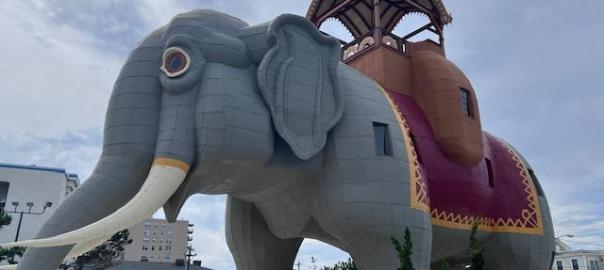
The town has many historical sites especially the “Lucy the Elephant” building down the road from the museum, which is one of the most well known structures at the Jersey shore.
The history of the Margate trolley system that used to exist on the shore line
Artifacts from the old trolleys
The history of the early community
Artifacts from residents of the town that continue to be collected by the museum
Artifacts from the community
The corner stones from the local schools
The museum has an interesting display of the 1964 Democratic Convention that was held in a fading Atlantic City. One of the biggest complaints was that the hotels were past their prime. This was before gambling would be introduced five year later.
The Democratic Convention in Atlantic City that was held in 1964
The museum touches on all parts of the Town of Margate,NJ and its role in the formation of beach communities along the Jersey shore. The museum shows the spirit of this New Jersey community.
The inside of the museum and the extensive displays of this small but interesting local museum.
The museum takes about an hour to visit and is packed with interesting information. The museum has very limited hours but you can work with the library in the off times to arrange a private tour.
Jolly Nick’s is a small local restaurant in Downtown Dumont, NJ with a menu of deep fried hot dogs, hamburgers, chicken sandwiches and cheesesteaks. They have other deep fried treats like French Fries, Onion Rings and Mozzarella sticks.
The front of Jolly Nick’s at 31 East Madison Avenue
The inside is like a step back in the 1970’s and 80’s with classic chairs and tables and menu prices to match. The menu is so reasonable at a time when everything is getting so expensive. The owner keeps the prices with reach of his customers.
The inside of the restaurant
The menu is varied and very reasonable
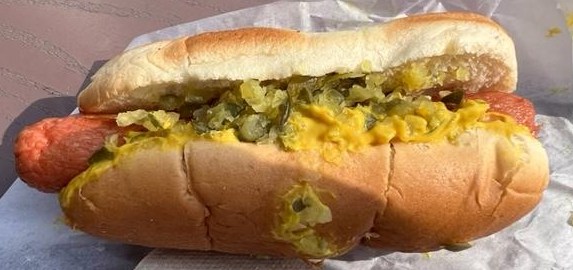
What I love about the hot dogs here is that he deep fries them so they come out crackled and crisp. Then he puts them in a soft bun and you can choose from a variety of toppings
The hot dog and French Fries lunch special with a drink
I chose to keep it traditional and chose mustard and relish. It was loaded on top and I liked the combination of spicy and sweet in the taste.
The special meal
The deep fried hot dogs
The French Fries
Lunch was so good!
It was nice to sit back and talk to the owner while I was eating. He really loves what he is doing and the food he makes brings back a lot of memories of high school and summers.
On my last day of class at the college, I stopped in for lunch to try more of their delicious and very reasonable menu.
I was in the mood for a Cheeseburger with a side of Onion Rings and a Dr. Brown Black Cherry soda. It was the perfect meal at the end of the semester.
The Cheeseburger and Onion Rings
The burger was perfectly cooked and had a nice caramelized flavor to it. It was topped with lettuce, tomato and a pickle.
My burger and Onion Rings
The Onion Rings were perfectly fried and crisp and had nice slices of onion in every bite.
The Onion Rings
I really enjoyed my lunch out!
What I like about lunches here is they are reasonable, filling and well cooked. You can a nice meal for a fair price.
I took a ride to Upstate New York in July to visit museums and historical sites in Orange County, NY that had been on my bucket list but most were closed on the sunny Sunday. I made a U turn on the local highway and stopped to visit the Hill-Hold Museum in Campbell Hill, NY.
The Hill-Hold Museum at 128 NY 416 in Campbell Hill, NY
After the tour of the house was over, I decided to stop at the Orange County Fair for the evening and get something to eat.
Being a frequent visitor of the Dutchess County Fair, I expect all the fairs to be of the size and scope of that fair. This one was much smaller but still had a lot to offer.
The entrance to the Orange County Fairgrounds in Middletown, NY
When I arrived in the late afternoon, the fair was rather quiet as it was the late afternoon and most of the demonstrations and entertainment would be later that evening.
Walking through the entrance of the fairgrounds past the rides and the concessions
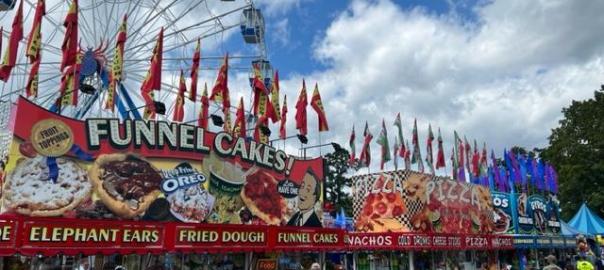
Still there was a sizable crowd already at the fair riding the rides, playing games of chance and eating at the somewhat over-priced concession stands.
There were a nice variety of rides and things to do while I walked around surveying the grounds to what there was to do and experience.
Looking over the rides which were filled with families
The first tent I visited was the Livestock Tent and the petting zoo. While the fair did not have the livestock displays that the other fairs did or the 4H presence, the tent had friendly selection of animals to see and feed. They looked so happy to see humans with food.
Walking through the petting zoo
Walking through the petting zoo
The sheep and llamas were waiting by the edge of the pens for treat from a human hand. I found them inquisitive of us especially as we fed them.
Watching the llamas decor an ice cream cone filled with treats
The next tent I visited was the 4H tent with all the craft and food items on display. The judging had taken place and all the ribbons were on display.
Walking through the crafts tents
The Scarecrow Contest in the Crafts Tent
We even got to vote on a scarecrow. I thought that was interesting.
Nightmare Manor, the haunted funhouse
The preview of the movie “The Funhouse”
I next walked along the Midway past a whole series of rides and attractions. The first ones were the funhouse and the glory, the Nightmare Manor haunted ride. The lines were short so most people were getting in quickly.
The next thing I did was visit the grandstands where they were having a demonstration on Monster Trucks. This I had to see.
The Monster Trick Rally competition
They were offering rides to patrons before the show (which was a separate fee), so I got to see people driving around the field having a great time.
I did not want to stay for the show as those lines were getting long and I wanted to head home before it got dark. I left the ever growing line to head to the concession to get something to eat.
Stopping for dessert at Tootsie’s Fried Dough Concession
Someone had just walked by me with a steaming funnel cake and then I had to have one. The one thing I have to say about Tootsie’s Fried Dough is that everything is made fresh to order and the quality of the funnel cake was better than any one that I had at the Dutchess County Fair, which are always premade and soggy by the time you get them.
The Funnel Cake was made to order and out of this world
Yum! These were the best!
The last thing that I attended was the circus, which had just started at 6:00pm as I was leaving the fairgrounds. I decided to stay for the most of the show. I enjoyed the high wire acts and the acrobatic displays.
The high wire acts
These brothers from South America were extremely talented and do the most amazing tricks on the high wire.
The bicycle ride over the high wire
Skipping rope on the high wire acts
I really had a nice time at the fair. While it was not as big as either the Dutchess or Ulster County fairs that I attended in the past, there was a lot to see and do at the Orange County Fair.
The Bridgewater, NJ 4H Fair:
Going to the 4H Fair in Bridgewater, NJ was like a step back in time. I used to come here with friends after swim team practice as kids and we all used to garbage up eating our way through the Food Tent. After that, we would enjoy the fair.
The entrance to the Somerset County 4H Fair in Bridgewater, NJ
Walking into the 4H Fairgrounds was like stepping back over forty years as I had not been here since 1981. I even searched all the tents to find someone I knew (I did not know anyone).
The various displays of crafts, hobby cars, crafts and gardening tips
I first visited the Craft and Hobby tents with the displays of model trains, planes, automobiles and artwork. It was mostly families talking amongst themselves. The I next visited the Cow pens.
The cow pens
The cow pens
The cows were getting their afternoon feeding
I next visited the Sheep tent and they were in the middle of having their lunch as well not paying too much attention to us humans.
The sheep were enjoying their lunch when I got there and stopped for a second to see what I was doing
They all went back to feeding
There was a llama tent as well and they seemed very welcoming to human interaction
While walking around the fair, I could see the dark clouds coming in the distance. I had thought the storms were not coming until that evening, so I hustled through the rest of the tents.
Walking down the Midway of the fair with dark clouds in the distance
Entering the Poultry Tent
There were all sorts of varieties of chickens, ducks and geese to visit at the fair.
The prize chickens in their pens
The chickens were eating their lunch and pecking away
The highlight of the 4H Fair to me as a child was the Food tent with all the hot dogs, hamburgers, fried dough and funnel cakes and the popcorn and cotton candy for dessert.
The Food Concession tent
The Food tent
Just as I was deciding what to eat for dinner, there was a panicked announcement over the loudspeaker that they were closing the fair due to incoming storm clouds and lightening.
Everyone made a mad dash for their cars and I actually felt for all the concessions, who had all this food to sell and now how to shut down quickly. Some of the patrons had a ‘screw it’ attitude and kept eating probably until they kicked them out of the tent.
It started to rain while I was in the parking lot and I just checked messages on my phone and worked on blogs until most of the traffic got out of the parking lot. Then I drove into Bridgewater and had dinner at Joe’s Pizzeria at 1938 Washington Valley Road in Martinsville.
Joe’s Pizzeria at 1938 Washington Valley Road in Bridgewater, NJ
I had been coming to Joe’s since I was five and the pizza has not changed on bit since then. The next and the current owner both use the original Joe’s recipe for tomato sauce for the pies and calzones. Dinner here is another step back in time to my teen years. The inside of the pizzeria has not changed much in 35 years.
I was in the mood for a sandwich but I did not see any on the menu. They no longer make them so I ordered the Sausage and Pepperoni Roll. When it came out, it looked like a small pizza folded over. They made it fresh for me.
The Sausage and Pepperoni Roll with a side of red sauce
The roll was stuffed with a half pound of sweet fried sausage and spicy pepperoni, tucked in a pizza dough shell and baked to perfection.
It was the perfect meal for me covering both lunch and dinner. This could have been shared by two people.
The food here has been excellent since I started to come here in the 1970’s and has not changed since.
The dining area has not changed much since I was a kid
There’s more fairs to see and many more experiences to be had at them.
I had never heard of the Hill-Hold Museum and I happened to come across it when I saw a sign on the local highway that the museum was open that day. I thought it was a very interesting home and grounds with historical homes and buildings. Some came from other parts of Orange County, NY.
There are group tours on the hour with the last tour at 3:00pm. I took the last tour by myself with the tour guide and got a one on one tour of the house and grounds. The tour takes you into a step back in time to an agricultural society that no longer exists and times were slower and more structured.
The Hill-Hold Museum
The estate in the background
The Hill-Hold Museum:
A Farm for Two Centuries. This stone farmhouse was built in 1769. This museum reflects the life of the Bull-Jackson family spanning over 200 years. Hill-Hold Museum has circa 1830 Furnishings, a one room School House, a historic 1870 barn, Goosetown Gift Shop, picnic benches, and parking (Museum website).
The house on the estate grounds
The Mission Statement:
(From the museum website)
The Friends of Hill-Hold and Brick House Museums serve to preserve and enhance the preservation of history in Orange County, by maintaining, furnishing and operating programs at both these exemplary 18th century houses. These museums include portraits, memorabilia, photographs, and furnishings pertinent to them, the county and the past ages that touched each house (Museum website).
The front of the Hill-Hold Museum at the start of the tour
History of the Hill-Hold house museum:
(From the museum website)
Visit Hill-Hold museum and see what life was like on a Hudson Valley farm in the 1830s. This was still the era of candlelight, fireplace heat, homegrown food, and homespun clothing. The stone farmhouse was built in 1769 with wide plank floors, handsome paneling, and huge fireplaces (Museum website).
It was the home of a prosperous farmer, Thomas Bull, and his family. Original furnishings range from a prized old mahogany sideboard to made-on-the-farm pieces. Most of the rural family’s needs – food, clothing, fuel came directly from the farm. The property was gifted to the County in 1968 by Eleanor Jackson and the house went through an extensive restoration in the 1970’s to return it to how it appeared when it was originally built in the 18th century. (Museum website).
The Hill-Hold farm served the Bull-Jackson family for more than two hundred years. Now visitors are welcome to tour the farm. As we wander through Orange County, reveling in its rolling farmland scenery, we can go back to when the early Americans brought the gracious living and energetic husbandry to this unique part of the Hudson Valley (Museum website).
The Parlor-sitting room on the first floor was once a bedroom
We started the tour in the formal parlor, which the tour guide told me was once a bedroom along with the Living Room before the house was expanded. The house is filled with Bull family heirlooms that were donated back to the house by distance family members.
The family portrait’s in the Parlor-sitting room with the family piano that was used in the evening for entertainment
The portrait below is of the last member of the Bull family to live in the house before it was donated to the State of New York.
A portrait of the last family member to live in the house
The room was used by the family for entertainment, relaxation and for every evening activities. The room was used for pursuits such a sewing, needlepoint, conversation and with a piano in the room, evening activities with the family. With so much going on the farm, people retired in the evening early as the morning brought a lot of work on this working farm.
The spinning wheel by the fireplace
The Dining Room again was a former bedroom that was expanded for a formal eating as the both the house was expanded as well as the family. Breakfast and a late lunch/supper were served in this room. The Dining Room table, chairs, sideboards and china were pieces that part of the house donated back by the family.
The family dining room
The family China in the sideboard cub-bard in the Dining Room
The complete formal china set was displayed in the china closet as if ready to be used for a formal dinner party.
The sitting area in the Dining Room
The upstairs bedroom
We toured the master bedroom on the second floor of the home. Each of the rooms had fireplaces to keep them warm in the long winter nights with a canopy bed to keep the warmth inside. I could not believe how small people were at this time. This would have barely held one person today.
The canopy bed in the upstairs bedroom
The other bedroom would have been used by the children of the family. Now it contains sewing and weaving machines as well as spinning wheel to create the family clothing.
The second bedroom
The Sewing Room on the second floor with the oven/heater and family spinning wheels
Fabric and clothing was created in the home. Whether flax and wool, material was spun on the farm and the family wardrobe was created here.
The family spinning wheels
The sitting area on the second floor
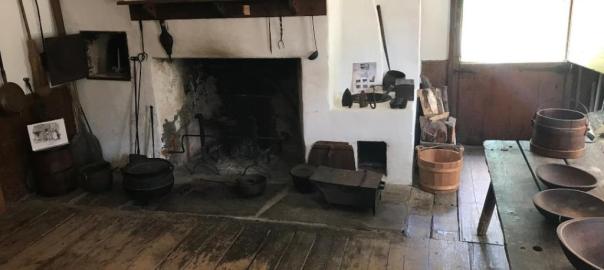
The last part of the house tour was of the family kitchen in the main house. The Summer kitchen was on the other side of the garden outside. The main kitchen inside the house had the fireplace, cooking materials, the family pewter and everything you would need to cook a complete meal.
The family kitchen
The family table set for cooking
Items for bread and dessert baking, butter making, roasting and stewing and all the items needed to cook three meals a day. The bounty of the Spring, Summer and Fall had to supply the long winters when there was no grocery shopping available.
The equipment for washing clothes and other household chores
Wash Day was a whole day reserved for sorting, boiling, scrubbing and hanging clothing to dry. Until the more modern machines were invented in the 1920’s after WWII, this was the weekly ritual for the farm housewife or the staff.
The open hearth and cooking equipment
The cooking equipment
The family pewter set
After we finished the house tour, we explored the outer buildings which included a Summer Kitchen, a smoke house, the vegetable and flower gardens. These buildings were spread around the main house.
The Summer Kitchen
The inside of the Summer kitchen
This Summer Kitchen came from a different property but the use is still the same. As the warmer months of the Summer were upon them, cooking was done in a separate building to keep the house cooler.
Some of the cooking and baking equipment
The flower beds on the side of the house
The flower and vegetable beds on the side of the property and the smoke house
Outside the main house were the vegetable, fruit and flower gardens. Items used in the household for meals, decorations and entertaining.
The barn, the outhouse and the smoke house in the distance
The inside of the smoke house where meats once hung used for family meals
All the family meats were placed in here for cooking and smoking for the family meals. The process took much longer than it does today.
The well in the middle of the property
They also moved an old school house to the property and it was furnished as a complete turn of the last century school house. It was used until 1936.
The schoolhouse on the property
The inside of the school room
The classrooms of the 1700’s and 1800’s to today have not changed much. With the exception of modern heating and air conditioning, the class room set up has not changed much. There is still a board in the front of the room, chairs facing the teacher, who is in charge and books lining the walls.
The teachers desk and the furnace that kept the room warm in the cold months
Games and amusements that were used in recess
Wheels and bikes were part of the games children played at the turn of the last century
Before modern electronics took over starting in the 1970’s, bicycles, hoops and games such as tag and hopscotch were part of playground activities. Playing outside has not changed much throughout the centuries.
Looking over the grounds at the end of the tour
Before I left for the afternoon, I was able to tour the gift shop before the museum closed for the day.
The Goosetown gift shop at the museum entrance at the end of the tour
The Goosetown Gift Shop at Hill-Hold features books, gifts, toys, craft items, and souvenirs. The shop is operated by the Friends of Hill-Hold, Inc., a not-for-profit organization, which aids in the operation of Hill-Hold and Brick House museums (The Museum website).
It really is an interesting tour and a step back in time for a glimpse into the life of a Upper Middle Class farming family.
*The blogger wants to note that the prices have gone up a few dollars but the quality and portion sizes are well worth it.
This iconic pizzeria has been open since 1970 and has been serving the Bridgewater, NJ community and beyond since then. I have been coming here since I was kid and have rediscovered again when travelling in the area. On only its third owner since its opening, the pizza and their amazing tomato sauce has not changed since then.
Their iconic sign
The original Joe sold the business to Joe II in 1984 and this year after 35 years of ownership, Joe II retired and his family did not want to take over the business and sold it to Sal, who I met recently who said he is keeping all the original recipes.
The longevity of this restaurant is the food and their prices. The mozzarella is always stringy on every bite, especially when a fresh pie comes out for slicing at lunch. The tomato sauce has a wonderful spicy tomato-y flavor to it that really brings out the sweet flavor of the fruit.
The pizza sauce recipe has been passed down through three owners!
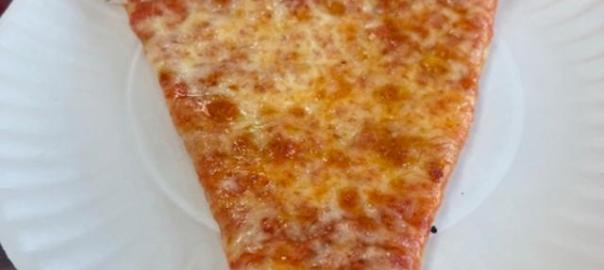
The bottom of the pizza has a crisp consistency to it and you can taste the caramelization in every bite. The best thing to do is order a large and really enjoy it.
The pizza is really good!
Joe’s sandwiches are always consistent and delicious (See review on TripAdvisor). The half meatball hoagie comes with four rather large, freshly made meatballs. Joe’s meatballs are made fresh every day and are loaded with garlic. On a crusty fresh roll and lots of their tomato sauce each bite is special.
The meatball sandwiches here are amazing! (They no longer serve sandwiches)
Their half Italian hoagie is loaded with freshly sliced Italian cold cuts including ham, salami, provolone cheese with shredded lettuce and tomatoes with a vinegar and oil dressing. The combination of flavors of meats and vegetables really works.
Add a half dozen mozzarella sticks with fresh sauce on the side or garlic knots to a slice and it will give you the perfect afternoon lunch or dinner. In the almost fifty years I have been coming to Joe’s, I have never had a bad meal through the three owners.
The calzone was excellent
On a recent trip after a Michigan State versus Rutgers football game I decided to stop for dinner. I had the most delicious Sausage and Cheese Calzone that was made by the current owner. The calzone was huge. It was about the size of a small pizza that had been folded over.
Where the pizza magic happens
The calzone was filled with a combination of ricotta, mozzarella and parmesan cheeses with a big handful of fried sausage tucked into a soft pizza dough that was baked golden brown. It was accompanied by a bowl of their delicious tomato sauce that is based on the original Joe’s special recipe. Each bite was wonderful.
I went to Bridgewater again in 2026 to go to the 4H Fair and when a storm brewed during the fair, the organizers kicked everyone out before I could eat, so I decided to stop by Joe’s for a sandwich. They no longer make them so I ordered the Sausage and Pepperoni Roll. When it came out, it looked like a small pizza folded over. They made it fresh for me.
The Sausage and Pepperoni Roll with a side of red sauce
The roll was stuffed with a half pound of sweet fried sausage and spicy pepperoni, tucked in a pizza dough shell and baked to perfection.
It was the perfect meal for me covering both lunch and dinner. This could have been shared by two people.
The food here has been excellent since I started to come here in the 1970’s and has not changed since.
The dining area has not changed much since I was a kid
It’s nice to know that somethings never change. The restaurant has always been consistent and it’s nice to know that some things don’t change.