It was another warm and sunny Saturday afternoon and we lucked out that the day fell between two rain storms, where the rain cooled down the temperature and got rid of the humidity. It made it the perfect day for our June barbecue.
The grounds of the NJ State Firemen’s Home
The NJ State Firemen’s Home built an outdoor grill a few years ago making it easier for us to sponsor our barbecues, where the food is cooked and served outside for the residents and their guests. The tables and chairs were set under tents and umbrellas and shade trees making it an enjoyable afternoon.
The built in barbecue was ready to start cooking
The food preparation by Chef Prince and our own President of the NJ State Firemen’s Association Bob Ordway was started in the afternoon
Chef Prince and his helper manning the grill
With the grill fired up and meat sizzling for lunch, everyone anticipated a wonderful lunch ahead. With the assistance of Chef Prince of the Firemen’s Home and NJ State Fire Association President and member Bob Ordway, we stated serving lunch to everyone by 12:30pm.
NJ State Firemen’s Association President Bob Ordway helping with service to the residents
Entertainment rocked that afternoon with the sounds of performer Kelly Carpenter
As residents and their families settled in for lunch and the members of our organization startled to serve everyone, singer Kelly Carpenter started to perform singing popular contemporary songs.
Singer Kelly Carpenter is always a favorite at our events
Residents got to enjoy the beautiful weather that afternoon
It was such a beautiful afternoon with temperatures hovering around 80 degrees with no humidity making it the perfect afternoon to eat under the large shade trees.
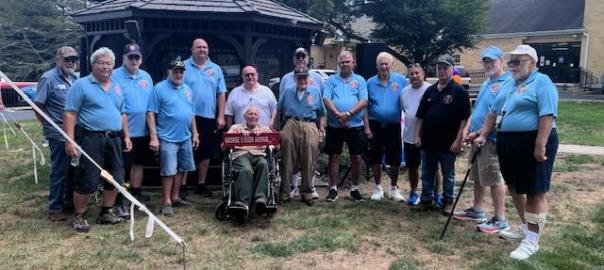
Members of the Bergen County Firemen’s Home Association relaxing for their lunch after serving the residents
Kelly Carpenter performing as the sun shines on this marvelous afternoon
Sitting down to enjoy our barbecue lunch. One of the perks of membership to the Bergen County Firemen’s Home Association
The lunch started to wrap up by 1:00pm and everyone started to either head back inside or wondered ofc to spend time with their families.
It was another successful picnic sponsored by the Bergen County Firemen’s Home Association.
If you would like to make a donation to our organization, please send it to:
BCFHA
C/O Jeff Parma
277 Harriott Avenue
Harrington Park, NJ 07640
Please make the checks out to the Bergen County Firemen’s Home Association
Our 2026 Meeting Schedule:
All our meetings at the home start at 12:00pm at the NJ State Firemen’s Home in Boonton, NJ:
August 15th (August Barbecue)
October 18th
December 6th (Annual Christmas Party)
A big “Thank you” from The Bergen County Firemen’s Home Association Executive Board 2026
In the months of March and May right before the Memorial Day holiday, many of the museums I belong to held their private ‘Members Night’, where they hold extra hours for members after the museums are closed to the public to come and see the exhibitions, listen to music, have something to eat and drink and listen to talks about the exhibitions. The funny part is that the museum’s are more crowded on these nights than when they are open to the public.
Walking inside the soaring dining space at the Morgan Library
The first set of ‘Members Nights’ I went to were on March 24th with my first stop at the Morgan Library. I was there to see the ‘Mozart’ exhibition again.
Wolfgang Amadeus Mozart: Treasures from the Mozarteum Foundation of Salzburg, an exhibition that traces the extraordinary life and enduring legacy of Wolfgang Amadeus Mozart (1756–1791). On view March 13th through May 31st, 2026, this two-gallery exhibition combines the Morgan’s significant holdings in Mozart manuscripts and first editions with remarkable objects, on view in the United States for the first time, from the Mozarteum Foundation of Salzburg. These include Mozart’s clavichord on which he composed The Magic Flute and his childhood violin, as well as famous portraits, letters, and personal objects of Mozart and his family (Morgan Library.com).
Touring the exhibition
Video on the exhibition:
The concert of Mozart as a child
The Magic Flute music and costumes
I happen to love ‘The Magic Flute’ and it was interesting to see the notes and some of the original costumes from the opera at the exhibition.
The costumes from the Magic Flute
After I toured the Mozart exhibition, I toured the rest of the museum that included the original part of the mansion.
The old Living Room
The ceiling outside the exhibition hall
The old Library and Rare book collection
The ceiling in the old Library
I then visited the exhibition of ancient Mesopotamia art scrolls. This was really interesting how this form of written art worked into the collection.
After touring the museum, I went to see what everyone was eating in the museum’s small restaurant was eating because it was getting crowded. The counter was filled with delicious looking desserts.
The sweet treats at the dessert bar at the Morgan Library
The selection of desserts at the Morgan Library the night of Member’s Night
I then visited their very interesting Gift Shop
Admiring the flowers at the Coat Check on the way out. I thought this was a nice touch.
All good things come to an end and I made my way up Fifth Avenue to the Museum of Modern Art for the second part of the evening
I could not believe that the museums arranged these ‘Members Nights’ on the same night. They would plan this three weeks late when the Museum of Modern Art and the Metropolitan Museum of Art. I just had to enough time at one museum and see what I wanted to see and then go up the next.
The Museum of Modern Art (MoMA) at 11 West 53rd Street
Frida and Diego: The Last Dream celebrates Frida Kahlo and Diego Rivera—two of Mexico’s most beloved icons of 20th-century art—in a first-of-its-kind collaboration with the Metropolitan Opera. Organized in conjunction with the Met’s new production of El Último Sueño de Frida y Diego, the presentation at MoMA features artworks by Kahlo and Rivera in an elaborate setting designed by Jon Bausor, the set and co-costume designer of the opera. For both the opera and installation, Bausor evokes the artists’ lives and artworks in his theatrical designs (MoMA.org).
Key participants in a movement to redefine Mexican culture and identity after the revolution of 1910–20—Rivera through monumental murals and Kahlo through intimate self-portraits—the artists were romantically involved from 1928 until Kahlo’s death in 1954. The fictional narrative of the opera El Último Sueño de Frida y Diego begins three years after Kahlo’s death and follows an aging Rivera as he summons the deceased Kahlo back to life on the Day of the Dead, a Mexican holiday honoring passed loved ones. As the opera and installation design attest, the pair continue to have an enduring influence on artists across the visual and performing arts (MoMA.org).
Video on the exhibition:
The opening of the ‘Frida and Diego’ exhibition brought members out in droves
The description of the exhibition
The tree dominates the center of the exhibition
The signature piece from the exhibition
One of the dominate drawings
Looking over costume designs
Some of my favorite costume designs
Another great costume design
After touring the exhibition, I visited some of the other galleries and looked over other works of art that I admired in the past. I took a quick tour of the Modern Galleries before I left that evening.
The Jackson Pollack work
I loved this creative food service work
After touring the museum, I joined the rest of the crowd on the main floor for music.
The main lobby of the MoMA the night of Member’s Night
A few weeks later, the Metropolitan Museum of Art had planned their Member’s Night and then the Museum of Modern Art planned a Member’s Night the same night. So I planned another night of running back and forth between museums.
Member’s Night at the Museum of Modern Art
The schedule of events
There was a lot of activities happening that evening and I wondered around museum to see all of them. I started in the Museum Garden to hear the singers who were performing that evening.
The first performer was Lizzy Hilliard, who performed the guitar and was really enjoyable to hear. She is a very lively and engaging entertainer.
The crowds were outside enjoying the beautiful weather that evening
Lizzy Hilliard performing that evening in the garden
After the performance, I wondered around the museum to see some of the exhibitions and started on the first floor which was really active.
I love wondering through the lobby of the MoMA.
While most of the crowds were still listening to the entertainment in the garden, I went up to the Marcel Duchamp exhibition and toured the galleries again (I had been there the previous week and quickly walked the exhibition).
The Marcel Duchamp exhibition was the biggest retrospect of the artist’s work in years
Marcel Duchamp is organized by The Museum of Modern Art, New York, and the Philadelphia Art Museum, with the generous collaboration of the Centre Pompidou. “Contemporary artworks often prompt viewers to ask, ‘Why is this art?’ It is virtually impossible to answer this question without referring to the work of Duchamp,” said Temkin. “More than any other modern artist, Duchamp challenged and transformed the very definition of an artwork.” Kuo added, “Duchamp’s influence is incalculable and his myriad contributions have established him as one of the most important figures in modern culture (MoMA.org).
Our exhibition will foreground the ways in which Duchamp upended conventional oppositions between hand and machine, original and copy, intention and chance, and matter and idea.” MoMA and PMA have a longstanding history with Duchamp’s work. MoMA was the first museum to acquire a work by Duchamp, in addition to including his work in early landmark exhibitions such as Fantastic Art, Dada, Surrealism (1936) and The Art of Assemblage (1961) (MoMA.org).
Video on the exhibition from the MoMA curator:
I joined the start of the walking tour with one of the docents at the MoMA at the beginning of the exhibition
The gallery was so crowded with people listening to the one docent that was describing the exhibition that I continued on my own. I had never seen much of this artist’s work in museums before and had heard about his piece of changing the look of the Mona Lisa. I really enjoyed seeing it up close.
The 1919 original “L.H.O.O.Q.” was on a card
The 1930 replica “L.H.O.O.Q.”
The information on the replica piece
I then moved on to other works that he was well known for especially his controversial urinal piece.
The work “Fountain” (I thought this was unusual)
The write up on the piece
The last piece that I saw in the exhibition before I left the museum for the Met was his spoke wheel piece.
The work “Bicycle Wheel”
I wondered around the museum for a bit after the tour of the exhibition and admired works in the Modern Wing.
I love Picasso’s Cubism works
After I finished touring the exhibition, I left the MoMA for The Met. The weather was beautiful and with it being light out until almost 8:30pm. It was a beautiful walk up Fifth Avenue with the trees and the flower beds in full bloom.
Arriving at The Metropolitan Museum of Art for “The Met After Hours”
The lobby and rotunda for the event seemed very quiet to me
The beautiful floral arrangements in the lobby area were fresh Cherry Blossoms
The Cherry Blossoms in the urns around the lobby
The American Wing where the Member’s Bar and entertainment was located
The Met seemed very quiet that night. Being the Tuesday after Memorial Day Weekend, I guess most members were getting back to work or still tired from the weekend. It had been a rainy mess the whole weekend and I could not see many people going away.
The bar and the entertainment in the American Wing were located that evening.
I had about two hours before the museum closed for the evening, so I wondered through some of the special exhibitions and started with the “Raphael-Sublime Poetry” exhibition on the second floor.
Raphael: Sublime Poetry is the first comprehensive exhibition on Raphael in the United States, bringing together more than 170 of the artist’s greatest masterpieces and rarely seen treasures to illuminate the brilliance of Raphael’s extraordinary creativity. The son of a painter and poet, Raphael engaged with the foremost writers and thinkers of his age in Rome, displaying a poetic sensibility that captivated his peers and generations that followed. Follow the full breadth of his life and career, from his origins in Urbino to his rise in Florence, where he began to emerge as a peer of Leonardo da Vinci and Michelangelo, to his final, prolific decade at the papal court in Rome (Met.org).
Dive into the artistic process of one of history’s most beloved and influential artists. A true titan of the Italian Renaissance, Raffaello di Giovanni Santi (1483–1520)—better known as Raphael—matched ambition with lyricism to create works with both intellectual heft and emotional depth, a necessary skill in the complex political landscape of Renaissance courts. In his short life of only 37 years, he achieved such profound success as a painter, designer, and architect that he was regarded as the pinnacle of artistic perfection for centuries after his death (Met.org).
Video on the exhibition with the MoMA:
Video on the exhibition with CBS This Morning:
The work admired as I was walking around the exhibition.
This was my favorite piece from the exhibition
The Raphael Exhibition I know was a big deal for the museum but it really was not my taste in art. As much as I admired the work, the whole exhibition did not ‘grab me”.
I was not as impressed with the art in the exhibition and took a quick tour of the works. I had seen the exhibition on a previous tour of the museum so I just wanted to walk around again to see the works that I missed.
I then went back to the first floor and spent more time at the Costume Art exhibition. There had been so much media on the exhibit that you could not get in without timed tickets but because it was quiet on Member’s Night, I just walked in.
The Costume Institute’s spring 2026 exhibition explores depictions of the dressed body across The Met’s vast collection, pairing garments with artworks to reveal the inherent relationship between clothing and the body (Met.org).
Focusing primarily on Western art from prehistory to the present, Costume Art presents connections between garments from The Costume Institute and objects from the Museum’s other collecting areas. Pairings between fashions and artworks will present a spectrum of connections and experiences: from the formal to the conceptual, the aesthetic to the political, the individual to the universal, the illustrative to the symbolic, and the playful to the profound. These pairings are organized into a series of thematic body types that reflect their pervasiveness and endurance through time and cultures (Met.org).
Video on the Costume Art exhibition:
Walking through the entrance of the exhibition
This gallery was newly created for this collection and I had display the pieces that stood out to me the most in the Costume Art exhibition.
One of the pieces I admired
Some of the Evening clothes I admired
Another piece I admired
I thought this was really unusual
I really enjoyed looking over the exhibition yet wondering how many people would actually wear some of these pieces out in public. It really asks the question “What is art?” Still, I loved the dress with all the human organs on it. Now that would stop everyone in mid conversation at a party.
All good things come to an end again and I left the Met as it was closing for the evening. It really is a pretty site at night looking down Fifth Avenue.
How beautiful the Upper East Side is at night
I was starved when I left the museum and knew not too many places outside the bars would be open this late at night. I remembered Asian 83 on East 83rd Street that still might be open for the evening and I was one of their last customers that night. The food is excellent at this little ‘hole in the wall’ on the Upper East Side.
Dinner at Asian 83, Beef and Broccoli with Fried Rice
I ordered a combination platter of Beef and Broccoli with Fried Rice and an Egg Roll with a Coke. Their prices are so reasonable and their portion sizes are very fair. It was a nice dinner before I left Manhattan that evening.
The Beef and Broccoli entree
Their Egg Rolls are excellent
Being a member of many museums, this is one of the perks about membership. You get to enjoy these wonderful evenings while supporting the museums which in this economy really helps. That’s why I have enjoyed supporting them for years. The donation benefits everyone.
Every semester for my Business Marketing, Management and Communications classes, I create one big Team assignment for my students. In a Commuter College, it is a lot tougher for students to get to know one another between their studies and their jobs, so I create these projects to foster learning, creativity and especially Teamwork.
This semester I taught two sections of Business 101-Introduction to Business, which is the entry level course to the Business/Hotel Management School. This is a tough course to teach as you always have students of various age groups and various levels of industry experience.
The Spring semester was no different. This makes the class more interesting yet more challenging to teach. I still challenge them and test them to see what type of future executives they will become.
I also taught Principles of Management, which came with its own set of challenges. It was the amount of people in the class and what projects would they be working on.
In the past, I have created these Team projects under the Bergecco-Parc Consulting Inc. banner, the main consulting company, the Orion Malls banner, a Mall design company and the Buscomonzefi.com banner, my Tech Division. All of these business concepts are simulated.
Each business does its best to be creative, forward thinking and have a thought producing presentations. I also challenge the students to top on another in their presentations and build on what they have seen others do in the past.
The Bergecco-Parc Consulting Inc. concept is an acronym for Bergen Community College Paramus campus where I work.
Professor Justin Watrel, CEO Bergecco-Parc Consulting Inc.
Our Corporate site (created my one of my former President’s:
While my morning Business 101 classes worked on their ‘Breakfast at Primo Pizza’ project and my International Marketing students worked on their “The Historic Revolutionary War Graveyards and Cemeteries of Bergen County” projects, I had my Principle of Management students create a game plan to market the Pascack Historical Society Museum in Park Ridge, NJ to a younger, more modern audience.
When choosing a project for this class, I had had two other ideas that fell through, then I had remembered working with the Pascack Historical Society Museum the prior year for my “Bergen 250” Team Project. We had proposed a Farm to Table Dinner at the Wortendyke Barn down the road with the dinner starting with a Cocktail Party here with a tour of the museum. I asked the museum again to partner with me on this project.
The Video Presentation of the “Bergen 250”in 2024:
The museum had created a wonderful exhibition for the “Bergen 250” but when I went to visit it, no one was at the museum but myself. When I asked the volunteers that day how many people had visited the museum, they told me I was the first one. That got me thinking why people were not visiting this wonderful museum with its interesting artifacts and intriguing displays.
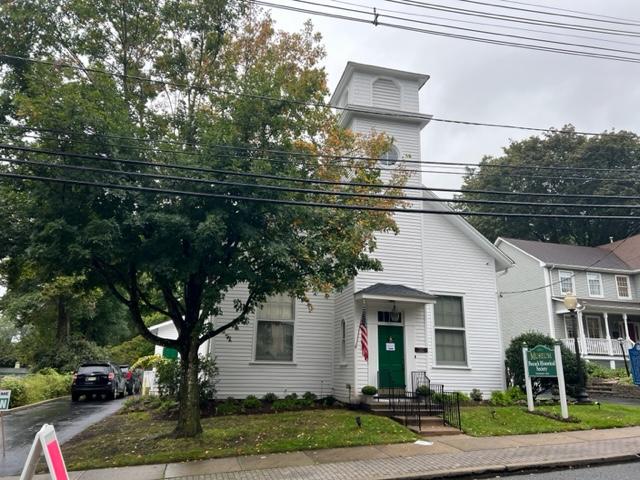
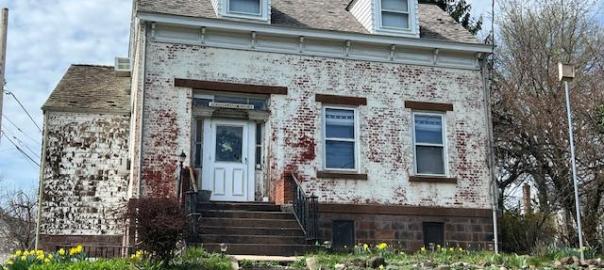
The outside of the Pascack Historical Society Museum at 19 Ridge Avenue in Park Ridge, NJ
Then I looked at their website and their displays. I realized that the museum was not adapting to the cellphone age. There were no QR codes at any of the displays, not enough pictures of the display on their website and their scavenger hunt bingo game needed an update to engage a younger crowd.
That’s when I came up with a Marketing plan for the museum and proposed it to their Executive Board. We worked together to come up with new ways to promote the museum and its collection. This was our combined idea and we looked at how to bring more traffic to the museum.
The Proposal for “Bergen 250: Touring the Pascack Historical Society Museum”:
I presented the project to my students after the Spring Break and then the next week took my students on a mandatory field trip to the Pascack Historical Society Museum in early April. The Board members of the Museum led us on a tour of all the exhibitions, then discussed their plans for the “Bergen 250” and then discussed some of the challenges that the museum faced with attendance.
Touring the museum
The students on their part took pictures and notes about the museum and their displays. Many would make various trips back to the museum to crest the QR codes for the displays and map the museum’s backyard for the Farm to Table fundraiser and a proposed afternoon tea.
Touring the museum
Touring the museum
Touring the museum with the Board of the museum
The museum’s Board members could not have been nicer and more helpful to the students and myself. We got a lot of insights on what direction the Board wanted to go.
Our Team picture at the museum
The tour of the museum took about an hour. We then had a Division Team Dinner at Pompilio’s Pizzeria in Downtown Westwood, NJ:
I find that these Team dinners and lunches are very helpful in getting the students together to get to know each other and we share a nice meal as a Team should. We asked the Board to join us so we could continue the conversation.
Dinner with both the Board and my Team
For the next five weeks the three Teams broken into Marketing, Historical and Foodservice created their ideas and game-plans to help the museum increase traffic by trying to bring a younger and tech savvy visitor into the space.
The Pascack Historical Society YouTube Presentation:
The video of our Presentation to the Board of the Pascack Historical Society Museum on the evening of April 29th, 2026
On the evening of April 29th, the Board members of the museum joined us for the Presentation of ideas the students came up with including setting new QR codes for all the displays, a revamped Marketing plan to showcase the museum, a new historical walking tour, one aimed at adults and one to children and the ideas for the fundraising dinner, a children’s birthday party concept and a Afternoon Tea fundraiser.
After the Presentation, we had a Q & A on the ideas and after the Presentation was over, we had a reception for our guests and for the student consultants. Then we took our Corporate Team picture.
My Divisional Team the night of the Presentation
Our reception after the Presentation
It was another successful project accomplished and it looked like the Board went home with new ideas and the students learned a few things about themselves. I could not have been more proud of the students.
One of the last places I visited in the 2026 Pathways tour of Morris County was the Historical Society of Boonton Township which is located in the former Oscar Kincaid Farm Homestead. The house and what was left of the acreage of the farm was part of the current museum. The museum was an example of early New Jersey farming that dated from the 1800’s to the Twenty-First century. There was not much in the way of period furniture or farm equipment (items of the home were sold off since Mr. Kincaid’s passing), but the new historical society is buying artifacts and bringing them back to the farm. This includes one of Mr. Kincaid’s tractors. His roll up desk is also still in the display room which was once the Living Room of the home.
The Kincaid Homestead
History of Oscar Kincaid and Homestead:
(From the Morris County Historical Society website)
Originally a part of the extensive tract belonging to William Penn, the earliest portion of the home was constructed in 1785 by Adam Miller and Anna DeMouth Miller. Just over a decade later, they sold the property to Adam’s cousin, Sarah Miller Parlimen (of the Miller/Dixon homestead) and her husband, John, who built a sawmill there. After a brief ownership by William Scott of Powerville, a Miller relative, the land was sold to John Decker in 1828. An industrious man, Decker operated both a farm and successful forge, shipping his goods to New York via the Morris Canal. By 1837, he expanded the home, adding a distinctive folk-art painting of a face and unique plasterwork that can still be seen today (MCHS website).
The homestead passed through generations of Decker’s family, ultimately being inherited by Oscar Kincaid Sr. in the early 20th century. Kincaid ran a popular ice cream stand and dairy business throughout the 1920s and 30s. Following World War II, the family opened Valley Farm on the site, which continued until the death of Oscar Kincaid Jr. in 2000. Added to the National Register of Historic Places in 2005, the Decker-Kincaid Homestead today operates as a museum and headquarters of the Historical Society of Boonton Township (MCHS website).
The Kincaid House
The historical marker for the house
The front yard
The entrance to the house
The main foyer of the house
The house is a small farmhouse built in two sections. The original part of the house dates back to the late 1700’s and the newer part in the early 1800’s. The once furnished rooms now hold displays of Morris County and the farming industry of the time plus community artifacts.
The former Living Room
Oscar Kincaid’s desk
There were not much left in the way of family furnishings and heirlooms but this desk was Oscar Kinkaid’s.
The back bedroom
The Flag display for the ‘250th Anniversary’
Story of Oscar Kincaid’s life: Oscar Kincaid was a farmer/businessman, a politician and a conservationist.
On Community:
(From the museum website)
Oscar’s commitment to his community transcended farming. He served as a member of the Boonton Township Committee for 30 years and was mayor for two terms. He was also a founding member of the Morris County Agricultural Development Board, on which he served for 17 years, six as board chairman. Oscar led the charge for farmland preservation in Morris County. His efforts resulted in the preservation of 41 farms covering 3,100 acres spanning several municipalities throughout the county. As one person put it: “Oscar had more impact on preserving the character of Boonton than any single individual.”
But to Oscar: “Farming and being active in local politics was simply a way of life.” Oscar passed away November 11, 2000
The contractor’s face on the wall
The face came about when Oscar Kincaid did not want to pay a contractor for his work. He created this face so that he would have to live with it for the rest of his life. It can not be planted over.
The ‘Mr. Face’ in Weird NJ
On Farming:
(From the Museum website)
Oscar Kincaid, Jr., was born into farm life. It was 1824 when the Kincaid family purchased 30 acres in Boonton Township, Morris County and began farming. More than a century later, a young Oscar took over the operation, working alongside his father as they raised dairy cows, grew vegetables and developed a poultry business. For years, they delivered eggs to retail establishments and sold vegetables from their roadside stand. Over time, Oscar moved away from the dairy and poultry business and focused his efforts on vegetable and hay production.
The Kincaid house from the side
After the short tour around the house, I walked around the farm grounds. The house was set on a beautiful piece of land that sloped down to the old farmstand. There was also a swimming pond which was once part of the farm which is now private property.
The farm property from the side with the barn
The barn across the street
The property was about ten acres at the time of his death and parts have been developed. It still has some of the most wonderful views of the area.
The view of the old farm from the front porch
The farm land stretches over different sections of the road and the property is very picturesque. It is a very beautiful homestead.
The view of the farm from the lawn
The swimming pond on the edge of the property
The old farm stand that had been used for eighty years
The old Farm stand was used into the mid 2000’s
The full view of the farm
Since the house was just recently bought, there is still some design and artifacts that need to be collected to complete the look of a Jersey farm.
The Historical Society of Boonton Township is still expanding the collection of farm equipment for property and finding furniture for the home. The property is a beautiful and picturesque and shows how the traditional farm has adapted to modern times. Mr. Kincaid only passed a few years ago but kept the farm traditional and that worked for him. He left a legacy for us to appreciate the independent Jersey farmer.
I recently visited Lewes, DE for ‘Maritime Day’ by the harbor and there were a lot of interesting booths on the watersheds, environmental agencies that discussed their purpose with harbor issues and what the town of Lewes does for the environment.
The historic Blizzard from 1888
History of the Lewes Life Saving Station & Museum:
(From Historic Lewes.com)
It was also a busy station, guarding both the mouth of Delaware Bay and the protected waters created by the massive breakwaters of the National Harbor of Refuge. Its string of Keepers and their six- or seven-man crews of Surfmen enacted scores of rescues through the years and in particular won great praise for their tireless heroics during the Great White Hurricane of 1888, when they pulled scores of sailors from the frigid waters and iced-over hulks of wrecked vessels to safety.
The front of the museum
The History of the Lewes Lifeguard Museum:
(From the Historic Lewes.com)
The United States Life-Saving Service (USLSS) protected the American coast and saved lives in peril at sea from 1871 until 1915, when it became a part of the new United States Coast Guard (USCG). This incredible humanitarian mission came to Lewes in 1884, making it the fourth of six stations to be established in Delaware. Lewes was among the most desirable stations for the Keepers and Surfmen who manned it, with its original location on the site of the present-day Cape May-Lewes Ferry Terminal placing it not far from town and therefore civilization.
The view of the harbor which has changed over the years
I spent my time touring the Lewes Lifeguard Museum, which is an interesting little museum on the history of life saving along the Delaware coast. The museum’s artifacts show some of the earliest and innovative forms of rescue equipment from before the Civil War. This was the precursor to the United States Coast Guard.
The inside of the museum
The lower part of the museum contained most of the equipment, items like rescue ropes, wenches, rescue apparatus, lanterns and uniforms like jackets and boots.
Pulled and equipment used to rescue stranded people
History of the Lewes Historical Museum:
(Historic Lewes.com)
The United States Coast Guard maintained the Station Lewes from 1915 until 1969, when it was closed, declared surplus, and sold. The original main station building was relocated numerous times and still stands today, heavily modified, as the Rehoboth Beach VFW. The Boat House preserved by Historic Lewes, a unique 1884 addition to the USLSS station intended to launch lifeboats on a marine railway directly into the harbor, was acquired from the Pilots’ Association of the Bay & River Delaware in 1979 and moved to its present home at Canalfront Park. It stands proudly beside the Lightship OVERFALLS (LV-118), together commemorating the nation’s and community’s efforts to preserve life on hazardous waters.
The bullies and wenches used by the men
Information in the Lewes Life Saving Station
Biography of the men who worked there
Information on the Boat House
Some of the ropes and wenches used in the rescue procedures
On the other side of the building was the rescue boat the ‘Life Car’, a rudimentary form of rescue boat that the docents said was effective but clunky and hard to use. It shows how we have progressed in life saving.
The Life Car rescue unit
Information on the ‘Life Car’
The ‘Life Car’
The ores and other rescue equipment used
The small rope cannon
The ores
The rope equipment
The story of the ‘Great White Hurricane of March 1888’
The Men’s Dining area in the front of the building
There was no living area in the facility but a place to gather the team, eat and socialize when manning the station.
History of Lewes Lifeguard Museum:
(From the Lewes Lifeguard.com)
Guests visiting the USLSS Boat House today will find it furnished just as Keeper John Clampitt and his courageous Surfmen left it on March 12, 1888, as they pushed out into the roaring gale and whipping snow for their finest hours. It also features a display of early life-saving equipment, including the rope-and-pulley Breeches Buoy rescue system, a steel life-car, and a rare 1887 Long Branch, New Jersey-style surfboat under restoration.
The dining area and the schedule
The dining room table
The Lewes Life Saving Station & Museum is an example of early beach and shipping rescue at the East Coast Shore. It also shows the daily life of these brave men and how lonely and dangerous this job could be. It shows how times have progressed and how they have stayed the same. To save people and property.
I visited the Tunis-Ellicks House on the Morris County ‘Pathways’ tour of historical sites throughout the County and enjoyed the self-guided tour of this well maintained and displayed home. Unlike many sites I have visited over the years where things are left out and jumbled on tables, the Tunis-Ellicks House offers a look at small family farms from before the Civil War. The displays depict and discuss the life of a farming family in Central New Jersey.
The Tunis-Ellicks House in New Vernon, NJ
The house sign
The house is located in the New Vernon Historic District
The house was located in one of the oldest sections of the community, facing other structures in the historical district of New Vernon, NJ.
The house and front garden from the road
The vegetable garden in the front of house
In front of the house was a large vegetable and fruit garden with a grape arbor for spirits on the side of the house. These items would be jarred and pickled for the winter months or sold at market.
Mission Statement:
(From the Museum website)
The Harding Township Historical Society is a private, not-for-profit corporation founded in 1977 to stimulate interest in the history of Harding Township. The Society shall support, assist in and seek to achieve the preservation of documents, buildings and sites related to Harding Township. It shall also collect, preserve, maintain and interpret original cultural material, which illuminates this history. In addition, The Society is responsible for preserving and maintaining the Tunis-Ellicks House and environs. Through use of its historic site, collections and programs, the society endeavors to document and illustrate the history of Harding Township for present and future generations (Tunis-Ellicks website).
You enter the museum from the back of the house. In the backyard of the home, there were all sorts of activities going on while you could start a self-guided tour of the house.
The back of the Tunis-Ellick’s House
The beautiful view from the back door of the home
The inside of the main part of the museum
The main part of the museum was the newer extension of the home where the living room and dining rooms were located. There were displays on the walls discussing farm life in New Jersey during the late 1700’s and early 1800’s.
The Dining Room section of the house
The workings of the Dining Room
The story of ‘Country Life’ and the gentleman farmer
Pieces of the decor on display
The kitchen area of the older part of the home offers a homey fireplace for cooking and summer storage for jarred and pickled food stuffs for the winter.
The kitchen and storage areas of the home
Pottery collection in the museum
The pottery collection
The kitchen dining and cooking area of the home
The fireplace for cooking, roasting and stewing of foods
The oven for baking breads, cookies and pies and the baking equipment
The Summer storage area for canned and jarred provisions for the winter months and for cooking.
The bathrooms were on the second floor of the home/museum and I got a quick tour of the upstairs bedrooms.
Bedroom One
Bedroom Two
These were not part of the self-guided tour but I was able to see them and how they were decorated.
History of the Harding Township Historical Society:
(From the Museum website)
The Harding Township Historical Society was formed in 1977 to save the circa 1795 Tunis-Ellicks House and restore it as it appeared in the early 19th century. The society discovered an original 18th century hearth and Federal-style mantel and a water-fed cooling room besides the well. Areas of the house were left exposed to showcase the post-and-beam construction. A permanent exhibit on 19th century farming was created as well as space for temporary exhibits.
The Society saved a circa 1870 Tramp House from destruction when the Great Swamp National Wildlife Refuge was created by having the building moved the Tunis-Ellicks House property. The Harding Township Historical Society maintains an extensive archive containing records, maps, and objects since the colonial era pertaining to the town. The archive is open to researchers, genealogists and the public. Each year we provide an award to a student at the Harding Township School that excels in the subject of history. The Society produces exhibits, lectures, tours, and interactive events to bring history to the public.
I then joined many of the other visitors to hear an historical reading on the patio of the home from a descendant of a Colonial family. He was discussing life in Colonial New Jersey.
The Colonial talks
They also had a table set up for arts and crafts. The volunteers were making corn husk dolls with some of the visitors.
They also had corn husk doll making as an activity
Then I was able to tour the grounds and visit the ‘Tramp House’ that was used for workers of these farms. This had been moved from the ‘Great Swamp’ to this location. It showed the living conditions of workers on the farm.
Walking on the grounds of the farm
The Wine Arbor on the side of the house
History of the Tunis-Ellicks House:
(From the Museum website)
The Tunis-Ellicks House was built in 1795 when George Mitchell bought it from Michael Pearce, a Minuteman in the Revolutionary War. The deed for 7 acres of land is dated April 22, 1795. Interestingly, the ledgers of Daniel Tunis, who lived down Millbrook Rd and had a store, show that, beginning May 9, 1795, Mitchell bought items consistent with building a house: a load of timber and half a bushel of hair (used for plaster).
In 1838, a local farmer named Silas Tunis bought the farm and his descendants owned the house until 1923. Eva and Lee Ellicks sold the house to the township in 1968. In 1977, the Harding Township Historical Society began to restore the home as it would have appeared in the early 19th century. The house is a post-and-beam East Jersey cottage complete with a cooling room fed by the well outside. The museum features a permanent exhibit entitled A Country Life about the workings of 18th-century farms.
The ‘Tramp House’ for farm workers
The historic sign
The inside of the small living quarters
The farm equipment used in processing crops
History of the Tramp House:
(from the Museum website)
The Tramp House is a simple stone building built about 1870 by the Morris Overseer of the Poor as a place to stay for wandering Civil War veterans searching the countryside for work. By providing a place to stay, farmers protected their barns from accidental fires by the men trying to cook or keep warm. The men would work on the farms in exchange for a safe and warm place to sleep
The house was located in one of the oldest sections of the community, facing other structures in the historical district.
The house and front garden from the road
I really enjoyed visiting the site and got a good view how life on a New Jersey farm was before the Civil War. The museum was very nicely organized and the displays were engaging. The volunteers and docents could not have been nicer and it was a fun afternoon.
The Institute of Italian Culture has a small gallery in it that several times a year hosts small art gallery events that are open to the public. This one caught my eye when I saw the picture of Sophia Loren looking back at me when I passed.
I thought it might be interesting and I stopped to see “Italians: Italian Women who changed the World” by artist Salvatore Catalano. The gallery held about fourth pictures of Italian women from all over the world and of different time periods who influenced art, fashion, politics and business.
There were many names I recognized and a few who I did not know. The works were very interesting and engaging.
The sign that welcomes you to the gallery
The main gallery at the Instituto Italiano di Cultura for the “Italiana: Italian Women Who Changed the World” exhibition
The exhibition Italiana: “Italian Women Who Changed the World” by artist Salvatore Catalono highlights the many impressive achievements by Italian women over the course of the last few centuries, until today.
(From the museum website):
These formidable women all greatly impacted the world in one way or another, often also against the odds imposed by a “male-ruled” society. The selection of 22 portraits includes scientists, politicians, entrepreneurs, artists, humanitarians and writers. These women all accomplished incredible feats and have contributed to the world in ways that still continue to resonate nowadays.
The Institute of Italian Culture exhibition sign:
The show Italiana: Italian Women Who Changed the World”
These were my favorite sketches from the show and women I most admired in the show.
Miuccia Prada, of the Prada fashion empire
Catherine de Medici, who revolutionized French Culture
Sophia Loren, the famous Italian actress
Lidia Bastianich, the Chef and restauranteur
The sketching’s represented different eras.
(From the museum website)
They are not all household names, but they are all at the top of their professions and exemplify the spirit of Italy. Salvatore Catalano uses his art as a vehicle to transmit these stories and to highlight the lives of these incredible Italian women.
(from the Italian Cultural Institute of New York website)
Salvatore Catalano is an artist, illustrator, and educator. Catalano works in all forms of visual communication. His art has appeared on everything from postage stamps to billboards and his work is in many private and corporate collections. He is an educator at the college level, teaching in New York City and Florence, Italy.
Catalano has worked with The United Nations, U.S. Government, Department of The Interior, National Audubon Society, The New York Times, The New Yorker, ABC, CBS, NBC, American Museum of Natural History, Smithsonian Institution, N.Y. Zoological Society, Merck, Pfizer, Johnson & Johnson, Bayer, GlaxoSmithKline, Coca Cola, Pepsi Cola, Seagram’s, General Foods, Sony, Panasonic, Citibank, Scholastic, Harper-Collins, Bantam-Doubleday, Dell, MacMillan, DuPont, Exxon, State of New Jersey Children’s Television Workshop, McGraw-Hill, Ranger Rick, among others. He has also worked on more than thirty books for children.
The History of the Instituto Italiano di Cultura in New York City:
(from the Instituto Italiano di Cultura website)
The Italian Cultural Institute in New York was founded in 1961 by the Italian Government. Its mission is to promote Italian language and culture in the United States.
Under the guidance of its trustees at the Ministry of Foreign Affairs, its advisory board, and its staff, the Italian Cultural Institute in New York fosters cultural exchanges between Italy and the U.S. in a variety of areas, from the arts to the humanities, to science, and technology.
Central to the Italian Cultural Institute’s activity is its collaboration with the most prominent academic and cultural Institutions of the East Coast. The scientific exchanges, the organization of, and support to, visual arts exhibitions, the grants for translation and publication of Italian books, inspire and nourish the Institute’s initiatives.
In particular, we focus on the relationship between memory and innovation, and the multiplicity of identities in the Italian civilization. The Italian Cultural Institute in New York, therefore, provides an “open window” on main cultural and social aspects of past and current Italy.
I had passed Geordane’s Neighborhood Market many times on my trips to Irvington, NY when I was visiting Sunnyside, Washington Irving’s Home right up the street or for Halloween or Christmas events in Tarrytown, NY. During the holidays the market is so nicely decorated and their diverse menu is very reasonable for both breakfast and lunch.
The front of Geordane’s Neighborhood Market during the holiday season
Their many sandwiches are reasonably priced and I can tell you from eating there are over-sized. The market has wonderful quality and looking over their hot line, everything is made inhouse.
The sandwich menu has a lot of choices
The hot food line at the deli has a lot of delicious choices
It was a cool Spring afternoon and since I was eating outside and I was starved, I decided to go with something hearty and ordered a Meatball hero (please note there is a difference in price between the sandwich and the hero). The homemade meatballs were large and meaty with a hint of garlic and parsley. The tomato sauce was spicy and rich and the perfect accompaniment to the meatballs. I really enjoyed my sandwich.
The Meatball hero with a specialty soda
The Meatball sandwich was over-sized and is enough for two hungry people to share
The sandwich was delicious
Some of the desserts are made inhouse such as these delicious Apple Cider Doughnuts that begged me to try them but for another time. Everything looked like it would satisfy any sweet tooth.
Their cases have homemade desserts that include in house made Apple Cider Doughnuts
The History of Geordane’s Neighborhood Market:
(From the store’s website)
Dani Diaz has built this landmark on a simple promise: “Quality you can taste, with a heart for the hometown.” Dani prides herself on a hands-on commitment to excellence, ensuring that Geordane’s delivers the best of a classic NY Deli with the high standards of a fine grocer.
For three decades, we have been more than just a neighborhood market; we have been the village’s gathering place and kitchen. We are the place where neighbors meet for coffee, high-schoolers get lunch, and where the community comes for quality they can count on.
hat dedication is evident on every shelf. From our fresh, organic ingredients and locally sourced meats to our famous grilled chicken, we believe in honest cooking. Whether you need a quick panini, a fresh chopped salad, or full-service catering to cover an event “from soup to nuts,” we are here to make it great.
After lunch was over, I walked around Downtown Irvington, NY, which is one of the nicest downtowns along the Hudson River. This downtown is lined with historic storefronts and buildings, unique independent businesses and an excellent view of the Hudson River. Being a rail town, there is a close proximity to New York City.
I then worked it off by walking around Downtown Irvington, NY
I had visited the store during the holiday season in 2025 after lunch at another restaurant up the road and loved their menu and wanted to try it on my next trip to the area. During the Holiday season it was beautifully decorated for Christmas and it was a very festive environment.
The inside of the store during the holiday season
The counters were full of holiday treats
The store was stocked with all sorts of foods and gifts for entertaining and for gifts to bring to people’s homes for the holidays. I loved the way things were packaged.
The front of the store decorated for Christmas
Downtown Irvington is like a storybook town at the holidays. Something out of Currier & Ives when you walk around both during the day and when the downtown is lit at night.
Downtown Irving during the holiday season
Downtown Irvington during the holidays
The decorations around the downtown were really cute
The signs for the holidays were very creative
Geordane’s Neighborhood Market is the perfect place for breakfast and lunch and the perfect place to pick up things for a picnic by the Hudson River. The food is wonderful and the prices are very fair. The service is very friendly and you know you are a local when they call you by name.
The Meadowlands Museum is the main steward of the history and culture of the Meadowlands region and one of its leading storyteller.
The sign welcoming you
Its mission and collection, which resides in the Yereance-Berry House in southern Bergen County in Rutherford, NJ are distinctive and unique. The house too is a historic treasure and landmark and was built in 1804 by the Berry family, who were among the county’s earliest European settlers.
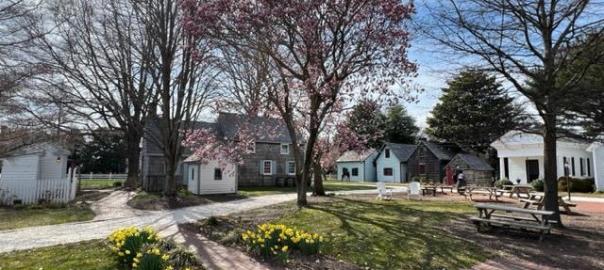
The front of the museum in the Spring of 2026
Rooms in the three-level American Dutch farmhouse are alive with permanent and temporary exhibits and sometimes include loaned objects from other museums and private collections. Historical artifacts like archives and photographs are mingled with textiles, furniture, housewares and artwork.
The display on the history of area
There is even correspondence by the daughters of John Rutherfurd, a close confidant of George Washington.
The display in the local artifacts
The gardens outside in the Spring of 2016
Grounds include the William Carlos Williams Poetry Garden, which acknowledges the legacy of Rutherford’s most famous native and the town’s history as a cultural center.
The everyday products of the Meadowlands Museum
Founder in 1961 as the Rutherford Junior Museum by parents of school age children to help connect them to their community, the museum is staffed by professionals assisted by dedicated volunteers and involved trustees. Interns add to the rich resource of individuals who contribute to its present and future.
A recent commercial developed by my Business 101 Class for the Meadowlands Museum for the project “Rocking it in Rutherford: Being a Tourist in your own Town”
The location of the Yereance-Berry House suggests a colonial farm dating to 1740. The oldest house in south Bergen County in close to original condition, it was part of the Historic American Building Survey project of the 1930’s. The building is also listed on the state and national registers of historic places and the Bergen County Stone House Survey.
The Yereance-Berry House is the now the Meadowlands Museum
Affiliated organization include the American Alliance of Museums, American Association for State and Local History, Meadowlands Regional Chamber of Commerce, New Jersey Association of Museums and The National Trust for Historic Preservation.
Programming & Community Service:
Free and reasonably priced services for individuals, community groups, businesses, government bodies and educational institutions are available.
*Educational programs, lectures and traveling exhibits.
The ‘Historic Rutherford Homes’ exhibition at the museum in 2026
The Historic Homes exhibition
The Historic Homes exhibition
*Customized on and off site programs.
*Collaborative ventures with a wide range of partners.
*Assistance with academic research and other archival support.
Special Events:
Special events, which often are made possible by partnerships with businesses and other organizations, are an additional way for visitors of all ages to enjoy the museum. Public and private events occur on a regular or one-time basis; many are fundraisers. Call or email for a current calendar and sponsorship possibilities. The house hosts both permanent and special exhibits.
Our permanent exhibits include:
*Yereance Berry House: During the Spring of 2026.
The outside of the museum
*Pre-electric kitchen: This unique kitchen in the basement shows off the collection of equipment that would be used in the kitchen from the Civil War to the 1950’s. There are coffee grinders, whisks, wash boards and such. It showed how much effort was put into preparing the family meal through the ages.
The Farm Kitchen of Bergen County
The Farm Kitchen at the Turn of the Century
*Meadowlands Geology: there are all sorts of rocks and gems not just from the area but all over the state. There are two different rooms one of the specimens locally and there is a separate room for glowing stones. It is very interesting to see when the lights are out.
The Mineral Collection at the Meadowlands Museum
The fluorescent Zinc display
The Mining Display
*Mining in South Bergen: This is how the county has changed when we mined ore.
The Mining Display at the Meadowlands Museum
The Mining Display
The Mining Display
*19th century Laundry Room: The Laundry room that is located in the basement has many of the things our grandparents would have used. The washboards, scrub bushes, old washing machines and ringers. Washing clothes was much harder back then.
The Wash Room of the Turn of the Century
*The wonderful Toy Exhibition of turn of the last century toys and from the 1960’s 70’s and 80’s. This contains Dolls, Board Games, play things and instruments:
The Toy Collection fascinates kids of all ages
The Factory Toys display
The wonderful toy factory in Kearny, NJ that used to produce all these wonderful toys.
The Toy Display
The Toy Display
The Doll display
The Doll display
The ‘Brownies’ display in the Toy Room
*The Bergen County Farm display:
Farming in the County in the past
The Farm display
The home Spinning Wheel display
Spinning Wheel display
The new Turn of the Century Furnace display
*Horse elevator
Recent special exhibits have included:
*High school football
*Needlecraft
*Steampunk
*Medical Innovations
*Maps of the region
*Civil Rights
*Dr. Williams’ Babies
Dr. William’s display
Dr. Williams display
Dr. William’s display
Dr. William’s display
Dr. William’s display
*World War I
Special Events:
Scarecrow Day 2018:
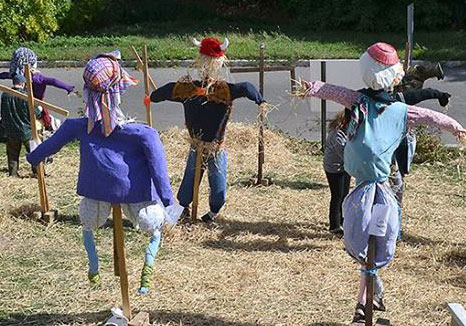
I went to the recent Scarecrow Day on October 20, 2018 where guests of the museum created their own scarecrows using their own creativity. All the scarecrows were lined up facing the street with their interesting clothes and accessories.
Each person got to use their own clothes and each one had its own style to it. It was fun watching the families show their creativity at this annual event.
Scarecrow Day at the museum in 2018
Scarecrow Day in 2021: the winners of the contest for best Scarecrow
I also stopped by for the Dutch Christmas decorations. The museum was decorated for the holidays with garland and trees. On December 1st, they had a Dutch Christmas festival (I could not attend) with food and entertainment.
Celebrating the Easter Holidays in 2026
Help tell the story…
(from the museum website)
Individuals who value the purpose and work of the Meadowlands Museum remain its inspiration and abiding spirit. Donations, memberships, sponsorship’s, grants and fundraisers are crucial elements of the museum’s financial well-being.
Admission to the museum is free but donations are greatly appreciated. Fees for events and other services vary. A personal letter to the appropriate person acknowledges a gift made in the name of an individual. Donations to provide for the buildings and grounds are valuable links to the future and a kind of giving that is among the museum’s top priorities.
Disclaimer: This information was taken directly from the Meadowlands Museum’s pamphlet. For information on the site, please call or email the museum for more information.
My Bergen Community College Team Project in 2022:
Bergecco-Parc Consulting Inc.-Rocking it in Rutherford:
My Business 101 class at Bergen Community College Lyndhurst branch visit in the Spring of 2022 for the project “Rocking it in Rutherford: Be a Tourist in your own Town”.
For Spring Semester in 2022, my Business 101-Introduction to Business class made a weekend visit to the Meadowlands Museum for the project “Rocking it in Rutherford-Be a Tourist in your own Town”. We were promoting the museum to increase tourism with a fundraiser and a barbecue. So on the weekend, I took my Team to the museum to tour it for extra credit. They ended up learning a lot about not just the museum but the history of Rutherford and Bergen County, NJ.
The project was promoting the Town of Rutherford for Domestic and Foreign Tourism and created a fundraiser and modernization of displays for the museum. This is a copy of the project, presentation and Commercials.
The Team Project “Rocking it in Rutherford: Be a Tourist in your own Town”:
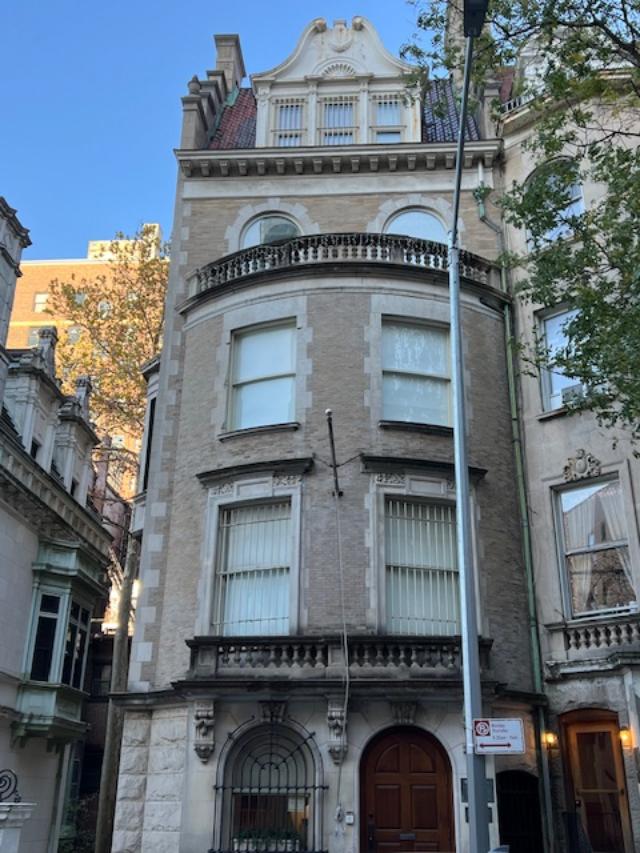
This small museum in the Upper West Side neighborhood of Manhattanville is easy to miss. It is in a small brownstone on West 107th Street right near Riverside Drive. You can see the plaque for the museum to the right of the building and there is a side door to get in. The admission is free but they do ask for a donation if you can do it.
The gallery on the second floor
The museum is a specialty collection of the works of artist Nicholas Roerich. They are mostly landscapes and religious themed that cover three floors of the museum.
The is a beauty to all his works especially the ones concentrated in the Himalayas with their colorful and spiritual themes.
The artist’s portrait of his mother on the third floor
It takes about an hour to an hour and a half to see all the floors. A nice touch they had in the afternoon that I was there was a piano player whom you could hear play throughout the brownstone. When you go, it will be a pleasant afternoon where you are not fighting the crowds of the larger museums.
The art pieces enlighten you and I felt gave you a sense of hope.
(The following information is from the museum website)
Artist Nicholas Roerich
(From the museum website)
The Nicholas Roerich Museum was founded in 1949 to house a permanent collection of over two hundred paintings by the Russian-born artist, poet, philosopher and humanitarian, Nicholas Roerich. The museum also houses a library of books and maintains an archive and a collection of artifacts relating to the areas of Roerich’s interests (Museum guide).
The Mission of the Museum:
The mission of the Nicholas Roerich Museum is essentially a narrow one: to make available to the public the full range of Roerich’s accomplishments. These, however, are not narrow; they cover the realms of art, science, spirituality, peacemaking and more. Because Roerich’s activities ranged widely, so do the museum’s.
The second floor galleries
The Museum Collection:
Nicholas Roerich is known first and foremost as a Russian-born artist. His paintings, of which there are thousands around the world, explore the mythic origins, the natural beauty and the spiritual strivings of humanity and of the world.
One of the more spiritual paintings in the collection
The museum houses approximately two hundred of these works and keeps most of them permanently on display for visitors who come from around the world. Indeed, for many of these visitors, the museum is a destination of great importance; the paintings speak to them of their own inner yearnings and possible fulfillment. For them, Roerich’s paintings are a kind of teaching-about spiritual development about culture and its role in human life and about opportunities for the achievement of peace in a fractious world.
The second floor galleries
The beautiful landscapes on the second floor
Publications & Booklist:
The museum also keeps in print a number of books by and about Roerich and his life and work and a substantial stock of postcards and reproductions of his paintings. These too are seen by many as more than just prints; they are hung in homes with a degree of appreciation that is not often given to such things.
The gallery on the first floor with some of the more religious works
Cultural Events:
In addition to these functions, the museum also maintains an active schedule of cultural activities.
The second floor galleries
It was Roerich’s fervent belief that the role of cultural development in the peace and evolution of the world is fundamental and that it is therefore the responsibility of those who work in creative and cultural fields to strive always for that peace and evolution and for those goals to be the chief impulses guiding their creative work. Information about these ideas is always available.
The second floor gallery with Asian themed art
The Roerich Pact & the Banner of Peace:
The museum sustains an ongoing effort to spread public awareness of the intermingled roles of peace and culture and the ways in which each sustains the other. Information and materials about The Roerich Pact and the Banner of Peace are always available.
The patronage of the museum through the Katherine Campbell-Stibbe Foundation
Throughout this century of wars and national struggles, the yearning of the public for ways of achieving peace has been great; the ideas of the Pact and the Banner provide a welcome answer to those yearnings.
The history of the museum through the years
As Roerich’s ideas become better known around the world, attendance at the Museum grows and requests for information and materials about him and his art and social achievements increase.
The gift shop on the first floor. The director of the museum even sells honey from the beehives on top of his building.
*This information is from the Museum’s website.
Disclaimer: This information was taken from a combination of the museum’s website and from the biography of the artist.