Category Archives: Visiting a Museum in New Jersey

Day Three Hundred and Eighty Three Bergecco-Parc Consulting presents “Bergen 250: Exploring Bergen County’s Revolutionary War Era Cemeteries and Graveyards” April 29th, 2026

Every semester for my Business Marketing, Management and Communications classes, I create one big Team assignment for my students. In a Commuter College, it is a lot tougher for students to get to know one another between their studies and their jobs, so I create these projects to foster learning, creativity and especially Teamwork.

This semester I taught International Marketing. This is a tough course to teach as you always have students of various age groups and various levels of industry experience. The Spring semester was no different. This makes the class more interesting yet more challenging to teach. I still challenge them and test them to see what type of future executives they will become.

I also taught Principles of Management and International Marketing which came with their own challenges. It was the amount of people in each class and what projects would they be working on. I knew the things I wanted to work on, I just had to figure out how to frame them.

In the past, I have created these projects under the Bergecco-Parc Consulting Inc. banner, the main consulting company, the Orion Malls banner, a Mall design company and the Buscomonzefi.com banner, my Tech Division.

Each business concept does its best to be creative, forward thinking and have a thought producing presentations. I also challenge the students to top on another in their presentations and build on what they have seen others do in the past.

The Bergecco-Parc Consulting Inc. concept is an acronym for Bergen Community College Paramus campus where I work. It came to me one night around 3:00am in the morning when I was trying to figure out a project for my students to work on.

Professor Justin Watrel, CEO Bergecco-Parc Consulting Inc.

Our Corporate site (created my one of my former President’s:

This semester I attempted one of the toughest and most extensive Team projects in all the historical projects I have created, taking the listing of the Daughters of the American Revolution created for Bergen County Historical Division for the “Bergen 250”and we took it to another level.

I challenged the students to visit all the cemeteries and graveyards on the listing (using my blog if needed), find the tombstones of the veterans of the Revolutionary War and photograph them. Next they needed to create a biography of each of the veterans.

From there, they needed to create a short video of that gravesite and put it all into a QR code so visitors can find them. It was a big challenge but I knew this class could do it. There was something about the personality of this class that would make it work.

I then planned a series of field trips so that the students could visit particular sites in a more formal tour. I asked a lot of the contacts who I have met over the years to help me out, so the students could see why this project was so important to the 250th Anniversary to both our County and our Country. It took a lot to plan and execute. I gave them six weeks to do the research and create other sections of the project.

Bergecco-Parc Consulting Inc. Project Proposal:

The project came in four different sections:

A. They had to take the listing of all the veterans and their list of grave sites and play ‘detective’ to find the tombstones and then film and create the QR codes.

B. They had to create a special “250th Medallion’ that would be placed at each veteran’s tombstone to honor them on the “Bergen 250”. These pieces of art were very clever.

C. They had to create a “Farm to Table” fundraiser with three courses and an American selection of wines, one being from New Jersey. They also had to create the menu and the invitation to the event. The Teams created the menu, cost and budget to show how much they would raise for the event.

D. As an extra credit assignment, I had the Teams create a special “Halloween Tour”, with a special concession menu, tour script of the cemetery or graveyard of their choice and create the logo and advertising for it. Three of the four Teams created this.

Then I planned a series of field trips to visit the most important sites in Bergen County, some were tiny stand alone family cemeteries, some were historical sites and some were very important church graveyards with family plots.

I think this is where the students had the most fun. This is where the comradery of the class was created. As I took the Team out to many of the sites on their listings, the Teams got to see the concept of “Dark Tourism”, the desire to visit places were either bad things have happened, the site has an evil past or something to do with death. This has become a popular form of Tourism in the Twenty-First Century. (Think the 9/11 Memorial).

It was also a chance to get out of the classroom and get some fresh air and sunshine. These are some of the places our Team visited.

My Graveyard and Cemetery Team “Out in the Field”:

The first site I took my Team to was the Baylor Massacre site in River Vale, NJ, where the British had ambushed a battalion of soldiers and killed them. The site has a rather dark history from the war.

Touring the Baylor Massacre site

https://www.discoverbergencounty.com/baylor-massacre-burial-site

https://en.wikipedia.org/wiki/Baylor_Massacre

My review on TripAdvisor:

https://www.tripadvisor.com/ShowUserReviews-g46777-d12277914-r1054278914-Baylor_Massacre_Burial_Site-River_Vale_New_Jersey.html?m=19905

My review on VisitingaMuseum.com

My Team tour of the Baylor Massacre site

The Team tour of the site

Tour of the Baylor Massacre site

Touring the Baylor Massacre site

The irony about the site is that all my students were from Bergen County and none of them had been here before. I had taken my previous ‘Bergen 250’ class here as well as our next stop, the Haring Farm Cemetery just a few blocks away.

The Team picture at the Baylor Massacre site

We next toured the Haring Family Cemetery down the road on Old Haring Farm Road. This was one of the many examples of small family cemeteries that used to be placed at the edge of family farms, who wanted loved ones buried close by or the distance to the family church was too far away at that time.

Touring the Haring Family Cemetery

The Haring family is one of the most important and prominent Colonial families in New Jersey (and are very distantly related to me by marriage), so I felt this site was very important to visit to show the family dynamic of that era.

Our Team at the Haring Farm Cemetery at Old Haring Farm Court

https://www.findagrave.com/cemetery/1974293/haring-family-cemetery

My review on TripAdvisor:

https://www.tripadvisor.com/ShowUserReviews-g46777-d33055554-r1054278214-Haring_Farm_Cemetery-River_Vale_New_Jersey.html?m=19905

My review on VisitingaMuseum.com:

We then went on our Team lunch at Pompilio’s Pizzeria in Downtown Westwood, NJ. I feel on projects like this to build comradary and for the students to start their projects, we need to ‘break bread’ with one another and get to know each other in a relaxed place. Plus the students seem to love free pizza and Coke. This lunch has started many successful projects.

Our Team Divisional at lunch at Pompilio’s Pizzeria:

Our Team lunch at Pompilio’s Pizzeria

We all had such a nice time at lunch and feel this is the best way to get to know one another. The food at Pompilio’s is also excellent. I always host the lunch with large Cheese Pizza and Coke.

My Executive Team at our lunch

Our next Field Trip was the Old Stone Church in Saddle River at 481 East Saddle River Road in Saddle River, NJ. This is one of the oldest churches in Bergen County and in New Jersey.

The Old Stone Church at 481 East Saddle River Road in Saddle River

https://oldstonechurchonline.org

https://en.wikipedia.org/wiki/New_North_Reformed_Low_Dutch_Church

My review on TripAdvisor:

https://www.tripadvisor.com/ShowUserReviews-g46882-d33349708-r1053127966-Saddle_River_Reformed_Church_and_Cemetery-Upper_Saddle_River_New_Jersey.html?m=19905

My review on VisitingaMuseum.com:

Touring the oldest part of the graveyard

This church has the most complete set of tombstones of Revolutionary War veterans and the church website has some of the most complete information on their veterans.

Our group picture at the Old Stone Church

Our next trip was to the First Reformed Church of Hackensack, the second oldest church in New Jersey and one of the most important for the Revolutionary War. Their graveyard has the most amount of Revolutionary War veterans in Bergen County.

My students outside the First Reformed Church of Hackensack at 42 Court Street

https://en.wikipedia.org/wiki/First_Dutch_Reformed_Church,_Hackensack

https://dspace.njstatelib.org/items/4de999c0-1b3c-442a-867c-c3d5e3ee75e7

My review on TripAdvisor:

https://www.tripadvisor.com/ShowUserReviews-g46480-d34352436-r1058240159-First_Reformed_Church_of_Hackensack-Hackensack_New_Jersey.html?m=19905

My review on VisitingaMuseum.com:

The historic outside cornerstones of the church with the original family founder names carved in the bricks

The family keystones

John Paulson keystone

Henry Berry keystone

Albert C. Zabrifky keystone

The Historic First Reformed Church pews and stained glass windows.

The first floor of the church and the inside pews

The alter

The view of inside of the church

The Revolutionary War artifacts

My student visit on the second floor of the church. The church’s artifacts are displayed in the cases here.

Tour of the church

The Child’s family windows

Voorhis-Lozier-Moore Windows

The Kraissi family windows

The Van Valen windows

The War years windows

The church is the second oldest church in New Jersey and one of the oldest in the country. We then walked outside to tour the historic graveyard in the back of the church. It had the most amount of Revolutionary War veterans buried in Bergen County, NJ.

Many of the veterans of the American Revolution were buried closest to the church, which was the tradition of the time to be buried as close to the church as possible. Their graves were marked by Revolutionary War medallions and American flags.

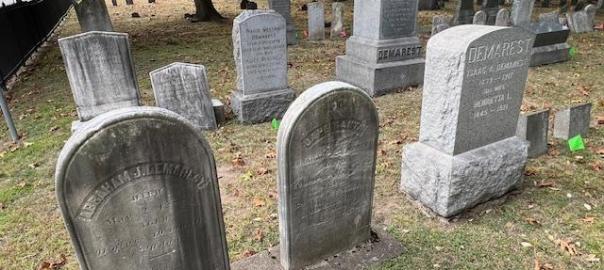
The Demarest-Voorhis Revolutionary War graves

General Poor’s grave

Albert Romin grave Revolutionary War veteran

The front part of the church by the Hackensack Green was the resting place of many of these heros

Our Team of Student Consultants picture inside the historic graveyard

It is also the resting place of General Enoch Poor, who died during battle, whose funeral was attended by General George Washington himself. We took this group picture by the General’s grave.

Our Team pictures with General Poor

Our last field trip and one of our most important was to the Old South Presbyterian Church in Bergenfield. This was the place of the Demarest family plot, which is currently under a full renovation.

The Old South Presbyterian Church and Graveyard

https://www.southchurchtoday.org

My review on TripAdvisor:

https://www.tripadvisor.com/Profile/R4960NKjustinw/mediabatch/13264450?m=19905

My review on VisitingaMuseum.com:

We worked with Melissa Naylis, who is leading the renovation of the church and master carver, Bob Carpenter, who showed us how he is restoring the graveyard. He had led one of my previous classes when we visited the graveyard for my ‘Bergen 250’ project.

Master Carver Bob Carpenter leading our tour

The South Presbyterian Church and the Demarest family plot

The Demarest family plot

Melissa Naylis starting the tour with us

The students got to learn of the important history of the grave sites and why they are an important piece of the United States founding. The were the men who fought for our freedom and the wives and families that supported the effort.

Melissa leading the tour and introducing Bob Carpenter to us

Melissa Naylis explaining the work that is being done in the graveyard

Bob Carpenter explains his work

Some of the earliest tombstones in the graveyard

Bob Carpenter explaining the renovation

Bob Carpenter talking about the Demarest plot renovation

Pastor Glen from the Old South Presbyterian Church introducing himself to the students and joining us on this part of the tour.

Talking about the care of the tombstones

Talking about care of the tombstones

We then moved to tombstone of the founder of Rutgers University for a marble carving demonstration. Bob Carpenter wanted the students to know the effort into carving into stone and brought the tools of that era and a piece of marble for the students to use. The students got a kick out of this and some really enjoyed it.

Bob explaining the work of a marble carver

Describing the process

My students giving it a try

My student Amy, carving marble

My student, Walid, carving on marble

Demonstrating the process

After the demonstration, we talked about the work of the Demarest family and their contributions within Bergen County.

The founder of Rutgers University, John Henry Goetscheus and a member of the extended Demarest family.

Our Team picture after the tour

Taking a quick tour of the graveyard after the formal tour, the Blauvelt-Kipp family burial ground

I found that being ‘out of the field’ really exposed the students to not just to visiting parts of the county they had never seen but showing them how cemeteries and graveyards are part of our culture of respect and memory. They can be looked at less as religious standpoint but as a historical value of who we are and how it part of all of our pasts.

We also looked about how these sites could play a role of building Bergen County tourism by promoting these sites as a part of the history of our country. Not just during the Revolutionary War but as part of our cultural fabric.

On April 29th, 2026, the students made their formal Presentation of the project and showed off their research of the sites and their fundraising tools to support the restoration of these sites.

Here is their work:

The Bergen 250 PowerPoint:

https://docs.google.com/presentation/d/1WdalxqzFy9NJE-6D2Y9nRrHBTB9Z14N2WgSzn119EqM/edit?slide=id.p1#slide=id.p1

The Bergen 250 Website:

https://sites.google.com/me.bergen.edu/bergecco-park-consulting-inc/our-journey

The Bergen 250 Presentation Video:

https://drive.google.com/file/d/1ow37gAAbXF22uoae_bwix6mAseVn_TXy/view

The Bergen 250 YouTube Video:

This was an amazing project that will benefit so many people from historians to researchers to people who love the Revolutionary War and its history to family members looking for loved ones.

It is my class’s contribution as well as other future and past projects to benefit the “Bergen 250” and the rich history of Bergen County, NJ. Our County has contributed so much to not just the building of the state but of the United States as well. It was one of the best projects I ran as CEO of Bergecco-Parc Consulting Inc.

Our Executive Picture:

The “Cemetery and Graveyards” Team

Our Reception following the Presentation

Our Presentation was followed by a Q & A with many people we had met along the way from our visits “out in the field” who had come to see the final project and this was followed by our Corporate Team picture and then a reception in honor of the Student Consultants who made this important possible and come to life.

Great job Team!

Day Three Hundred and Eighty Four Bergecco-Parc Consulting presents “Bergen 250: Touring & Marketing the Pascack Historical Society Museum in Park Ridge, NJ for Tourism” April 29th, 2026

Every semester for my Business Marketing, Management and Communications classes, I create one big Team assignment for my students. In a Commuter College, it is a lot tougher for students to get to know one another between their studies and their jobs, so I create these projects to foster learning, creativity and especially Teamwork.

This semester I taught two sections of Business 101-Introduction to Business, which is the entry level course to the Business/Hotel Management School. This is a tough course to teach as you always have students of various age groups and various levels of industry experience.

The Spring semester was no different. This makes the class more interesting yet more challenging to teach. I still challenge them and test them to see what type of future executives they will become.

I also taught Principles of Management, which came with its own set of challenges. It was the amount of people in the class and what projects would they be working on.

In the past, I have created these Team projects under the Bergecco-Parc Consulting Inc. banner, the main consulting company, the Orion Malls banner, a Mall design company and the Buscomonzefi.com banner, my Tech Division. All of these business concepts are simulated.

Each business does its best to be creative, forward thinking and have a thought producing presentations. I also challenge the students to top on another in their presentations and build on what they have seen others do in the past.

The Bergecco-Parc Consulting Inc. concept is an acronym for Bergen Community College Paramus campus where I work.

Professor Justin Watrel, CEO Bergecco-Parc Consulting Inc.

Our Corporate site (created my one of my former President’s:

While my morning Business 101 classes worked on their ‘Breakfast at Primo Pizza’ project and my International Marketing students worked on their “The Historic Revolutionary War Graveyards and Cemeteries of Bergen County” projects, I had my Principle of Management students create a game plan to market the Pascack Historical Society Museum in Park Ridge, NJ to a younger, more modern audience.

When choosing a project for this class, I had had two other ideas that fell through, then I had remembered working with the Pascack Historical Society Museum the prior year for my “Bergen 250” Team Project. We had proposed a Farm to Table Dinner at the Wortendyke Barn down the road with the dinner starting with a Cocktail Party here with a tour of the museum. I asked the museum again to partner with me on this project.

The “Bergen 250” Project in Spring 2025:

The Video Presentation of the “Bergen 250” in 2024:

The museum had created a wonderful exhibition for the “Bergen 250” but when I went to visit it, no one was at the museum but myself. When I asked the volunteers that day how many people had visited the museum, they told me I was the first one. That got me thinking why people were not visiting this wonderful museum with its interesting artifacts and intriguing displays.

The outside of the Pascack Historical Society Museum at 19 Ridge Avenue in Park Ridge, NJ

Then I looked at their website and their displays. I realized that the museum was not adapting to the cellphone age. There were no QR codes at any of the displays, not enough pictures of the display on their website and their scavenger hunt bingo game needed an update to engage a younger crowd.

https://www.facebook.com/pascackhistoricalsociety

My review on TripAdvisor:

https://www.tripadvisor.com/ShowUserReviews-g46713-d12610386-r1051662243-Pascack_Historical_Society_Museum-Park_Ridge_New_Jersey.html?m=19905

My review on VisitingaMuseum.com:

That’s when I came up with a Marketing plan for the museum and proposed it to their Executive Board. We worked together to come up with new ways to promote the museum and its collection. This was our combined idea and we looked at how to bring more traffic to the museum.

The Proposal for “Bergen 250: Touring the Pascack Historical Society Museum”:

I presented the project to my students after the Spring Break and then the next week took my students on a mandatory field trip to the Pascack Historical Society Museum in early April. The Board members of the Museum led us on a tour of all the exhibitions, then discussed their plans for the “Bergen 250” and then discussed some of the challenges that the museum faced with attendance.

Touring the museum

The students on their part took pictures and notes about the museum and their displays. Many would make various trips back to the museum to crest the QR codes for the displays and map the museum’s backyard for the Farm to Table fundraiser and a proposed afternoon tea.

Touring the museum

Touring the museum

Touring the museum with the Board of the museum

The museum’s Board members could not have been nicer and more helpful to the students and myself. We got a lot of insights on what direction the Board wanted to go.

Our Team picture at the museum

The tour of the museum took about an hour. We then had a Division Team Dinner at Pompilio’s Pizzeria in Downtown Westwood, NJ:

https://www.pompiliospizzeria.com

My review on TripAdvisor:

https://www.tripadvisor.com/ShowUserReviews-g46923-d4643410-r1053567938-Pompilio_s_Pizzeria_Restaurant-Westwood_New_Jersey.html?m=19905

Dinner with my Divisional Team

I find that these Team dinners and lunches are very helpful in getting the students together to get to know each other and we share a nice meal as a Team should. We asked the Board to join us so we could continue the conversation.

Dinner with both the Board and my Team

For the next five weeks the three Teams broken into Marketing, Historical and Foodservice created their ideas and game-plans to help the museum increase traffic by trying to bring a younger and tech savvy visitor into the space.

The Pascack Historical Society PowerPoint:

The Pascack Historical Society Corporate Website:

https://ekucevic4.wixsite.com/bergecco-parc-consul

The Pascack Historical Society YouTube Presentation:

The video of our Presentation to the Board of the Pascack Historical Society Museum on the evening of April 29th, 2026

On the evening of April 29th, the Board members of the museum joined us for the Presentation of ideas the students came up with including setting new QR codes for all the displays, a revamped Marketing plan to showcase the museum, a new historical walking tour, one aimed at adults and one to children and the ideas for the fundraising dinner, a children’s birthday party concept and a Afternoon Tea fundraiser.

After the Presentation, we had a Q & A on the ideas and after the Presentation was over, we had a reception for our guests and for the student consultants. Then we took our Corporate Team picture.

My Divisional Team the night of the Presentation

Our reception after the Presentation

It was another successful project accomplished and it looked like the Board went home with new ideas and the students learned a few things about themselves. I could not have been more proud of the students.

Historical Society of Boonton Township/Oscar A. Kincaid Home of History 591 Powerville Road Boonton Township, NJ 07005

Historical Society of Boonton Township/Oscar A. Kincaid Home of History

591 Powerville Road

Boonton Township, NJ 07005

https://historicalsocietyofboontontownship.org/

Open: For Special Events and Pathways Tours only

Admission: Free on the Pathways Tour

My Review on TripAdvisor:

https://www.tripadvisor.com/Profile/R4960NKjustinw/mediabatch/14296162?m=19905

The Historical Society of Boonton Township

One of the last places I visited in the 2026 Pathways tour of Morris County was the Historical Society of Boonton Township which is located in the former Oscar Kincaid Farm Homestead. The house and what was left of the acreage of the farm was part of the current museum. The museum was an example of early New Jersey farming that dated from the 1800’s to the Twenty-First century. There was not much in the way of period furniture or farm equipment (items of the home were sold off since Mr. Kincaid’s passing), but the new historical society is buying artifacts and bringing them back to the farm. This includes one of Mr. Kincaid’s tractors. His roll up desk is also still in the display room which was once the Living Room of the home.

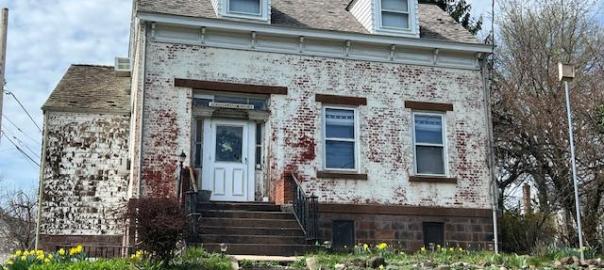
The Kincaid Homestead

History of Oscar Kincaid and Homestead:

(From the Morris County Historical Society website)

Originally a part of the extensive tract belonging to William Penn, the earliest portion of the home was constructed in 1785 by Adam Miller and Anna DeMouth Miller. Just over a decade later, they sold the property to Adam’s cousin, Sarah Miller Parlimen (of the Miller/Dixon homestead) and her husband, John, who built a sawmill there. After a brief ownership by William Scott of Powerville, a Miller relative, the land was sold to John Decker in 1828. An industrious man, Decker operated both a farm and successful forge, shipping his goods to New York via the Morris Canal. By 1837, he expanded the home, adding a distinctive folk-art painting of a face and unique plasterwork that can still be seen today (MCHS website).

The homestead passed through generations of Decker’s family, ultimately being inherited by Oscar Kincaid Sr. in the early 20th century. Kincaid ran a popular ice cream stand and dairy business throughout the 1920s and 30s. Following World War II, the family opened Valley Farm on the site, which continued until the death of Oscar Kincaid Jr. in 2000. Added to the National Register of Historic Places in 2005, the Decker-Kincaid Homestead today operates as a museum and headquarters of the Historical Society of Boonton Township (MCHS website).

The Kincaid House

The historical marker for the house

The front yard

The entrance to the house

The main foyer of the house

The house is a small farmhouse built in two sections. The original part of the house dates back to the late 1700’s and the newer part in the early 1800’s. The once furnished rooms now hold displays of Morris County and the farming industry of the time plus community artifacts.

The former Living Room

Oscar Kincaid’s desk

There were not much left in the way of family furnishings and heirlooms but this desk was Oscar Kinkaid’s.

The back bedroom

The Flag display for the ‘250th Anniversary’

Story of Oscar Kincaid’s life: Oscar Kincaid was a farmer/businessman, a politician and a conservationist.

On Community:

(From the museum website)

Oscar’s commitment to his community transcended farming. He served as a member of  the Boonton Township Committee for 30 years and was mayor for two terms. He was also a founding member of the Morris County Agricultural Development Board, on which he served for 17 years, six as board chairman. Oscar led the charge for farmland preservation in Morris County. His efforts resulted in the preservation of 41 farms covering 3,100 acres spanning several municipalities throughout the county. As one person put it: “Oscar had more impact on preserving the character of Boonton than any single individual.”

But to Oscar: “Farming and being active in local politics was simply a way of life.” Oscar passed away November 11, 2000

The contractor’s face on the wall

The face came about when Oscar Kincaid did not want to pay a contractor for his work. He created this face so that he would have to live with it for the rest of his life. It can not be planted over.

The ‘Mr. Face’ in Weird NJ

On Farming:

(From the Museum website)

Oscar Kincaid, Jr., was born into farm life. It was 1824 when the Kincaid family purchased 30 acres in Boonton Township, Morris  County and began farming. More than a century later, a young Oscar took over the operation, working alongside his father as they raised dairy cows, grew vegetables and developed a poultry business.  For years, they delivered eggs to retail establishments and sold vegetables from their roadside stand. Over time, Oscar moved away from the dairy and poultry business and focused his efforts on vegetable and hay production. 

The Kincaid house from the side

After the short tour around the house, I walked around the farm grounds. The house was set on a beautiful piece of land that sloped down to the old farmstand. There was also a swimming pond which was once part of the farm which is now private property.

The farm property from the side with the barn

The barn across the street

The property was about ten acres at the time of his death and parts have been developed. It still has some of the most wonderful views of the area.

The view of the old farm from the front porch

The farm land stretches over different sections of the road and the property is very picturesque. It is a very beautiful homestead.

The view of the farm from the lawn

The swimming pond on the edge of the property

The old farm stand that had been used for eighty years

The old Farm stand was used into the mid 2000’s

The full view of the farm

Since the house was just recently bought, there is still some design and artifacts that need to be collected to complete the look of a Jersey farm.

The Historical Society of Boonton Township is still expanding the collection of farm equipment for property and finding furniture for the home. The property is a beautiful and picturesque and shows how the traditional farm has adapted to modern times. Mr. Kincaid only passed a few years ago but kept the farm traditional and that worked for him. He left a legacy for us to appreciate the independent Jersey farmer.

Henry Doremus House 490 Main Road Towaco, NJ 07082

Henry Doremus House

490 Main Road

Towaco, NJ 07082

https://www.montvilletwphistoricalsociety.com/museums

https://en.wikipedia.org/wiki/Henry_Doremus_House

https://www.facebook.com/groups/1141264633508766/posts/1764205224548034

Open: Special Events and Pathways Tours in Spring and Fall-Please contact through their website

Admission: Free but donations are accepted

My review on TripAdvisor:

https://www.tripadvisor.com/ShowUserReviews-g46639-d4814175-r1059078529-Henry_Doremus_House-Montville_Morris_County_New_Jersey.html?m=19905

The Henry Doremus House during the Pathway’s tour

I visited the Henry Doremus House during the Morris County Pathways Tour in May of 2026 and it is good look at the early farming communities of New Jersey under the Dutch and then the English. The house was used by General George Washington while he was passing through this section of New Jersey during the Revolutionary War.

The sign for the Henry Doremus House

The historic sign for the house

Montville Township Historical Society:

(from the Museum website)

Established in 1963, the Montville Township Historical Society is dedicated to the preservation and promotion of the cultural heritage of Montville Township. Our unwavering commitment to meticulous archival work, interactive educational programs, and community outreach initiatives is aimed safeguarding the rich history of our town. Our ultimate objective is to ensure that the stories and traditions of Montville Township are cherished and celebrated for years to come.

The farm and harvest equipment

General Washington’s payment to the Doremus family for use of their home during the Revolutionary War

The farming equipment

The farm and household equipment room

The farm equipment from the time of the Revolutionary War

Henry Doremus House History:

(from the Museum’s website)

The Henry Doremus House is a Dutch American stone farmhouse that has been remarkably preserved since the time the first portion was built, circa 1760. The house has never been modernized with heating, plumbing, electricity, or wiring, and is one of only seven left in New Jersey without modern electricity. What is now Route 202 was one of the main military routes during the Revolutionary War through Montville and Towaco, (then part of Pequannock Township). The Henry Doremus house was located in a small community often referred to as Doremus Town.​

The main room of the original house during the tour

The kitchen and cooking equipment by the open hearth fireplace

The open hearth fireplace for cooking and heat for the home

Cooking items

(from the Henry Doremus website)

General George Washington and his troops often traveled this route between Morristown and West Point. In June of 1780, Washington’s troops (2000 soldiers and 40 aides) were in Whippany and traveled to Doremus Town after the retreat of the Battle of Springfield. General Washington and his aides (which General George Washington at age 45 about the time he stayed at the Henry Doremus House (Mount Vernon)  included Alexander Hamilton) stayed two and a half days in the Doremus House as General Andre Rochambeau (NIAHD Journals)   documented by Washington’s expense account and letters. A payment of $40 was  made to Mrs. Doremus at Pequannock on June 25th, to house General George Washington and his soldiers after the Battle of Springfield. French General Rochambeau stayed in the orchards around the house with over 5000 of his men, women, and camp followers on his way to the Battle of Yorktown in 1781.​

The items for processing wool and flack for clothing

A closer look at the equipment

Household equipment

The house addition towards the back had a spinning wheel and demonstration on how to make cloth.

​The Henry Doremus House was placed, in 1972, on both the National Register of Historic Places and the New Jersey Register of Historic Places. It was also listed on the Montville Township Local Register in 1987, as well as the Crossroads of American Revolution Greenway. In addition, the preservation and protection of the Henry Doremus House won the New Jersey Historic House Preservation Award in 2009.

The demonstrations on spinning yarn and making clothing in the back of the house

When I toured the house, the docents described how the household functioned and how the farm worked during the season. Men and women had different roles to make the household function. There was not much buying things for the house so clothes were made, foods were preserved and pickled for the Winter and then meals had to be prepared while the men worked out in the field. Men had to grow, tend to and then pick all the fruits and vegetables. Then there was tending to the animals, sheering animals and just working on tending the farm with repairs and working through the seasons. It was a lot of physical work through all the seasons.

Household equipment and furnishings plus another open hearth for heating the house

The front of the house facing the street with twin Dutch doors and entrance to the root cellar

The Doremus House is open mostly during the Pathways tour in May and October. The Montville Historical Society also runs the Montville Historical Society Schoolhouse Museum in Montville.

Harding Township Historical Society/Tunis-Ellicks House 16 Village Road New Vernon, NJ 07976

Harding Township Historical Society/Tunis-Ellicks House

16 Village Road

New Vernon, NJ 07976

(973) 272-3661

https://www.hths.org/museum

Open: Special Events and Pathways Tours

Admission: Free but donations are accepted

My review on TripAdvisor:

https://www.tripadvisor.com/ShowUserReviews-g46670-d24085125-r1058924664-Tunis_ellicks_House_Museum-New_Vernon_Morris_County_New_Jersey.html?m=19905

I visited the Tunis-Ellicks House on the Morris County ‘Pathways’ tour of historical sites throughout the County and enjoyed the self-guided tour of this well maintained and displayed home. Unlike many sites I have visited over the years where things are left out and jumbled on tables, the Tunis-Ellicks House offers a look at small family farms from before the Civil War. The displays depict and discuss the life of a farming family in Central New Jersey.

The Tunis-Ellicks House in New Vernon, NJ

The house sign

The house is located in the New Vernon Historic District

The house was located in one of the oldest sections of the community, facing other structures in the historical district of New Vernon, NJ.

The house and front garden from the road

The vegetable garden in the front of house

In front of the house was a large vegetable and fruit garden with a grape arbor for spirits on the side of the house. These items would be jarred and pickled for the winter months or sold at market.

Mission Statement:

(From the Museum website)

The Harding Township Historical Society is a private, not-for-profit corporation founded in 1977 to stimulate interest in the history of Harding Township. The Society shall support, assist in and seek to achieve the preservation of documents, buildings and sites related to Harding Township. It shall also collect, preserve, maintain and interpret original cultural material, which illuminates this history. In addition, The Society is responsible for preserving and maintaining the Tunis-Ellicks House and environs. Through use of its historic site, collections and programs, the society endeavors to document and illustrate the history of Harding Township for present and future generations (Tunis-Ellicks website).

You enter the museum from the back of the house. In the backyard of the home, there were all sorts of activities going on while you could start a self-guided tour of the house.

The back of the Tunis-Ellick’s House

The beautiful view from the back door of the home

The inside of the main part of the museum

The main part of the museum was the newer extension of the home where the living room and dining rooms were located. There were displays on the walls discussing farm life in New Jersey during the late 1700’s and early 1800’s.

The Dining Room section of the house

The workings of the Dining Room

The story of ‘Country Life’ and the gentleman farmer

Pieces of the decor on display

The kitchen area of the older part of the home offers a homey fireplace for cooking and summer storage for jarred and pickled food stuffs for the winter.

The kitchen and storage areas of the home

Pottery collection in the museum

The pottery collection

The kitchen dining and cooking area of the home

The fireplace for cooking, roasting and stewing of foods

The oven for baking breads, cookies and pies and the baking equipment

The Summer storage area for canned and jarred provisions for the winter months and for cooking.

The bathrooms were on the second floor of the home/museum and I got a quick tour of the upstairs bedrooms.

Bedroom One

Bedroom Two

These were not part of the self-guided tour but I was able to see them and how they were decorated.

History of the Harding Township Historical Society:

(From the Museum website)

The Harding Township Historical Society was formed in 1977 to save the circa 1795 Tunis-Ellicks House and restore it as it appeared in the early 19th century. The society discovered an original 18th century hearth and Federal-style mantel and a water-fed cooling room besides the well.  Areas of the house were left exposed to showcase the post-and-beam construction. A permanent exhibit on 19th century farming was created as well as space for temporary exhibits. 

The Society saved a circa 1870 Tramp House from destruction when the Great Swamp National Wildlife Refuge was created by having the building moved the Tunis-Ellicks House property.  The Harding Township Historical Society maintains an extensive archive containing records, maps, and objects since the colonial era pertaining to the town. The archive is open to researchers, genealogists and the public. Each year we provide an award  to a student at the Harding Township School that excels in the subject of history. The Society produces exhibits, lectures, tours, and interactive events to bring history to the public.

I then joined many of the other visitors to hear an historical reading on the patio of the home from a descendant of a Colonial family. He was discussing life in Colonial New Jersey.

The Colonial talks

They also had a table set up for arts and crafts. The volunteers were making corn husk dolls with some of the visitors.

They also had corn husk doll making as an activity

Then I was able to tour the grounds and visit the ‘Tramp House’ that was used for workers of these farms. This had been moved from the ‘Great Swamp’ to this location. It showed the living conditions of workers on the farm.

Walking on the grounds of the farm

The Wine Arbor on the side of the house

History of the Tunis-Ellicks House:

(From the Museum website)

The Tunis-Ellicks House was built in 1795 when George Mitchell bought it from Michael Pearce, a Minuteman in the Revolutionary War. The deed for 7 acres of land is dated April 22, 1795. Interestingly, the ledgers of Daniel Tunis, who lived down Millbrook Rd and had a store, show that, beginning May 9, 1795, Mitchell bought items consistent with building a house: a load of timber and half a bushel of hair (used for plaster).

In 1838, a local farmer named Silas Tunis bought the farm and his descendants owned the house until 1923. Eva and Lee Ellicks sold the house to the township in 1968. In 1977, the Harding Township Historical Society began to restore the home as it would have appeared in the early 19th century. The house is a post-and-beam East Jersey cottage complete with a cooling room fed by the well outside. The museum features a permanent exhibit entitled A Country Life about the workings of 18th-century farms.

The ‘Tramp House’ for farm workers

The historic sign

The inside of the small living quarters

The farm equipment used in processing crops

History of the Tramp House:

(from the Museum website)

The Tramp House is a simple stone building built about 1870 by the Morris Overseer of the Poor as a place to stay for wandering Civil War veterans searching the countryside for work.  By providing a place to stay, farmers protected their barns from accidental fires by the men trying to cook or keep warm. The men would work on the farms in exchange for a safe and warm place to sleep

The house was located in one of the oldest sections of the community, facing other structures in the historical district.

The house and front garden from the road

I really enjoyed visiting the site and got a good view how life on a New Jersey farm was before the Civil War. The museum was very nicely organized and the displays were engaging. The volunteers and docents could not have been nicer and it was a fun afternoon.

Meadowlands Museum 91 Crane Avenue Rutherford, NJ 07070

Meadowlands Museum

91 Crane Avenue

Rutherford, NJ  07070

Phone: (201) 935-1175

Email: meadowlandsmuseum@verizon.net

https://www.meadowlandsmuseum.com/

https://www.facebook.com/MMusRutherford/

Open: Most Wednesdays and Saturdays from 10:00am-4:00pm

TripAdvisor Review:

https://www.tripadvisor.com/Attraction_Review-g46796-d2403380-Reviews-Meadowlands_Museum-Rutherford_New_Jersey.html?m=19905

Both Curator & Chronicler

The entrance of the museum

The Meadowlands Museum is the main steward of the history and culture of the Meadowlands region and one of its leading storyteller.

The sign welcoming you

Its mission and collection, which resides in the Yereance-Berry House in southern Bergen County in Rutherford, NJ are distinctive and unique. The house too is a historic treasure and landmark and was built in 1804 by the Berry family, who were among the county’s earliest European settlers.

The front of the museum in the Spring of 2026

Rooms in the three-level American Dutch farmhouse are alive with permanent and temporary exhibits and sometimes include loaned objects from other museums and private collections.  Historical artifacts like archives and photographs are mingled with textiles, furniture, housewares and artwork.

The display on the history of area

There is even correspondence by the daughters of John Rutherfurd, a close confidant of George Washington.

The display in the local artifacts

The gardens outside in the Spring of 2016

Grounds include the William Carlos Williams Poetry Garden, which acknowledges the legacy of Rutherford’s most famous native and the town’s history as a cultural center.

The everyday products of the Meadowlands Museum

Founder in 1961 as the Rutherford Junior Museum by parents of school age children to help connect them to their community, the museum is staffed by professionals assisted by dedicated volunteers and involved trustees. Interns add to the rich resource of individuals who contribute to its present and future.

A recent commercial developed by my Business 101 Class for the Meadowlands Museum for the project “Rocking it in Rutherford: Being a Tourist in your own Town”

The location of the Yereance-Berry House suggests a colonial farm dating to 1740. The oldest house in south Bergen County in close to original condition, it was part of the Historic American Building Survey project of the 1930’s. The building is also listed on the state and national registers of historic places and the Bergen County Stone House Survey.

The Yereance-Berry House is the now the Meadowlands Museum

Affiliated organization include the American Alliance of Museums, American Association for State and Local History, Meadowlands Regional Chamber of Commerce, New Jersey Association of Museums and The National Trust for Historic Preservation.

Programming & Community Service:

Free and reasonably priced services for individuals, community groups, businesses, government bodies and educational institutions are available.

*Educational programs, lectures and traveling exhibits.

The ‘Historic Rutherford Homes’ exhibition at the museum in 2026

The Historic Homes exhibition

The Historic Homes exhibition

*Customized on and off site programs.

*Collaborative ventures with a wide range of partners.

*Assistance with academic research and other archival support.

Special Events:

Special events, which often are made possible by partnerships with businesses and other organizations, are an additional way for visitors of all ages to enjoy the museum. Public and private events occur on a regular or one-time basis; many are fundraisers. Call or email for a current calendar and sponsorship possibilities. The house hosts both permanent and special exhibits.

Our permanent exhibits include:

*Yereance Berry House: During the Spring of 2026.

The outside of the museum

*Pre-electric kitchen: This unique kitchen in the basement shows off the collection of equipment that would be used in the kitchen from the Civil War to the 1950’s. There are coffee grinders, whisks, wash boards and such. It showed how much effort was put into preparing the family meal through the ages.

The Farm Kitchen of Bergen County

The Farm Kitchen at the Turn of the Century

*Meadowlands Geology: there are all sorts of rocks and gems not just from the area but all over the state. There are two different rooms one of the specimens locally and there is a separate room for glowing stones. It is very interesting to see when the lights are out.

The Mineral Collection at the Meadowlands Museum

The fluorescent Zinc display

The Mining Display

*Mining in South Bergen: This is how the county has changed when we mined ore.

The Mining Display at the Meadowlands Museum

The Mining Display

The Mining Display

*19th century Laundry Room: The Laundry room that is located in the basement has many of the things our grandparents would have used. The washboards,  scrub bushes, old washing machines and ringers. Washing clothes was much harder back then.

The Wash Room of the Turn of the Century

*The wonderful Toy Exhibition of turn of the last century toys and from the 1960’s 70’s and 80’s. This contains Dolls, Board Games, play things and instruments:

The Toy Collection fascinates kids of all ages

The Factory Toys display

Meadowlands Museum Scarecrow Day III

The wonderful toy factory in Kearny, NJ that used to produce all these wonderful toys.

The Toy Display

The Toy Display

The Doll display

The Doll display

The ‘Brownies’ display in the Toy Room

*The Bergen County Farm display:

Farming in the County in the past

The Farm display

The home Spinning Wheel display

Spinning Wheel display

The new Turn of the Century Furnace display

*Horse elevator

Recent special exhibits have included:

*High school football

*Needlecraft

*Steampunk

*Medical Innovations

*Maps of the region

*Civil Rights

*Dr. Williams’ Babies

Dr. William’s display

Dr. Williams display

Dr. William’s display

Dr. William’s display

Dr. William’s display

*World War I

Special Events:

Scarecrow Day 2018:

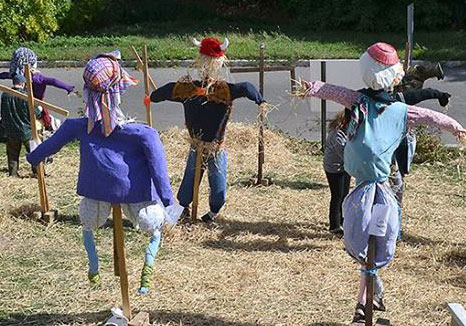
I went to the recent Scarecrow Day on October 20, 2018 where guests of the museum created their own scarecrows using their own creativity. All the scarecrows were lined up facing the street with their interesting clothes and accessories.

Each person got to use their own clothes and each one had its own style to it. It was fun watching the families show their creativity at this annual event.

Image result for scarecrow day at meadowland museum

Scarecrow Day at the museum in 2018

Meadowlands Museum Scarecrow Day

Scarecrow Day in 2021: the winners of the contest for best Scarecrow

I also stopped by for the Dutch Christmas decorations. The museum was decorated for the holidays with garland and trees. On December 1st, they had a Dutch Christmas festival (I could not attend) with food and entertainment.

Celebrating the Easter Holidays in 2026

Help tell the story…

(from the museum website)

Individuals who value the purpose and work of the Meadowlands Museum remain its inspiration and abiding spirit. Donations, memberships, sponsorship’s, grants and fundraisers are crucial elements of the museum’s financial well-being.

Admission to the museum is free but donations are greatly appreciated. Fees for events and other services vary. A personal letter to the appropriate person acknowledges a gift made in the name of an individual. Donations to provide for the buildings and grounds are valuable links to the future and a kind of giving that is among the museum’s top priorities.

Disclaimer: This information was taken directly from the Meadowlands Museum’s pamphlet. For information on the site, please call or email the museum for more information.

My Bergen Community College Team Project in 2022:

Bergecco-Parc Consulting Inc.-Rocking it in Rutherford:

My Business 101 class at Bergen Community College Lyndhurst branch visit in the Spring of 2022 for the project “Rocking it in Rutherford: Be a Tourist in your own Town”.

For Spring Semester in 2022, my Business 101-Introduction to Business class made a weekend visit to the Meadowlands Museum for the project “Rocking it in Rutherford-Be a Tourist in your own Town”. We were promoting the museum to increase tourism with a fundraiser and a barbecue. So on the weekend, I took my Team to the museum to tour it for extra credit. They ended up learning a lot about not just the museum but the history of Rutherford and Bergen County, NJ.

The project was promoting the Town of Rutherford for Domestic and Foreign Tourism and created a fundraiser and modernization of displays for the museum. This is a copy of the project, presentation and Commercials.

The Team Project “Rocking it in Rutherford: Be a Tourist in your own Town”:

Video’s of the Presentation:

The video presentation promoting the museum:

The Project showcased the museum in such a professional and creative way.

Van Bushkirk Burial Ground 45 East Saddle River Road Saddle River, NJ 07458

Van Bushkirk Burial Ground

45 East Saddle River Road

Saddle River, NJ 07458

https://www.findagrave.com/cemetery/2160733/edit

The Van Bushkirk Burial Ground behind the residence at 45 East Saddle River Road

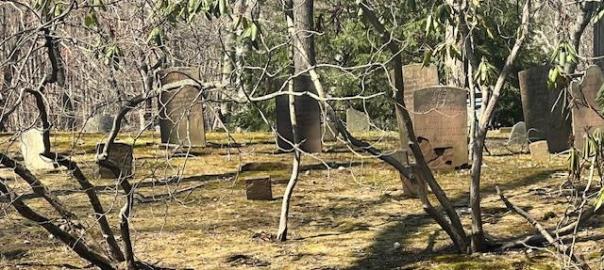
The Van Bushkirk Burial Ground is part of the history of Saddle River, NJ’s early settlement period. The burial ground has about 40 tombstones that are arched and shaped. These are some of the first residents both of Saddle River and Bergen County, NJ.

The burial ground lies next to a creek off East Saddle River Road and can only be accessed by going through private property of the residents living at 45 East Saddle River Road. Please do not enter without permission of the owner of the home. These pictures were taken with a long distance camera from the street.

The Van Bushkirk Burial Ground at 45 East Saddle River Road

The History of Saddle River:

(from the Saddle River Town website):

In 1675, Lenni Lenape tribal leaders sold a large amount of land on the Eastern side of the Saddle River (known as Werimus) to Albert Zabriskie. In 1708, Zabriskie sold this tract of land to Thomas Van Buskirk. The first house in Saddle River was built by the Van Buskirk family in 1709. The original Van Buskirk homestead still stands at 164 East Saddle River Road across from Borough Hall.

In 1709, the Lenni Lenape sold the land on the west side of the Saddle River to the English as part of the Ramapo Tract. Property on the west side of the Saddle River was acquired from this Tract throughout the 1700’s. The Ackerman Family was the most prolific buyer of these early Saddle River parcels and first settled on the West side of the Saddle River in 1745 when Johannes Ackerman acquired 245 acres.

The graves of George and Margaret Achenbach

Saddle River continued to grow and populate during the 18th century.  Families such as the Van Buskirk’s, the Ackerman’s, the Achenbach’s, the Hopper’s, the Zabriskie’s, the Stilwell’s and the Baldwin’s farmed and developed the area.

The grave of George Achenbach

The first of many Saddle River mills was built in 1714 and the first school was constructed in 1720. Another early 18th century business was the blacksmith shop operated by the Ackerman family. Over the years, these 1st families built the quintessential “Old Dutch Homesteads” from actual sandstone that was found in town.

The Revolutionary War era tombstones

The Revolutionary War was a horrendous time for the residents of Saddle River. The townsfolk had spent the entire 18th century developing the area into a well established community and all growth essentially stopped during the war. Since the Jersey Dutch initially considered the revolution to be an English issue, it was particularly shocking when the fighting came to their backyards. From December 1776 until the end of the war, both American and British forces traveled through Saddle River and many times set up camp in the center of town.

Residents were in constant fear of the British employed Hessian soldiers who would terrorize families by raiding the houses for food and then burning the fields before leaving. Although no major battles took place in Saddle River, there were small skirmishes to fend off raids and the Blue Mill on East Saddle River Road was destroyed. Even George Washington, the future father of our country, passed through Saddle River on multiple occasions and tradition has him staying overnight at the Ackerman Homestead on the East road.

When the Revolutionary War ended, Saddle River residents picked up right where they left off in terms of community and industry development. The Ackerman’s built a Foundry on what is now Waterford Gardens. Tice and Berdan both opened stores in town and the Bulls Head Tavern opened its doors to weary travelers in 1802. Old mills were re-opened and new ones such as Van Riper’s Saw Mill and Basket Factory were established. The post war growth continued for decades and culminated in the 1820s with the construction of the Zion Lutheran Church in 1821 and a new schoolhouse behind the church in 1825.

The worn tombstones in the cemetery

History of the Van Bushkirk family in Bergen County during the Revolutionary War:

(From the Bergen County Historical Society website):

Loyalists in Bergen County | Bergen County Historical Society

Loyalists in Bergen County came from all backgrounds, religions and economic classes. At the beginning of the war, a number were officers in the militia, the military force composed of all able-bodied males maintained by each province, and later the states. The lieutenant colonel of the militia was John Zabriskie of New Bridge. Zabriskie understood the sentiments of many of his neighbors, particularly those of Abraham Van Buskirk, whose property was directly across the bridge in Teaneck. Van Buskirk was a surgeon in the militia under Zabriskie, and with whom he served on Bergen County’s Committee of Correspondence, an entity established to keep in touch with other New Jersey counties and the events occurring there.

Van Houten Family Cemetery 108 Delaware Lane Franklin Lakes, NJ 07417

Van Houten Family Cemetery

108 Delaware Lane

Franklin Lakes, NJ 07417

https://www.findagrave.com/cemetery/1598327/van-houten-family-cemetery

https://www.myheritage.com/names/john_vanhouten

https://www.wikitree.com/genealogy/VANHOUTEN

My review on TripAdvisor:

The Van Houton Family Cemetery at 108 Delaware Lane on what was once the family farm

The historic Marker from 1822

The family plot from the entrance of the cemetery

About five generations of Van Houton’s have been buried in this spot, with an impressive list of family members who have served in all the nation’s wars.

From the Revolutionary War up to World War II, the family’s contribution extends not just to Bergen County but our entire country.

The family extends to other older ‘first families’ of Bergen County, such as the Snyder’s, the Demarest’s, DeBuan’s and the Van Ripper’s.

History of the Cemetery:

https://www.interment.net/data/us/nj/bergen/vanhouten/van.htm

(From the research of Richard Hrazanek)

This multi-generational cemetery is still used today by the descendents of John Van Houten, who left the property in his will. The grounds of the cemetery are well maintained. A metal fence around the property could use some minor repairs. Unfortunately a couple of the obelisk markers have fallen off their bases.

In the August 1992 Cemetery Inventory Booklet, published by the Bergen County Department of Parks, Division of Cultural and Historic Affairs, they listed Andrew Schaaf as a contact person for the cemetery, with an address of 749 High Mountain Road, Franklin Lakes, NJ 07417. The same publication mentions that an inventory of the cemetery was done by John Neafie in 1911.

The oldest tombstones in the center

The History of Franklin Lakes:

(From the Franklin Lakes Town website):

https://activerain.com/blogsview/238626/franklin-lakes-new-jersey-history

In the 17th century, Lenape Indians traveled the land we now call Franklin Lakes.  They made winter camp in the “Clove” near Buttermilk Falls and fished in Micharagrape Pond ( now Franklin Lake).

Slowly, the Dutch settlers made their way west from the Hudson River Valley.  In 1701 the East Jersey Proprietors confirmed to Michael Hawden the land around the Pond.  In 1772 Franklin Township was formed and included much of northwestern Bergen County.  Farming was the major occupation of the early inhabitants, mostly Dutch with the names of Van Winkle, Van Houten, Ackerman, Pulisfelt, Van Blarcom, etc.  They built solid farmhouses of sandstone and fieldstone.  Fourteen of these historic homes still stand in our Borough.

Some of the original family member tombstones in the cemetery

Mills sprang up along the creeks: sawmills, gristmills, tanneries and forges.  Daniel Youman’s Grist Mill on Franklin Lake was probably the first business established (it later served as a saw mill and a cider mill).

The 1876 Walker Atlas showed Franklin Lakes had about 100 residences, 5 mills, 1 tannery, 3 schools, 4 blacksmith and wagon shops, 1 church, 2 hotels, 1 store, and 2 railroad depots.

The railroad stations were built in 1869 when the New Jersey Midland Railroad was extended to Oakland.  One station stood at Campgaw on Pulis Avenue, the other at Crystal Lake on High Mountain Road.  Residents used the train for commuting, moving goods and mail.

Around the turn of the century, estate houses and mansions began to appear in the area.  The industrial revolution brought wealth, and many of the wealthy became “gentleman farmers,” sometimes living here only in the summer.  Examples of these houses include the Bartholf-Hughes house on Somerset, the Post-Terhune house on Franklin Lake Road, and the Atterbury-Brockhurst house on Ewing Avenue.

Eventually, the Campgaw section became the civic center of our Borough.  In 1922 Franklin Lakes separated from Franklin Township, incorporated, and elected William V. Pulis as its first Mayor. 

Edward May built three lakes and started the Shadow Lake Swim Club, which evolved into Shadow Lakes Estates.  On the other side of the Borough, J. Nevins McBride purchased land around Franklin Lake and began building single-family homes in Urban Farms.

When Route 208 was extended to Oakland in 1959, Franklin Lakes became more accessible, and by 1980 there were more than 8,500 residents.  The completion of Interstate 287 in the early 1990’s stimulated another boom in building.  Today, the population of our Borough is 10,422.

From a sleepy rural community to an affluent metropolitan suburb, Franklin Lakes has changed extensively, continuing to be a desirable place to live and raise families.

The Franklin Lakes Historical Society was created to help preserve our Borough’s rich history, while at the same time looking to the future of our unique community and those who choose to make this their home.

courtesy http://www.franklinlakes.org 

The family still uses the cemetery into the twenty-first century

Part of the cemetery into modern times

Multiple family members are often buried together

The cemetery in modern times

The children of Ralph Van Houten who passed within a few years of one another

The grave of Abraham Van Houton and his wife, Bridget

The front part of the cemetery shows the different branches of the family and when they were buried.

The back part of the cemetery is rather old

The Snyder branch of the family

Another branch of the Van Houten family is buried together here

Members of the Ackerman and Cooper side of the family

Conrad and Elizabeth Van Houten

Jacob and Elizabeth Van Houten

Some of the modern graves of the Van Houten’s and Ackerman sides of the family

Many of these small family plots sit on buffs and have the most amazing views. It is as if the final resting place was to be a place of beauty and contemplation.

Unfortunately the family farm is long gone and the cemetery is now surrounded by McMansions. Talk about progress!

The African Art Museum of the SMA Fathers (Society of African Missions) 23 Bliss Avenue Tenafly, NJ 07670

The African Art Museum of the SMA Fathers (Society of African Missions)

23 Bliss Avenue

Tenafly, NJ  07670

(201) 894-8611

http://www.smafathers.org/museum

https://smafathers.org/museum/

https://smafathers.org/museum/about-us/

Open: 8:00am-5:00pm Seven Days a week

Please contact us for group tours.

Fee: Free admission but a donation is suggested.

TripAdvisor Review:

https://www.tripadvisor.com/Attraction_Review-g46863-d3967225-Reviews-African_Art_Museum_of_the_Society_of_African_Missions-Tenafly_New_Jersey.html?m=19905

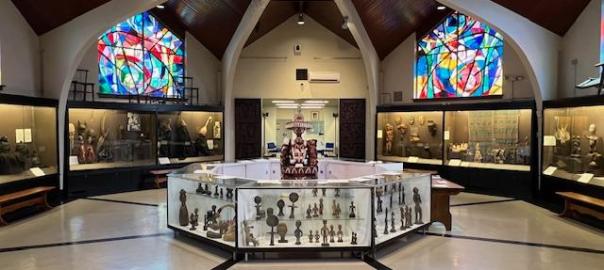
I recently revisited the African Museum of Art on the SMA Father’s and on this trip really took my time to learn about the Mission and study the art in the various displays. Each country that the Mission is involved with is represented here with detailed information on the meaning of the art and its purpose. It is an interesting approach to understanding the culture of each of these countries.

The beautiful stained glass windows line the ceiling and walls and has a beautiful effect in the room on a sunny day.

The sculpture in the middle of the main hall

The History of the Museum:

(From the museum website)

This museum was established in 1980 and is one of the only rare few in the United States dedicated solely to the arts of Africa. Its permanent collections, exhibited on a rotating basis, offer a unique advantage in the study and research of sub-Saharan sculpture and painting, costumes, textiles and decorative arts, religion and folklore.

The main hall of the museum

The history of the Mission

The history of the Mission

The history of the Mission

The African Art Museum of the SMA Fathers is one of five museums around the world founded and maintained by the Society of African Missions, an International Roman Catholic missionary organization that serves the people of Africa.

The display case that line the main hall

The display case that line the main hall

The art works up close

The descriptions of the works

The display case that line the main hall

Some of the works up close

The description of the masks

The display case that line the main hall

The museum is the continued vision of SMA’s founder, Bishop Melchior de Marion Bresillac (1813-1859). The French-born clergyman urged his Society to respect and preserve the culture of the peoples they serve, the unique among the missionaries of his time. (This information is provided by the museum).

Some of the works being featured in the exhibition

Their current exhibitions is on the “Africanizing of Christian Art” which shows the 20th Century encounter between Catholic Christianity and the visual culture of the Yoruba, a prominent west African people of southwest Nigeria under the conditions of late colonization (This information provided by the museum).

The hallway off the main room

Linking the walls of the main room are wooden carved doors from a palace in Africa. The interesting detail work tells it own story.

The description of one of the doors

Panel One

Panel Two

Panel Three

Panel Four

The collection contains many works in the form of masks, textile work, religious figurines and decorative arts. Each display case shows a different theme in the art.

The works of art in the cases

The puppets in the case

The works of art lining the cases

The engaging Mask collection

The museum is the main hallway of the church. I found it a quiet place where you could really concentrate on the beauty of the art. It grounds are also nice to walk around in in the nice weather.

The Chapel just off the museum is interesting to visit. I wondered how many people came to serve here and how the service was performed.

The main chapel of the mission

The beautiful stained glass windows in the chapel

The museum is a true hidden gem of wonderful and interesting testimonial and contemporary art. An inspiring museum if you take the time to really enjoy it.

Sturr Family Cemetery 375 Pulis Avenue Franklin Lakes, NJ 07417

Sturr Family Cemetery

375 Pulis Avenue

Franklin Lakes, NJ 07417

https://www.findagrave.com/cemetery/2227047/sturr-family-cemetery

https://www.wikitree.com/genealogy/STURR

My review on TripAdvisor:

The Sturr Family Cemetery sits on a bend of the driveway of the Chabad Jewish Center of Northwest Bergen County and is a small cemetery that once sat on the edge of the J.H, Sturr farm.

The Sturr Family Cemetery

The farmhouse of the Sturr Family sits on the lot across the street from the cemetery property. This is located on a small buff on what was the edge of the farm.

The Sturr Family cemetery tombstones

The tombstones of the Courter and Carlouch family members

The grave of William Courter

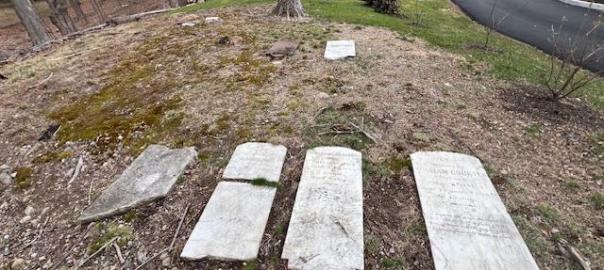
The only visible tombstones that are left in the cemetery are an Ackerman family member, Anny Ackerman and members of the Courter and the Carlouch family’s (who must have married into the family).

The Ackerman family tombstones (the one to the right was unreadable)

The other tombstones are broken and no one is sure who is buried where in the cemetery.

The History of the Cemetery:

(From Find a Grave website)

The cemetery is located in Franklin Township, Bergen County, New Jersey, on what was once the family farm of J.H. Sturr. As of October 1991 only 6 markers were still remaining.

The Sturr Family Cemetery in full view

History of the House:

(From the Franklin Lakes Municipal Website)

H. Sturr House or Blue Meadow Farm
Built 1860
378 Pulis Avenue, Block 1510, Lot 8
Franklin Lakes, New Jersey 07417 

The Sturr House – also known as Blue Meadow Farm -is a handsome and little altered example of mid 19th century vernacular architecture which incorporates several stylistic elements such as gable returns and frieze area of the early 19th century Greek Revival style. The Borough of Franklin Lakes lists the erection year of the house as 1860. 

The façade of this 2 ½ story house consists of clapboard. The front porch has five bays with square posts and a rectangular entrance door with rectangular sidelights. Two tall 1st story windows are on one side of the porch. A single hitching post with iron rings sits in front of the porch stairs. The building has a frieze area with linear design. Semi-circular headed louvered vents are in all gable ends. The rear of the house has a one story wing.  There is a detached garage to the west side of the house as well as a round frame well. Further west of the house is a stable which has been extensively remodeled and converted into a residence in recent times. The house combined with associated structures is a significant remnant of the large farmsteads which ones dotted the Borough’s landscape prior to the recent suburban housing boom.

History of the Family:

(From the Franklin Lakes Municipal website)

This Sturr house and the nearby more altered house at 402 Pulis Avenue were duplicate structures and were probably built around the same time by members of the Sturr family. The 19th century Sturr family was descended from Conraedt Sturr who purchased 190 acres of land in this area with John Coeter from Robert Livingston in 1793.

The non-extant homestead and mill was located at present-day 930 Old Mill Road. It is known that Henry Sturr, the son of Conraedt, had a fanning mill at this location in 1850. In a will dated 1852 he bequeathed his property and mill to his grandsons John, Henry, and Daniel (Maria Braun – 1976 page 26 & 27).

The property along Pulis Avenue upon which these houses are situated was probably included in this will since the homes were built around the mid-19th century. Future deed research is recommended to identify the original builder and the construction date of the house (1861: H. Sturr, 1876 Estate of H.M. Sturr). Presently the house is privately owned and occupied.